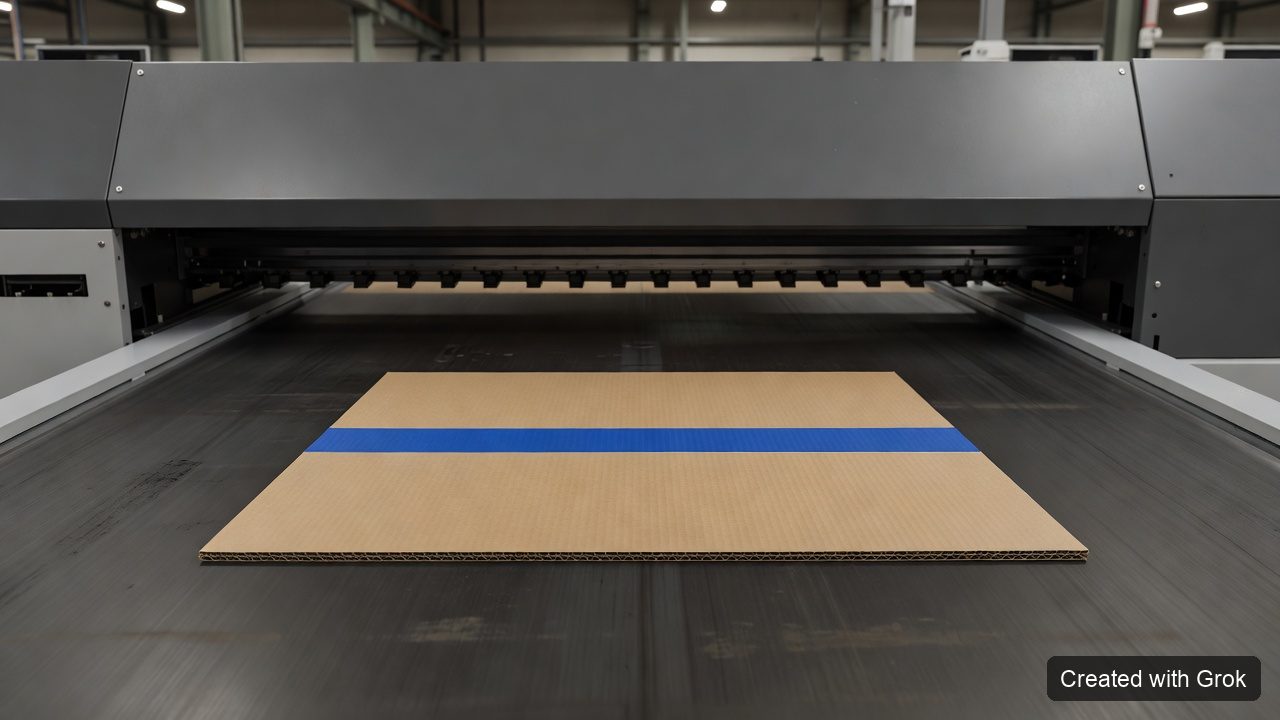
According to Sprinter’s September 28 exhibition report, Agfa showcased its Jeti Tauro H3300 XUHS hybrid press at PRINTING United 2026. The report describes vacuum and motorised media guides for cardboard and specialty substrates, plus options ranging from automatic board feeding to automated loading and unloading. That is a trade report drawing on the manufacturer’s equipment description—not evidence that a Korean plant has installed the press or proved a production result on corrugated board.
For post-printing corrugated sheets, the decision is less about a headline maximum speed than about whether a board feeds squarely, retains the intended print and survives creasing and converting. The checks below are an editorial evaluation framework, not Agfa’s official acceptance protocol.
Follow one board through feed, print and inspection
Sprinter lists extended vacuum, motorised feed guides, automatic board feeding and robotic handling among the XUHS’s automation possibilities. An available configuration is not necessarily the exact equipment displayed at the exhibition or installed for each customer. Define the sheet width, length, thickness, warp, surface texture and stack height for the intended job first; record registration, skew, double feeds and unloading damage under those conditions.
Agfa’s large-format portfolio describes wide-format printers, UV LED-curable inks and a range of applications. It supplies portfolio-level manufacturer context, not an achieved uptime or operating rate for this particular XUHS model on a particular corrugated grade. “Hybrid” does not mean identical productivity on all media without changeover.
Separate an ink description from a finished carton test
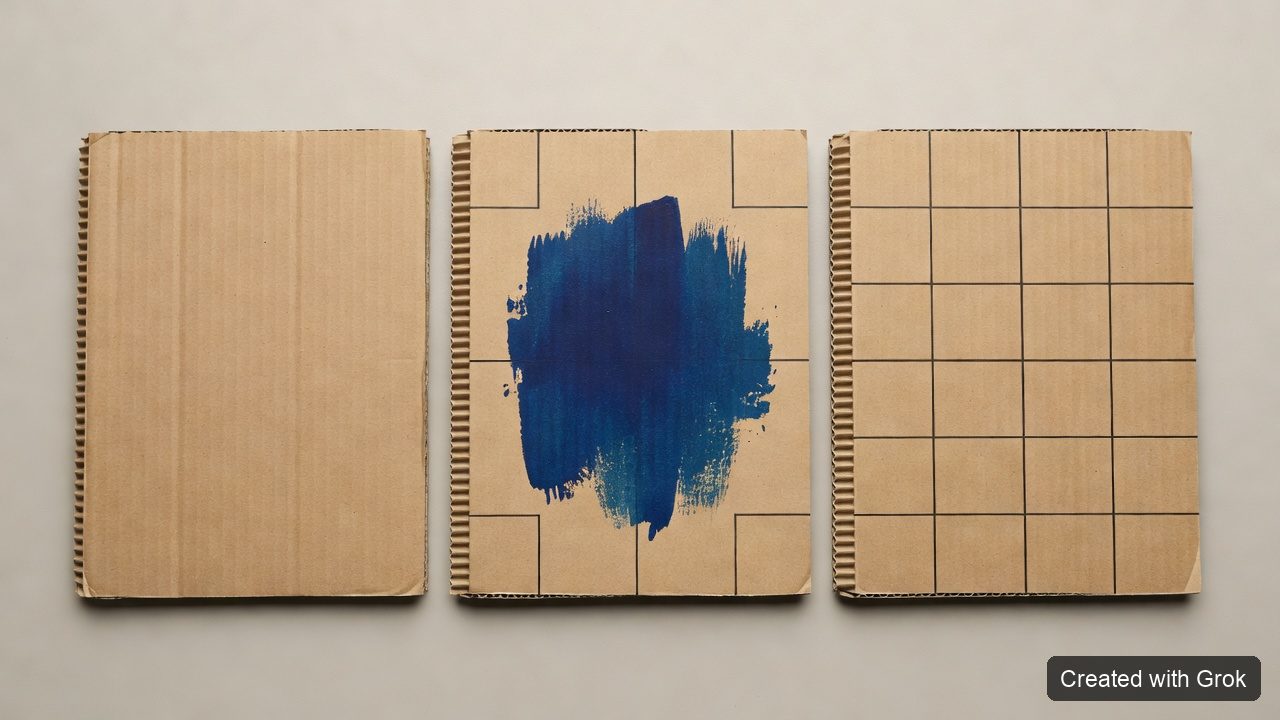
Sprinter presents the Tauro 30 ink set as a combination intended for corrugated printing and bending resistance. That product description should not be converted into a universal no-crack result for every finished carton. Score position, liner grade and coating, ink laydown, curing conditions, fold direction and downstream converting can all matter. The ink-performance language in the report is a manufacturer claim, not a substrate-independent field qualification.
An acceptance trial should inspect more than print sharpness as the board exits the press. Run boards from the same lot through the actual die-cutting, folding and gluing sequence and record cracking at scores, abrasion, colour changes and rework. This is our proposed verification method, not a published Agfa customer’s measured outcome.
Questions before ordering or accepting the line — editorial checklist
- Confirmed configuration: Which feeding, unloading, vacuum, print and ink options are actually in the vendor’s quotation?
- Material window: Does one sheet at a time travel reliably at the upper limits of the buyer’s board grade, warp, thickness and sheet size?
- Print and converting: Does the approved artwork withstand colour and smear checks, creasing and gluing on the actual board? Who sets the sample count and rejection criteria?
- Throughput evidence: Instead of applying a headline maximum to every job, have changeover time, good output, missed feeds, re-feeds, rework and stops been measured for representative orders?
What is supported today is the XUHS exhibition report and Agfa’s general large-format portfolio. A Korean installation, a given plant’s corrugated production rate and a pass rate for every board stock remain unverified. A buyer should evaluate both direct-to-board printing and its handoff into converting.
About the Author
PackingMaster: PaperPackLog editor, covering packaging materials, market developments and practical technical guidance for the paper-converting industry.