
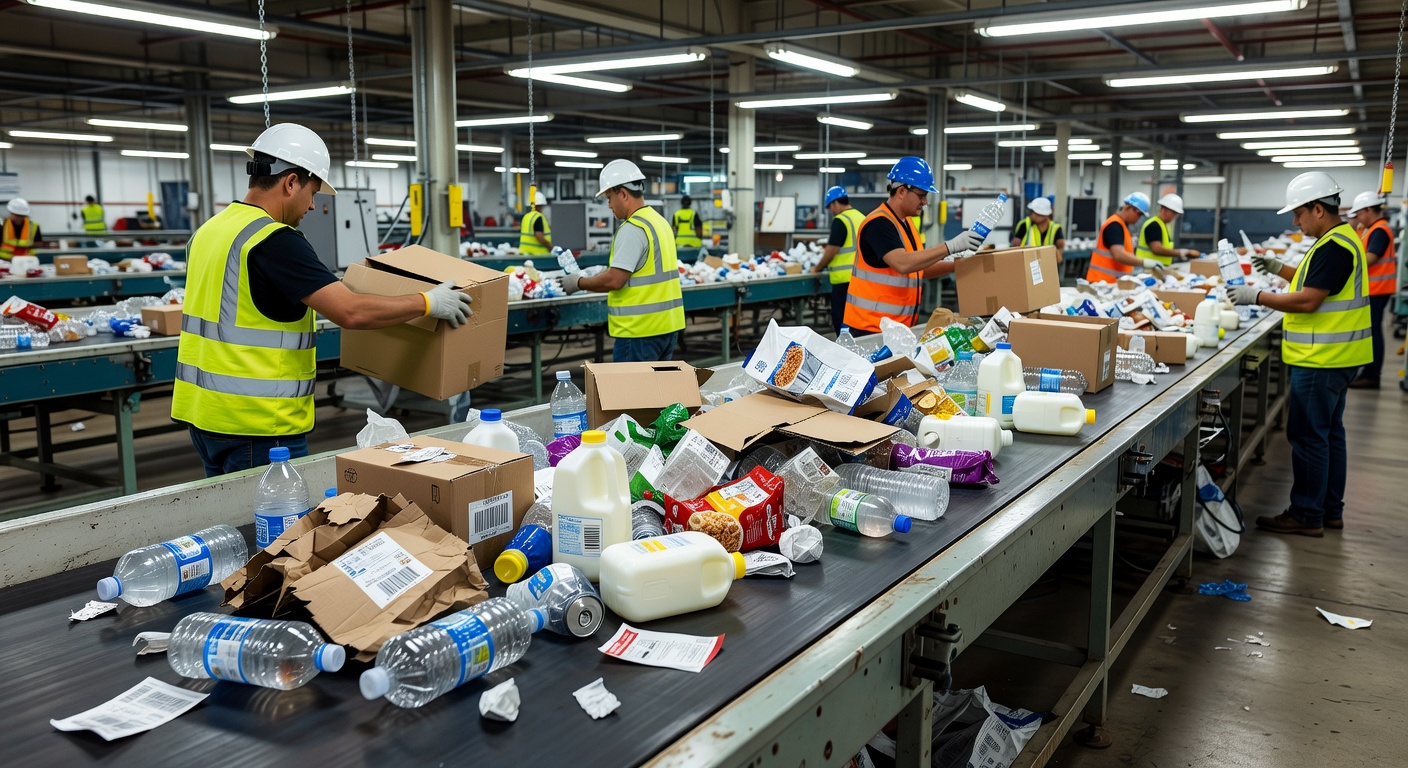
“Recyclable packaging” is now a starting point, not the conclusion. The questions buyers and regulators are asking are getting more specific. How does this package actually move through a sorting facility? Does it end up in the intended material stream? Do labels, pumps, caps, color, coatings, and composites lower the recovery rate? Does the same material yield different outcomes depending on regional recycling infrastructure?
In May 2026, Packaging Dive reported that Kenvue is using Greyparrot’s AI-based waste analytics to track how its packaging behaves in actual recycling systems. Greyparrot’s Deepnest platform is being used to understand how specific packaging components, such as pumps or labels, affect recovery rates. The signal is that packaging design and regulatory response can no longer end at the material name.
Why Measured Data Has Become More Important
Packaging reviews used to rely mainly on spec sheets and test certificates. Reviewers checked whether the material was PET, paper, or a single material, whether there was a coating, and whether hazardous-substance limits were respected. That information is still important. But there are many variables in actual recycling processes that spec sheets do not capture.
For example, the same plastic bottle can have lower optical-sortation efficiency if its color is too dark. A wide label can make the bottle body read as a different material. Pumps and sprayers mix in materials different from the body, so they may drop out of the target stream. Paper packaging is the same. Coatings, window films, adhesives, inks, and content contamination change the actual repulping and sortation result.
In this sense, “recyclable” is design intent, while “recovery rate” is closer to system outcome. Packaging teams have to keep the two separate.
What the Greyparrot and Kenvue Case Means
According to Packaging Dive, Greyparrot’s analytical units are installed on recycling sortation lines and send data to the Deepnest platform. With that data, Kenvue can see how its packages actually behave inside the recycling flow, and how individual components affect recovery rates.
The core points are three:
- Product-level tracking: see which stream a specific brand’s or SKU’s packaging ends up in at the sorting facility.
- Component-level analysis: examine how pumps, caps, labels, and color affect recovery rates.
- Design-change forecasting: judge how recyclability-driven design changes will affect cost and recovery.
The reporting explains that this kind of data is becoming more important as EPR regulations expand. Under producer-responsibility regimes, how recyclable a package is, what materials it is built from, and how much cost it is likely to generate in the actual recovery system are all becoming more important.
The Same Questions Apply to Paper Packaging
The AI sortation data case is not limited to plastic packaging. Paper-based packaging also has to be examined under actual recovery, sortation, and reprocessing conditions.
Elements that frequently cause problems in paper packaging:
- Barrier layers such as PE, PLA, or aqueous coatings
- Window films and laminations
- Excessive adhesive or hot melt
- Foil stamping, special inks, UV coatings
- Plastic handles, magnets, sponge inserts
- Food residue, oil, and moisture contamination
- Shipping boxes with heavy label or tape coverage
Judged by paper content alone, these elements can look like small components. In the recycling process, however, they can lead to sortation errors, pulp-quality drops, more contaminants, and higher processing costs. So paper-packaging specs should not stop at “paper-based” - they have to record interfering elements separately.
Data the Packaging Spec Should Carry
AI sortation data is not directly available to every company. Even so, packaging specs should be structured so they can connect to measured data.
Baseline items:
| Area | Item |
|---|---|
| Body material | Paper, paperboard, corrugated, PET, PP, PE, etc. |
| Component materials | Labels, caps, pumps, window films, adhesives, coatings |
| Weight | Component weights and total package weight |
| Area | Label area, coating area, window-film area |
| Color | Black, dark colors, metallic inks, and other potential sortation-affecting factors |
| Separability | Whether the consumer or operator can separate elements easily |
| Contamination potential | Possible food, cosmetic, oil, or powder residue |
| Test data | Repulping, sortability, recyclability assessment, internal testing |
This table is not just paperwork. It feeds straight into EPR reporting, buyer document requests, packaging-change approvals, and green-claim reviews.

Design Checkpoints from a Recovery-Rate Perspective
To raise actual recovery rates, the following questions belong in the packaging-design stage:
- Can the body material and component materials go to the same recycling stream?
- If a different material is attached, can it be separated easily?
- Does a label cover too much of the body and interfere with sortation?
- Do colors and inks affect optical sortation or repulping?
- Can coatings and adhesives be removed in the recycling process?
- Will content residue come down to a low level at consumer-disposal time?
- Does the recovery infrastructure of each region actually accept this package?
- Can the change in recovery rate or cost be evidenced after a design change?
There is no single right answer here. The same packaging can produce different results in US, EU, Korean, and Japanese recovery systems. For export packaging, then, actual infrastructure and documentation requirements matter as much as country-by-country regulation text.
Why This Connects to EPR Response
As EPR expands, producers carry more of the cost of packaging after disposal. That cost is no longer simple weight-based. As eco-modulation discussions, which differentiate between easy-to-recycle and hard-to-recycle packaging, grow louder, the value of actual sortability and recovery data goes up.
In the Greyparrot case, Deepnest data is described as supporting performance assessment for specific state-level programs and potentially linking to eco-modulation in the future. Korean companies supplying US or EU customers will need more specific documentation than “we use paper packaging.”
In practice, it is worth assembling the following materials in advance:
- Material composition sheets by package
- Component-level weight tables
- Coating, adhesive, and label specs
- Internal recyclability review sheets
- Supplier test certificates or assessment documents
- Country-level EPR-reportable data
- Weight and material change history before and after packaging changes
AI Data Is Not a Universal Answer
AI sortation data is useful but does not replace every judgment. The data is based on a specific facility, a specific period, and a specific packaging sample. Results vary with sorting-facility equipment, regional waste composition, consumer-disposal habits, season, and product sales volume.
So companies should treat AI data this way:
- Not as an absolute certificate, but as evidence for improvement direction
- Reviewed alongside material specs, test certificates, and supplier documents
- Country-by-country recovery-infrastructure differences checked separately
- Used as an internal indicator comparing packaging before and after changes
- Reflected in marketing copy with conditions and limits, without exaggeration
“AI said it’s recyclable” is risky language. A more accurate phrasing is closer to “specific sortation data confirmed potential for recovery-rate improvement.”
Wrap-Up
Packaging recyclability is harder and harder to explain by material name alone. One label, one pump, one coating layer, one color can produce a different result at the actual sortation facility. The Greyparrot and Kenvue case shows that brands and packaging supply chains are moving toward improving design based on real recovery data.
Paper-packaging companies and exporters cannot sidestep this flow. The job now is not to install a large AI system immediately, but to rebuild packaging specs into a structure that can connect to real recovery data. Recording component-level material, weight, label, coating, adhesive, separability, and contamination potential is what unlocks the next stage of recyclability verification.
About the Author
PackingMaster: Editor of PaperPackLog. Curates and organizes market trends, product information, and technical insights for the paper-packaging industry.
References
- Packaging Dive, “Kenvue tracks packaging through recycling stream with Greyparrot’s AI”, 2026.05.20, https://www.packagingdive.com/news/greyparrot-deepnest-kenvue-packaging-analytics-recycling-design-sortation/820662/