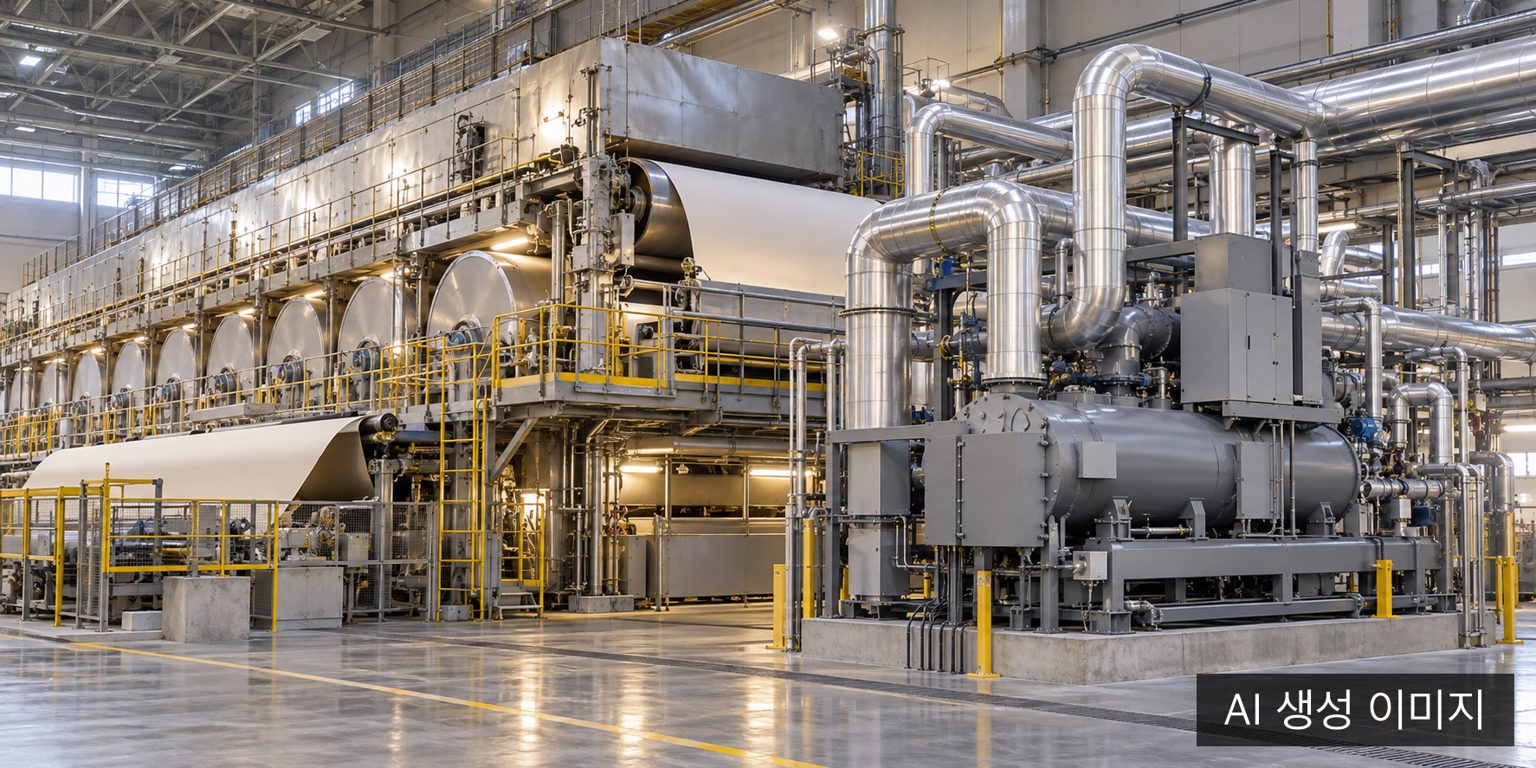
Paper drying consumes substantial heat, but reusing exhaust heat requires a match between source temperature and process demand. Ajin P&P’s industrial heat-pump project offers a case study. Installation and a projected annual saving are not a year of measured savings. These are AI-generated illustrative images, not photographs of Ajin P&P equipment or measurements.
Operational problem
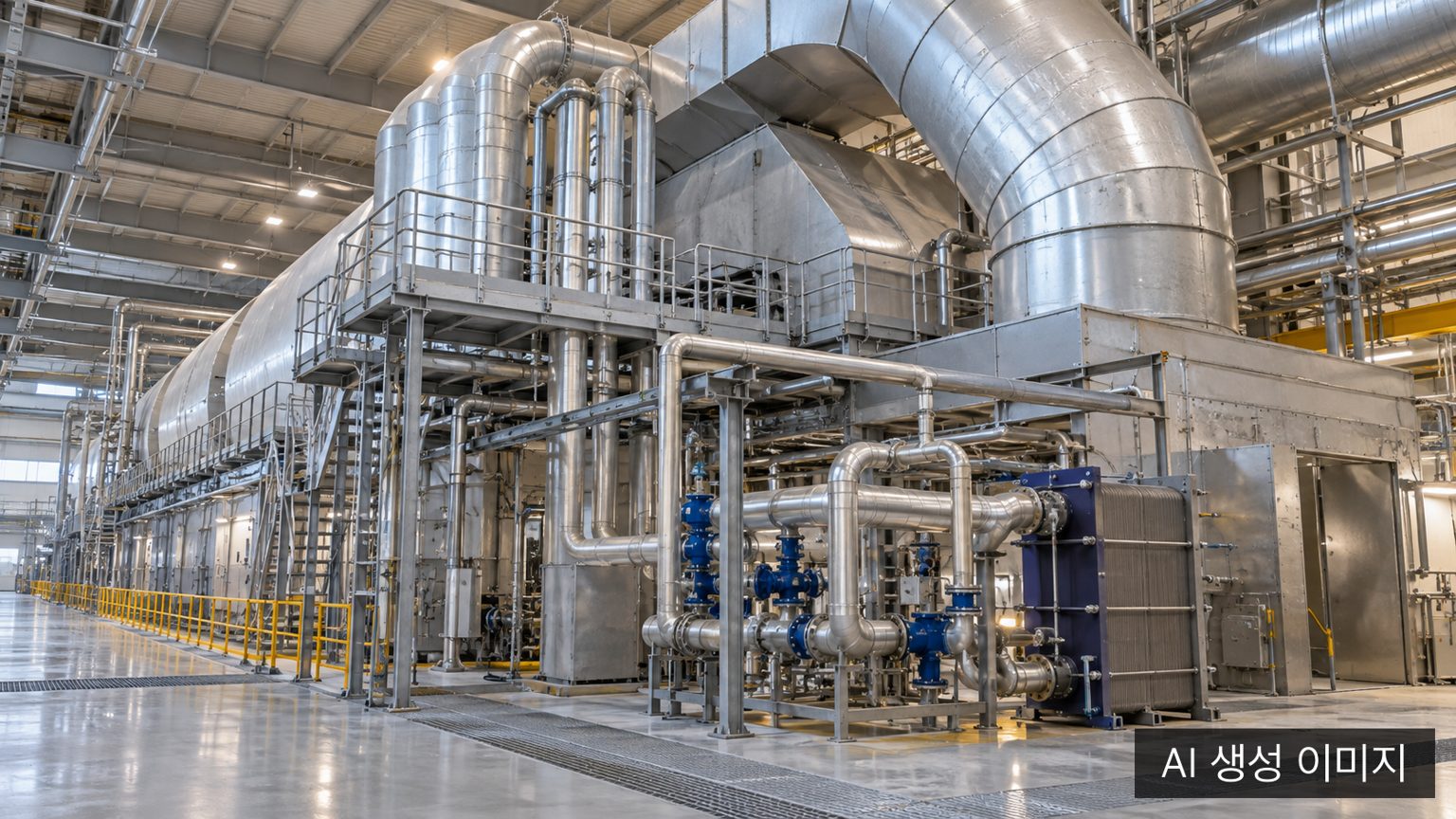
Seoul Economic Daily’s October 25 site report describes a high-temperature heat pump installed at Ajin P&P’s Daegu mill. It says the equipment recovers heat at about 60°C and supplies hot water at about 108°C; the reporting visit took place on October 19. The quoted KRW 2.5 billion annual energy-cost saving and roughly four-year payback are expectations, not a published record of sustained operation. The available report does not supply the operating hours, electricity input and displaced fuel measurements needed to verify them.
Evidence to request
Coefficient of performance (COP) compares useful heat output with electrical input. The reported expected COP of 2.9 cannot be converted directly into a mill-wide annual cost-saving percentage. Heat demand, utilisation, auxiliary electricity, source temperature, actual boiler efficiency and electricity and fuel tariffs matter too. A September 2026 paper on mill energy analysis describes building a heat balance from factory energy-management data. Its modelled results should not be mistaken for measured savings from Ajin P&P equipment.
Practical output
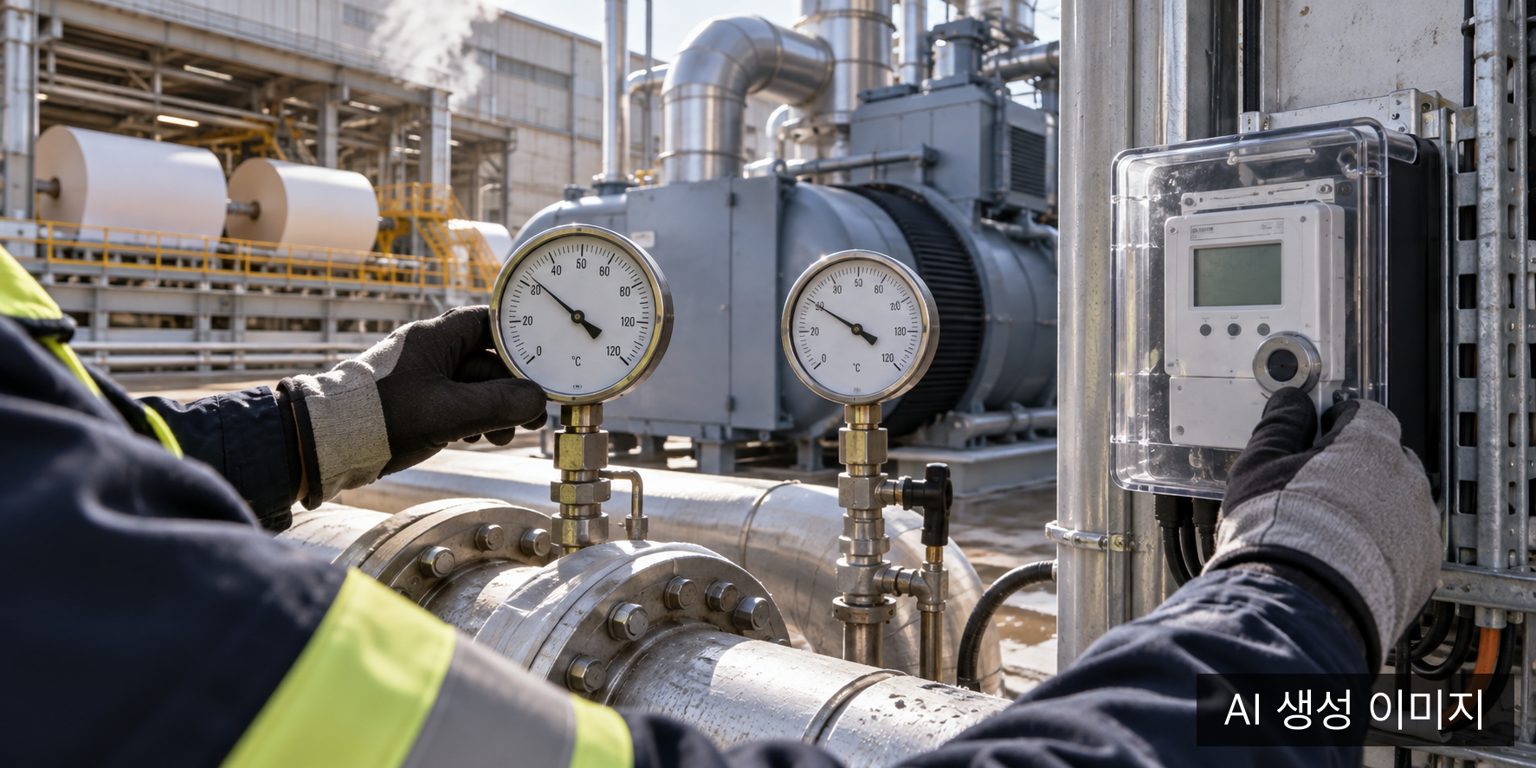
A verification sheet should record, over the same intervals, recovered-heat flow and temperatures, delivered-hot-water flow and temperatures, compressor and auxiliary-pump electricity, displaced boiler fuel, run and stop times, and production mix. Match production conditions across comparison periods and keep electricity and fuel prices separate when calculating net savings. These are editorially proposed checks, not measurements disclosed by the mill.
When to defer application
Do not transfer the same savings estimate to another mill without continuous operating data and a close temperature-demand match. Hot water and steam should not be treated as interchangeable outputs. What is public so far is the installation and the saving forecast; an assessment of realised performance requires follow-up operating data.
About the Author
PackingMaster: PaperPackLog editor covering paper-packaging markets, products and technology using public sources.
References
- Seoul Economic Daily, site report on LG’s industrial heat pump at Ajin P&P, October 25, 2026
- Seo et al., factory-energy-data approach to paper-mill heat-pump integration, September 23, 2026 — methods from a separate study, not measured Ajin P&P results.