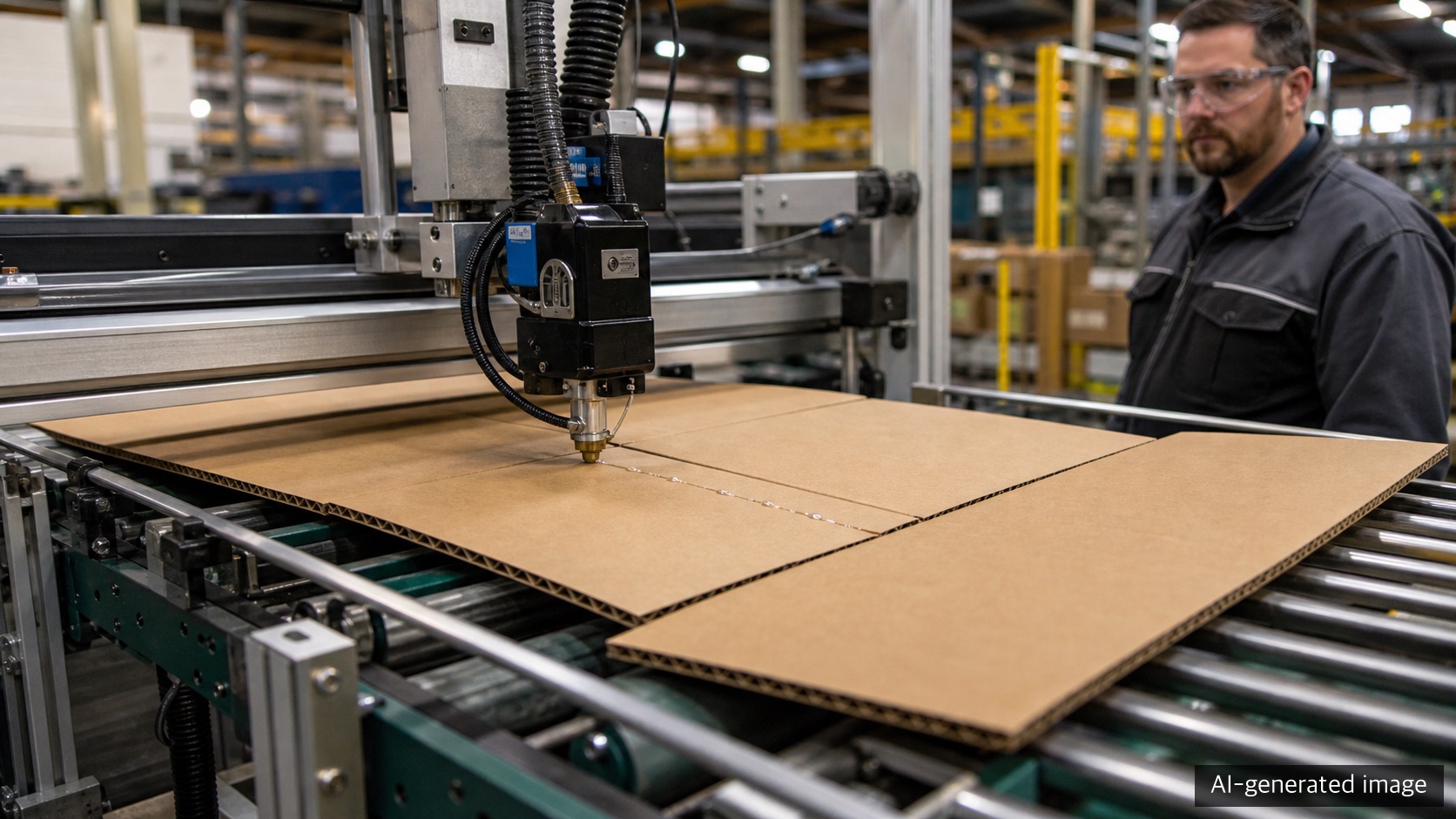
A clogged hot-melt nozzle stopped the carton-sealing conveyor, while stringing just before the stop let unsealed cartons reach the next process. Production Engineering must compare recurring pneumatic faults and the expected benefits of all-electric dispensing under matched conditions. Filling in the A/B pilot test plan below with adhesive volume, bond strength, downtime, and maintenance records supports a proceed, correct, or hold decision.
What the Vendor Claims About All-Electric Dispensing
Valco Melton markets its EcoStitch all-electric adhesive dispensing technology on the claim that the applicator needs no compressed air, that adhesive usage can drop 40–70%, and that components can last up to 2 billion cycles. Case and carton sealing are named as representative applications, alongside vendor claims of reduced maintenance and fewer moving-part replacements.
Sponsored content published by Packaging Europe on July 20, 2026, on Valco Melton’s behalf repeats the same direction. It frames pneumatic dispensing as structurally burdened by compressed-air supply, adhesive waste, seal and wear-part replacement, and cleaning downtime, while describing all-electric dispensing as offering precise electronic control over adhesive volume, placement, and pattern. The 2-billion-cycle figure and up-to-70% adhesive reduction both reappear here.
Both sources matter for what they are: Valco Melton’s own product page and content sponsored by Valco Melton. Neither is independently verified by a third party. The 40–70% savings and 2-billion-cycle durability figures are therefore claims to verify under your conditions, not pass thresholds for the A/B pilot.

The Comparison Only Means Something Under Matched Conditions
If vendor figures can’t be taken at face value, only one path is left: run A (the current pneumatic system) and B (an all-electric pilot unit) side by side on the same SKU, the same adhesive, the same substrate, and the same line speed, and measure directly. Operating cost (energy, adhesive consumption, maintenance and parts replacement, downtime) and quality (seal strength, unsealed cartons, stringing, dispensing consistency) need to be evaluated separately, not folded into one number — otherwise you end up with “all-electric looks better” and no way to explain why.
The A/B Pilot Test Plan
The table below is built to be copied directly into a field pilot. Do not fill the A/B value columns with assumed numbers — pull them from the adhesive’s technical data sheet (TDS), the dispensing head manufacturer’s approved specifications, the customer-approved spec sheet, and internal quality standards. Update status as ☐ Pending / ▶ In progress / ☑ Complete.
| Measurement | A: Pneumatic | B: All-electric | Observation/evidence | Reference source and status | Action after judgment |
|---|---|---|---|---|---|
| Dispensing temperature and viscosity | Enter | Enter | Temperature log and viscosity reading | Compare with adhesive TDS / baseline undefined if blank | Production Engineering applies the TDS-approved range to both systems and holds the trial if either condition falls outside it. |
| Adhesive volume and stitch pattern | Enter | Enter | Weighing result and pattern photos | Compare with customer-approved sealing spec and equipment range | Quality isolates samples with pattern deviation, corrects volume or cutoff timing, and retests before approval. |
| Line speed | Enter | Enter | PLC log | Compare with equipment maker’s approved range | Production Engineering excludes speeds outside the approved range and tests them separately. |
| Bond strength and fiber tear | Enter | Enter | Tester readings and opening photos | Compare with customer spec or internally approved value | Quality holds scale-up on failure and separates substrate, volume, and compression as distinct causes. |
| Missed bonds and stringing | Enter | Enter | End-of-line defect log | Compare with internally approved value | Production links each event to nozzle, adhesive, and speed logs and isolates the affected lot until the cause is identified. |
| Unplanned stops and maintenance | Enter | Enter | MES and maintenance records | Confirm matched A/B collection scope | Maintenance separates stop causes and holds the operating-cost comparison if the scopes differ. |
| Energy and compressed air | Enter | Enter | Power and air-use logs | Confirm normalization to the same output | Utilities normalizes the readings and holds the savings claim if metering is incomplete. |
| Adhesive consumption | Enter | Enter | Input and remaining-material weights | Confirm same SKU, adhesive, and output | Production Engineering removes unmatched batches and passes only like-for-like data to Procurement. |
Action Assignment: Who, What, When
| Role | Action |
|---|---|
| Production engineer | Before the pilot starts, confirm the current adhesive’s TDS-recommended temperature and viscosity range, and enter the same values into both the A and B head controllers. |
| Maintenance manager | Immediately upon delivery of the all-electric demo unit, cross-check the manufacturer’s approved line speed and electrical specifications (voltage, phase, power draw) against the line’s electrical supply capacity. |
| Quality control lead | After confirming the A-line baseline dataset, run the B-line bond-strength test with the same internally approved sample size and method, then compare both with the internal quality standard. |
| Production engineer | After the pilot, compile downtime and cleaning/maintenance logs, calculate A and B uptime over the same collection scope, and hand the result to Procurement and Capital Equipment. |
| Procurement/capital equipment lead | Once pilot data compilation is complete, compare the all-electric unit’s capital cost and payback period against the internal capital approval standard and decide whether to proceed or hold. |
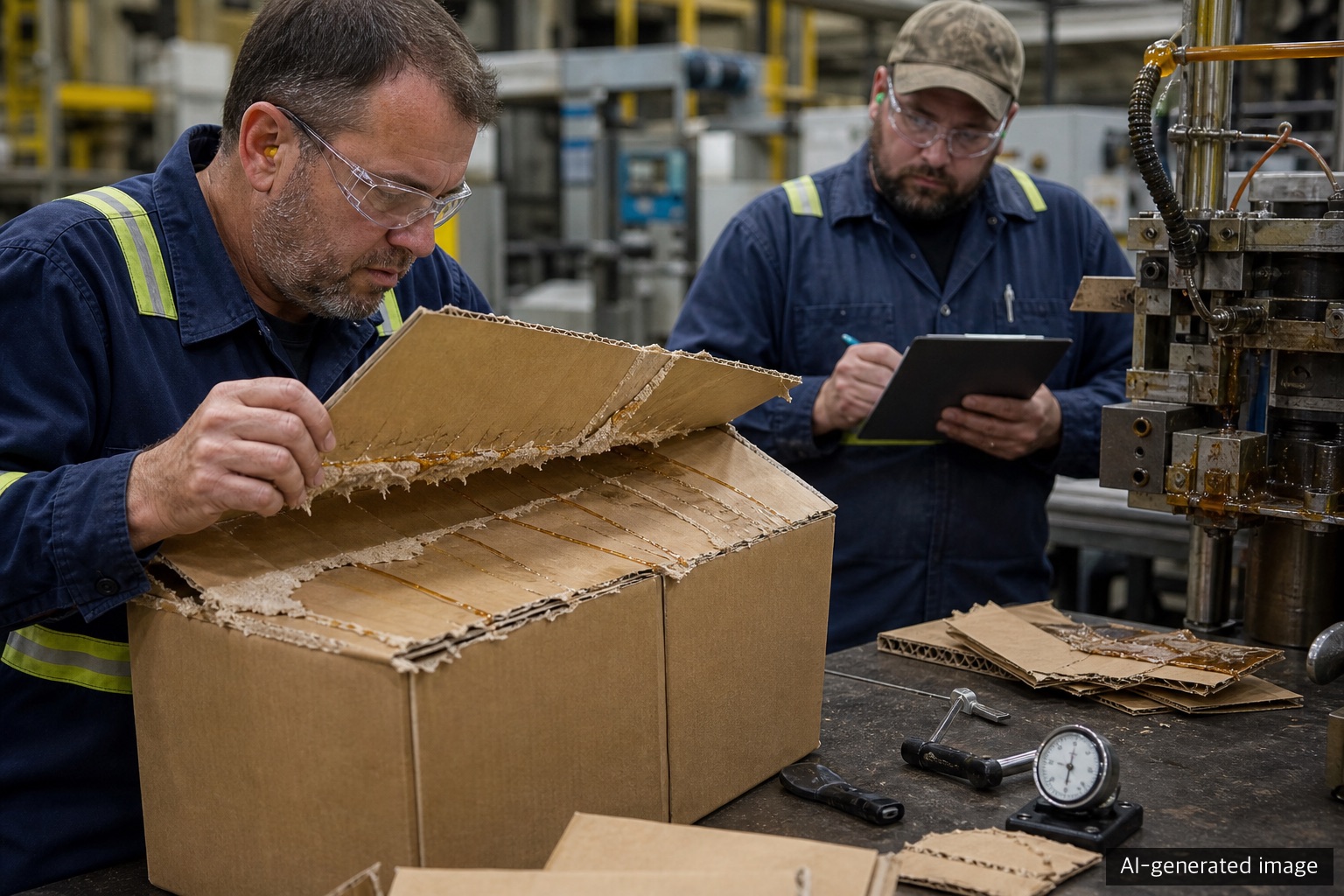
Decision Criteria: When to Proceed, When to Hold
Even if the all-electric system performs well in the pilot, hold and re-review adoption if any of the following apply:
- Capital cost: The payback period on the all-electric unit’s adoption cost (dispensing head, controller, electrical work included) exceeds the internal capital approval standard.
- Integration: Integrating the all-electric head’s communication protocol with the existing line’s PLC and conveyor controls requires significant separate systems-integration cost.
- Adhesive compatibility: The currently used adhesive is not on the dispensing head manufacturer’s approved adhesive list, or is unverified, requiring adhesive replacement cost to be recalculated into the comparison.
- Parts/service: The local service network, parts lead time, and consumables (nozzles, filters) sourcing path are not confirmed.
- Electrical/control integration: The line’s electrical capacity is insufficient or the control cabinet needs modification, requiring the electrical work schedule and cost to be settled independently of the pilot result before proceeding.
Frequently Asked Questions
Q: Can we trust the vendor’s 40–70% adhesive savings or 2-billion-cycle durability figures?
These figures come from Valco Melton’s own product page and content Valco Melton sponsored — not from independent third-party verification. Whether they reproduce under your own line conditions has to be confirmed with an A/B pilot, and these figures should not be carried over as the pilot’s pass criteria.
Q: Is all-electric always better than pneumatic?
No. The outcome depends on capital payback period, compatibility with the existing adhesive, electrical/control integration cost, and local parts and service responsiveness. Weigh the pilot data against your internal capital approval standard before deciding.
What to Check Today
- Documents to check today: The current adhesive’s TDS, the all-electric dispensing head manufacturer’s specification sheet (approved line speed and electrical requirements), and the customer-approved seal strength spec sheet.
- Field test: Collect the A-line baseline over an internally approved common scope, then bring in an all-electric demo or rental unit under the same SKU and adhesive to collect B-line data.
- Hold criteria: If adhesive compatibility is unverified or electrical supply capacity is insufficient before the pilot even starts, hold the pilot before data collection begins.
About the Author
PackingMaster: Editor of Paper Pack Log. We collect and organize market trends, product information, and technical insights for the paper packaging industry.