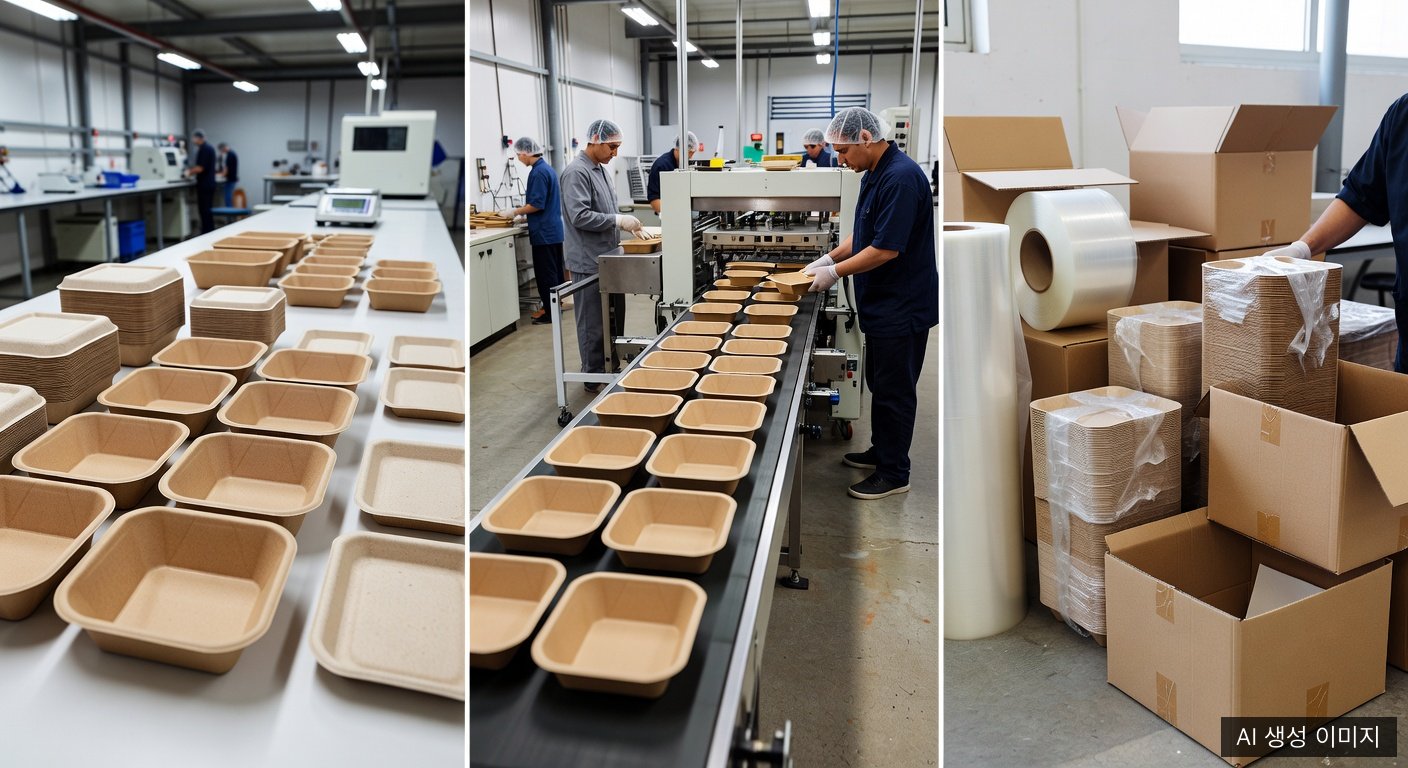
The move from plastic trays to paper or fibre-based trays is gaining momentum in fresh food packaging. But a fresh food tray is not just a holder. It has to support gas control, moisture management, sealing stability, cold-chain distribution, shelf display, and consumer opening. That is why the recent Amcor, G. Mondini, and Metsa Spring collaboration should be read as a MAP packaging system transition, not just a material announcement.
The companies announced work on a fibre-based tray packaging solution using Metsa Spring’s Muoto wood-fibre tray format, Amcor’s AmFiber packaging platform, and G. Mondini’s tray-sealing technology. The important point is not simply that the tray can be fibre-based. It is whether the functions of the existing plastic MAP tray can be transferred to a fibre structure without losing line speed, seal quality, or distribution stability.

Why Fresh Food Trays Are Hard
Trays for fresh meat, processed meat, cheese, ready meals, salads, and similar products do more than hold contents. They have to resist moisture and fat, seal consistently with lidding film, and remain stable under modified atmosphere packaging conditions.
Plastic trays provide high forming precision and stable sealing flanges. Fibre-based trays are more sensitive to humidity, thickness variation, surface roughness, coating structure, and compression recovery. So a paperisation review should start with practical questions.
- Can the existing tray-sealing equipment run at the same speed?
- Does flange flatness support reliable MAP sealing?
- Does the inner coating or liner handle moisture and fat?
- Is there no warping, absorption, or leakage in cold-chain distribution?
- Can the used tray enter a paper recycling process in the target market?
What the Collaboration Means
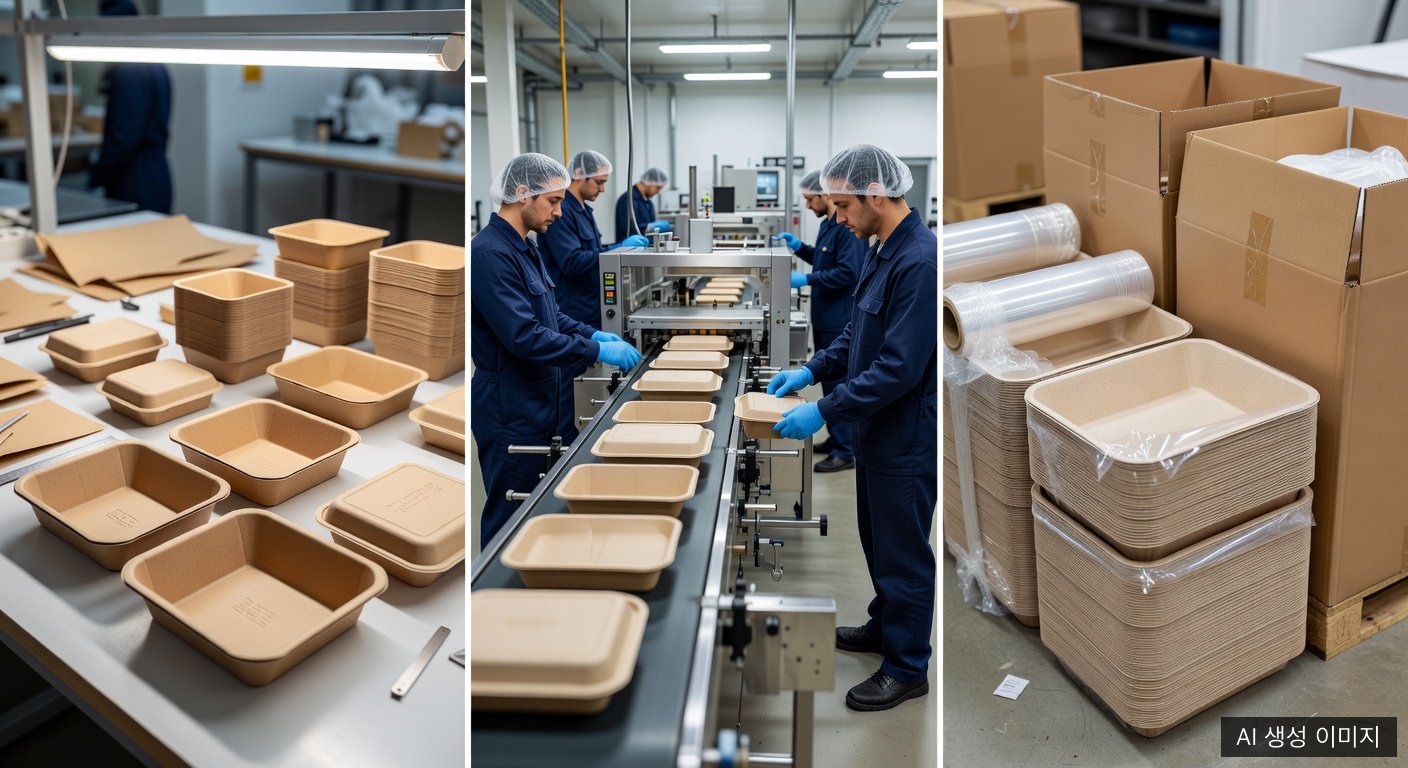
The collaboration is notable because the roles are separated. Metsa Spring brings the fibre tray structure, Amcor connects lidding film and barrier packaging design, and G. Mondini links the solution to tray-sealing equipment and production conditions.
This matters for Korean converters too. Saying “we can make a paper tray” is not enough. Fresh food customers will ask about the tray, film, sealing machine, packaging speed, cold-chain conditions, and return rate together. Customers already using plastic trays will first ask about line-conversion cost and defect risk.
Checklist for Procurement and Development Teams
For fibre-based MAP trays, the verification package matters more than the material brochure. Suppliers should prepare the following as one set.
| Checkpoint | Evidence Needed |
|---|---|
| Seal compatibility | Seal temperature, pressure, dwell time, peel strength |
| Barrier performance | Oxygen transmission, moisture transmission, shelf-life data |
| Distribution stability | Cold-chain, compression, vibration, leakage testing |
| Recyclability | Composition, coating and film separation, repulpability |
| Line conversion | Equipment compatibility, speed impact, reject-rate comparison |
Food packaging does not change because of one benefit. Even if plastic reduction is attractive, higher product loss during distribution can damage both cost and environmental performance. Paperisation has to be scoped by product group.
Implications for Korean Packaging Suppliers
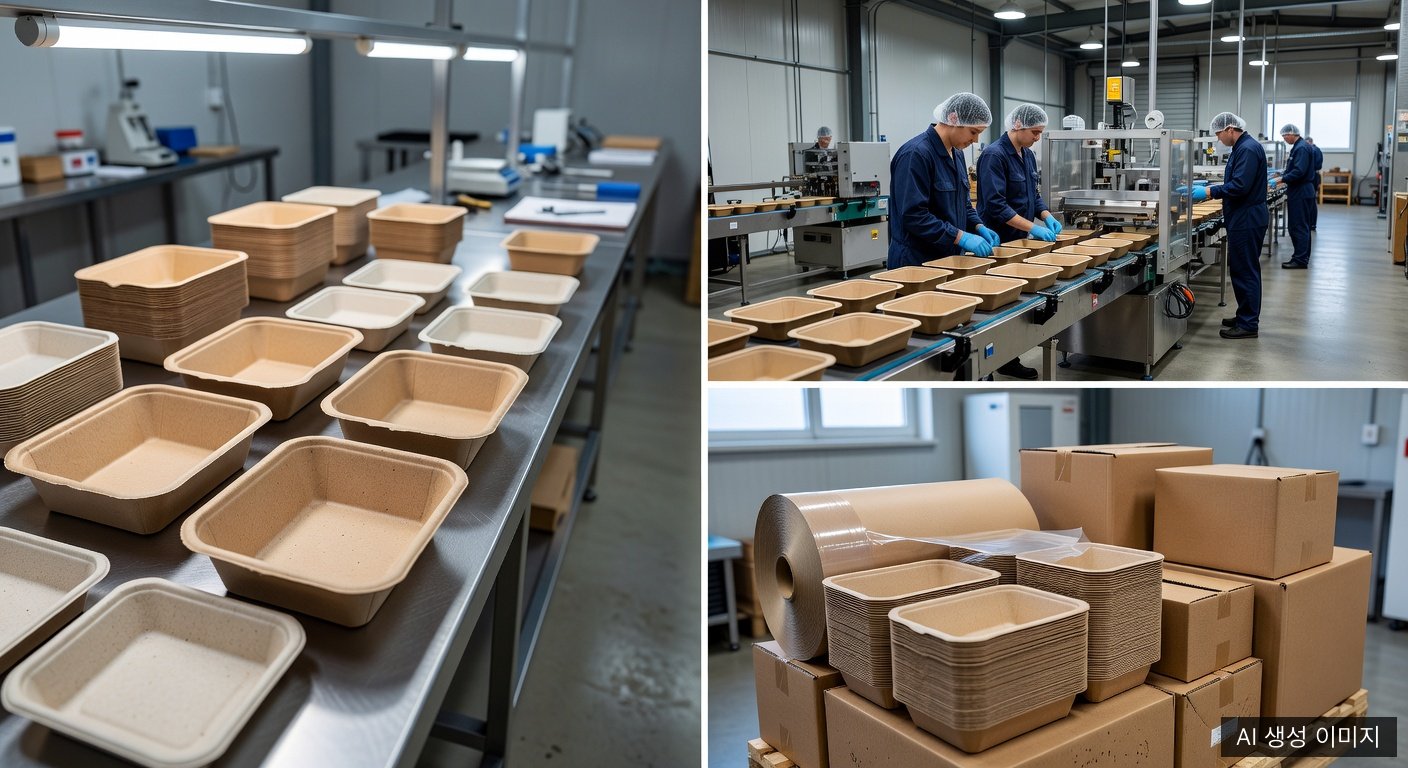
Korean paper-packaging suppliers can use this trend by proposing conversion tests rather than standalone trays. Samples should be divided by product group such as salads, bakery, processed foods, and chilled ready meals, with film and sealing conditions included.
Recyclability language also needs care. Even when the tray body is fibre-based, inner coatings, lidding film, and adhesives can change both consumer sorting and actual recycling performance. Export products also need market-by-market labeling checks.
Conclusion
The AmFiber and Muoto case shows that paperising fresh food trays is a system transition. Competitive advantage will come not only from forming trays but from presenting film, sealing, cold-chain, and recyclability evidence together.
Fibre-based trays have real potential, but overclaiming the application range can quickly lead to failure. Packaging suppliers should define which foods, which machines, and which distribution conditions are suitable before using “paper replacement” language.
Frequently Asked Questions
Q: Can fibre-based trays replace all plastic MAP trays?
Not yet. Product category and distribution conditions have to be tested first, especially for wet, fatty, or long-shelf-life foods.
Q: Can existing sealing equipment be used?
Possibly, but results depend on tray flange quality, sealing temperature, pressure, and film combination. Equipment test data is needed.
Q: How should recyclability be judged?
Look beyond the tray body. Coatings, lidding film, adhesives, contamination, and the local collection system all matter.
About the Author
PackingMaster: Editor of PaperPackLog. Curates and organizes market trends, product information, and technical insights for the paper-packaging industry.