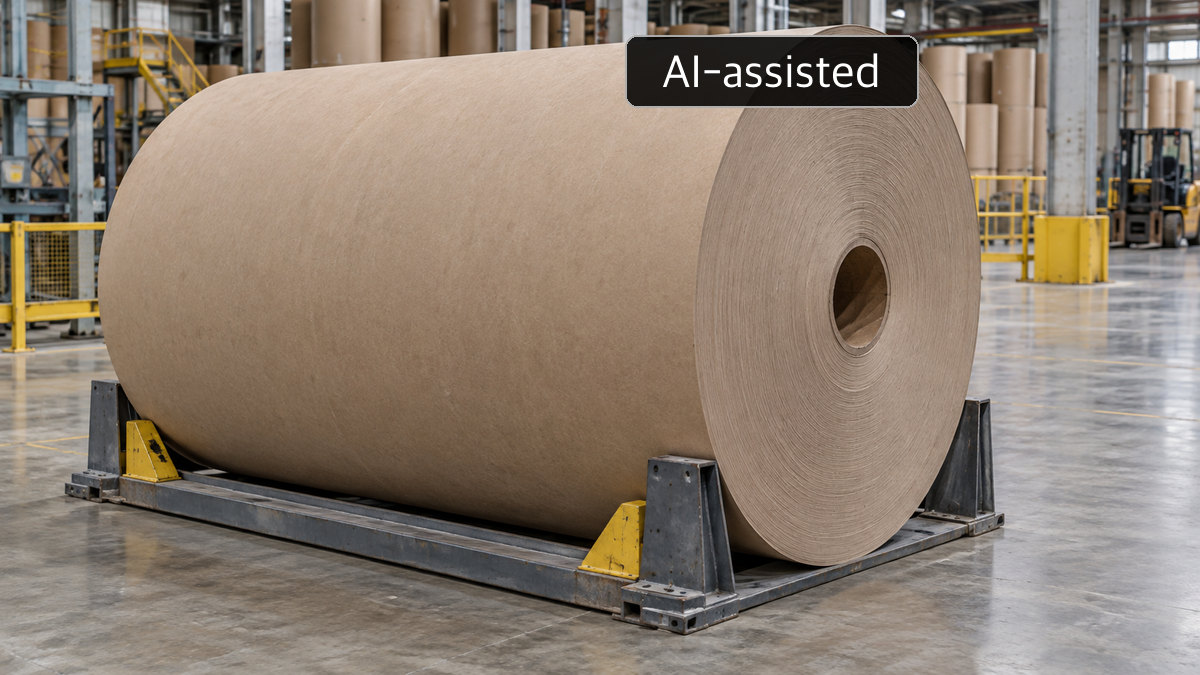
A new board-machine order is a meaningful supply-chain signal. It does not mean lightweight fluting or liner from that machine can be bought today. According to Valmet’s October 12, 2026 announcement, China’s Anhui Linping Circular Development has ordered a new PM9 board line intended for lightweight fluting and liner grades. Start-up is scheduled for 2028. The distinction between a confirmed order, a planned start and a qualified product matters when a converter builds its sourcing plan.
What the order actually covers
Valmet says the order was included in its third-quarter 2026 orders received and that the order value will not be disclosed. The delivery covers a complete board machine from headbox to winder, plus automation and lifecycle support. The announced configuration includes a layering gap headbox, a center-roll press with closed sheet transfer, a compact-geometry predryer section with runnability systems, and a winder. Spares, digital services and paper-machine clothing are among the support items.
The supplier describes these choices as supporting sheet formation, runnability, productivity and customer roll quality in lightweight grades. These are design intentions and supplier expectations, not measured results from PM9. The release gives no PM9 wire width, design speed, daily or annual capacity, grade-by-grade basis-weight and strength specification, or demonstrated energy and resource savings. Its automation language points toward increasingly autonomous operations; it is not evidence that unmanned operation has been tested or achieved.
Do not import PM8 figures into a PM9 quotation
Anhui Linping’s earlier PM8 project has its own Valmet release from October 2024. That release specified PM8’s width, design speed, daily capacity and a typical value range for such a line. This is a typical range for that type of line, not a disclosed PM8 contract price. The PM9 release does not repeat those figures or say they apply to PM9. PM8’s numbers are not PM9 specifications or a PM9 price. Nor does PM8’s planned start-up date in the 2024 announcement prove its current operating status.
The distinction matters beyond the arithmetic. Fluting and liner face different converting demands—corrugation and bonding on one side, surface and box-strength requirements on the other. A statement about intended product families cannot establish a drop-in replacement for a buyer’s approved stock-keeping units. Basis weight and test method, lot-to-lot variation, actual furnish, reel dimensions and performance on the converter’s equipment all require product-specific documents and trials. The PM9 release does not establish whether a particular grade uses recycled fiber or in what proportion.
From announcement to purchase order: an evidence ladder
This is an editorial sourcing checklist, not a disclosure of PM9’s contractual guarantees or the mill’s completed tests.
| Gate | What the announcement supports | Evidence to request before buying |
|---|---|---|
| Machine order | PM9 full-line order and a 2028 start-up plan | Updated commissioning milestones and the legal entity and mill that would supply the grade |
| First paper and commissioning | Not established in this announcement | First-reel date, trial grade and basis weight, operating interval and interruption record |
| Grade specification | Intended lightweight fluting and liner families | SKU-level basis weight, strength, moisture and reel specification, with test methods and tolerances |
| Conversion trial and approval | No named customer or packaging-line approval reported | Trials on the actual corrugating, printing and bonding process; signed approval and nonconformance procedure |
| Repeat deliveries | Distinct from a planned start-up | Repeat results for approved lots, production origin, shipment date, lead time and contingency supply |
In particular, avoid copying a planned start-up year into a contract as the first available delivery date. Fix the sampling location and test method before comparing results. Track fluting and liner as separate SKUs with separate approvals, rather than treating a machine trial as approval of every finished package. There is no basis yet to fill in passing thresholds or trial outcomes on PM9’s behalf.

Why a second article is not a second performance test
A Pulpapernews article also dated October 12 conveys the order, scope and 2028 schedule in language closely matching Valmet’s announcement. It supplies no separate commissioning observation, customer qualification record or measured energy saving. Two URLs do not amount to two independent performance verifications. The useful next update will document actual PM9 start-up, grade-level tests and commercial shipments, rather than repeat the purchase announcement.
The defensible reading today is narrow: Anhui Linping has ordered a full PM9 line for lightweight packaging grades and plans to start it in 2028. Adoption by a packaging buyer comes later. Keeping design intent → operating record → grade approval → repeat delivery as separate gates prevents a future capacity plan from being mistaken for current output or an immediately qualified source.
About the Author
PackingMaster: Editor of PaperPackLog, covering paper-packaging industry developments, products and technical decisions.