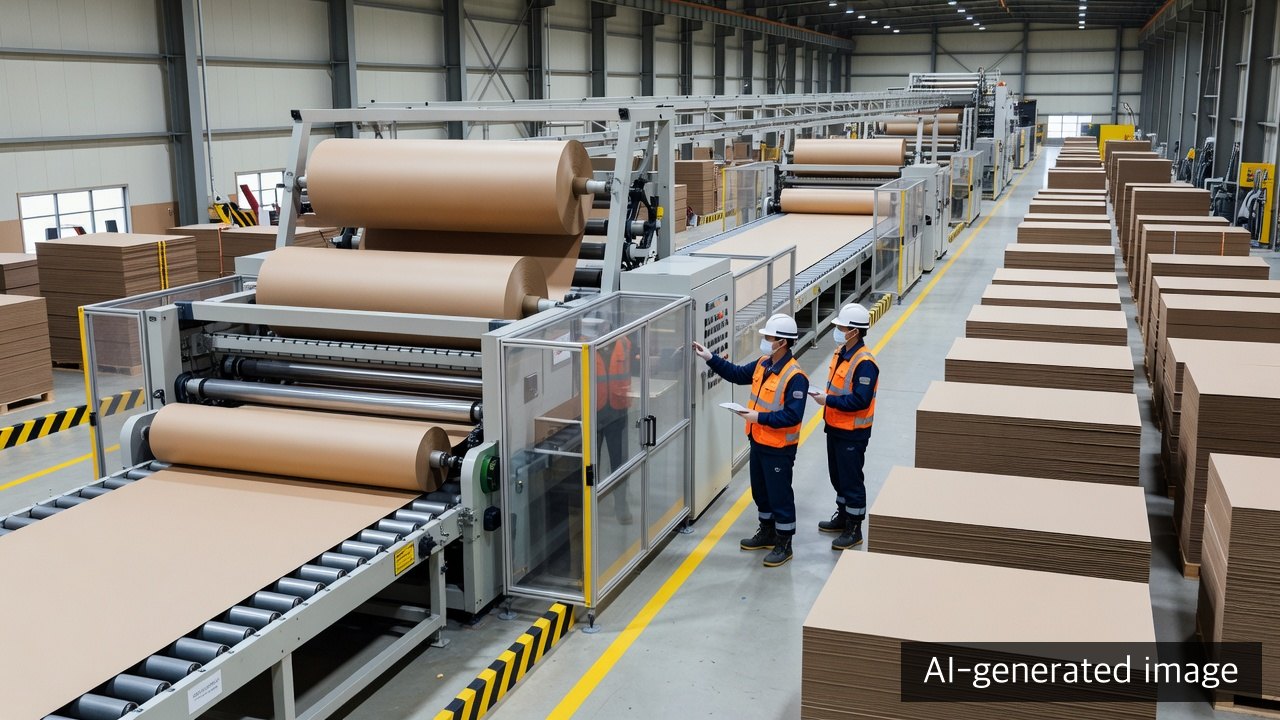
When a large corrugated-plant investment is announced, procurement teams quickly ask when the additional volume will reach the market. An investment-period end date, however, is neither a commercial-production date nor a promise that a buyer’s grade is available. Procurement, production and sales need to know how far the project has moved through construction completion, equipment acceptance, commissioning, grade-specific yield stabilization, customer approval and commercial allocation. This article converts Asia Paper’s Cheongju disclosure into a capacity-to-supply gate sheet.
Status checked September 4, 2026: Asia Paper’s 2026 half-year report lists
(주)청주하이테크밸리as the counterparty and describes a KRW 195.1 billion investment in a new corrugated manufacturing plant to expand capacity and strengthen competitiveness. The disclosure date is April 6, 2023, the stated investment period runs from April 6, 2023 through December 31, 2026, and the status at the June 30, 2026 reporting date is that investment procedures are in progress. The report does not disclose a start-up date, incremental nameplate capacity, grade-by-grade commissioning schedule or initial yield.
Separate the Confirmed Investment from Unconfirmed Supply
| Item | Confirmed by the public sources | Not established by the public sources |
|---|---|---|
| Investment object | New corrugated manufacturing plant | Detailed equipment configuration and grade allocation |
| Investment amount | KRW 195.1 billion | Cumulative spend and construction progress at the reporting date |
| Stated purpose | Capacity expansion and stronger competitiveness | Volume available to any specific buyer or specification |
| Reported status | Investment procedures in progress as of June 30, 2026 | Completion, occupancy approval and equipment-acceptance dates |
| Stated period | Through December 31, 2026 | Trial, commercial-production and customer-shipment dates |
| Business structure | Paperboard plus group corrugated sheet and box operations | New-plant furnish mix and allocation within the group |
A September 3 EBN report interprets the filing in the context of the company’s vertical-integration strategy. It also notes that the half-year report does not separately disclose cumulative project spending or a progress percentage. The disclosed KRW 195.1 billion therefore must not be converted into a claim that a defined volume will be available at the end of 2026.
A Different Question from the Earlier Supply-Shock Articles
Earlier 2026 coverage of the Sejong shutdown and containerboard supply followed the interruption and restart of existing assets. The Cheongju question is different: what converts a capital project into repeatable saleable output. This article does not repeat accident-recovery or price forecasts. It focuses on the evidence a buyer should obtain before reflecting new sheet and box output in a purchase plan.
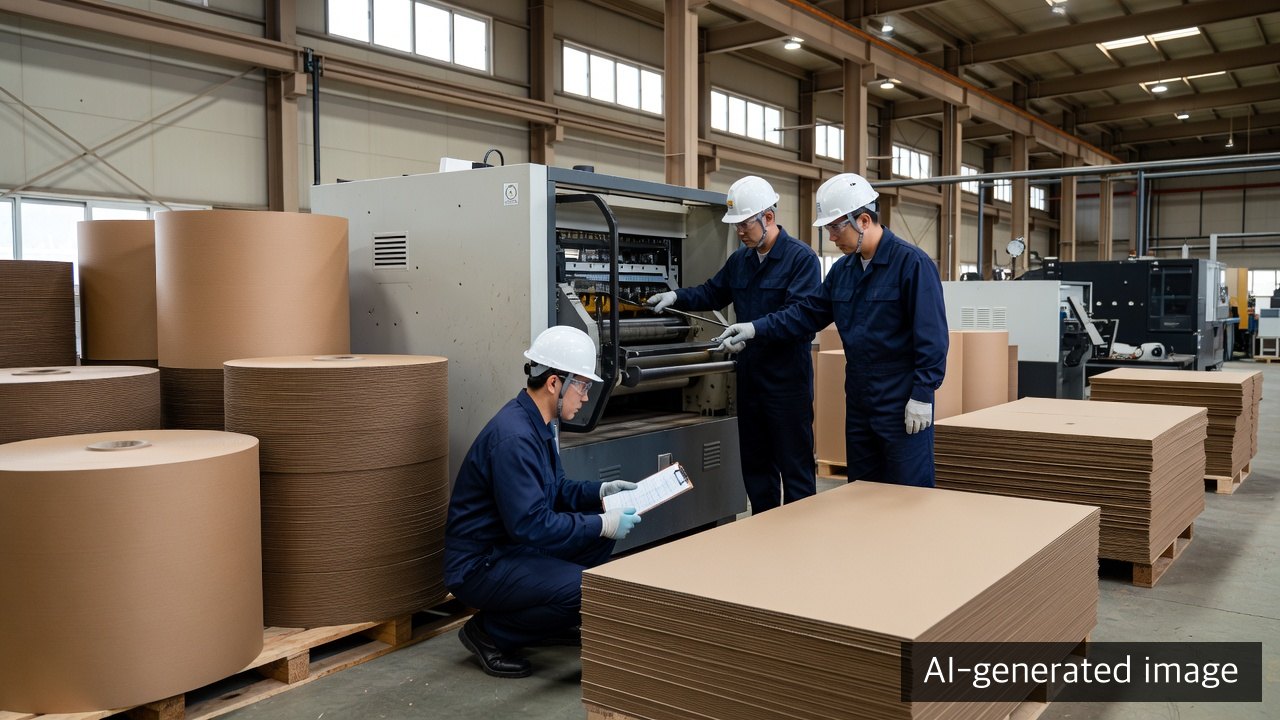
Six Gates from Investment to Available Supply
G0. Lock the Investment Baseline
Save the disclosed investment period, counterparty and reported status as the baseline. Compare later quarterly reports and filings for changes in the period, spending, progress or completion language rather than relying on a headline or sales description.
G1. Confirm Building and Equipment Acceptance
Separate building completion and occupancy approval from handover of power, steam, compressed air, wastewater treatment, corrugator, printing, die-cutting and case-making equipment. A completed building does not mean that every process can produce.
G2. Separate No-Load and Loaded Commissioning
Distinguish rotation checks from trials using real paper. Record stoppages and quality variation by web width, flute, paper combination, speed, adhesive and drying condition. One successful grade is not evidence that the entire product mix is running.
G3. Stabilize Grade Yield and Downstream Bottlenecks
Do not monitor corrugator speed alone. Include defects and scrap, paper changes, order changeovers, printing, die-cutting, gluing, palletizing and warehouse throughput. High line nameplate speed does not become saleable output when finishing or dispatch is the bottleneck.
G4. Approve the Customer Specification
Check the paper combination, flute, print, adhesive, compression, drop and moisture conditions for the buyer’s actual item. Do not assume that approval for material from an existing plant automatically transfers to a new manufacturing site.
G5. Confirm Commercial Allocation and Repeat Shipment
Separate a one-time trial shipment from recurring allocation. The quotation or purchase order should identify the plant, approved specification, first commercial-shipment date, weekly or monthly allocation, backup plant and response cadence.
Copy-Ready Capacity-to-Supply Gate Sheet
| Gate | Evidence to enter | Status | Owner | Next action or stop condition |
|---|---|---|---|---|
| G0 investment baseline | Latest filing URL, reporting date, investment period and amendments | [confirmed/changed/unknown] | Procurement and planning | Do not use an expansion figure until amendment status is checked |
| G1 completion and acceptance | Occupancy approval, utility handover and equipment-by-equipment acceptance | [complete/partial/unknown] | Engineering and production | Do not fix a production date while a critical utility or finishing asset is unaccepted |
| G2 commissioning | Loaded-trial results by flute, width and paper combination | [pass/conditional/fail] | Production and engineering | Hold customer timing while repeated stops or variation remain unresolved |
| G3 yield and bottlenecks | Good yield, scrap, changeover, finishing and warehouse throughput | [stable/improving/unknown] | Production and quality | Do not extrapolate one representative grade to total capacity |
| G4 item approval | Drawing revision, sample lot, test report and customer approval | [approved/conditional/pending] | Quality and sales | Do not make routine deliveries from the new plant before approval |
| G5 allocation | Plant, firm quantity, ship date, backup plant and response cadence | [allocated/trial/unallocated] | Sales and logistics | Do not label a trial shipment as repeat supply capacity |
The key is to replace the single word complete with a chain of evidence, date, grade, quantity, owner and stop condition. A public filing establishes the investment status; grade-specific availability is completed by supplier responses and approval records.
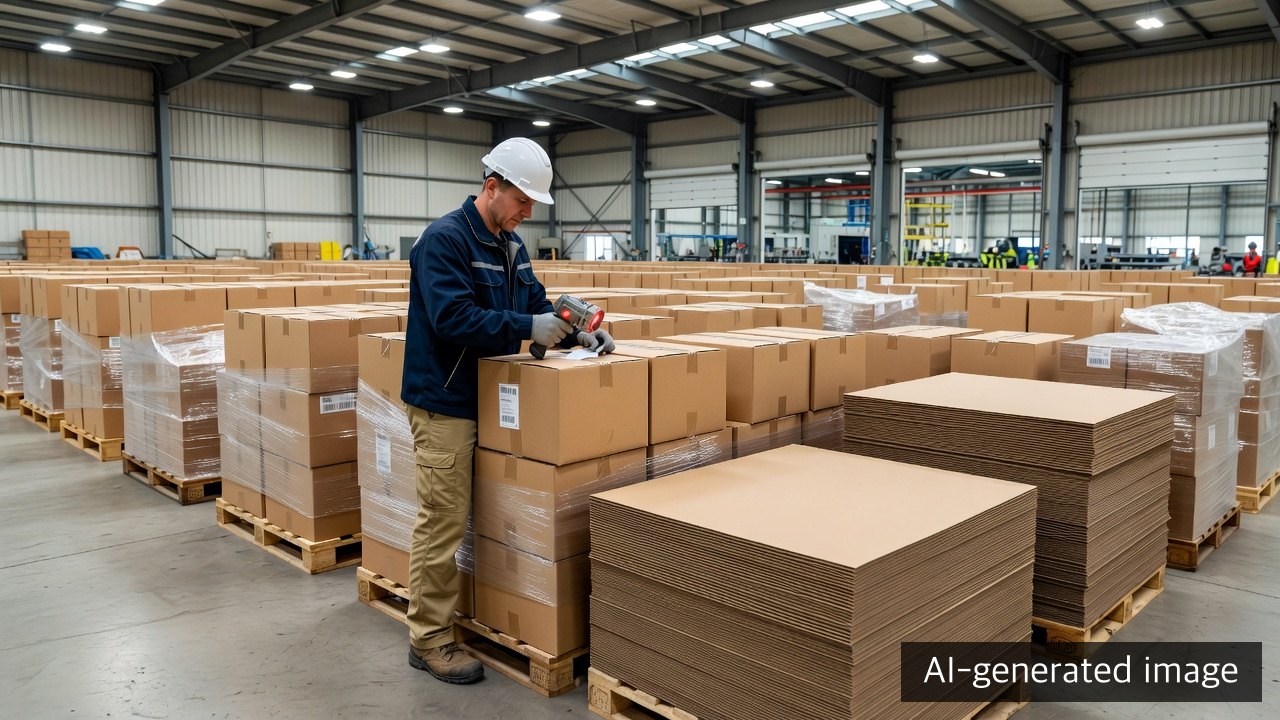
Documents Each Function Should Request Now
Procurement and planning
- Keep the latest quarterly report and any amendment to the facility investment in one control file.
- Ask for trial-production, approval and first commercial-shipment dates for the actual item rather than only a scheduled completion date.
- When a capacity figure is supplied, record its unit, included process, operating days, product mix and reference date.
Production and quality
- Compare existing-plant and new-plant material under the same drawing and test conditions.
- Link paper combination, flute, adhesive, print, die-cut and moisture changes to the sample lot.
- During ramp-up, keep approved-sample and routine-production variation separate.
Sales and logistics
- Communicate plant completion, item approval, commercial allocation and confirmed shipment as separate states.
- Ask for recurring dispatch cadence and backup plant or inventory location, not only the first shipment date.
- Do not promise price or lead-time improvement without a formal response.
Conditions That Require a Hold on an Expansion Claim
- Treating the investment-period end date as the commercial start-up date
- Estimating construction progress when progress and cumulative spending are not disclosed
- Using nameplate capacity without units, operating days or product mix
- Confirming only the corrugator trial while ignoring print, die-cut, gluing and warehouse bottlenecks
- Extending one grade’s trial success to all flute, width and print specifications
- Automatically transferring an existing-plant approval to material from the new plant
- Describing a trial shipment as long-term allocation or stable supply
What is currently established is the investment amount, purpose, disclosed period and the status at June 30, 2026. Actual supply capacity must be demonstrated through commissioning, yield, item approval and commercial allocation, not one completion date. Buyers can use the next filing as a public checkpoint while fixing their own sample plan and supplier-response form now.
About the Author
PackingMaster: Editor of Paper Pack Log. We collect and organize market trends, product information, and technical insights for the paper packaging industry.
References
- Financial Supervisory Service DART, Asia Paper 2026 half-year report (August 14, 2026; reporting date June 30, 2026)
- EBN, analysis of the Cheongju corrugated-plant investment and vertical-integration strategy (September 3, 2026)