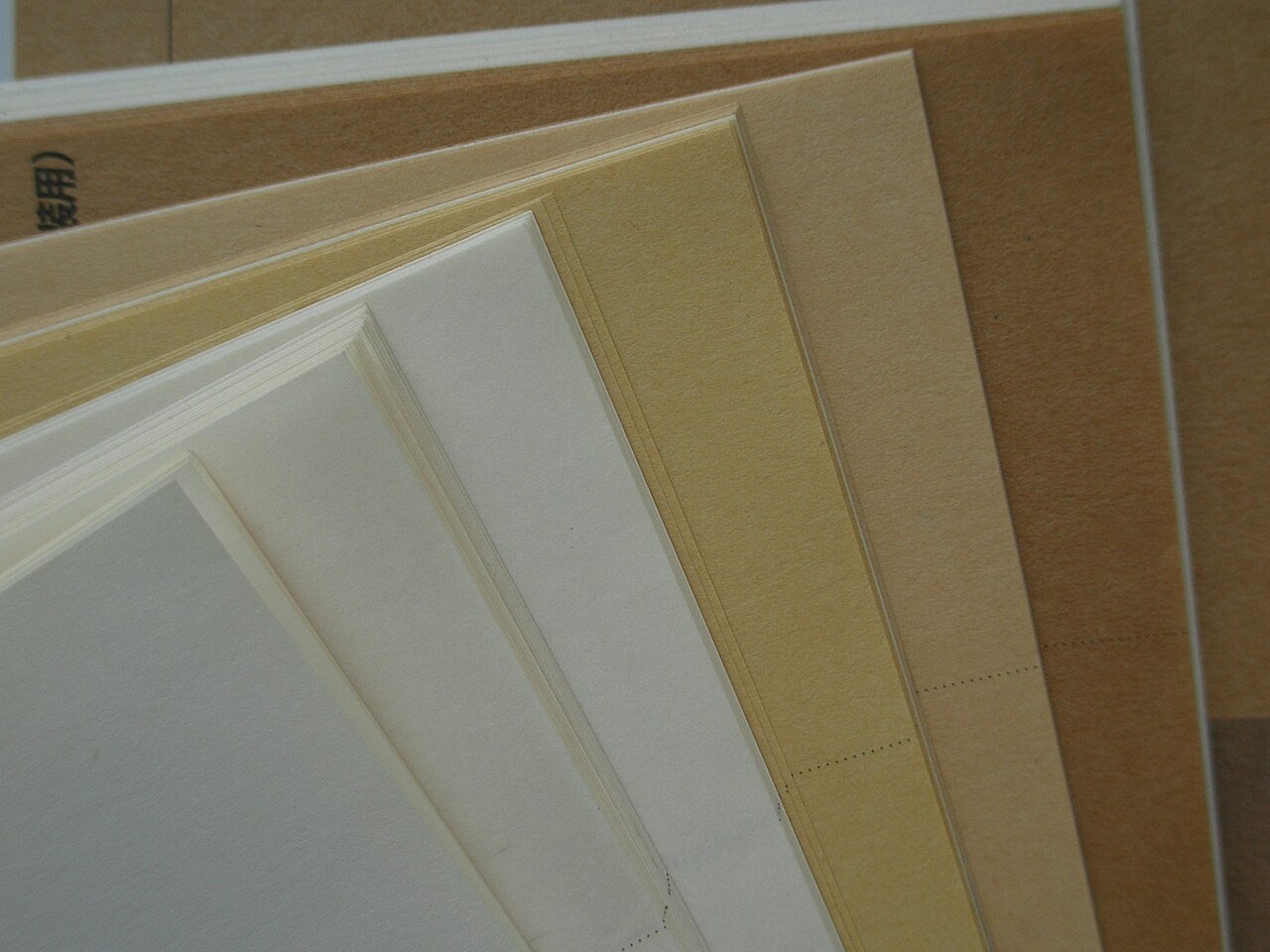
It is easy to picture the red wax around a Mini Babybel when hearing that the snack has moved to paper. That is not the layer changed in this case. The switch concerns the outer flowpack holding two Mini Babybel cheeses in the Babybel 2 Go format: paper replaces the former plastic outer wrap, according to Koehler Paper’s product story.
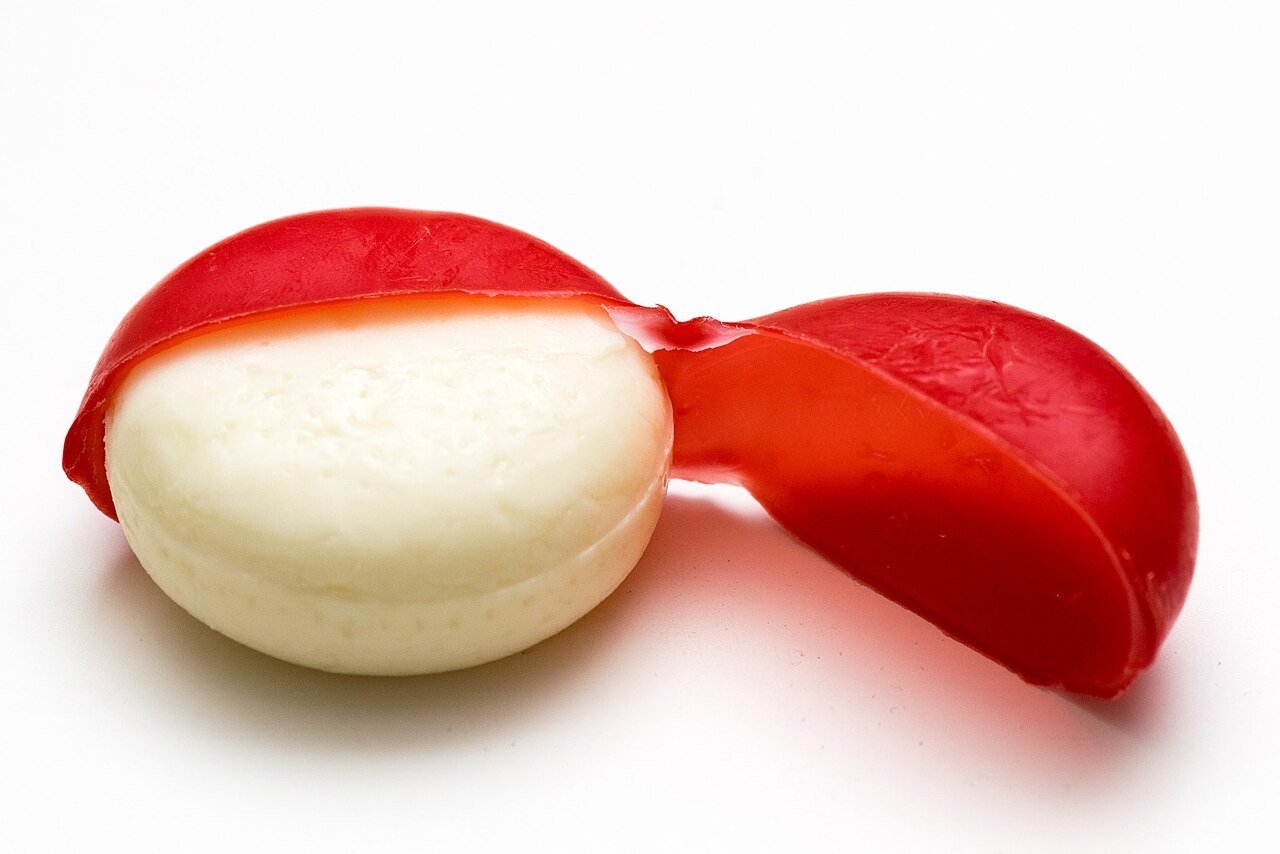
A generic Mini Babybel cheese in its red wax, which was not the outer layer changed here.
This is distinct from our earlier discussion of paper replacing individual Babybel outer wrapping and the food-contact checks: here the subject is the outer flowpack holding a two-pack.
The material and the production problem
The outer pack uses Koehler’s heat-sealable NexPlus® Seal Pure paper. Babybel packaging development manager Victor Desmonts says the paper’s dimensional stability also allowed the company to dispense with an inner cardboard component. That is a separate component from the red wax directly surrounding each cheese. As Packaging Europe reports, work on the iconic wax coating remains an area of research rather than a completed part of this switch.
Koehler describes the engineering requirements behind the change: run on existing packaging lines at a speed comparable to film, seal at low temperatures, resist bending and breakage, and present a smooth printable surface. Those are requirements described for this product and its operations, not a performance guarantee for every paper flowpack.
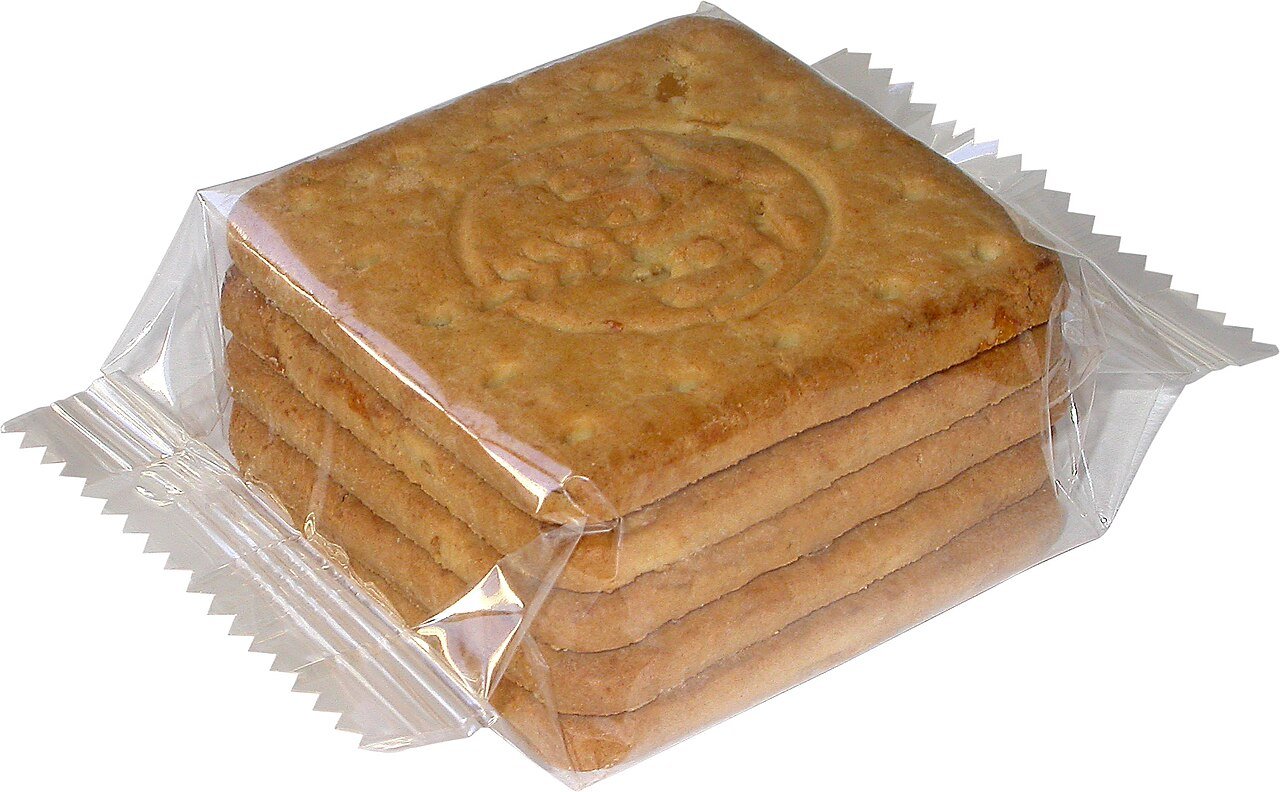
A generic transparent plastic flowpack, not a Babybel product or its new paper pack.
What “recyclable” does—and does not—establish
Koehler says the packaging paper is made from 100% virgin fibre pulp and meets relevant recyclability requirements in Europe and the US. The 100% figure describes the paper’s fibre feedstock; it does not mean the wax-covered cheese or the entire product is 100% paper. Nor does a supplier’s recyclability statement establish that collection and sorting are identical in every market, or that any particular used pack was actually recycled. Consumers still need to check local disposal guidance.
Bel’s stated ambition to move completely to recyclable packaging by 2030 is a future target, not evidence that every Babybel format has already changed. The useful lesson in this example is narrower: a specific outer packaging layer was redesigned while accounting for machinery, sealing and presentation. To assess a packaging transition, keep the changed layer, the supplier’s performance claims and the available end-of-life collection route separate.
References
- Koehler Paper, “Let’s roll, Baby!” — Year 2026 appears in the site path; exact publication day is not stated. First-party material and process account, including the manager’s comments.
- Packaging Europe, “Koehler wraps Babybel two-packs in recyclable paper flowpack” (21 October 2026) — industry reporting, not an independent recyclability test.
About the Author
PackingMaster edits PaperPackLog, covering market developments, products and technical considerations in paper packaging.
Photo credits
- 健ちゃん, generic paper packaging, CC BY-SA 3.0. Resized and JPEG re-encoded.
- Matthew Bellemare, Babybel cheese with red wax peeled open, CC BY-SA 3.0. Resized and JPEG re-encoded.
- Misterziggy, generic plastic flowpack, CC BY-SA 3.0. Resized and JPEG re-encoded.


