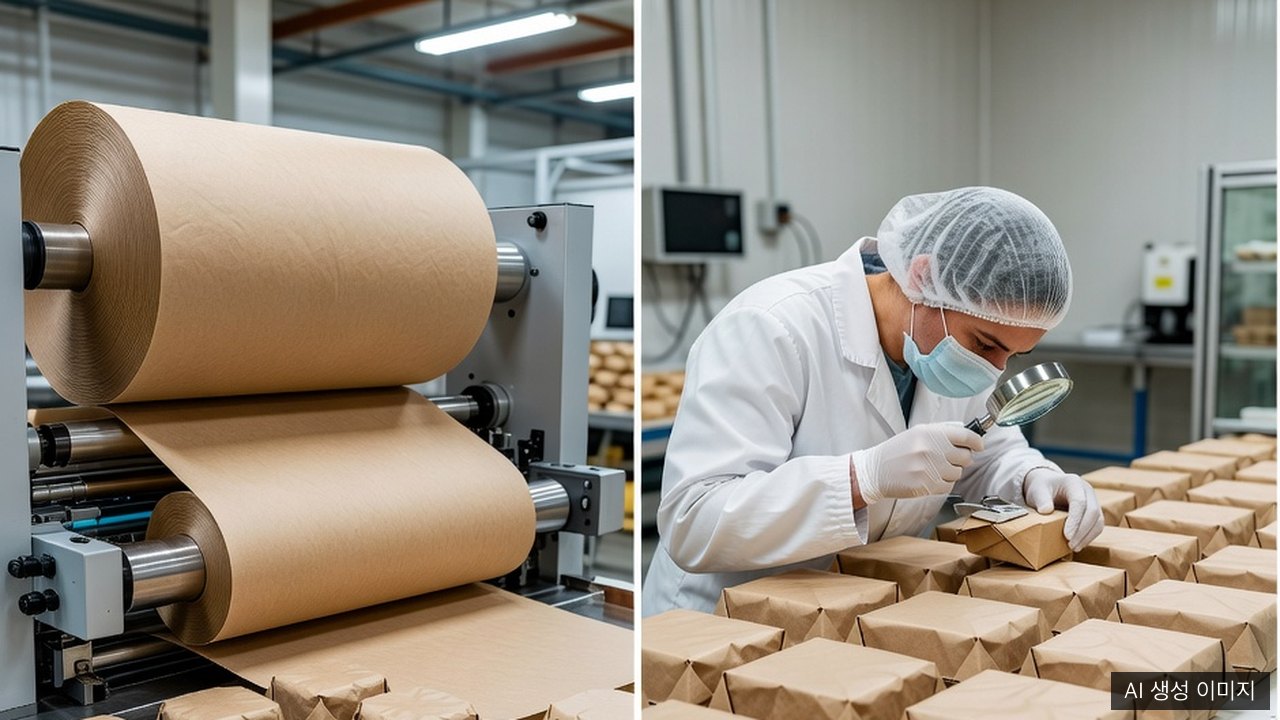
In the food packaging market, paperisation is no longer confined to experiments by a handful of green-leaning brands. As global food brands begin to swap conventional plastic-family packaging for paper-based materials, the bar for paper-packaging suppliers and packaging development teams is also rising.
Bel Group recently announced that it is switching Babybel’s outer packaging from a cellophane-family material to recyclable paper packaging, with plans to extend the change to all 50 markets by 2027. According to the company, commercial launch has started in the UK, with the US, Canada, and the Nordics to follow in 2026. Packaging Dive reports that the transition was an industrialization challenge involving five production sites and high-speed packaging lines, and that oxygen and moisture barrier and consumer openability were reviewed in tandem.
The case matters beyond brand-specific news. A paper transition in food packaging is not “we changed plastic to paper” - it is the simultaneous re-tuning of food safety, packaging line, recyclability, and consumer usability.

Why the Babybel Case Stands Out
Babybel is a small individually packaged product. Consumers carry it in their bags, and it can experience temperature swings and impact in distribution. The red wax layer on the product itself is preserved, but the outer packaging beyond that layer has to perform a separate function to protect the product and keep it hygienic.
Bel Group frames this transition not as a simple material change but as a structural change that went through R&D, factory trials, and live market validation. The company has emphasized that the packaging has to meet product quality, microbial safety, temperature stability, and mass-production performance in the same step.
For companies that handle food-contact or food-near packaging, there are three things to read here:
- The functional layers and coating structure matter more than the paper base on its own.
- Filling and packaging line compatibility is as important as lab performance.
- Recyclability depends more on regional collection and sortation systems and label format than on the material name.
Point One: Food Safety and Barrier
Paper is a familiar material, but it has limits as direct food packaging. Moisture, oxygen, fat, aroma, microbial safety, and migration all have to be considered. Especially for products like cheese, snacks, and confectionery that are sensitive to quality changes in distribution, paper appearance alone cannot be the basis for judgment.
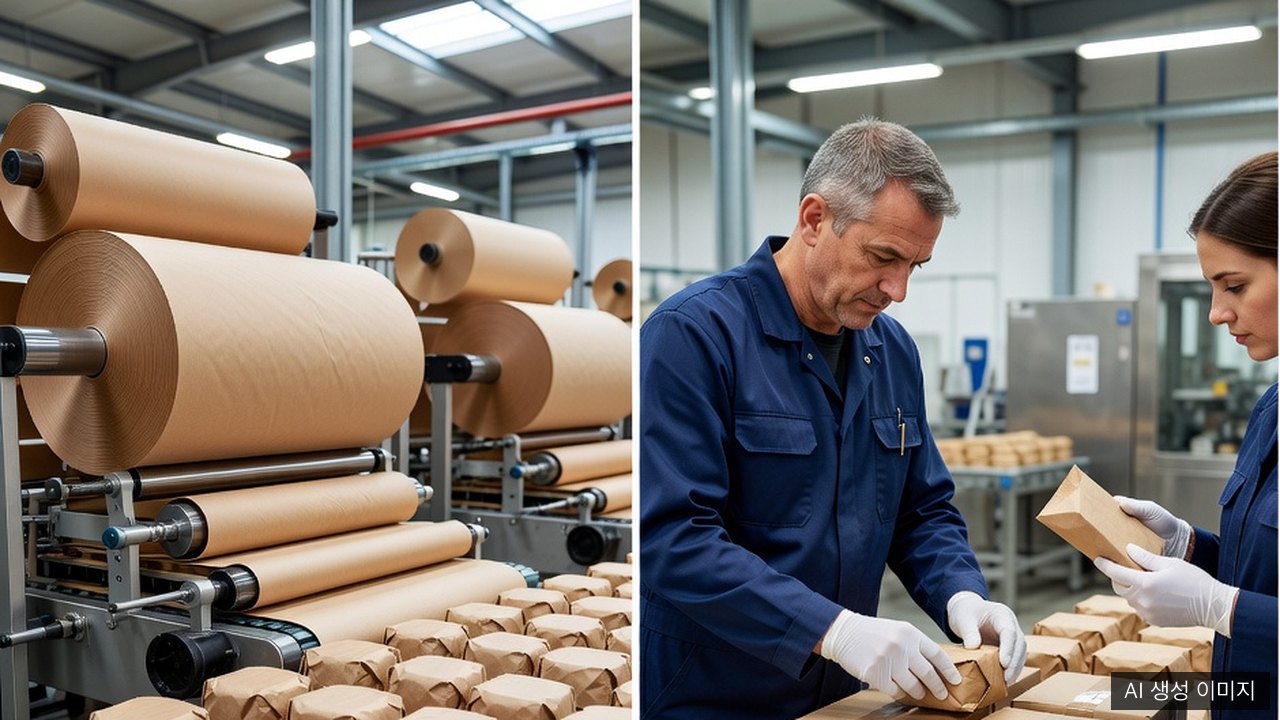
Questions to review:
- Is the surface in direct contact with food paper, or is it a wax, film, or coating layer?
- Does oxygen and moisture barrier meet the level of the previous packaging?
- Are the coating and adhesives compliant with food-contact rules?
- Does the packaging hold up without deforming under refrigerated, ambient, and in-transit storage?
- Is the hygiene and protection the consumer expects maintained until opening?
Even when “paperisation” is used as the label, “paper-based” and “food-contact compliant” have to be checked separately. Even with aqueous coatings or recycling-compatible coatings adopted for recyclability, test data tied to the actual applied food and distribution conditions is required.
Point Two: Line Speed and Processability
The production line is often underestimated in paper-packaging transitions. Even when two packages look the same, plastic film and paper differ in tension, cuttability, fold recovery, friction, static, and sealing conditions.
According to Packaging Dive, Bel needed production-line investment and equipment adjustment to switch to paper material, and some plants had to packed several million units per day stably. This point carries practical implications for Korean packaging converters too.
Supplier and brand have to align the following items:
- Whether existing equipment can cut, feed, and fold the material
- Whether reject rates stay under control without lowering line speed
- Whether curling, wrinkling, or tearing occurs with humidity changes
- Whether dusting or jams occur on high-speed lines
- Whether the package withstands compression, friction, and vibration in transit
A paper transition is not the material team’s job alone. In practice, base stock, coating, printing, conversion, filling equipment, and quality all have to move together.
Point Three: Verifying Recyclability Claims
Paper packaging tends to give consumers a recyclable image. But “looks like paper” and “recycles in the paper stream” are different. Even when the outer package is paper-based, coatings, inks, adhesives, wax, internal functional layers, and contamination can change the assessment in the recycling process.
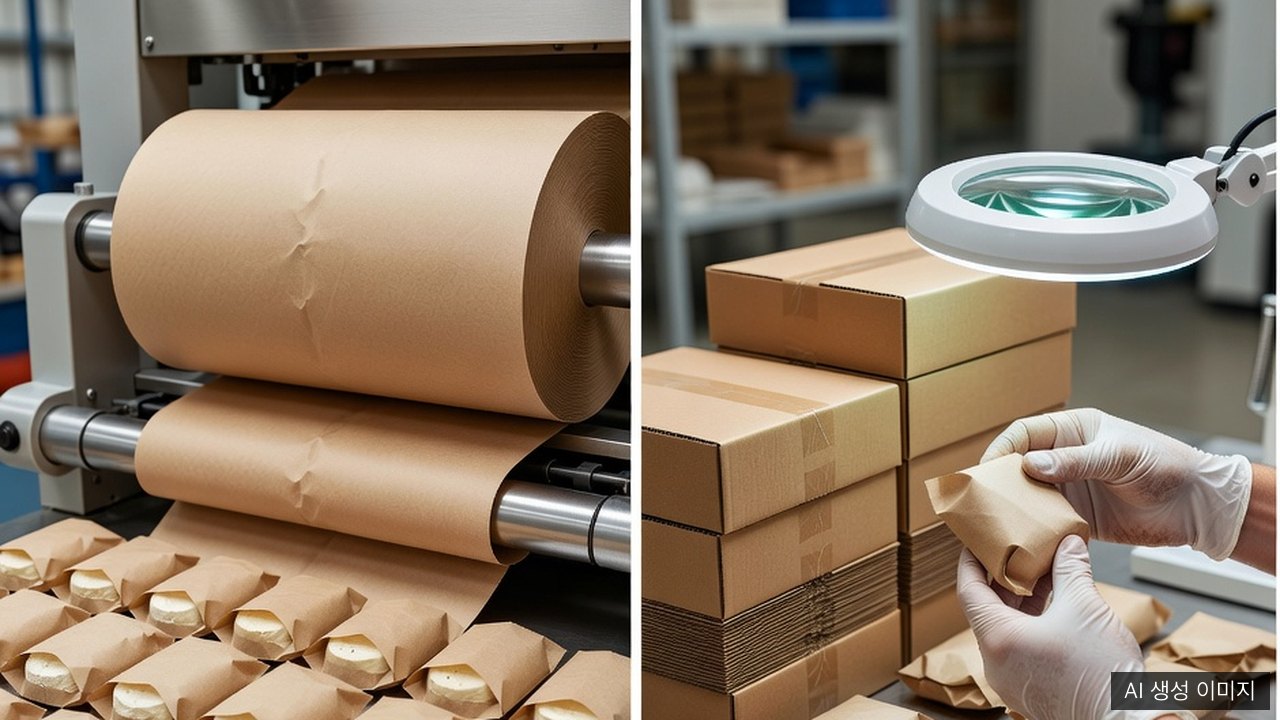
So before recyclability language goes on a package, the following materials are needed:
- Material composition ratio and functional-layer explanation
- Separate-collection and recyclability status by applied market
- Repulping test or recyclability assessment data
- Guidance on how consumers should separate the package
- The effect of printing, coating, and adhesive on the recycling process
For export packaging, country-by-country labeling rules differ. Europe, North America, Korea, and Japan do not share the same separate-collection systems or packaging assessment criteria, so claims that are acceptable in one market can be risky if carried over unchanged to another.
Opportunities for Korean Paper-Packaging Converters
The Babybel case suggests that paper-based materials will be reviewed more broadly in food packaging. For Korean converters, rather than just proposing a paper alternative, it is more effective to lead with the following package:
- Food-contact compliance documents
- Barrier performance testing
- High-speed packaging-line test samples
- Recyclability assessment data
- Export-market labeling and separate-collection guides
- Weight, plastic reduction, and damage-rate comparisons vs. the previous packaging
Customers do not only ask whether paper packaging is environmentally friendly. The real question is closer to “will this packaging protect our product safely, run on our equipment, and survive explanation in the countries where we sell it?”
Conclusion: Paperisation Is a Verification Capability Race
Babybel’s paper-packaging transition is a positive signal for the paper-packaging industry. A major brand is applying paper-based packaging to mass production and global distribution, which points to market direction. At the same time, the bar is now clear. Paperisation in food packaging cannot be justified by material name alone.
Going forward, competitive advantage will likely come from the ability to present food safety documents, barrier design, line compatibility, and recyclability evidence as a single package, not from “we can make it in paper.” Packaging converters should organize verification documents and application conditions before reaching for green messaging. That is what turns a paper-packaging transition from marketing copy into a real industrial shift.
Frequently Asked Questions
Q: If we switch to paper packaging, can we automatically call it eco-friendly?
No. Even a paper-based material’s recyclability depends on coating, adhesives, contamination, and the collection system. The recyclability assessment and labeling rules of the applied market have to be checked separately.
Q: What should be checked first when reviewing paper materials for food packaging?
Food-contact compliance documents, barrier performance, recommended use conditions, material composition, and recyclability assessment data should be checked first.
Q: What can Korean packaging converters differentiate on?
Rather than proposing only base stock, presenting test certificates, line tests, export-market labeling standards, and reduction effects vs. the existing packaging together makes the case much more convincing to B2B customers.
About the Author
PackingMaster: Editor of PaperPackLog. Curates and organizes market trends, product information, and technical insights for the paper-packaging industry.