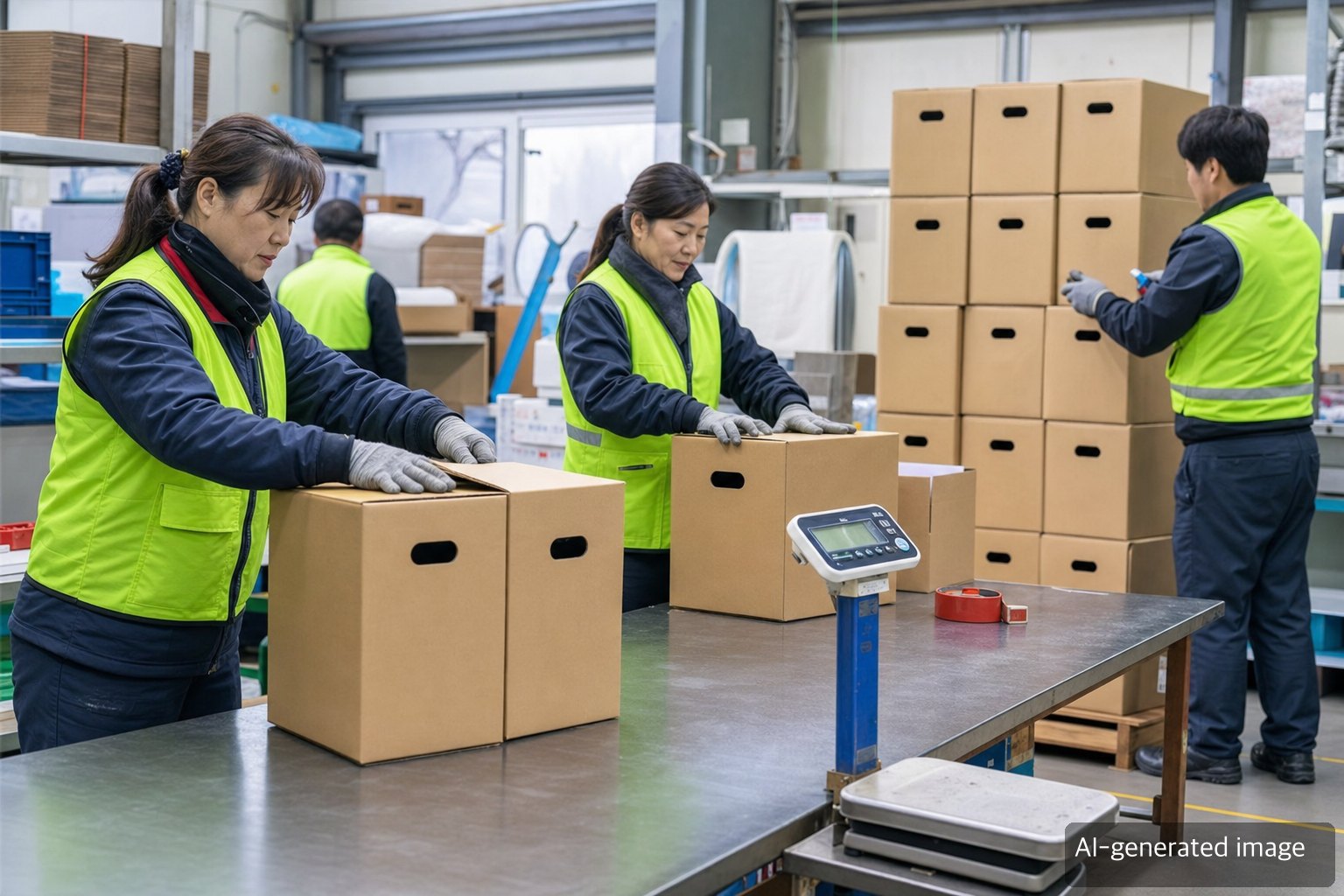
When the same box is lifted hundreds of times a day, small discomfort becomes fatigue, handling damage, and eventually a quality issue. Packaging and logistics teams should not stop at the vague phrase “make the box stronger.” They need to decide when two-person handling is required, where handles should be placed, and when an exception box must be stopped. This article provides a practical work-standard template for box weight and handle design.
OSHA describes ergonomics as improving job tasks and workplace conditions to reduce musculoskeletal strain. KOSHA also provides guidance on managing musculoskeletal-burden tasks. In a packaging operation, those principles need to become concrete rules for box weight, handle structure, worktable height, repetition, and exception reporting.
How box specifications become worker fatigue
A box that breaks is not the only packaging quality problem. A box that is too heavy, has no secure grip, or forces the operator to twist the wrist is also a quality problem. Workers may lift from awkward angles, stretch their arms, bend at the waist, and repeat the same motion under time pressure.
If the packaging specification does not include the following items, each shift may judge the work differently.
- total weight of one packed box
- whether one-person handling is allowed
- handle or die-cut grip position
- lifting direction and stacking direction
- worktable and pallet height
- rest or rotation rules for repetitive handling
- exception labels and line-stop criteria
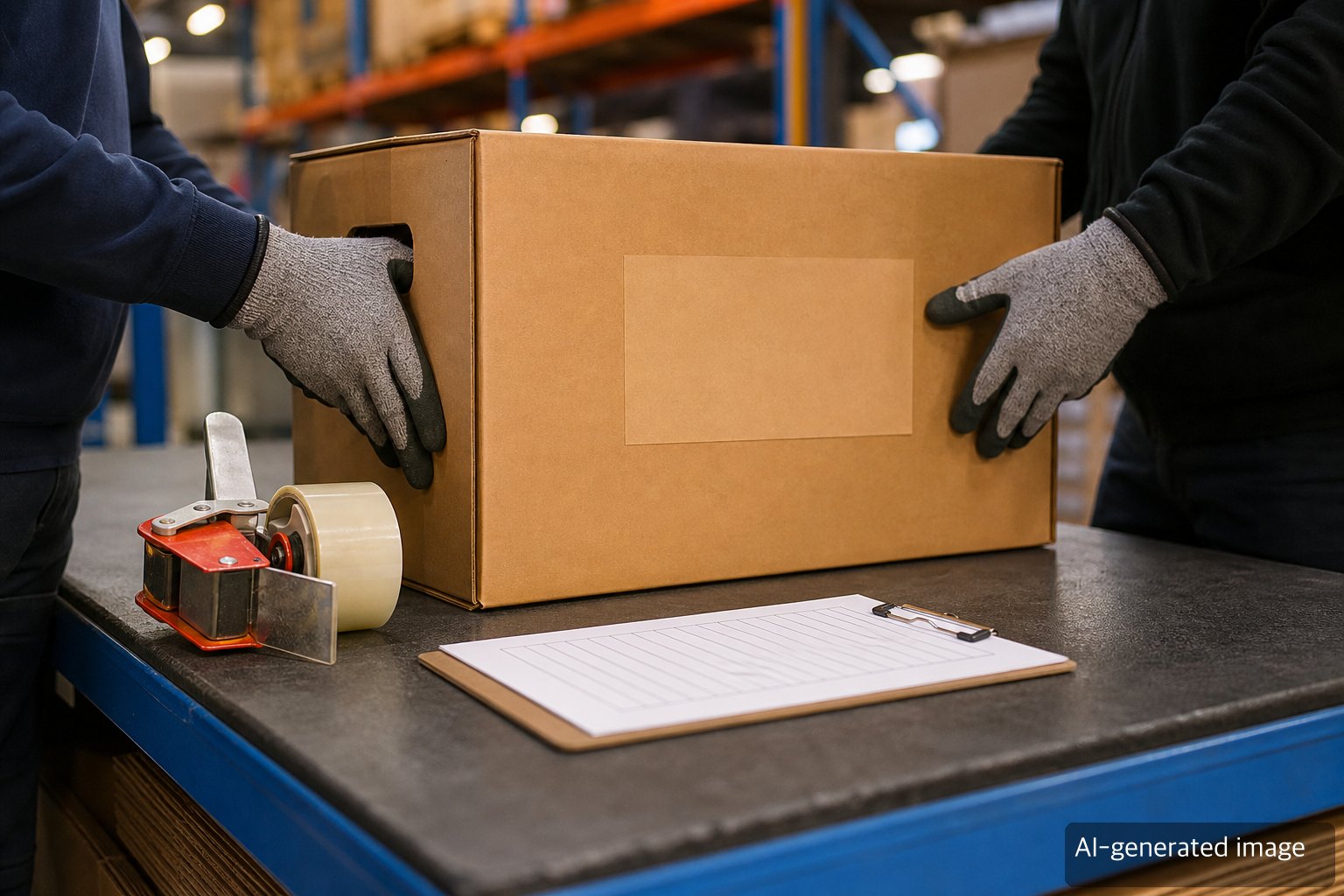
Six criteria to put in the work standard first
The table below is not a universal legal limit. It is a draft format that packaging and logistics teams can adapt after checking actual box weight, box size, handling frequency, worktable height, workforce, and transport conditions.
| Item | Input value | Judgment question | Action standard |
|---|---|---|---|
| Total box weight | Product + inner pack + outer box, kg | Can the worker handle it repeatedly as a one-person task? | If it exceeds the internal limit, specify two-person handling, cart use, or split packing. |
| Handle position | Side, top, or none | Does the handle match the actual lifting direction? | If the wrist bends, change handle position or mark the non-handle face as a no-lift side. |
| Handle strength | Sample lift result | Does the die-cut handle tear? | If tearing occurs, reinforce, change cutout size, or switch to two-person handling. |
| Worktable height | Floor to tabletop, mm | Does the motion cause repeated bending or shoulder elevation? | Adjust table or pallet height, or use a lift aid for heavy boxes. |
| Repetition | Boxes per hour | Is the same motion repeated intensively? | Define rotation, rest, or assist-tool rules in the standard. |
| Exception condition | Wet, torn, overweight, unlabeled | Does the worker have authority to stop the box? | Apply exception label, isolate, and block shipment until the responsible person confirms. |
The point is not “workers should be careful.” The box specification and the handling condition must be written down so that the same decision is made even when the operator changes.
Weight limits need a judgment method, not just a number
The riskiest approach is to invent a single number and declare that everything below it is safe. Handling difficulty is not determined by weight alone. Box size, handle availability, center of gravity, floor condition, lifting height, repetition, and worker posture all matter.
A work standard should therefore include judgment statements such as:
- Record total packed weight by adding product, inner packaging, and outer box weight.
- If the box exceeds the internal limit or cannot be lifted without bending, switch to two-person handling or cart use.
- Even a light box should be treated as a two-person task if it blocks visibility or forces the arms to spread too widely.
- Wet, chilled, rainy, or long-waiting shipment conditions should have separate exception criteria because box strength may decrease.
- For a new box, at least two workers should test the actual handling motion before first production approval.
This creates a stop rule without pretending that one public number fits every workplace. Specific kilogram values should be approved internally based on actual tests, safety rules, and customer handling conditions.
Handles are about location and direction, not just presence
A die-cut handle can reduce fatigue, but a poorly placed handle can create new problems. If it is too low, the wrist may twist. If it is too high, the box may tilt. If it overlaps a label, barcode, or printed face, workers may be confused about which side to grip.
Use the following sequence when checking handle specifications.
- Check how the box is actually placed on the worktable.
- Observe or record which face workers naturally grip.
- Test whether the handle area tears under actual product weight and humidity conditions.
- Check whether handles interfere with pallet wrap, labels, and barcode scanning after stacking.
- For boxes without handles, mark the gripping face, two-person positions, and cart-use condition separately.
A box handle is not a visual design detail. It is part of the operating procedure. A purchasing request should not simply say “with handle”; it should specify location, size, reinforcement, use direction, and restricted faces.
Work-standard template for the shop floor
The wording below can be copied into a packaging work standard. Replace values and responsible roles with site-specific information.
| Section | Draft standard wording | Owner | Stop trigger |
|---|---|---|---|
| First sample check | For a new box, load the actual product and move it from worktable to pallet to loading point before approval. | Packaging and logistics | Handle tearing, box tilting, or repeated bending during sample movement |
| Weight marking | Boxes above the internal limit must carry an exception label and be assigned to two-person handling or cart use. | Production and packaging | Missing weight, mismatch between actual and marked weight, unstable one-person handling |
| Handle use | Handled boxes must be gripped only in the specified direction; workers must not force-lift from a non-handle face. | Operators | Direction mismatch, torn handle, wet box |
| Two-person handling | Large boxes that block visibility or require excessive arm spread must be handled by two people regardless of weight. | Logistics | One operator cannot maintain visibility and stable posture |
| Repetitive work | During concentrated handling periods, the supervisor assigns rotation, rest, or assist-tool use. | Worksite supervisor | Sudden rise in boxes per hour, pain report, rushed loading due to delay |
| Exception isolation | Wet, torn, overweight, or unlabeled boxes are removed from the shipping line until confirmed. | Quality and logistics | Surface damage, handle damage, missing label, suspected overweight condition |
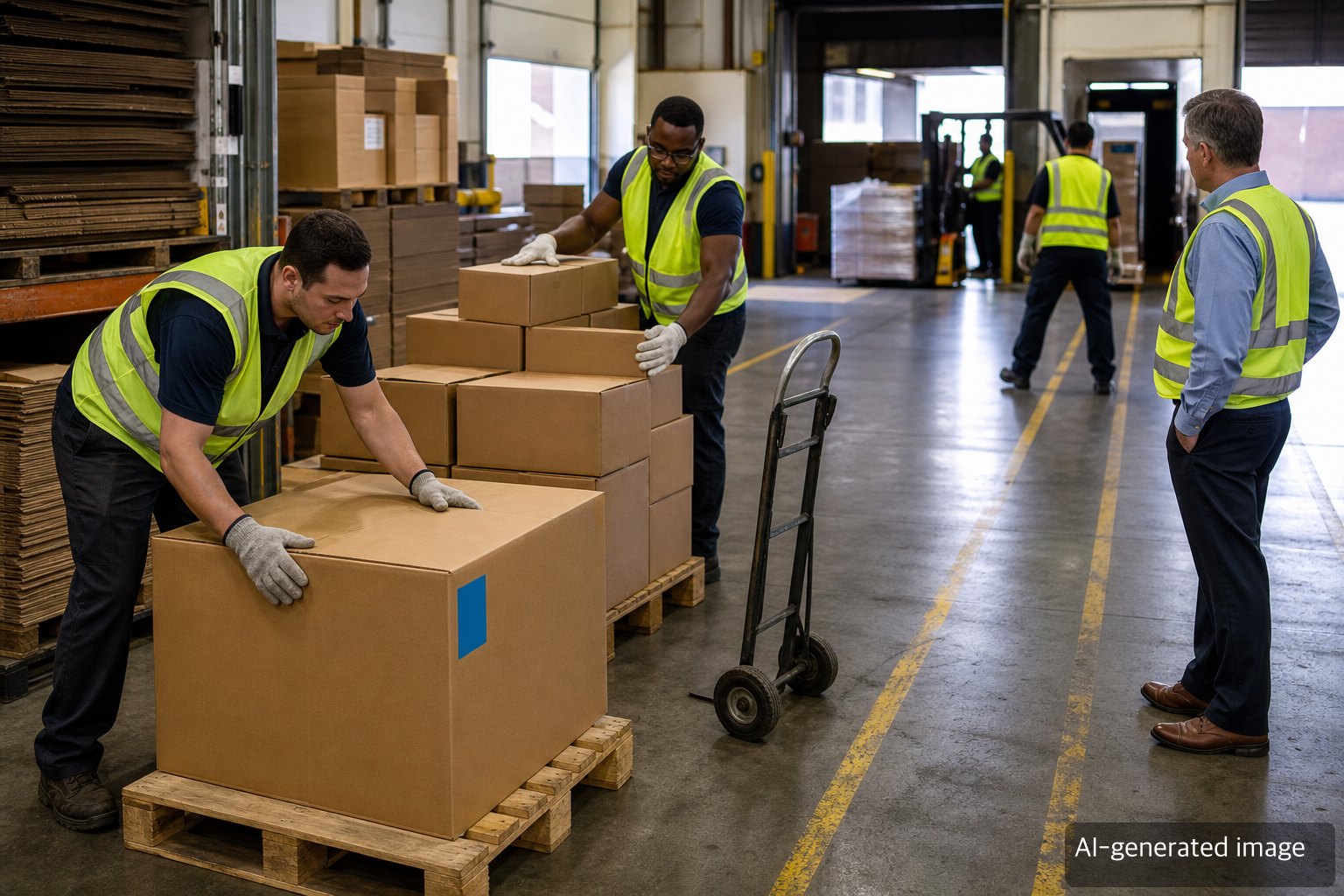
What purchasing, production, and logistics should check separately
A box standard that reduces fatigue is not only a safety-team document. The teams that buy, pack, and ship the box must use the same standard.
Purchasing should include total box weight, handle need, cutout position, expected handling frequency, stacking method, and humidity conditions in the RFQ. The packaging supplier should be asked to confirm handle reinforcement, tear risk, and sample-test conditions.
Production and packaging should test first samples with the actual product inside. Folding an empty box is not enough. The team should load the product, seal the box, move it from worktable to pallet, and stack it in the specified direction.
Logistics should reflect loading and unloading conditions. A box that works inside the warehouse may still be risky if the vehicle loading height, forklift route, cart availability, or rainy waiting time changes the handling condition.
When the draft should not be finalized
This work standard needs real site values. If the following information is missing, keep the document as a draft instead of treating it as a final rule.
- actual total weight of one packed box
- handling frequency per hour or per shift
- worktable and pallet height
- handle position and cutout sample size
- actual direction in which workers lift the box
- wet, chilled, long-distance, or strength-reducing conditions
- availability of two-person handling or carts
Worktable height and repetition are especially important. The same 10 kg box can create very different strain depending on whether it is moved a short distance at waist height or lifted from the floor into a vehicle.
Documents and samples to check today
The first step is simple. Record the total weight of the three most frequently handled box types. Photograph the side that workers actually grip and compare it with the handle position. Then move a sample box from worktable to pallet and define the rules for two-person handling, cart use, and exception isolation.
A packaging specification protects the product, but it also protects the operator. When box weight and handle rules are written into the work standard, the workplace can stop earlier and restart more safely.
About the Author
PackingMaster: Editor of Paper Pack Log. We collect and organize market trends, product information, and technical insights for the paper packaging industry.
References
- Background — OSHA, Ergonomics: https://www.osha.gov/ergonomics