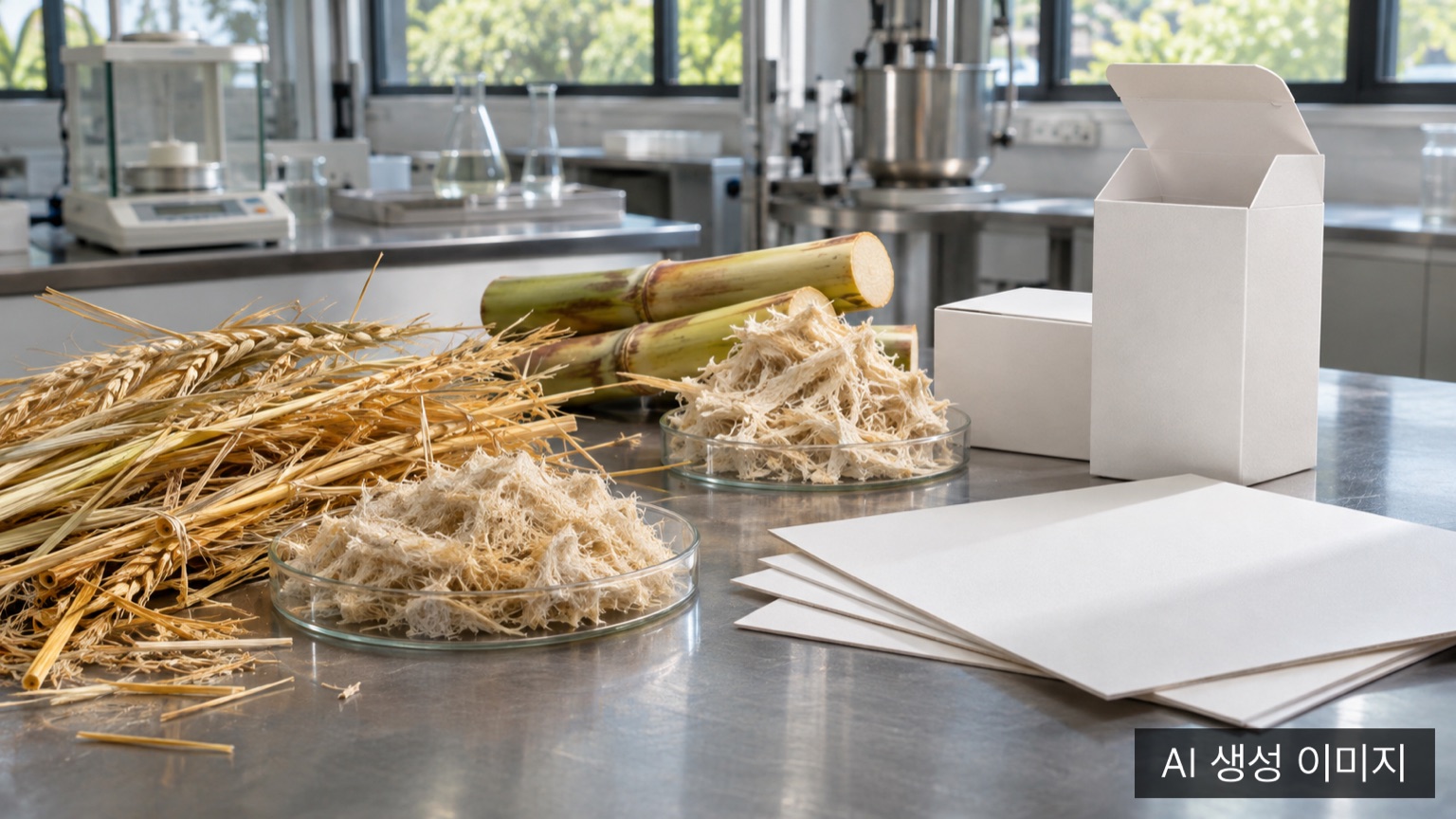
Canopy’s November 2026 white paper presents a preliminary economic model for using agricultural-residue pulp, including wheat straw and sugarcane bagasse, in folding boxboard (FBB). It models an illustrative relationship between a buyer and an integrated Chinese pulp-and-board mill. It is not a Korean mill quotation or a production-quality certificate.
The field problem
An attractive fibre story does not settle machine runnability, board stiffness, print surface or delivered price. Canopy uses a demanding three-layer FBB grade with bright surfaces and a strong middle layer. In its current case, the alternative pulp is limited to the middle layer with a 10% technical ceiling. That is a model assumption for the grade studied, not a universal limit for all folding carton board.
Evidence to check
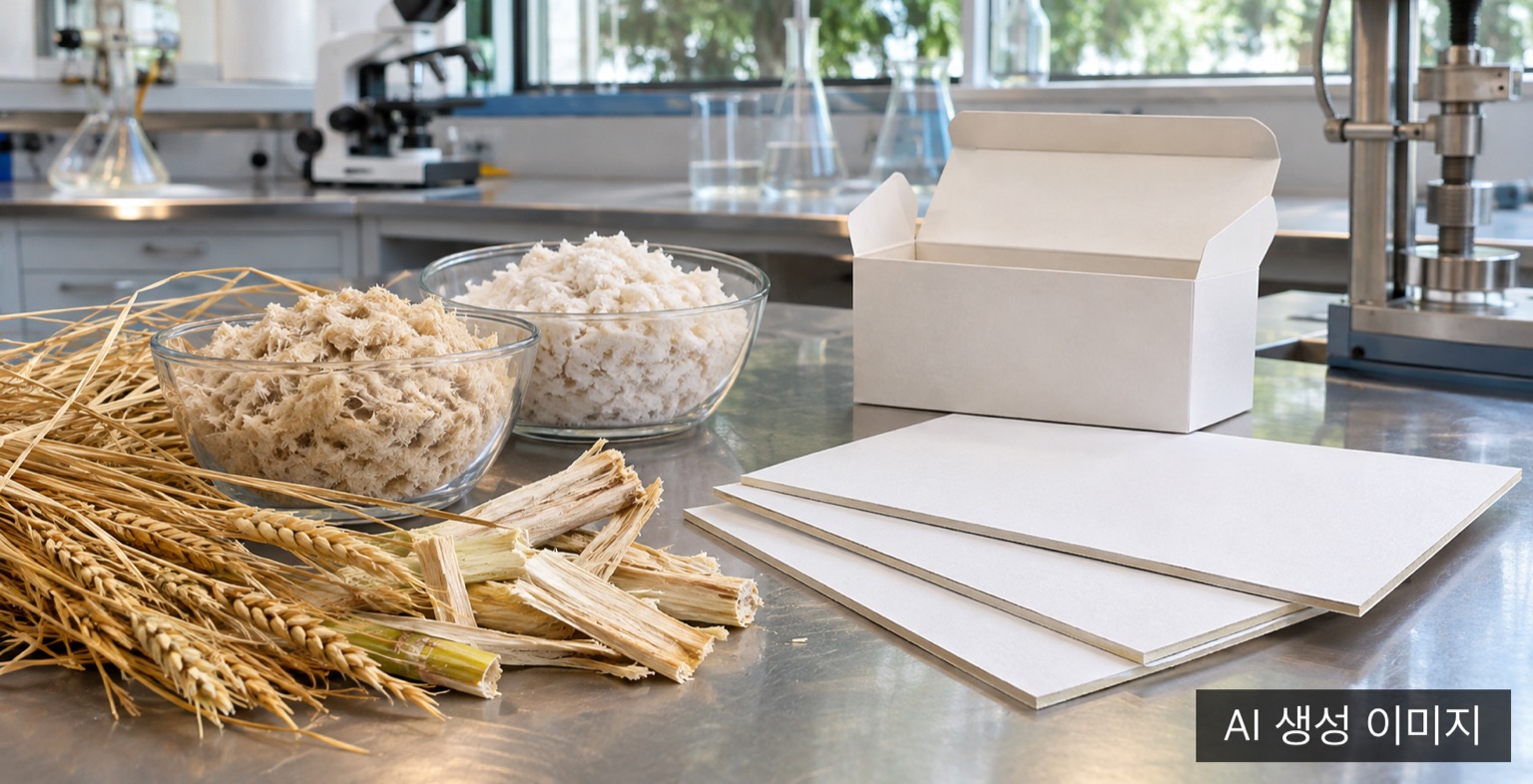
At an assumed delivered price of roughly US$345–380 per air-dried tonne, the model finds an average optimal inclusion near 8% in 2028. A scenario in which quality and process improvements permit use in more layers raises the modelled supported price to US$460–595/ADt. Both ranges are model outputs, not current mill quotes. A Korean landed-cost calculation still needs supplier terms, moisture basis, freight, duties, exchange rate, yield and process-adjustment costs.
| Topic | Canopy model | Site evidence needed |
|---|---|---|
| Feedstock | Straw, bagasse and other residues | Supplier, pretreatment, moisture, contaminants |
| Furnish | Middle layer, up to 10% in the studied grade | Layer compatibility, bulk and stiffness |
| Economics | Risk-adjusted assumed prices | Contract, transport, yield and reject costs |
Practical deliverable
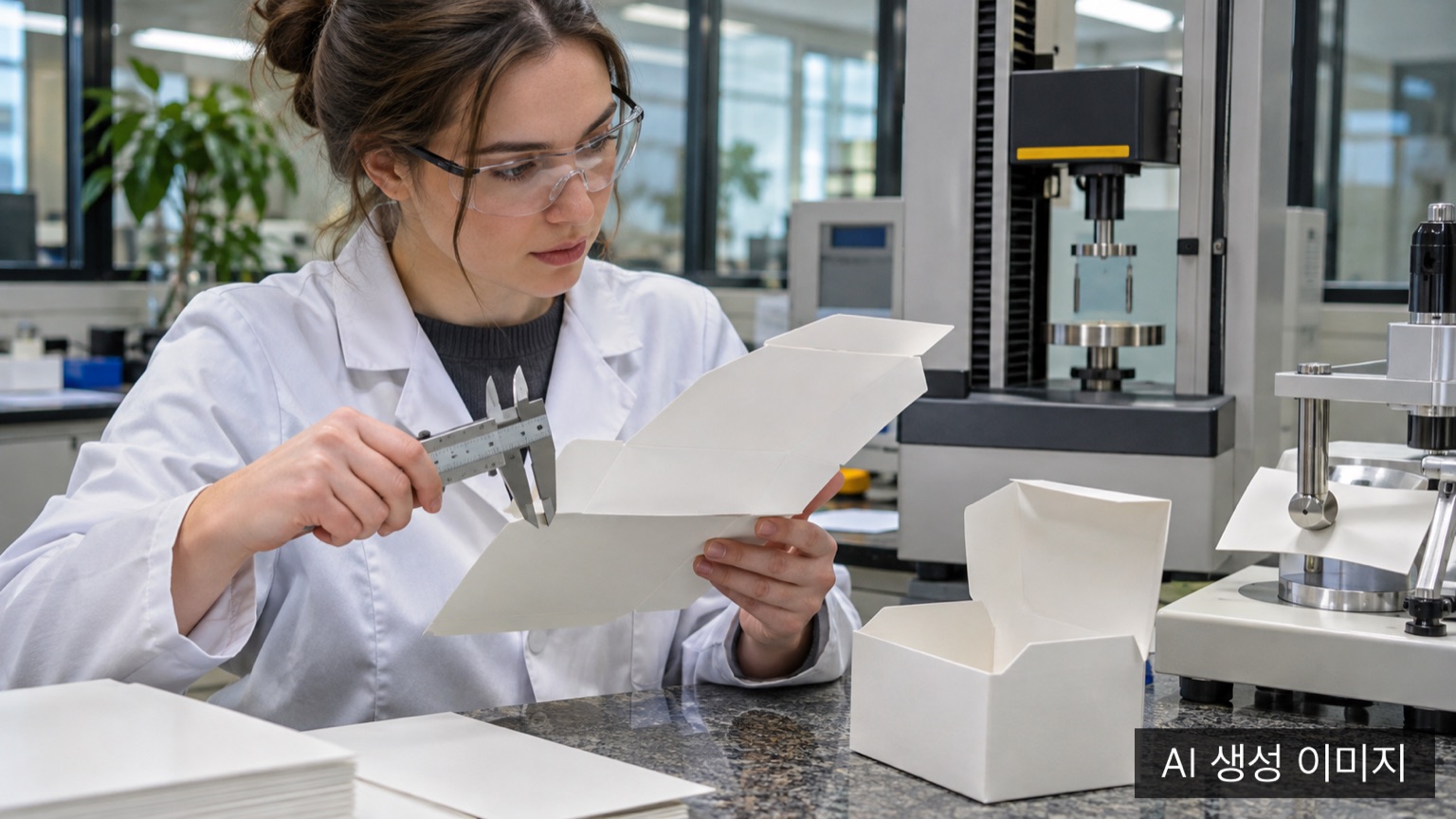
Connect supplier quote, trial furnish, converting performance and finished-board properties in one evaluation sheet. Check bulk and bending stiffness at comparable basis weight, printability, fold cracking, moisture response and contamination. Food-contact suitability, where relevant, needs its own application-specific evidence. Set acceptance criteria from the intended carton and customer specification.
When to hold application
Canopy explicitly says it will continue validating the model’s technical, economic and environmental assumptions. Do not cite its price bands as live market prices or claim Korean commercial readiness, certification or achieved environmental benefit. Hold procurement approval pending real quotations and papermaking and converting trials.
Difference from earlier coverage
Unlike an earlier performance test of straw-based printing paper, this brief addresses model assumptions for the middle layer of folding boxboard and quote validation.
About the Author
PackingMaster: Editor of PaperPackLog. Covers market trends, product insights, and technology in the paper packaging industry.
References
- Canopy, Next Gen Fibre in Consumer Paperboard, 5 November 2026.
- Canopy, Agricultural-residue pulp modelling announcement, 9 November 2026.
Sources checked 16 November 2026. Price and furnish figures are preliminary model outputs, not Korean operating data.