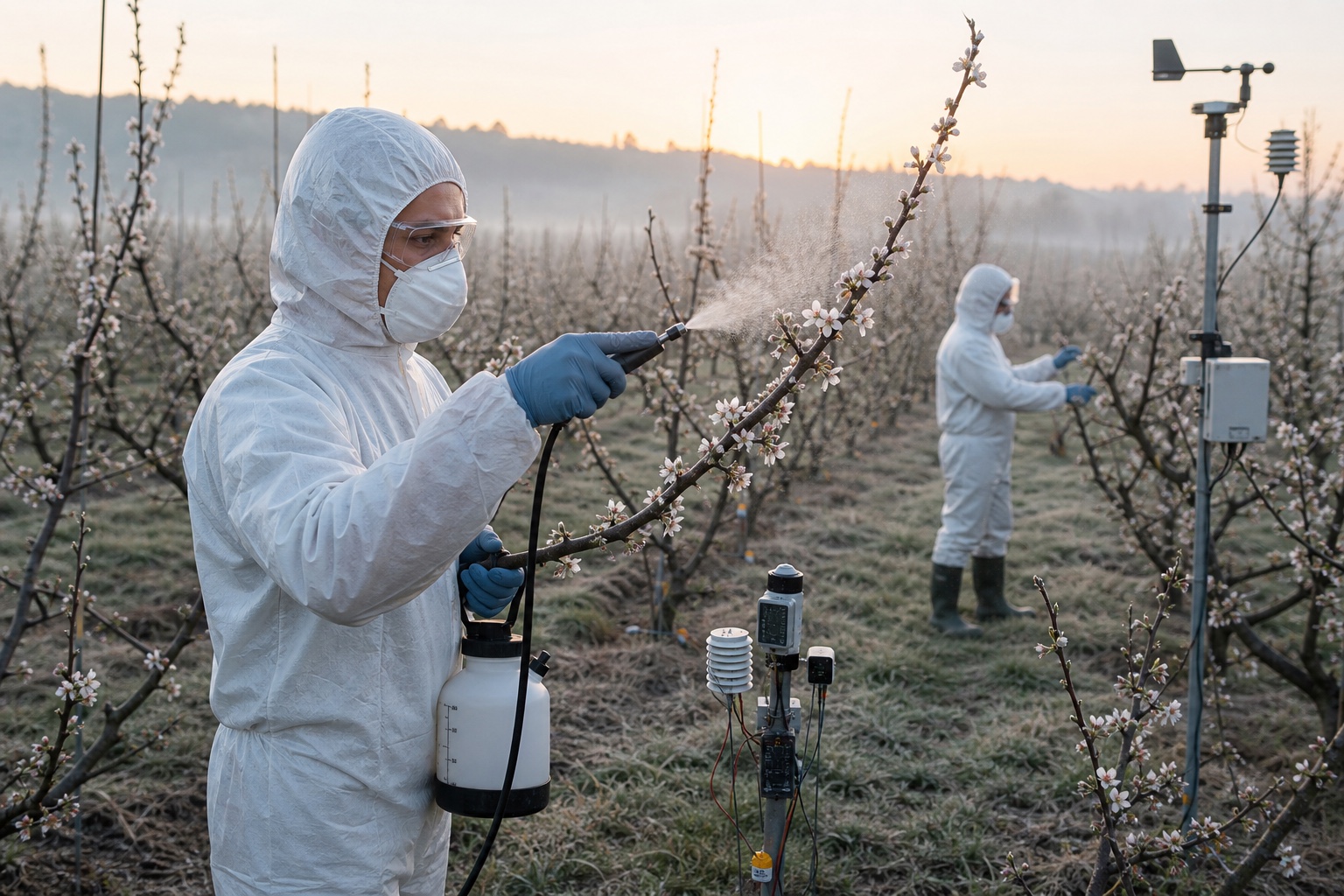
If a development team copies “nanocellulose” and “up to 20%” from a news article into a commercial specification, it can approve a technology that is still under development and awaiting field validation as though it were a finished product. Materials and agricultural-validation teams must separate the cellulose scope confirmed by the official cooperation announcement from the secondary article’s CNF explanation, then assess efficacy, field use, and production preparation stage by stage. The copy-ready four-stage development record below connects test design, raw data, field lots, and manufacturing specifications to a go-or-hold decision.
The Starting Point Confirmed by the Official Source
Korea’s National Institute of Horticultural and Herbal Science announced on July 23, 2026 that it had signed an MOU on July 21 with Moorim P&P and Gyeongsang National University. The official release confirms the following points.
- The three organizations will cooperate on field-oriented technology to address low-temperature damage to horticultural crops, including fruit trees, and on building a foundation for industrialization.
- The institute will review the applicability of cellulose-based technology to horticultural crops and pursue field demonstration and technology deployment.
- A cellulose-based freeze protectant is being developed to reduce freezing damage to flower buds around bloom, with further work planned to improve field applicability.
- Moorim P&P is responsible for agricultural material development and finished-product manufacturing, quality stabilization, and a mass-production and supply system.
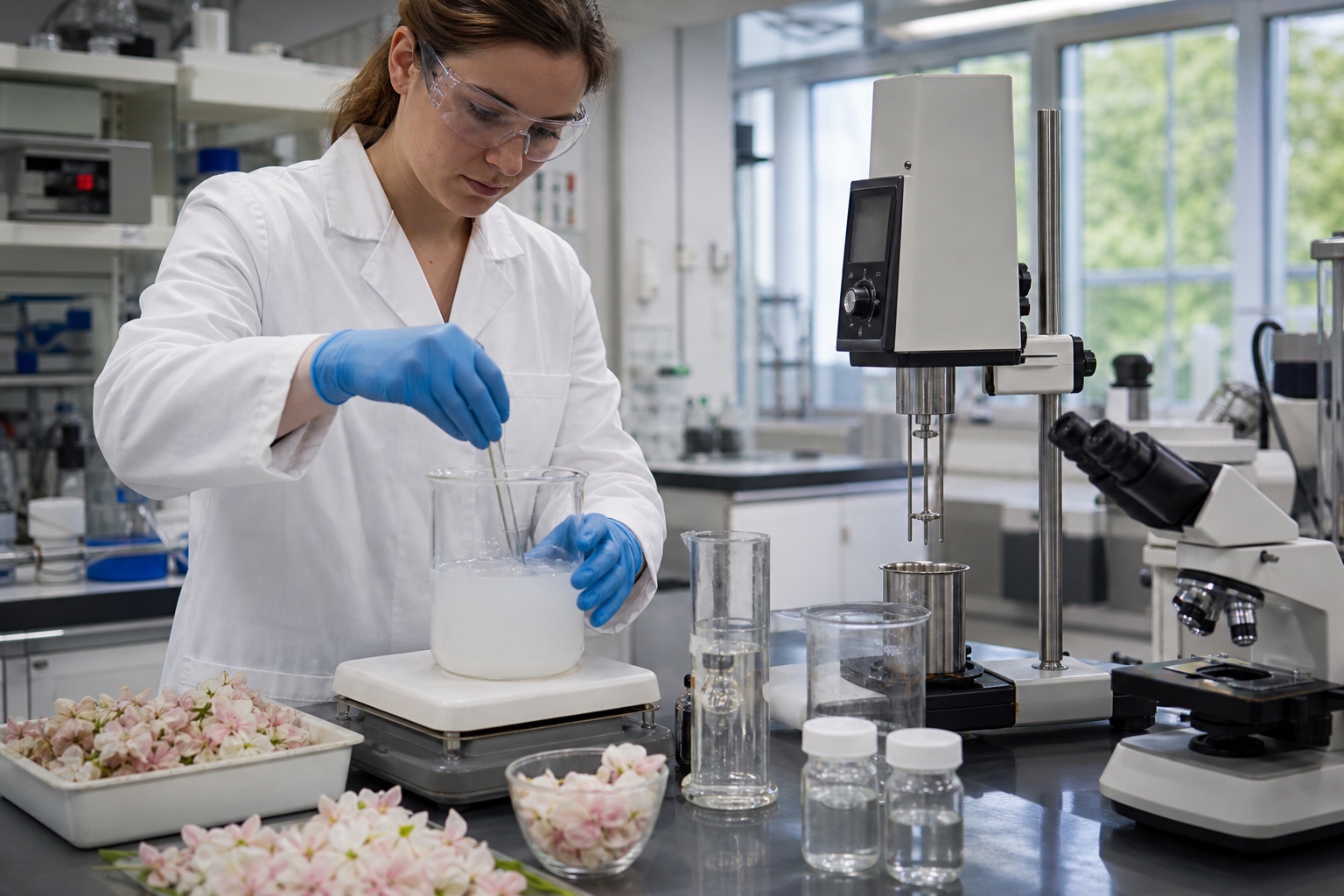
- Gyeongsang National University is responsible for verifying damage-mitigation effects and analyzing the mechanism.
- The organizations plan phased cooperation on selecting low-cost cellulose materials, developing a mixed finished product, and pursuing technology transfer.
The operative words are “review,” “developing,” “pursue,” and “build.” The official release does not announce completed field validation, commercial sales, fixed treatment concentration or spray rate, or a crop-specific efficacy result.
How Far Can “Nanocellulose” and “20%” Be Used?
A Bizwatch article published on July 26, 2026 describes the candidate material as CNF-based nanocellulose and reports a company estimate that low-temperature damage could be reduced by up to 20% if commercialized. The article helps explain the candidate direction, but it is a secondary source that adds detail beyond the official release.
This draft therefore applies the following boundaries.
| Wording | Source status | Treatment in this draft |
|---|---|---|
| Cellulose-based freeze-protectant development | Directly confirmed by the official release | Used as the core fact |
| CNF or nanocellulose | Specified by Bizwatch; absent from the official release | Excluded from the title and fixed specification; background only |
| Up to 20% reduction in low-temperature damage | Reported by Bizwatch as a company estimate | Not used as field performance or guaranteed efficacy |
| No concern about pesticide residue or soil contamination | No supporting test result in the official source | Not used as a confirmed safety claim |
| Field validation or commercialization completed | Not confirmed by either source | Completion wording prohibited |
Before CNF is entered as the material identity in a specification, the team should confirm material name, form, content, and lot through an official supplier TDS, formulation record, or development document. A news explanation cannot lock the raw-material specification.
Four Stages from Pulp Material to Orchard Use
The four stages below are not official milestone names announced by the institutions. They are an editorially proposed development roadmap reconstructed from the roles and plans in the official release. Pass criteria must be agreed in advance for the test owner, crop, and field conditions.
Stage 1: Lock the Material and Mixture
Narrow the broad term “cellulose” to a testable material. The supplier file should identify the raw-material name, process category, solids, particle or fibril form, additives, viscosity, pH, storage conditions, and manufacturing lot. Whether the material is CNF should also be established from an official document at this stage.
Stage 2: Verify Efficacy and Mechanism
Lock the cold-treatment profile, bloom stage, untreated control, incumbent-treatment control, replication, and injury assessment method in the protocol. Connect results to raw data, image IDs, temperature history, application quantity, and observation time rather than reporting only one average. Even when an effect appears, do not broaden field-use conditions until mechanism and reproducibility have been assessed.
Stage 3: Establish Orchard Applicability
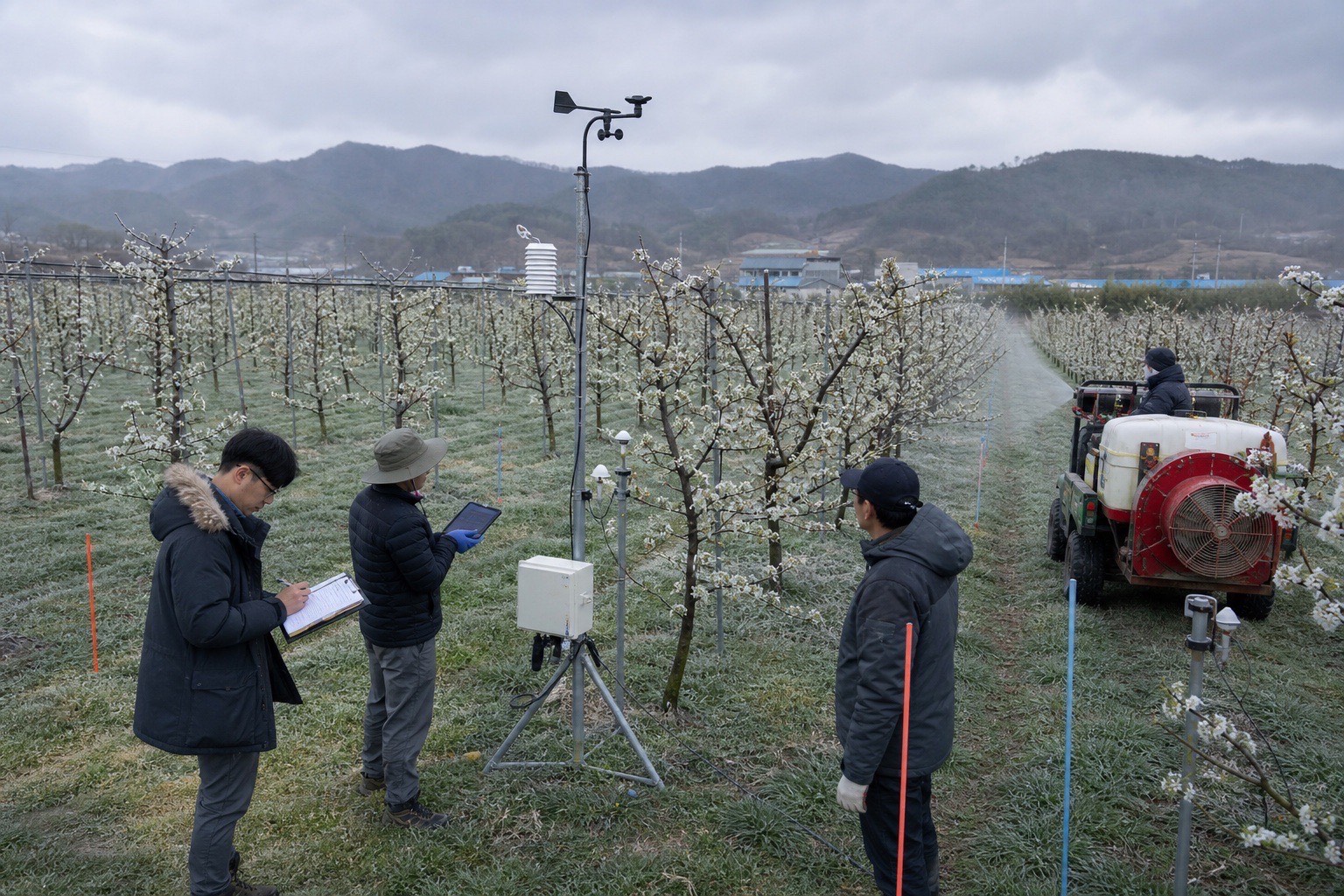
Move from controlled conditions to the actual cultivar, bloom stage, weather, spray equipment, and operating window. Record spray uniformity, persistence after rain or wind, phytotoxicity observations, flower-bud survival and subsequent fruit-set observations, operator handling, and conflicts with the existing crop-protection schedule. Do not invent a concentration or application frequency absent from the public source; use only values approved by the test owner.
Stage 4: Connect Quality Stabilization to Production and Supply
Once a field-candidate formulation is selected, document raw-material lot variation, mixing uniformity, storage stability, packaging and transport, sprayer compatibility, release inspection, supply planning, and the technology-transfer scope. An announced responsibility for mass production is not the same as approved commercial-production readiness. Do not declare commercialization complete without process-capability and field-reproducibility evidence.
Copy-Ready Four-Stage Development Record
| Stage | Input fields | Evidence to check | Current public status | Decision for the next stage | Owner, action, and trigger |
|---|---|---|---|---|---|
| 1. Material and mixture | Material name, CNF status, solids, additives, viscosity/pH, lot, storage | Supplier TDS, formulation, COA, mixing-batch record | Plans for cellulose selection and finished-product development confirmed | Test approval only after identity and batch reproducibility are documented | Materials owner obtains the official specification; retrigger protocol approval after any raw-material or formulation change |
| 2. Efficacy and mechanism | Crop/cultivar, bloom stage, cold profile, treatment/control, replication, injury method | Protocol, temperature log, image IDs, raw data, statistical analysis | University role for efficacy and mechanism confirmed | Field candidate only after controls and raw data meet the pre-agreed decision rule | Study lead closes missing logs and holds field testing if the decision rule is not fixed |
| 3. Field applicability | Orchard, weather, sprayer, application quantity, work time, rain/wind, phytotoxicity, bud and fruit-set observations | Field protocol, sprayer calibration, plot-to-lot linkage, weather log, observation sheet | Only a plan to pursue field demonstration is confirmed | Broader use review only after field raw data and adverse observations are captured | Field owner segregates and traces treated plots; stop expansion after phytotoxicity or nonuniform spraying |
| 4. Quality, production, and supply | Raw-material range, mixing uniformity, shelf life, packaging, release tests, capacity, transfer version | Pilot-batch record, stability data, QC specification, supply and technology-transfer documents | Plans for quality stabilization and mass-production/supply systems confirmed | Commercial-readiness decision only when pilot and field results reproduce under the same specification | Production and quality review lot variation; hold commercial transfer if the specification and field data diverge |
Separate Responsibilities by Role
Materials and production should lock the cellulose raw material and mixed-product specification and reassess the validity of test results whenever a development lot changes. A material name in a news article must not outrank the supplier’s official specification.
University and research teams should connect not only effect size but also controls, temperature history, bloom stage, application quantity, replication, and observation method to raw data. One “maximum” outcome must not become a representative or guaranteed value.
Field-validation teams should link spraying, weather, phytotoxicity, bud survival, and fruit-set observation under one test ID. General farm deployment and participation in a controlled trial must remain separate while efficacy is unresolved.
Business development and technology transfer should document the transferred specification, data version, responsibility boundary, and supply status. Signing an MOU must not be described as a sales approval or launch of commercial supply.
Conditions That Require a Hold
Hold progression to the next stage when any of the following applies:
- CNF or nanocellulose identity and the raw-material specification are not confirmed in an official supplier document
- The treatment, control, bloom stage, cold history, or application amount is not linked to the test ID
- The “up to 20%” estimate is being converted into a field result without supporting raw data
- Only controlled-environment results exist and the formulation has not been reproduced under orchard weather, spray-equipment, and work conditions
- A claim of “no environmental concern” is being made without required data on phytotoxicity, residue, soil, or water impacts
- The pilot batch and field-test material do not have the same raw-material and mixture specification
- Plans for technology transfer, mass production, or supply are being described as completed commercialization
Documents, Samples, and Tests to Check Today
- Document: The official July 23 release, supplier TDS/formulation/COA, and a protocol defining institutional roles and data ownership
- Sample: A traceable chain from the raw-material lot to the mixed batch and field-spray sample
- Test: An efficacy study with controls and a cold profile, followed by an applicability test using the actual spray equipment
- Hold rule: If material identity, raw test data, field lot, or production specification is disconnected, hold entry to the next stage.
The agreement shows a route for a pulp producer’s material capability to expand into an agricultural product. The officially confirmed status, however, is a program pursuing cellulose selection, freeze-protectant development, efficacy and mechanism verification, field demonstration, quality stabilization, and a supply system. Until an official material specification and field raw data are available, “nanocellulose” and the expected effect should remain background information and verification questions rather than commercial claims.
About the Author
PackingMaster: Editor of Paper Pack Log. We collect and organize market trends, product information, and technical insights for the paper packaging industry.