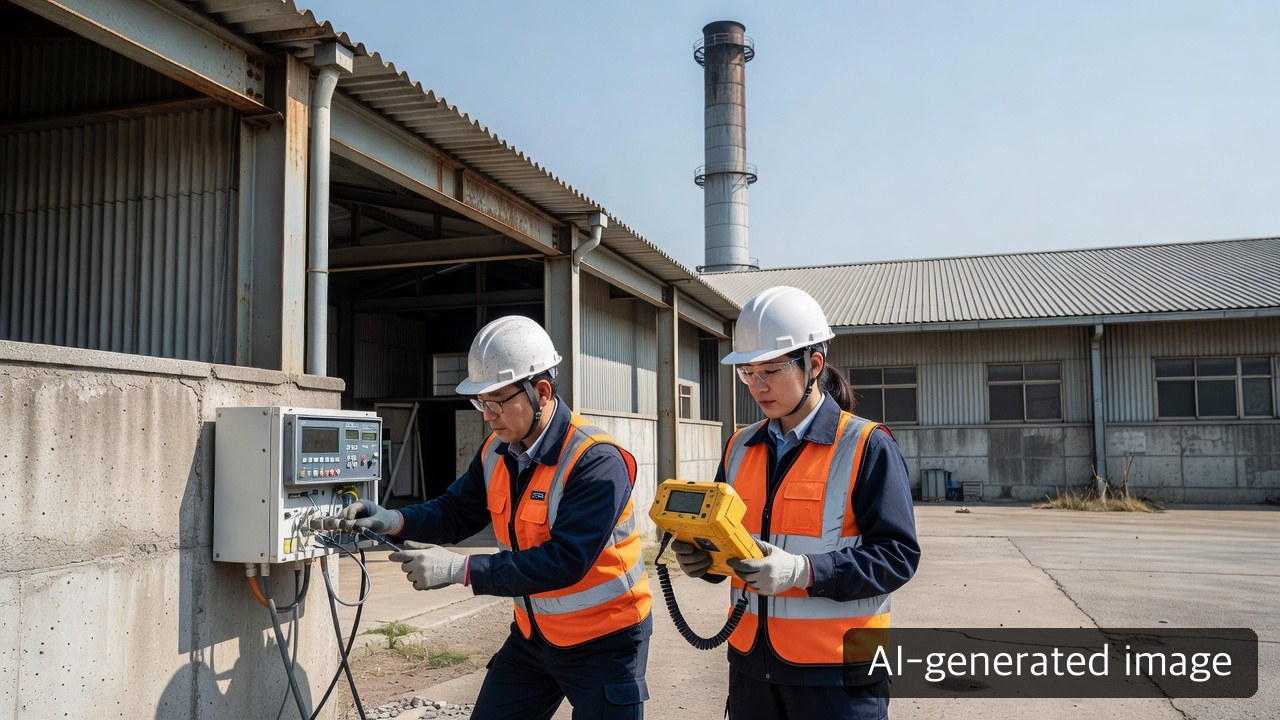
If a mill builds its boiler or power facility before the fuel-use pathway is secured, sunk construction cost and the production plan can be stranded together. On August 26, 2026, the Jeonbuk State Administrative Appeals Commission dismissed Cheonil Paper’s challenge to Jeonju City’s refusal of a solid recovered fuel (SRF) use permit, according to two Korean news reports. The status-and-evidence gate below is designed for engineering, environmental and legal teams planning a mill fuel conversion.
What Was Reported as of August 26
This case cannot be reduced to “SRF was approved” or “SRF was banned.” The two reports support the following status map.
Facility construction
- Reported: Cheonil Paper reportedly won an August 2023 administrative appeal related to refusal of construction for the power facility and built it in February 2024.
- Boundary: a completed building does not itself secure permission to use the fuel.
SRF-use application
- Reported: the company applied to use solid recovered fuel in September 2024, and Jeonju City refused the application.
- Boundary: the full legal and technical grounds must be checked in the original decision and application record.
January court ruling
- Reported: NoCut News reported that a court on January 22, 2026 upheld the refusal, citing gaps concerning ammonia slip, the equivalence ratio for a semi-dry system and the basis for activated-carbon demand.
- Boundary: this is a news account of the ruling, not a review of the full judgment.
Appeal after supplementation
- Reported: the company supplemented the material and filed an administrative appeal; the Jeonbuk commission dismissed it on August 26.
- Boundary: the supplemented package and full reasoning of the commission were not available in the reviewed reports.
Remaining proceeding
- Reported: the company said it would continue its administrative lawsuit against Jeonju City.
- Boundary: the administrative-appeal dismissal is not the final outcome of that lawsuit.
Yonhap quoted a Jeonbuk official saying that Jeonju City argued the submitted environmental and odor measures were insufficient to provide confidence that nearby environmental harm would be avoided, and that this position appeared to have been accepted. NoCut News separately reported resident acceptance, validation of the environmental-protection plan, site-description issues and technical deficiencies. Neither article is the commission’s full written decision.
Why the Permit Sequence Must Precede Equipment Procurement
A fuel conversion is not only a storage, conveying and combustion project. Fuel variability and throughput, combustion conditions, control-equipment capacity, reagent and adsorbent calculations, emissions and odor monitoring, abnormal-operation response, and the evidence presented to residents and authorities must form one traceable operating plan.
The reported ammonia-slip, equivalence-ratio and activated-carbon issues illustrate why “the equipment is installed” is not enough. Reviewers need to trace the design inputs, calculations, supplier guarantee boundary, operating limits, measurement locations, calibration intervals and actions after an excursion. Community engagement is important, but it cannot replace technical compliance evidence and should be managed as a separate workstream.
Copy-Ready Fuel-Conversion Permit Evidence Table
Application scope and address
- Inputs and checks: site, parcel, building/equipment boundary and applicant.
- Evidence: reconciliation of the application, drawings and construction permit.
- Status/hold: hold if the address or scope differs across records.
- Owner action: legal/permitting owner corrects inconsistencies in the source documents.
Fuel and mass balance
- Inputs and checks: SRF properties, lot variation, throughput, moisture, ash and auxiliary fuel.
- Evidence: supplier certificates, sampling plan and mass/heat balance.
- Status/hold: hold design if it relies on one unrepresentative certificate.
- Owner action: process owner separates normal and bounding conditions.
Combustion and controls
- Inputs and checks: temperature, residence, air ratio, DeNOx, neutralization, adsorption, reagent/catalyst/carbon.
- Evidence: design calculations, P&ID, supplier guarantees and reagent basis.
- Status/hold: hold filing if equivalence ratio or reagent/catalyst demand is not traceable.
- Owner action: equipment owner links each input to the final emission point.
Ammonia and odor
- Inputs and checks: dosing condition, slip potential, odor sources/pathways and boundary conditions.
- Evidence: operating envelope, sampling locations, methods and derate/stop response.
- Status/hold: hold if start-up, shutdown and failure scenarios are absent.
- Owner action: environmental owner adds measurement and response scenarios by condition.
Emissions monitoring
- Inputs and checks: parameters, ranges, calibration, retention and manual checks.
- Evidence: instrument specification, QA/QC, raw data and alarm history.
- Status/hold: hold demonstration if measurements cannot be tied to fuel and operating lots.
- Owner action: instrument owner verifies time synchronization and traceability.
Community and authority interface
- Inputs and checks: concern log, briefing material, questions, responses and revisions.
- Evidence: minutes, public material and supplement-response register.
- Status/hold: hold the next briefing if technical and public documents use different scope or figures.
- Owner action: project lead restores a single controlled version.
Legal status
- Inputs and checks: permit, notification, decision and litigation status by procedure.
- Evidence: original notices, decisions, judgments, deadlines and action log.
- Status/hold: hold the investment decision if news summaries are used as final legal status.
- Owner action: legal owner updates the status map from original documents.
Split the Investment Decision into Three Gates
G0: Legal Path
Confirm the required permits, notifications and approvals—and their sequence—from original instruments. Permission to construct, permission to install, permission to use a fuel and permission for stable commercial operation are not the same status.
G1: Technical Proof
Validate the mass and heat balance and control-system calculations across fuel-lot variation. Do not convert a supplier design statement into site approval or achieved emissions performance.
G2: Site Demonstration and Engagement
Prepare measurement and response plans for start-up, shutdown, low load and abnormal operation, and track community concerns and authority requests. Do not book savings or a normal-operation date as confirmed before demonstration data exist.
What the Decision Does Not Establish
- That the remaining administrative lawsuit has been finally decided
- That the city’s concerns prove environmental harm has already occurred
- That every item in the supplemented package was inadequate
- That the same outcome automatically applies to another mill’s SRF, biomass or waste-heat project
- That construction approval or equipment completion equals approval for fuel use and commercial operation
The practical lesson from August 26 is not a blanket position for or against one fuel. It is the need to connect the permit logic and technical evidence before capital is committed. The final legal status of this case still depends on the pending litigation and original written decisions. Other mills should lock the application scope, control calculations, abnormal-operation demonstration and engagement record before relying on a fuel-cost model.
About the Author
PackingMaster: Editor of Paper Pack Log. We collect and organize market trends, product information, and technical insights for the paper packaging industry.