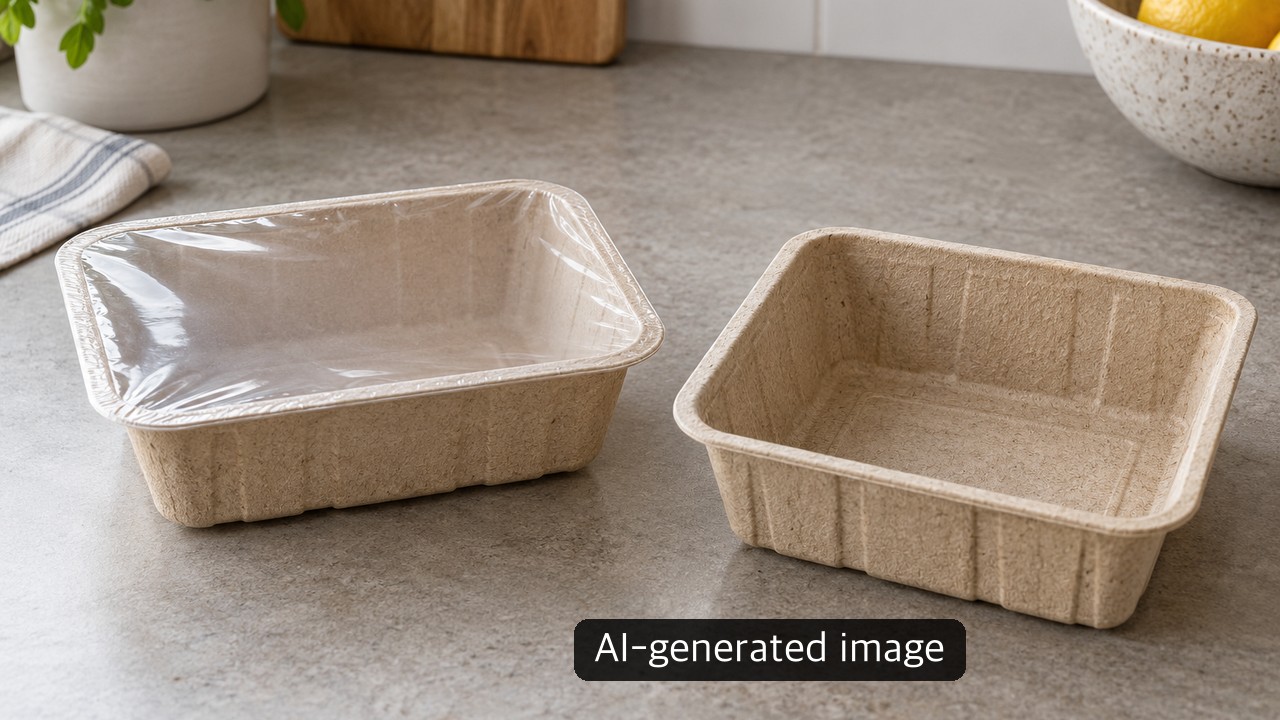
Can a lidding film on a fibre-based food tray be peeled and closed again? Cirkla, Belmark and Ossid announced a combined moulded-fibre tray, resealable film and automated sealing solution on October 12, 2026. Their joint release proposed uses in fresh proteins, produce and ready meals. FoodBev’s October 16 follow-up introduces the same combination and company claims. Neither item independently establishes shelf life, repeated reseal performance or recyclability for a particular finished pack.
The three components and the evidence gap
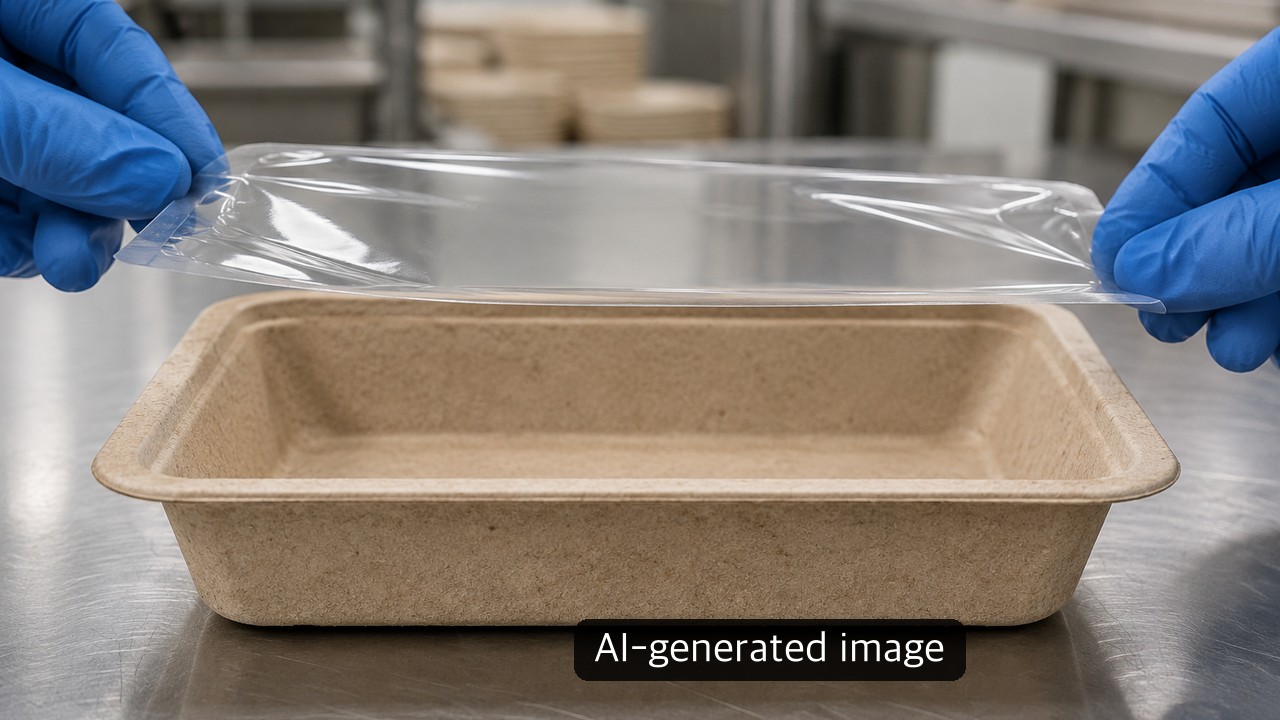
Cirkla supplies the moulded-fibre tray, Belmark the peel-and-reseal lidding film, and Ossid its ReeMaster NextGen Automatic Tray Sealer. The companies say they have addressed the challenge of bonding film to the tray without damaging its liner. That is an attributed technical claim. The public release does not give layer specifications for each food application, sealing conditions or an independent test report for this complete configuration.
The release said the solution would be shown at The Global Produce and Floral Show in Orlando on October 14–16 and at Pack Expo in Chicago on October 18–21. A planned display does not constitute food-by-food qualification or production-scale trial results. Ossid’s description of equipment capable of modified-atmosphere packaging (MAP) and vacuum skin packaging (VSP) likewise does not verify this exact resealable tray in each format.
Checks before buying or making disposal claims
- Tray and film interface: Ask for the precise tray, liner, coating and film construction; sealing temperature, pressure and dwell; initial peel force; and liner condition after opening.
- Repeated use and shelf life: Specify food, fill conditions and cold-chain profile. Test leakage, gas and moisture barriers and food quality after repeated opening and reclosing, separately from the first seal.
- Line performance: Check speed, rejects and changeover on the actual tray/film/sealer combination, not merely general equipment capability.
- End of life: Verify whether the lidding film can be removed, what liner or coating remains, and how food contamination affects collection and repulping in the sales market.
These are editorial validation questions, not results the companies have already published. “Resealable” describes closing the same package again during consumption. It is not equivalent to a returnable pack that is collected, cleaned and reused across distribution cycles.
Fibre does not automatically mean recyclable
The joint release asserts that Cirkla trays can rival plastic in shelf life and barrier performance and cut plastic waste by up to 90%. It gives no comparison pack construction and weight, food/distribution conditions or calculation boundary that would let a reader transfer that number to this finished resealable tray-and-film system. FoodBev repeats the assertions as company claims, not independent laboratory findings.
A fibre base still has a food-contact liner, separate lidding film, sealing interface and potential food residue. Neither of these two accounts proves that the whole used package belongs in a local paper-recycling stream. Buyers need the actual complete construction and market-specific collection instructions, plus relevant repulping and food-contact evidence.
The new documented event is the three-company launch announcement. “World’s first”, unchanged line requirements, plastic-savings percentages and material performance remain promotional assertions unless product-specific independent evidence is supplied. The useful next step is to obtain food-specific seal, preservation and disposal data before making procurement or sustainability claims.
About the Author
PackingMaster: Editor of PaperPackLog, covering paper-packaging industry developments, products and technical decisions.
References
- Cirkla, Belmark and Ossid, joint launch release via CNW/Newswire, October 12, 2026 — Company announcement, not an independent laboratory report.
- FoodBev Media, “Cirkla, Belmark and Ossid unveil resealable fibre tray packaging solution”, October 16, 2026 — Follow-up coverage of company assertions, not an independent performance study.