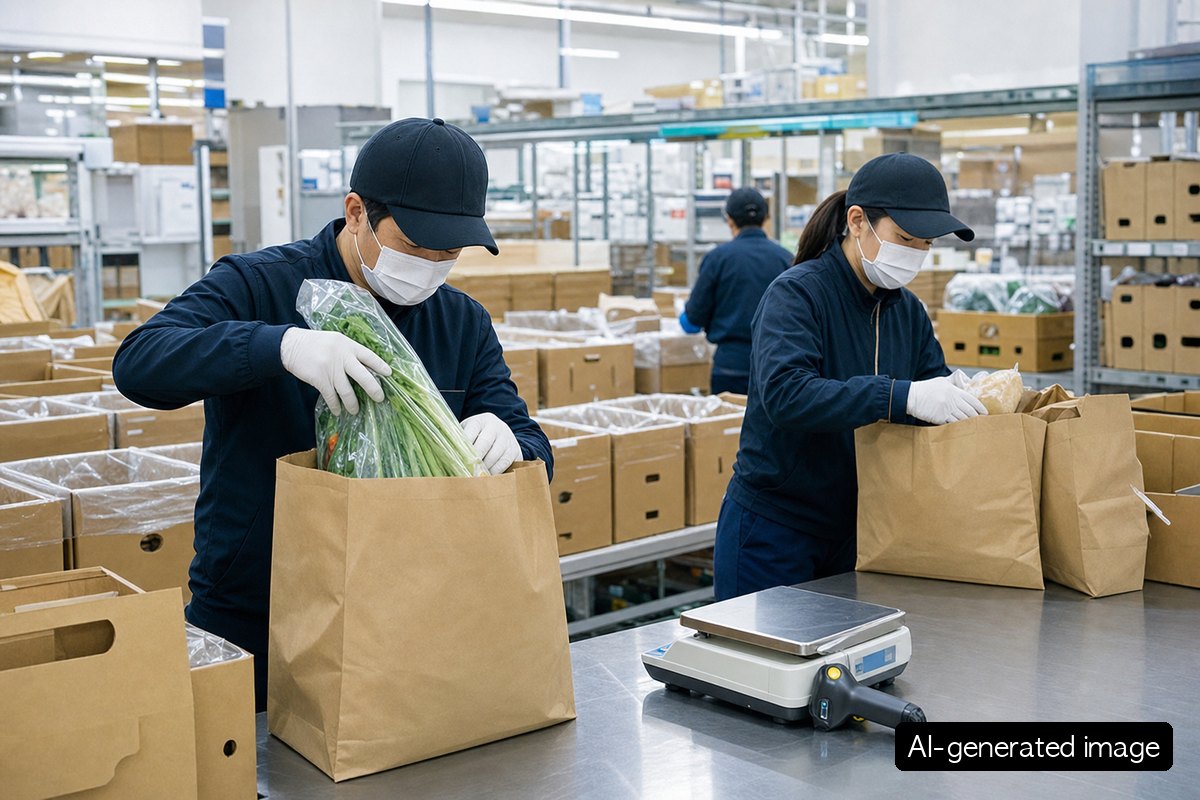
Dawn delivery packaging moves fast. Goods are received at night, picked, checked, packed, loaded, and delivered before morning. Packaging in this environment is not just a visual material choice. It is an operating tool that must survive mixed ambient and chilled logistics, humidity, repeated handling, and compression during transport.
Recent Korean media reports said Coupang was considering the use of paper bags for dawn delivery and other parcel flows as part of a shift away from plastic mailers. The signal matters beyond one retailer. It suggests that e-commerce packaging teams are being pushed to rethink what a delivery bag must do. Paper bags can reduce plastic use and improve the consumer recycling experience, but they need a separate review of moisture, weight, sealing, and line efficiency before full deployment.
The broader shift from plastic to paper packaging has already been discussed in relation to naphtha prices, packaging regulation, and consumer expectations. This article focuses more narrowly on the practical specifications a dawn-delivery paper bag should pass.
A paper bag switch is a delivery-condition redesign, not a simple material swap
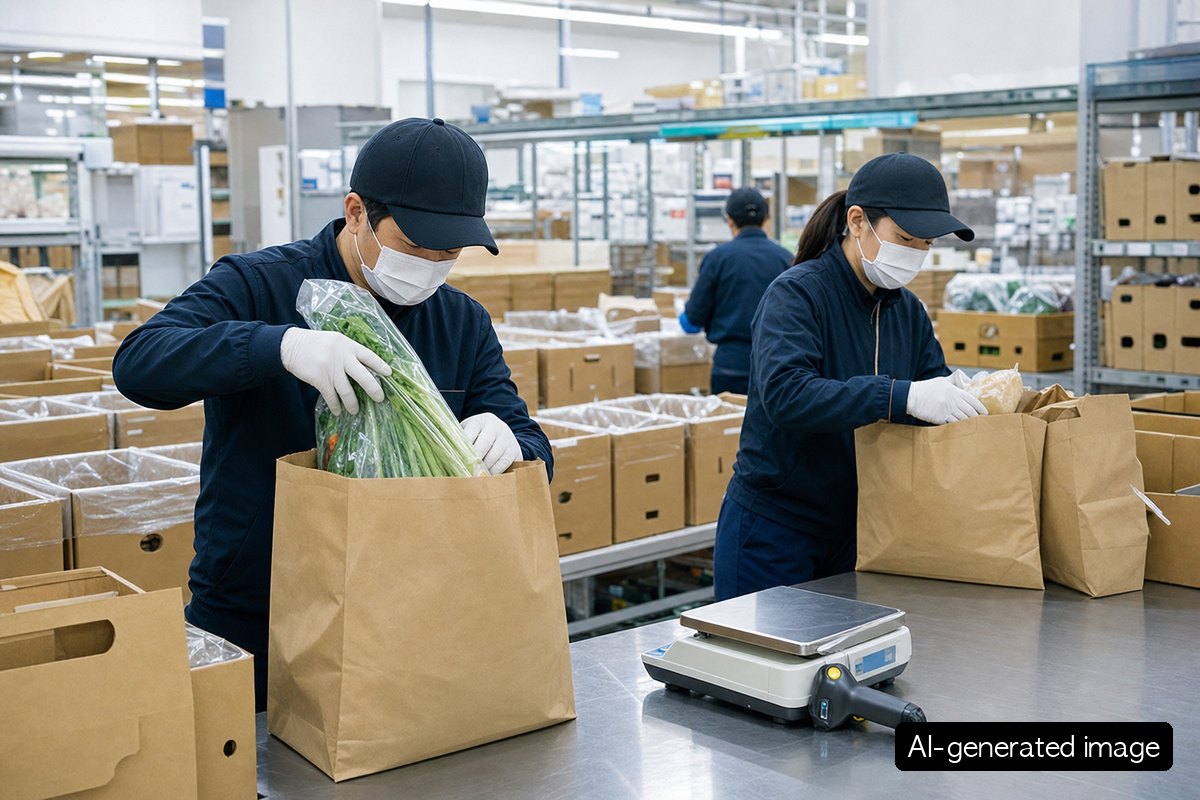
Plastic mailers are thin, light, and moisture-resistant. Operators can pack quickly, seal easily, and handle condensation from chilled goods with relatively low risk. Paper bags offer advantages in recyclability, tactile quality, and brand perception, but they are more sensitive to moisture and tearing.
So the change is not just “replace plastic with paper.” The following conditions also need to be redesigned:
- paper basis weight and strength
- handle or top-seal structure
- bottom-fold design and load distribution
- whether chilled and ambient products are mixed
- exposure to condensation, rain, or snow
- packing speed and automation compatibility
- time left at the customer’s door
Dawn delivery is more demanding than ordinary parcel delivery because temperature and time conditions are tighter. Chilled foods, fresh produce, liquid products, ice packs, and refrigerants may be packed together. Condensation can form when temperature and humidity change between the warehouse, vehicle, and doorstep. Whether paper bags work depends less on the word “paper” and more on how specifically those conditions are reflected in the packaging design.
Checkpoint 1: moisture and condensation
The first issue is moisture. Even without direct rain exposure, condensation from chilled goods, dampness around ice packs, or temperature changes inside delivery vehicles can weaken a paper bag.
Key questions include:
| Item | Practical question | How to check |
|---|---|---|
| Surface water resistance | Does water soak in immediately? | Spray test and droplet contact-time check |
| Wet strength | Can the bag be lifted after damp exposure? | Load the bag, wait, then lift and inspect |
| Seal water resistance | Does the glued or taped area open under humidity? | Check peel after chilled-condition exposure |
| Wet bottom fold | Does the bottom fold weaken first? | Test against a damp floor surface |
| Chilled goods fit | Can the bag handle condensation-prone SKUs? | Pilot with real SKU combinations |
One caution: the word “waterproof” should not be used casually. A fully waterproof paper bag and a paper bag with a limited water-resistant treatment are different. Stronger coatings may improve moisture resistance, but they can also affect recyclability and disposal claims. Procurement teams should ask not only “is it water-resistant?” but also how long it resists moisture, under what load, and with what recyclability evidence.
Checkpoint 2: weight and handle load
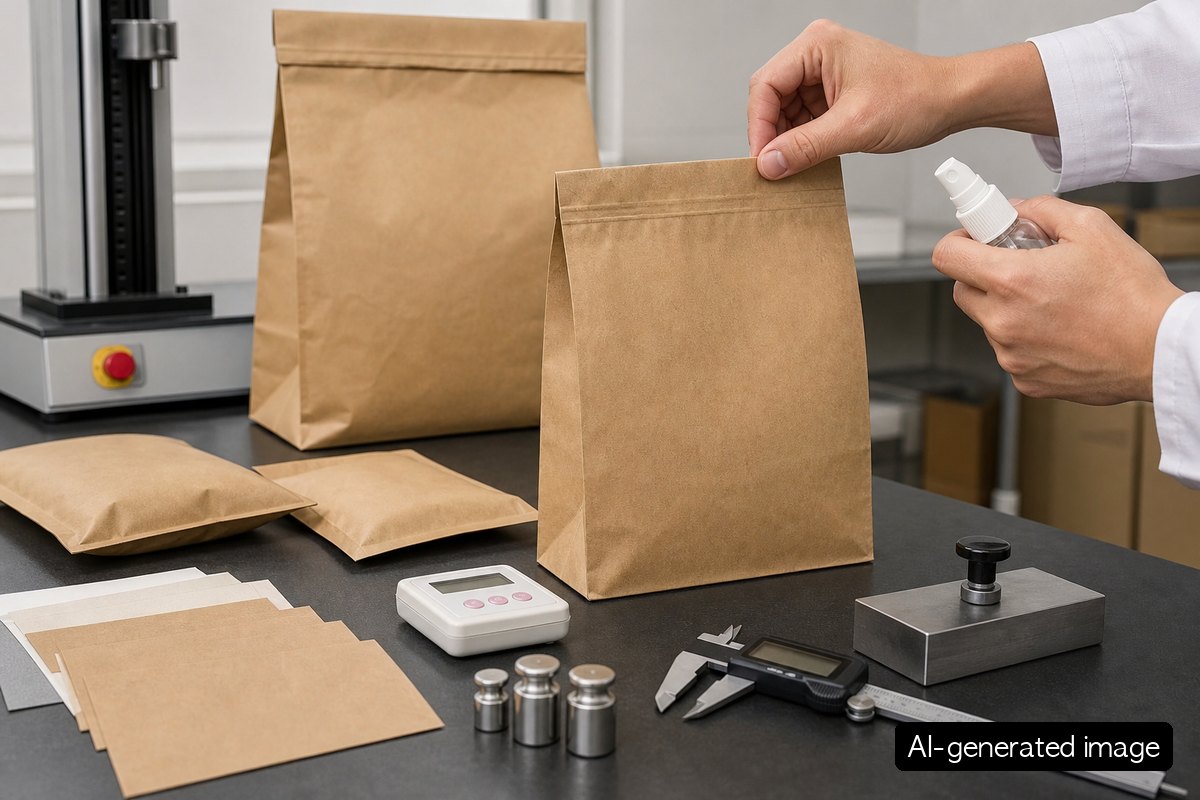
Paper bags are sensitive to load concentration. Three kilograms of beverage cartons does not stress the bag in the same way as three kilograms of snacks or household goods spread over a larger area.
Average order weight is not enough. Teams should also examine:
- maximum order weight and 95th-percentile order weight
- share of liquid, bottle, can, or concentrated-load items
- product shapes that press into bottom corners
- number of times the handle or folded top is lifted
- handling during picking, loading, and last-mile delivery
- how customers are likely to lift the bag at the doorstep
If the paper bag has a handle, the handle attachment becomes a likely weak point. If the bag has no handle and is folded or taped at the top, the customer may still lift it by the top edge, creating tearing risk. Testing should therefore include lifting, swinging, short drops, and one-sided load shift, not just static weight capacity.
Checkpoint 3: sealing and packing speed
E-commerce packaging must also work operationally. A sustainable material can still become expensive if it slows the line or increases packing defects. Paper bags behave differently from plastic mailers because they are thicker and less elastic, so folding, taping, and label application may need to change.
Useful questions are:
- Can the bag run on the existing packing line?
- Does the mouth open easily for fast product insertion?
- Is there a flat enough area for labels and waybills?
- Does tape adhere reliably to the paper surface?
- Is the bag easy for consumers to open but secure during delivery?
- Can it support returns or repacking?
For dawn delivery, packing speed is directly tied to outbound capacity. Comparing only the unit price of the bag misses the real cost. Labor time, defect rate, label rework, damage claims, and missing-item claims should be included in the calculation.
Checkpoint 4: recyclability labels and coating explanation
The main value of a paper-bag switch is reducing plastic use and improving consumer disposal experience. But “paper” does not automatically guarantee recyclability. Coatings, adhesives, tapes, or handles can make recovery more difficult.
A practical specification sheet should request at least the following:
- paper grade and basis weight
- recycled or certified fiber content
- coating type and coating amount
- adhesive, tape, and handle material composition
- printing ink and label material
- disposal or recycling-label guidance
- recyclability test data or internal review evidence
If a retailer wants to call the bag eco-friendly, the internal data needs to be more specific. Teams should know the paper share, whether the coating interferes with recycling, and whether labels or tapes can be separated.
Checkpoint 5: segment the SKU scope first
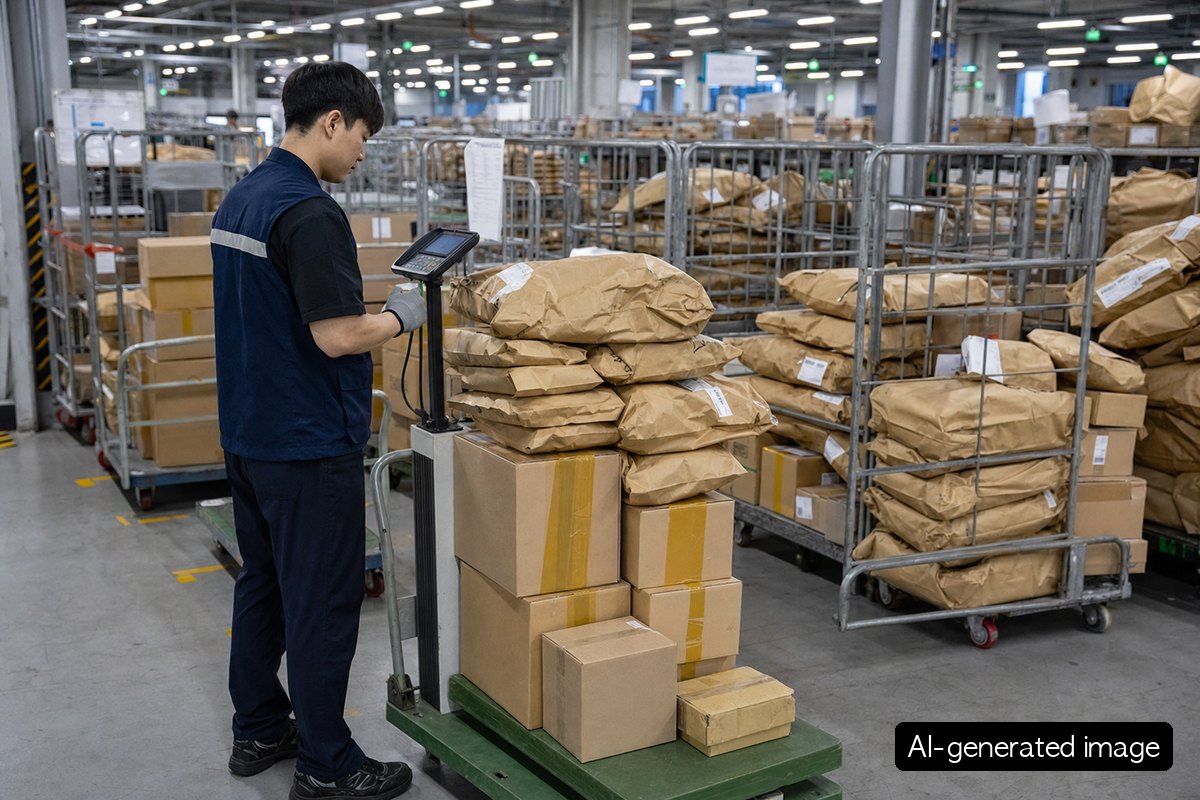
Applying paper bags to every SKU at once is risky. It is safer to divide products into suitable and cautious-use groups.
Good early candidates include:
- light, dry household goods
- small products with low breakage risk
- products already protected by primary packaging
- bulky but low-weight orders
- items where consumers can easily understand the disposal benefit
More cautious categories include:
- chilled or frozen goods with heavy condensation
- liquids, bottles, and bundled cans
- products with sharp edges
- orders with one-sided concentrated weight
- delivery locations where parcels may be exposed outdoors for longer
A staged pilot is more practical than an immediate full conversion. For example, ambient household goods and light packaged foods can be tested first, while chilled, liquid, and heavy orders follow separate rules. The pilot should quantify tearing, dampness, label failure, and customer inconvenience before expansion.
Example RFQ checklist for paper delivery bags
Procurement teams can ask suppliers for the following information:
| Area | Requested information |
|---|---|
| Basic spec | size, basis weight, paper composition, bottom structure, handle option |
| Strength | recommended max load, wet-load strength, handle attachment strength |
| Moisture response | surface treatment, condensation test, damp-floor contact test |
| Operations | mouth opening, sealing method, label adhesion, automation fit |
| Recyclability | coating and adhesive details, disposal marking, recyclability review data |
| Quality control | lot inspection items, defect criteria, test certificate availability |
This checklist helps avoid comparing only the unit price of a paper bag. Packaging changes are about operational stability as much as material cost.
Closing thought
The Coupang dawn delivery paper-bag issue shows that Korean e-commerce packaging is moving from plastic-first delivery mailers toward paper-based alternatives. But paper bags should not be selected only for their eco-friendly image. In a fast and moisture-sensitive logistics environment such as dawn delivery, teams must review moisture resistance, weight limits, sealing stability, packing speed, and recyclability evidence together.
The key message is not “plastic was replaced by paper.” It is “the paper packaging structure was designed for the delivery conditions.” If procurement teams and packaging suppliers run SKU-level pilots and sample tests first, the transition can support both sustainability and logistics reliability.
About the Author
PackingMaster: Editor of Paper Pack Log. We collect and organize market trends, product information, and technical insights for the paper packaging industry.
References
- The Korea Economic Daily, “비닐 없어요 한국도 난리 나더니…이곳 주문 폭주했다,” 2026, https://www.hankyung.com/article/2026042963431
- Seoul Economic Daily, “[단독] 탈 비닐 시동 건 쿠팡, 새벽배송에 종이봉투 쓴다,” 2026, https://www.sedaily.com/article/20031104
- Herald Business, “제지株 급등…쿠팡 종이봉투 가능성에 제지사들 숨통 트일까,” 2026, https://biz.heraldcorp.com/article/10715661