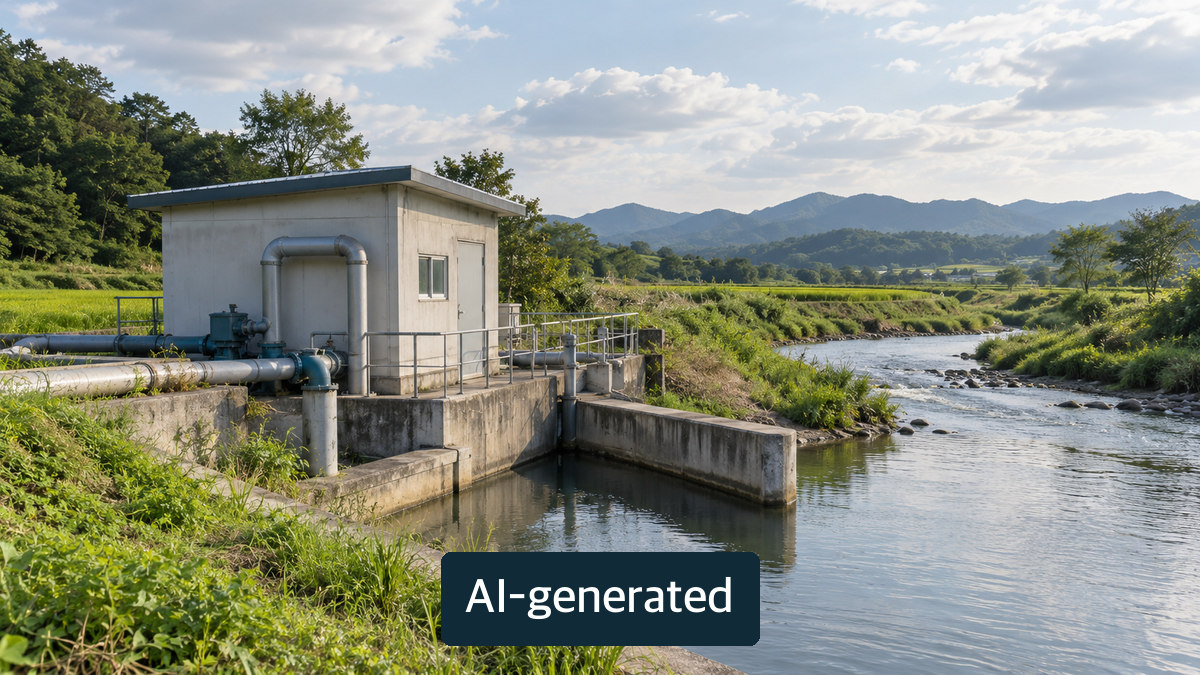
The future of the Yongsan pumping station in Damyang, South Korea, has become a debate about removal and industrial water access, not an established cutoff to a paper mill. In an October 14 release archived by the National Assembly Library, lawmaker Lee Gae-ho called on the Korea Rural Community Corporation (KRC) not to sell the old station to a company and instead to remove it. He described a D-grade safety assessment. Those are the lawmaker’s demands and characterizations, not an official demolition order.
What the sources actually say
The lawmaker’s release expects a replacement pumping station to be completed in December and questions the disposition of the older one. He also alleged that agricultural water supplied to the nearby firm during the 2022 drought may have breached internal rules, requesting investigation and action if a breach is established. An allegation is not a finding; the sources reviewed here do not resolve whether a rule was violated or determine future industrial-water conditions.
According to the release, KRC’s president proposed discussing the matter with residents, environmental groups and the firm and said he would not proceed against the residents’ wishes. YTN’s October 16 field report separately quotes the corporation as saying it had no intention at that time to sell the station. A debate over a possible sale should not be reported as a completed transaction.

Why a production effect cannot yet be claimed
Local outlet Damyang News reports the parliamentary comments and residents’ long-standing complaints about noise and odors. Its retelling of the lawmaker’s comments is not independent proof of a corporation decision. The reviewed sources do not include a dated removal decision, a water-cutoff notice, an alternative-intake agreement, mill downtime or shipment changes. For the paper industry, the relevant development is a pending infrastructure discussion—not a demonstrated interruption of production or deliveries.

What to check next
Any operational assessment requires KRC’s dated disposition decision, commissioning of the replacement station, the firm’s water-use rights and alternative intake plan, and a mill operations notice. The defensible conclusion today is that removal was requested and a decision is still under discussion, not that either side has prevailed or paper shipments have been affected.
About the Author
PackingMaster edits PaperPackLog, collecting market developments, product information and practical insights across paper packaging.
References
- Lee Gae-ho office, call to remove the Yongsan pumping station, National Assembly Library, October 14, 2026 — lawmaker’s position and quotation of KRC president; not KRC’s final decision.
- YTN, old pumping-station sale debate and KRC response, October 16, 2026 — field report and contemporary denial of an intention to sell.
- Damyang News, parliamentary comments and residents’ complaints, October 16, 2026 — overlapping account of comments; not a separate administrative finding.