Can a well-designed pack alone protect cargo in transit? For moisture- and odour-sensitive green (unroasted) coffee, the condition of the shipping container matters too. On 19 October 2026, the European Coffee Federation (ECF) introduced an infographic for shipping lines and logistics providers, covering container handling, loading and documentation. Its original digital PDF makes clear which commodity the advice addresses.
Check the container first
Page 1 describes green coffee as hygroscopic and sensitive to odours. It calls for a container that is odourless, clean and dry, pest-free, and structurally sound. Examples include avoiding residues from previous cargo, moisture, rust, oil, holes and damaged flooring. These checks are presented as safeguards for green-coffee quality, not a universal specification imposed on every kind of shipment.

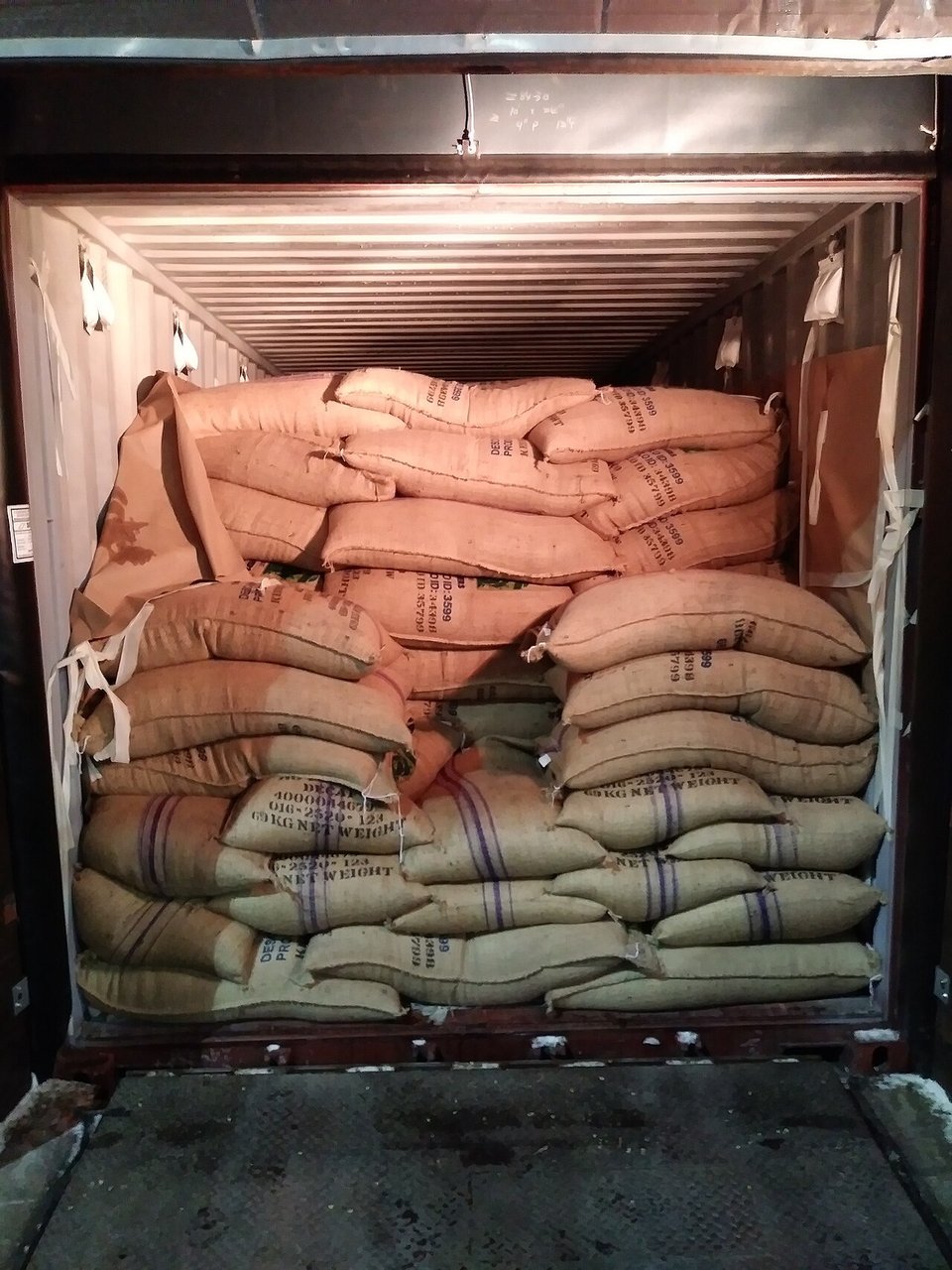
Generic coffee sacks; not a demonstration of ECF’s loading figures.
Read the loading figures as examples, not blanket limits
Page 2 of the infographic says 20-foot containers are typically used and 40-foot units may be used if availability is limited. It lists approximately 275–320 60 kg bags per container, about 20 tonnes in big bags per container, or 20.7–21.6 tonnes in a bulk liner per container. These figures are not a substitute for the actual equipment rating, loading plan or the conditions agreed for the origin and destination.
The illustration marks across stow (spelled “Accros stow” in the PDF) with a cross and saddle stow with a tick. The ECF announcement describes saddle stow as preferable and says to leave room below the container roof. Neither source provides a numeric roof-clearance distance. The graphic’s temperature labels lack the conditions needed to treat them as measured or generally achievable cargo temperatures.
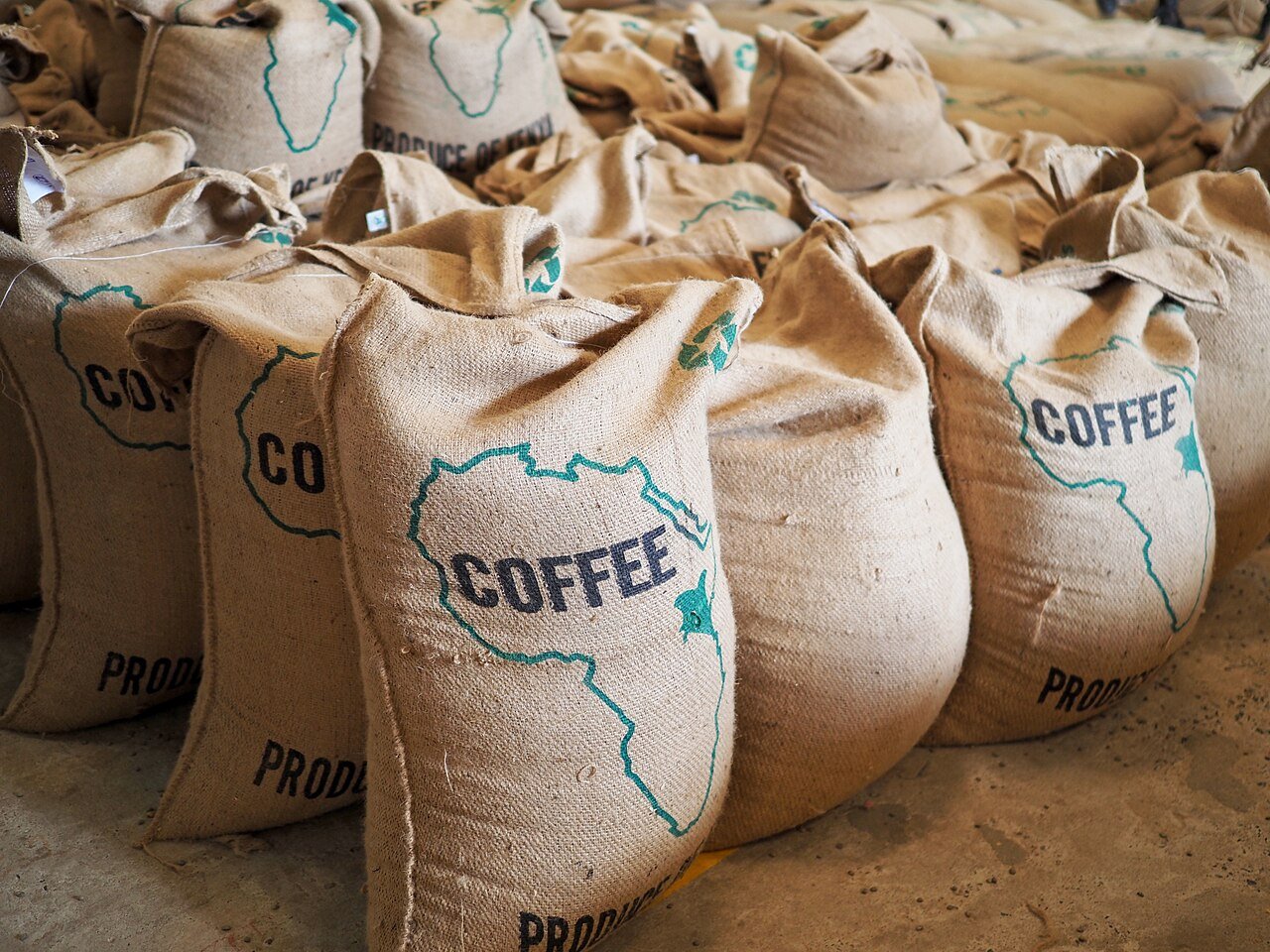
Coffee bags in Kenya, unrelated to the ECF stowage diagram.
Coordination is not a new contractual mandate
ECF adds that container suitability, documentation procedures and destination requirements can vary by company, origin and destination; early communication between partners is therefore important. The infographic also mentions the European Standard Contract for Coffee (ESCC), a buyer–seller contractual framework used for many European coffee imports. The infographic itself does not create an obligation for all shipping lines, and referencing the ESCC does not make its terms automatically binding on every shipment.
For readers who work with paper and packaging, the transferable insight is modest: check the transport environment as well as the product pack. Do not extend green-coffee loading numbers or this stowage illustration to paper products, other general cargo, or every coffee shipment without case-specific evidence.
References
- ECF announcement, 19 October 2026 — intended audience and interpretive explanation.
- Original ECF infographic, digital PDF, two pages — suitability (p. 1), loading, coordination and ESCC (p. 2).
About the Author
PackingMaster edits PaperPackLog, covering market developments, products and technical considerations in paper packaging.
Photo credits
- Jeangagnon, generic coffee container, CC BY-SA 4.0. Resized and JPEG re-encoded.
- Downtowngal, coffee sacks, public domain. Resized and JPEG re-encoded.
- Bex Walton, coffee bags in Kenya, CC BY 2.0. Resized and JPEG re-encoded.


