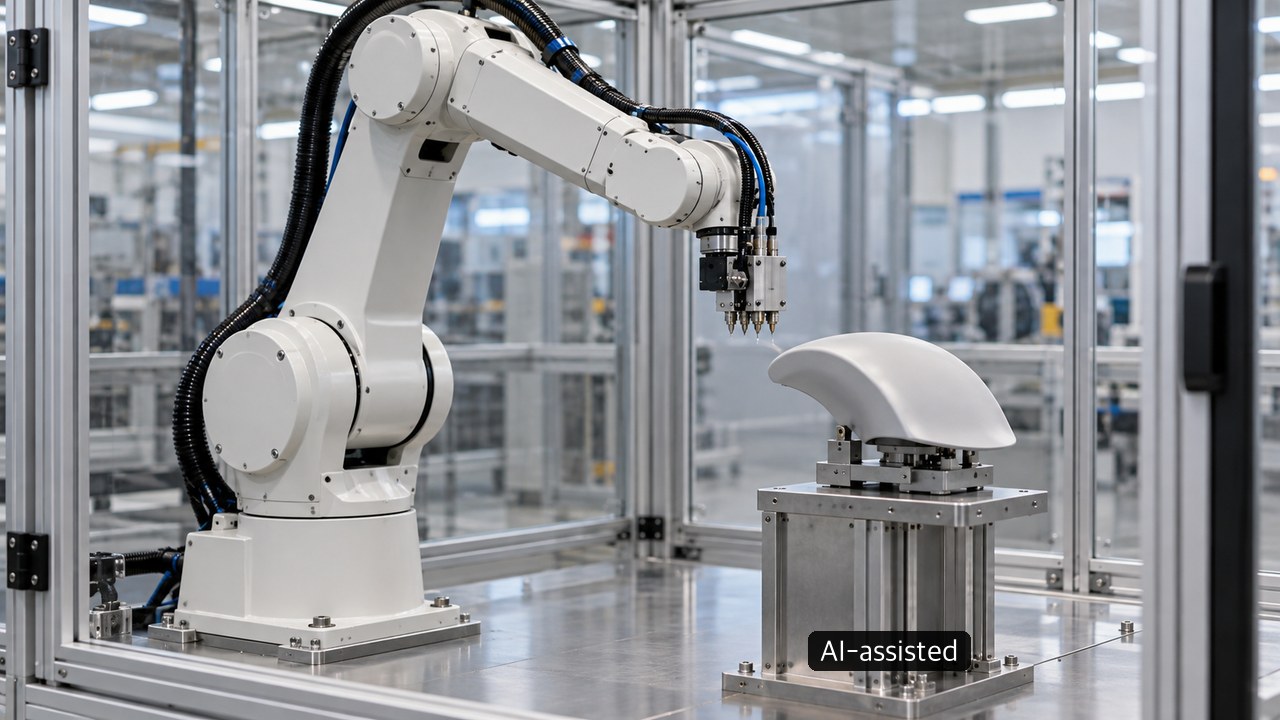
On October 22, 2026, Epson Korea’s official announcement introduced ContourJet, a direct-to-shape surface printing solution combining a PrecisionCore S800 inkjet head, a six-axis industrial robot and trajectory control. This is a different process design from printing a flat label or sheet and applying it later. But the announced application examples are not evidence that every paper or molded-fiber package has been qualified for this process.
From announced specifications to packaging qualification
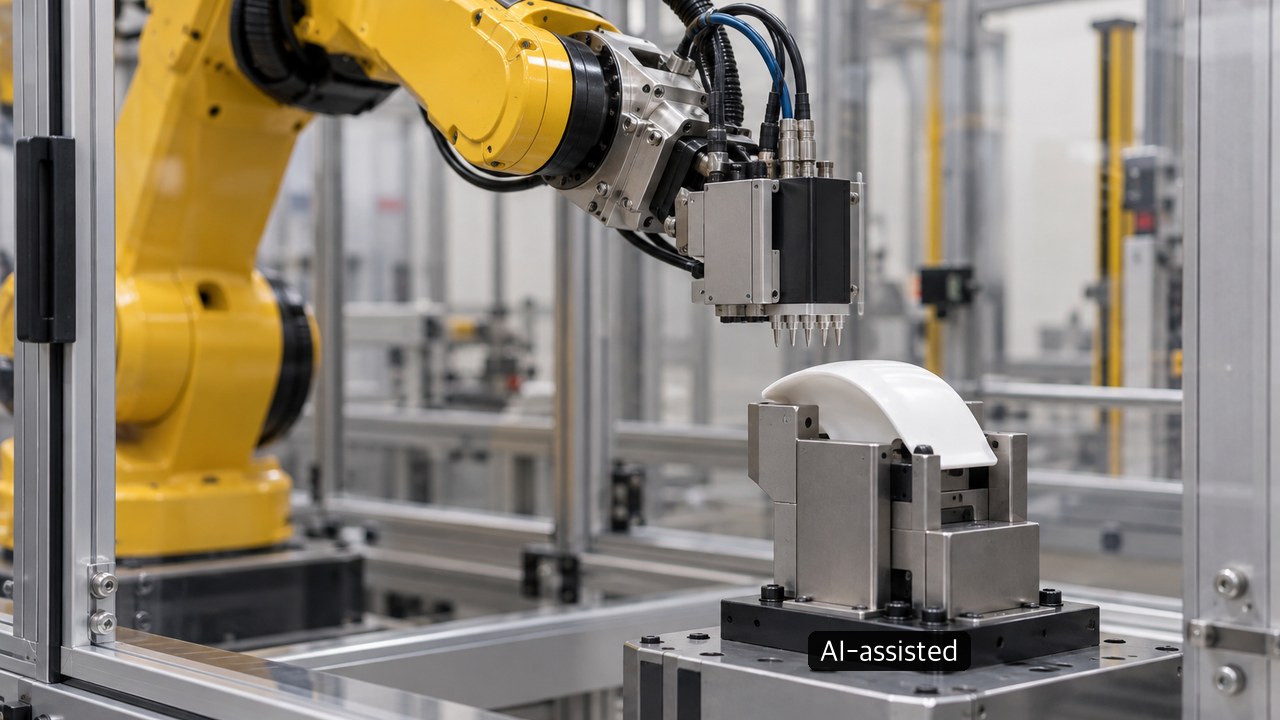
Epson Korea says the PrecisionCore S800 head supports 600×600 dpi. Its six-axis robot and an independent vertical lift are intended to adjust print direction around irregular three-dimensional objects. The announcement mentions multicolor printing with white ink and clear varnish, plus a planned integrated offering of software, support and maintenance. Its stated application examples include sporting goods, automotive components and industrial products.
The ability to avoid a conventional printing plate and handle shorter, more varied production runs is a manufacturer-stated capability and process objective. Claims about using less material or generating less waste are similarly part of the company announcement, not a measured like-for-like comparison against a paper-packaging line. The release alone does not establish ink adhesion, throughput or cost advantage on a particular carton, molded-pulp tray or recycled sheet.
| Described in the announcement | Unknown for a specific paper package |
|---|---|
| Robotic inkjet printing on three-dimensional surfaces | Printable area and fixturing for a chosen substrate |
| Head specification supporting 600×600 dpi | Actual edge clarity and bleeding on fibrous surfaces |
| White and varnish ink options | Adhesion, rub and moisture performance on coated/uncoated fiber |
| Short-run customization potential | Changeover time, hourly output and actual reject rate |
A trial sequence for paper converters
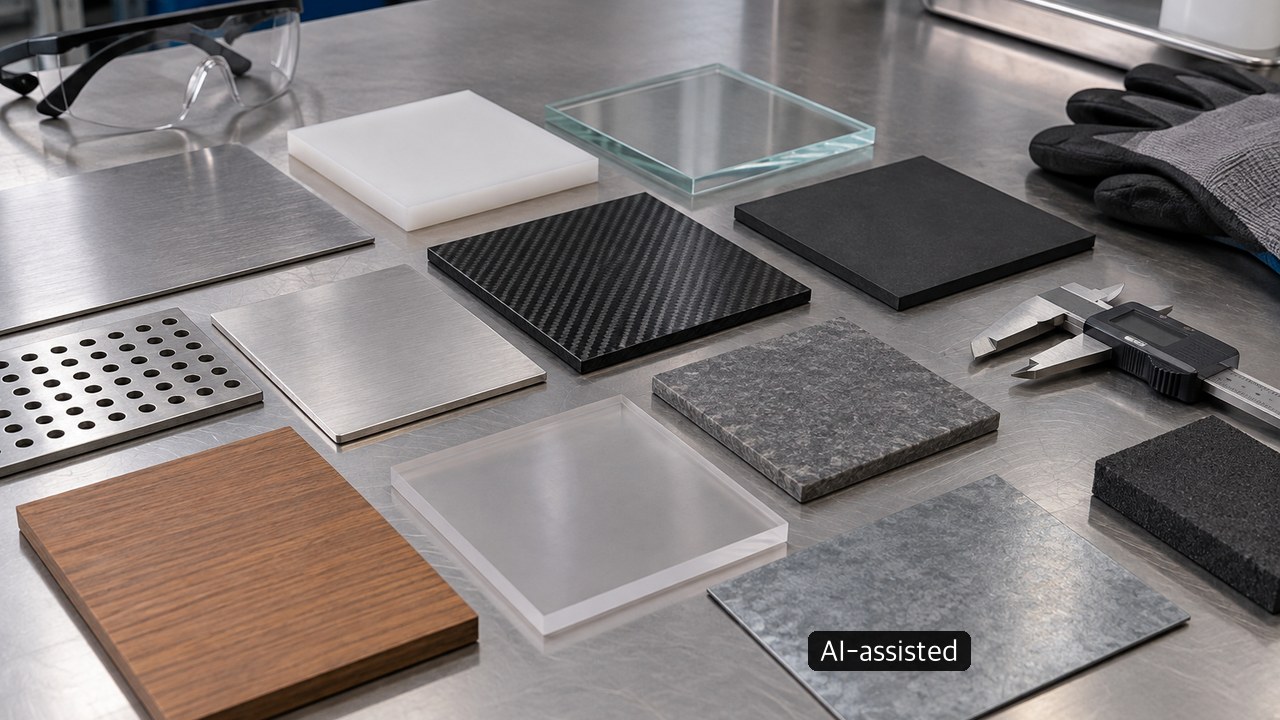
Specify the sample first. Uncoated kraft, coated board and molded pulp differ in absorption, roughness and geometry. Record thickness, curvature, surface treatment and end-use conditions, then ask the supplier about compatible inks and fixtures. This does not mean those substrates appeared in Epson’s public qualification examples.
With the actual sample secured, check stand-off distance and robot-path clearance. Measure print spreading, adhesion, rubbing, folding and humidity performance against the product’s intended use. For food contact or recovery claims, verify the ink and varnish composition and applicable requirements separately. Printable and fit for this end use are different decisions.
Direct-to-shape printing is a process option worth comparing with labels, transfers and pad printing. Without published paper-package trial data, do not assume a productivity or environmental advantage; make the comparison with actual samples and repeated tests.
About the Author
PackingMaster separates announced printing-system specifications from performance evidence required for real packaging substrates.
References
- Epson Korea official blog, “Seiko Epson unveils CONTOURJET direct-to-shape solution combining inkjet and robotics” (October 22, 2026; manufacturer announcement in Korean)