
When exporters discuss EU packaging issues, PPWR often comes first. But companies using paper, paperboard, corrugated board or pulp based packaging should also look at the EUDR separately. The EUDR is not mainly about packaging design or recyclability. It asks whether raw materials linked to forests can be traced and shown to be deforestation-free.
The EUDR refers to Regulation (EU) 2023/1115, the EU Deforestation Regulation. The European Commission explains that the regulation aims to reduce the EU’s impact on global deforestation and forest degradation, while also reducing greenhouse gas emissions and biodiversity loss. The regulation requires due diligence for certain commodities and derived products placed on the EU market or exported from the EU.
For paper packaging buyers, the practical point is simple. It is risky to assume that a paper based packaging item is automatically outside the discussion. If the packaging is linked to wood based pulp, paper or paperboard, the product code, use case, recycled content and fibre source can affect what needs to be checked. Buyers should not leave all judgment to suppliers. At minimum, they need to know how far origin and fibre source data can be traced for each packaging item.
What the EUDR is and why it matters for paper packaging
The EUDR covers commodities and products associated with deforestation risk, including wood and some derived products. Paper packaging can connect to this scope through wood based supply chains. A corrugated box may look like a finished packaging item, but its upstream chain may include wood, pulp, paper mills and converting processes.
For purchasing teams, the EUDR is not asking only whether a box is recyclable. The more relevant questions are: where did the fibre come from, can the supplier show that the raw material is not linked to deforestation risk, and can the supply chain be traced far enough for customer or regulatory questions.
This is different from PPWR. PPWR focuses on packaging circularity, including reuse, recyclability, packaging waste and reduction. The EUDR focuses on forest risk and origin traceability for relevant raw materials. Both can create data requests, but the questions are different.
Origin and fibre source data paper packaging buyers should check
Trying to complete a full forest origin file from the start can stop the project before it begins. A more practical first step is to map what information is already available by packaging item.
Useful checks include the following.
- Packaging item: identify whether the item is a corrugated box, paper tube, paper cushioning, paper pallet or another paper based item.
- Main material: distinguish virgin pulp, recycled paper, mixed paper or non-wood fibre where possible.
- Fibre source: check whether the fibre is wood based, recycled or mixed.
- Production country: record where the base paper, board, corrugated material and final packaging are produced.
- Upstream supplier level: confirm whether the converter can identify the paper mill, base paper supplier or pulp supplier.
- Certification records: check whether FSC, PEFC or another forest management related document exists and what it covers.
- Recycled content evidence: record recycled material ratio, basis and confirmation source where available.
- Change history: ask whether changes in base paper, formulation or supplier will be notified.
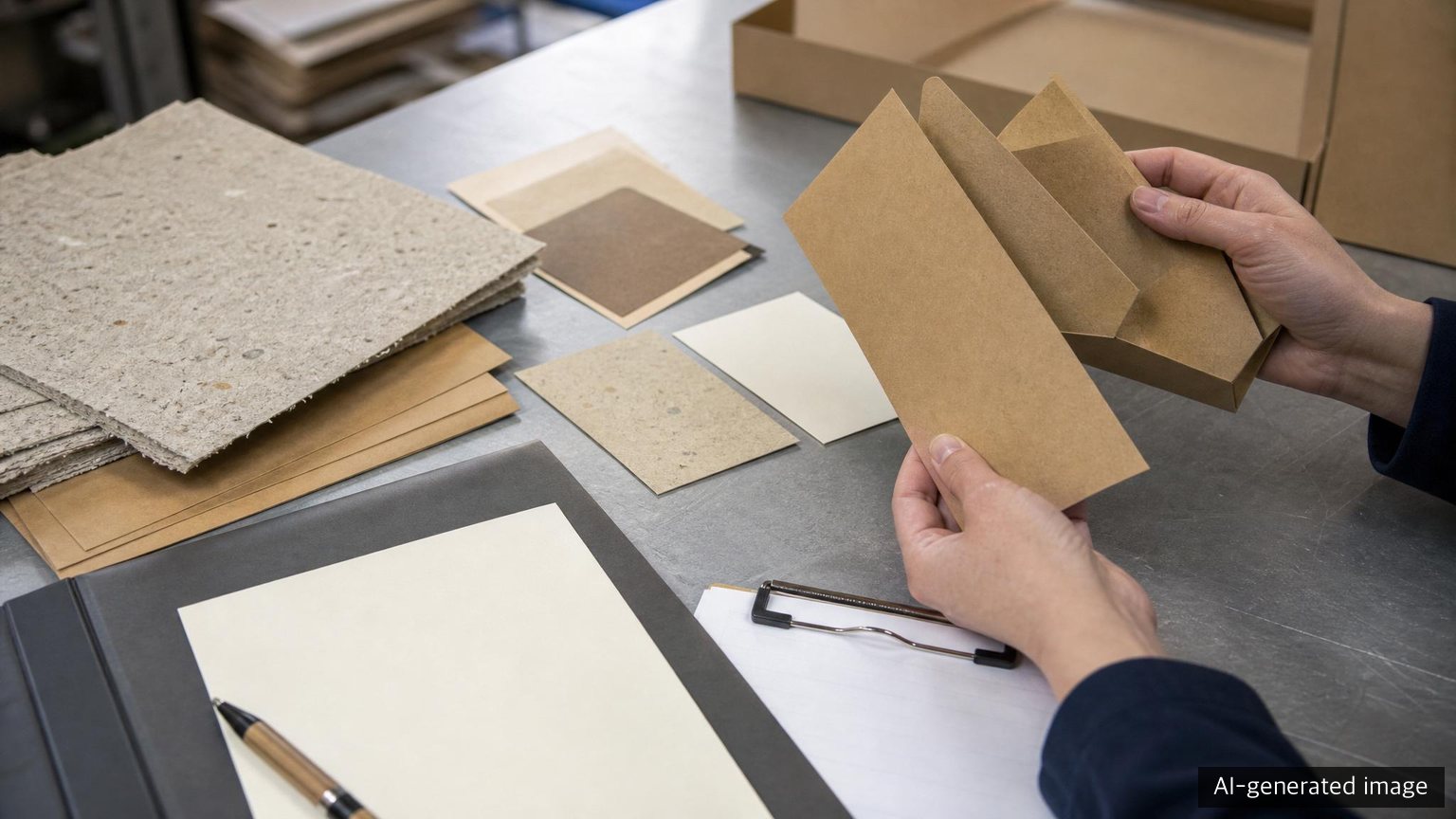
The key is not to expect every supplier to provide pulp origin data immediately. The first task is to separate available data from missing data. Only then can the buyer decide what to request next.
Examples of documents to request from suppliers
EUDR related document requests go deeper than ordinary packaging specifications. Price, dimensions and delivery terms are not enough. Buyers need to ask about raw material lines and forest related evidence.
Possible supplier requests include:
- Packaging specification sheet
- Main material composition statement for base paper or paperboard
- Virgin pulp, recycled paper or mixed fibre classification
- Paper mill or base paper supplier information
- Production country and manufacturing site information
- Forest certification or certification scope document
- Recycled material ratio evidence
- Notification rule for raw material or supplier changes
- List of EUDR related documents the supplier can provide to customers
A practical request can be written in plain language.
To prepare for possible EU customer supply chain data requests, we would like to confirm what origin related information is available for the paper packaging items supplied by your company. Please indicate, by item, the main material, virgin or recycled fibre classification, base paper or paper mill information, and the scope of any forest certification or recycled content document. If a document is not available, please mark it as not held.
This wording allows the supplier to reply with available and missing items, instead of feeling forced to provide a complete legal file immediately.
How PPWR data and EUDR data differ
Both PPWR and the EUDR can lead to packaging data requests, but it is better to manage the records separately.
- Main question: PPWR asks whether the packaging is designed and managed appropriately for circularity. The EUDR asks how the raw material connects to deforestation risk.
- Main data: PPWR focuses on material, weight, recyclability, restricted substances and packaging level. The EUDR focuses on fibre source, origin, supply chain, forest certification and recycled content.
- Internal owners: PPWR usually involves quality, development, purchasing and logistics. The EUDR also requires purchasing, ESG, export and supply chain management input.
- Supplier request: PPWR commonly asks for specifications, weight sheets, material composition and test reports. The EUDR asks more deeply about base paper, pulp or recycled fibre classification, certification scope and raw material change history.
- Main risk: PPWR risk is often missing reporting data or incorrect recyclability assessment. EUDR risk is often lack of origin evidence, weak traceability or misunderstanding certification scope.
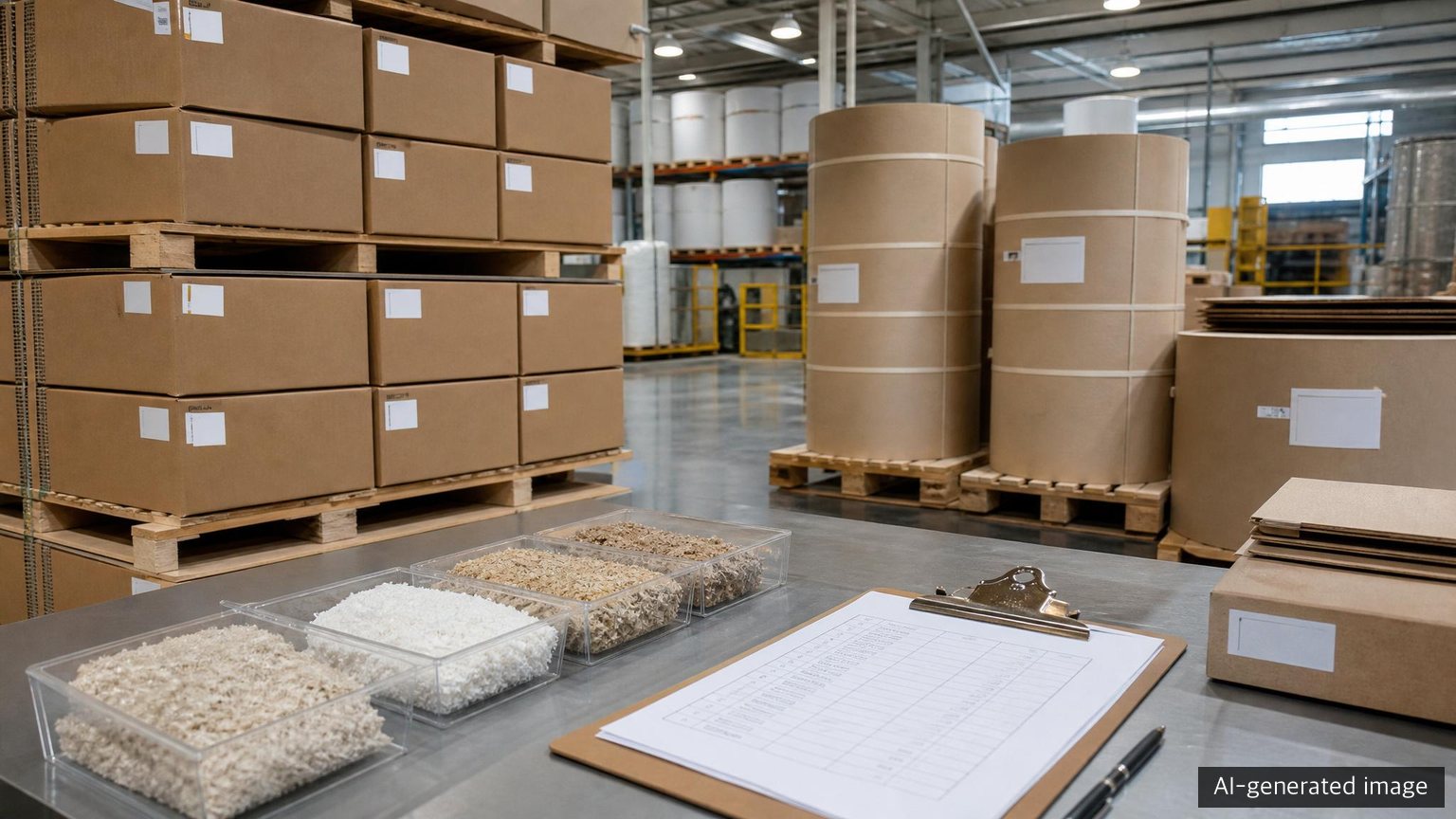
In practice, a company can use the same packaging item code as a common key, but maintain separate tabs or fields for PPWR and EUDR data. The same box may need weight and recyclability data for one regulation, and fibre source or origin data for another.
Checklist for small and mid-sized manufacturers
Small and mid-sized manufacturers can start with a structured checklist.
- List paper packaging items used for EU export products.
- Classify each item as paper, paperboard, corrugated board, tube, cushioning or another type.
- Ask suppliers whether the item is virgin pulp based, recycled paper based or mixed.
- Confirm how far upstream paper mill or base paper supplier information is available.
- If FSC, PEFC or another certificate exists, check the applicable item and validity period.
- If recycled material data exists, record the ratio, date and confirming party.
- Define notification rules for supplier, base paper or formulation changes.
- Separate documents that can be shared with customers from documents that are unavailable.
- Review legal applicability by product code and transaction structure.
- Treat missing data as an action item for supplier follow-up, testing, certification review or alternative sourcing.
Point 9 is important. EUDR applicability can depend on product classification, transaction role and whether the product is placed on or exported from the EU market. A blog article or supplier answer should not be treated as legal advice. But purchasing teams can still begin collecting origin and fibre source data before a formal legal review.
Closing
The EUDR expands paper packaging purchasing from price and delivery management into supply chain data management. Packaging made with wood based pulp or paper may require clearer records on origin, fibre source, certification scope and supplier change history.
The first step is not to complete every document at once. Start with a list of paper packaging items used for EU export, check what origin data suppliers can provide, and manage PPWR and EUDR data separately. A visible blank field is useful. It shows exactly what needs to be requested, reviewed or improved next.
Author
PackingMaster: Editor of Paper Pack Log. We organize market trends, product information and technical insights from the paper packaging industry.
References
- Background — European Commission, Regulation on Deforestation-free products, https://environment.ec.europa.eu/topics/forests/deforestation/regulation-deforestation-free-products_en
- EUR-Lex, Regulation (EU) 2023/1115, https://eur-lex.europa.eu/legal-content/EN/TXT/?uri=CELEX:32023R1115