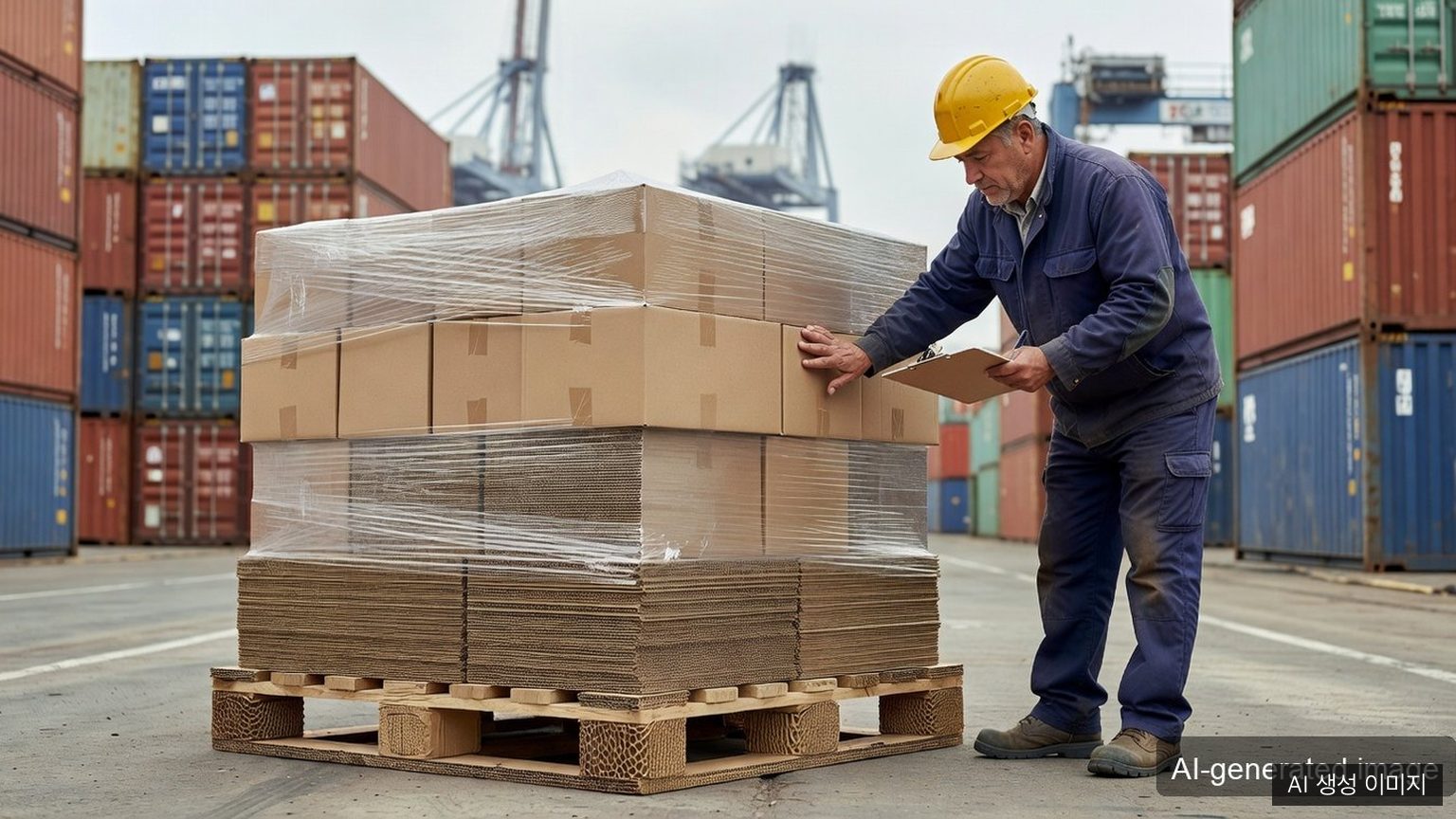
While exporters renegotiate freight rates with carriers and forwarders, how to pack more cargo into the same container is a cost area that can be cut without any negotiation at all. As of 2026, the paper-based honeycomb transit packaging market has grown to about USD 1.2 billion with annual growth close to 8 percent, and a growing number of plants that have adopted paper pallets and honeycomb report cutting more than 200 kg per loading cycle on average. The lighter the load, the more that can go into the same container.
“Lifting load efficiency” reads as one line, but on the floor, box specs, pallet specs, cargo shape, stacking pattern, and container type all have to line up. Shaving 5 mm off one side of an SKU’s box does not automatically fit more boxes into a container; the pallet stacking pattern, box layer count, and clearance against container internal dimensions also have to be aligned for the gain to land. This post organizes a field-measurement procedure for combining corrugated boxes, honeycomb paper boards, and paper pallets to raise loading efficiency.
Why Start with Loading Efficiency
Cost levers on export freight fall broadly into three groups. The first is negotiating the freight unit price itself, the second is redesigning the mode and route, and the third is loading-efficiency improvement that puts more into a single container. The first two move with carrier and forwarder leverage, deal volume, and market conditions, but loading efficiency is something the company can directly act on by adjusting its own packaging design.
The 40ft container in particular hits both volume and weight limits simultaneously, so cutting only one side does not solve the problem. A standard 40ft dry container has an internal volume of about 67-68 m3 and a payload of about 28-29 tons; a 40ft HC has about 76 m3 with a higher ceiling. Light consumer goods hit the volume limit first, heavy industrial goods hit the weight limit first, and cargo that sits between the two presses both sides at once.
Combining paper packaging materials to raise loading efficiency targets two effects at the same time. The same cargo is loaded lighter (creating headroom against the weight limit) and packed denser into the same volume (creating headroom against the volume limit). For a Korean exporter, this is the difference between walking into a freight negotiation with one card vs. with the freight-negotiation card plus a loading-efficiency card.
Combining Three Paper-Packaging Materials Within a Single SKU
When lifting loading efficiency, the key is not to try to do everything with one material. Corrugated boxes, honeycomb paper boards, and paper pallets each have a clear strength zone.
- Corrugated box: SKU-level outer packaging, face compression, and stacking-layer responsibility.
- Honeycomb paper board: Side and top cushioning inside the box, void filling, corner-guard role.
- Paper pallet: Bottom load-bearing structure on the container floor, forklift and hand-pallet-truck access.
Used together, the roles split inside one shipment. The paper pallet stabilizes the flat strength of each cargo tier, the corrugated box carries BCT so additional layers can be stacked without collapse, and the honeycomb absorbs face compression and vibration in the gaps between boxes and at corners. Once that structure is set, the height of each layer, the number of boxes per layer, and the exact external box dimensions come back into focus.
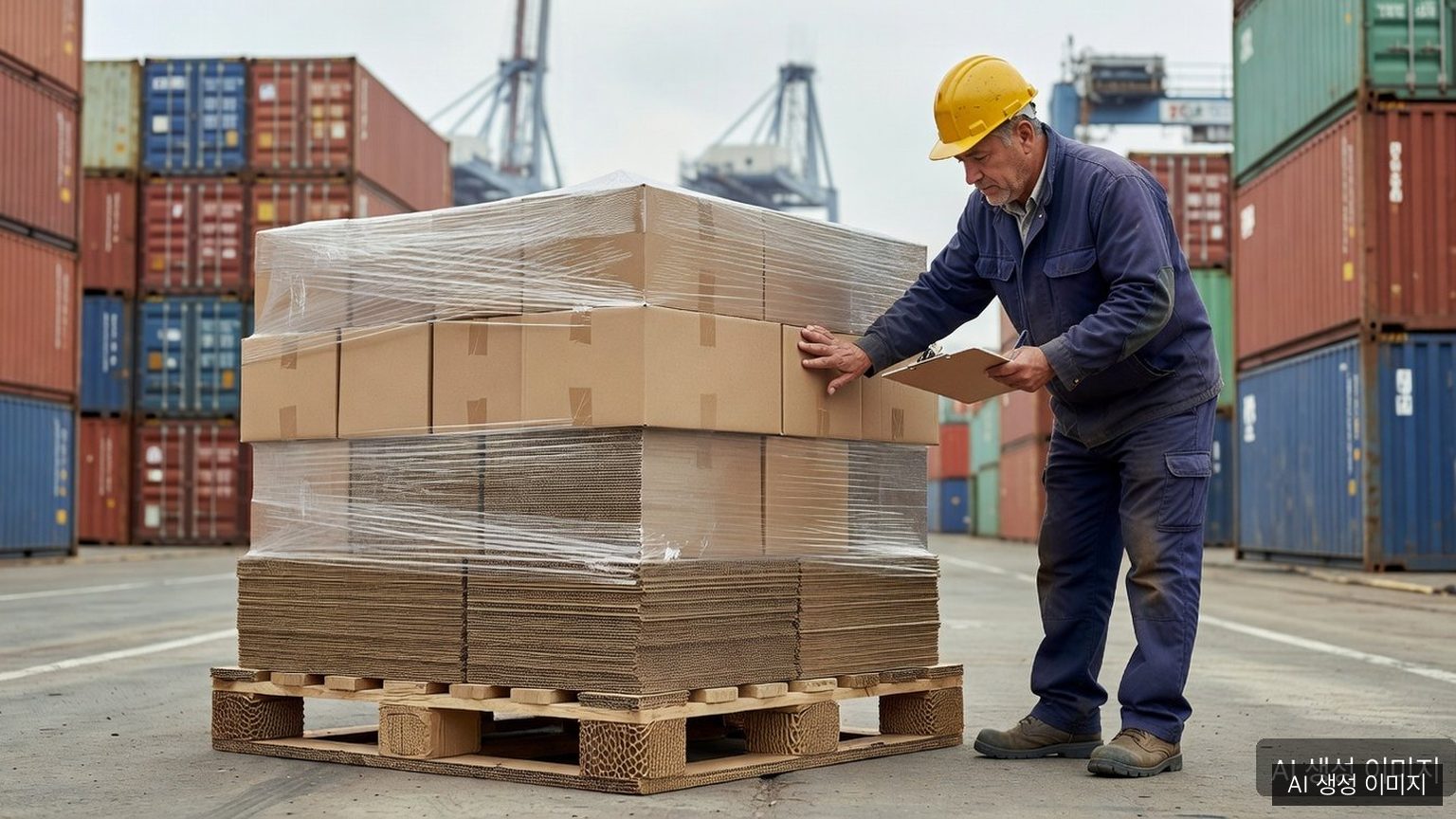
A frequently missed point here is the thickness and external dimensions of the paper pallet. Compared with wooden pallets (typically 144-150 mm thick), paper pallets can be designed around 100 mm, opening headroom to add one more stacking layer. At the same time, they weigh in around 6-8 kg, more than 8 kg lighter per pallet than a wooden pallet, so at the same number of layers more cargo can fit within the per-container payload ceiling.
SKU-Level Field-Measurement Procedure
The number of boxes per container can shift significantly depending on which pallet the same box is stacked on, and how. The following procedure minimizes omissions when measuring loading efficiency.
- Measure the current spec: record box external dimensions (W x L x H), box weight, pallet external dimensions and thickness, boxes per layer, number of layers, and total weight per pallet.
- Confirm container internal dimensions: ceiling height differs between 40ft dry and 40ft HC. Also review destination quarantine and customs criteria (e.g., ISPM 15, no-wood declaration).
- Simulate current loading: enter per-pallet cargo dimensions and calculate how many pallets fit per container. Leave 0-30 mm clearance for the door width, locking bars, and ceiling beads.
- Apply spec changes from the paper-packaging combination: reflect partial box-dimension adjustments (e.g., -5 mm on length, -10 mm on height), pallet switch to paper, and corner-guard honeycomb application in the simulation.
- Simulate the new loading: re-calculate boxes per layer, layer count, pallet count, total boxes per container, total weight, and total volume.
- Convert into a freight scenario: multiply the percentage increase in boxes per container by the same lane freight rate to compute the change in per-box freight cost. For cargo previously hitting the volume limit, box count increase is the key metric; for cargo previously hitting the weight limit, payload headroom is the key metric.
This procedure does not end with a single SKU. The improvement margin has to be ranked by SKU across the company’s entire export catalog to set priorities. Lightweight consumer SKUs that previously hit the volume limit usually show the largest savings, while heavy industrial SKUs show the largest payload-headroom recovery.
What Comes Down, and by How Much
Field-measured effects from paper-packaging combinations on container loading efficiency tend to fall into a few patterns. The numbers don’t apply uniformly to every cargo, but the ranges most often observed in Korean exporter operations are as follows.
- Pallet self-weight savings: from 14-17 kg for wooden pallets down to 6-8 kg for paper pallets. At 20-22 pallets per container, that removes 150-250 kg of non-cargo weight per container. Loading the same cargo into the same container leaves that much more payload headroom.
- Adding one stacking layer: wooden pallets are around 144 mm thick, while paper pallets can be designed around 100 mm. Depending on cargo layers and box height, SKUs that can take one additional stacking layer emerge. The effect is more visible on the 40ft HC.
- Better in-box void fill: using honeycomb board as corner guards and side fill reduces dead space inside the box, or trims the external box dimensions slightly so more boxes fit per layer. SKU-level box-external reductions of 5-10 percent are frequently reported.
- Freight-rate translation: when all three apply at once, SKUs that see a 5-12 percent increase in boxes per container appear. Per-box freight cost drops by the same magnitude on the same lane, with larger effects when lane rates are expensive.
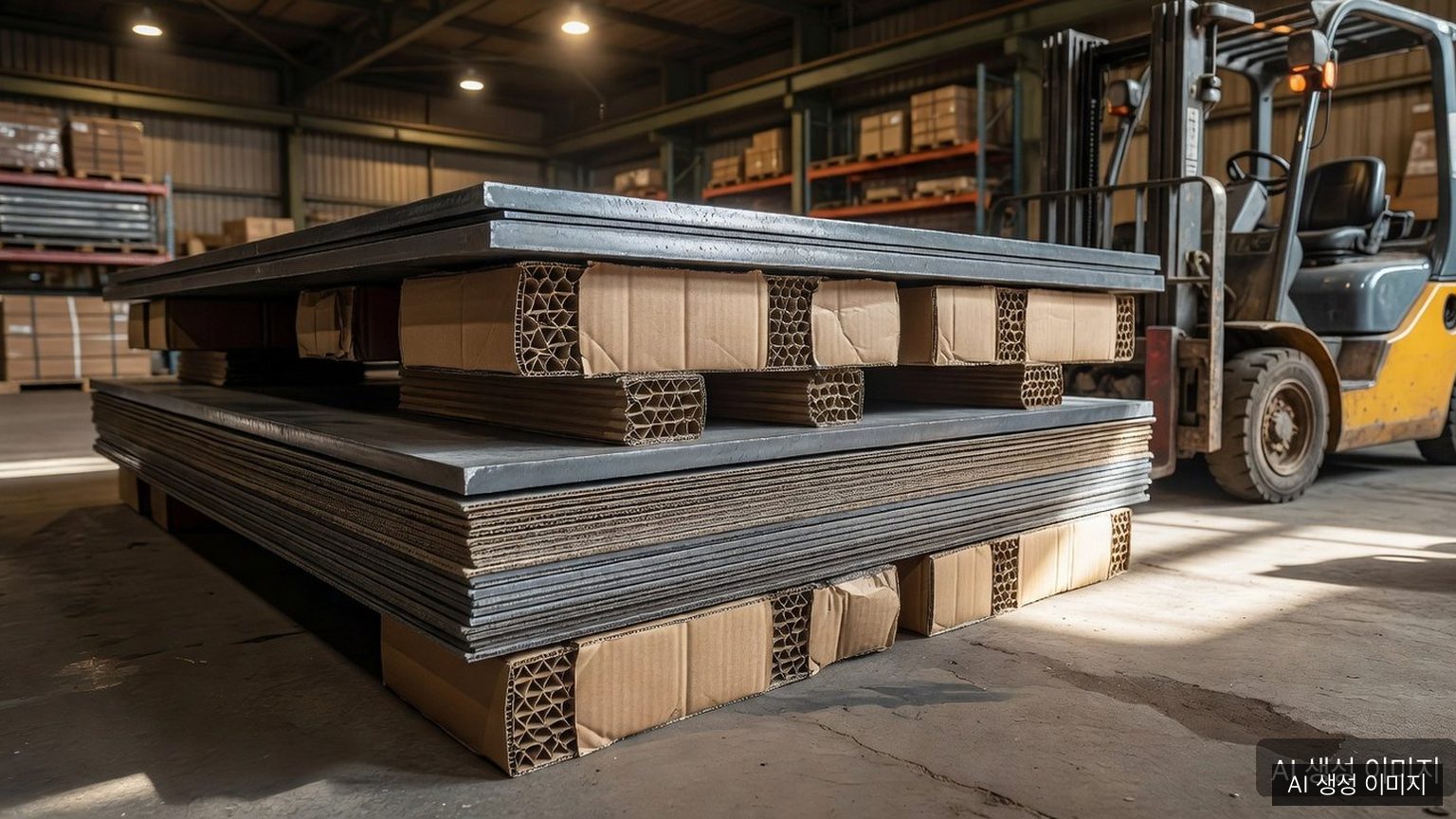
When putting these numbers into a quote or ROI report, it is safer to specify “same container, same cargo, same lane” as the baseline assumption. Otherwise freight-market volatility gets read as the effect of the redesign and obscures the real impact of the packaging change.
Common Traps in Raising Loading Efficiency
There are clear traps when raising container loading efficiency with paper packaging. Without checking these up front, the load factor rises but claims and damage rise with it.
First, stack collapse from insufficient compression strength. Adding one stacking layer while leaving BCT unchanged deforms or collapses bottom boxes. Basis-weight increases, ECT re-grading, and box redesign have to move together.
Second, strength loss from humidity and condensation. Paper packaging loses compression performance significantly when relative humidity sustains above 85 percent. On Southeast Asia, Middle East, and long ocean lanes, moisture liners, polycoat, edge sealing, and water-repellent pallet treatment should be reviewed in parallel.
Third, missed quarantine and customs criteria. ISPM 15 applies to wooden pallets, so switching to paper pallets removes the ISPM 15 requirement itself, but some destinations require a “no wood” declaration and material certification. Spec changes have to be aligned with declaration documents, labels, and quarantine procedures.
Fourth, missed forklift and hand-pallet-truck access. Paper pallets vary in length, width, fork entry direction, and entry depth by model. Without confirming what hand-pallet trucks and forklifts the destination warehouse uses, loading efficiency may rise while unloading cost rises with it.
Fifth, decisions made on unit-price comparison alone. A simple material unit-price comparison can make wooden pallets look cheaper. Once loading efficiency, payload headroom, EPR reporting fees, disposal cost, and quarantine cost are all included, the zones where paper combinations have the advantage become clear.
Items to Carry on the Quote and Spec
Transferring this procedure and the measured results to quotes and specs is easier when the following items are included, so they can be used later in spec changes, negotiations, and claims handling.
- Container type (40ft DRY or HC), arrival port and country
- Box external dimensions, box weight, layer count, boxes per layer
- Pallet type (wood/paper/plastic), thickness, width and length, self-weight
- Pallets per container, boxes, total cargo weight, total volume
- Basis weight, ECT, BCT grade, honeycomb placement and thickness
- Freight scenario (current lane rate, per-box freight after change)
- ESG and EPR reporting items, disposal classification
- Destination quarantine and customs requirements, material declaration documents
Organizing these items on one page lets sales, logistics, procurement, and production look at the same numbers in one meeting. Instead of just saying “we lifted loading efficiency,” it becomes traceable that this SKU improved by this percentage with this spec.
Wrap-Up
Export container loading efficiency is a faster lever than negotiating freight unit prices. A three-material paper combination is almost the only paper-based approach that can target both loading the same cargo lighter and packing more into the same volume at the same time. At the same time, ignoring compression strength, humidity, quarantine, and unloading sends the load factor up while claims follow behind.
The key is to start with SKU-level field measurement. Prioritizing by SKU based on potential savings across the company’s export catalog, and adjusting box, pallet, and honeycomb specs together in that order, adds another card to the negotiation table. Looking at EPR and ESG together makes the paper-packaging combination not only a cost-saving tool, but a card that lifts export competitiveness itself.
Frequently Asked Questions
Q: Is loading-efficiency improvement really a faster card than freight unit-price negotiation?
It depends on the situation, but loading-efficiency improvement is more controllable because the result follows once packaging design is adjusted. Freight negotiation moves with market conditions and deal volume, while box external dimensions and pallet thickness are decisions the company can make on its own.
Q: Does switching to paper pallets remove the ISPM 15 declaration?
ISPM 15 is a quarantine standard that applies to wooden packaging materials, so it does not apply to paper pallets themselves. However, some destination countries can require a “no wood” declaration and material certification, so it is safer to check the destination’s quarantine criteria and lane precedents together.
Q: Which gives a bigger effect, 40ft DRY or 40ft HC?
It depends on cargo layers and box height. SKUs with room to add one more stacking layer see a bigger effect on the 40ft HC. The lower-ceiling 40ft DRY is better suited to lifting loading efficiency by trimming box externals within the same layer or reducing pallet thickness.
Q: How does loading-efficiency improvement connect to ESG and EPR reporting?
Switching wooden pallets to paper pallets and increasing honeycomb foam simplifies waste classification and recycling flows, which can help with Korea EPR reporting and overseas regulatory reporting such as EU PPWR. Putting material specs together with disposal classification and destination recovery flow into the reporting documents lets ESG scores and actual cost savings be evidenced together.
About the Author
PackingMaster: Editor of PaperPackLog. Curates and organizes market trends, product information, and technical insights for the paper-packaging industry.