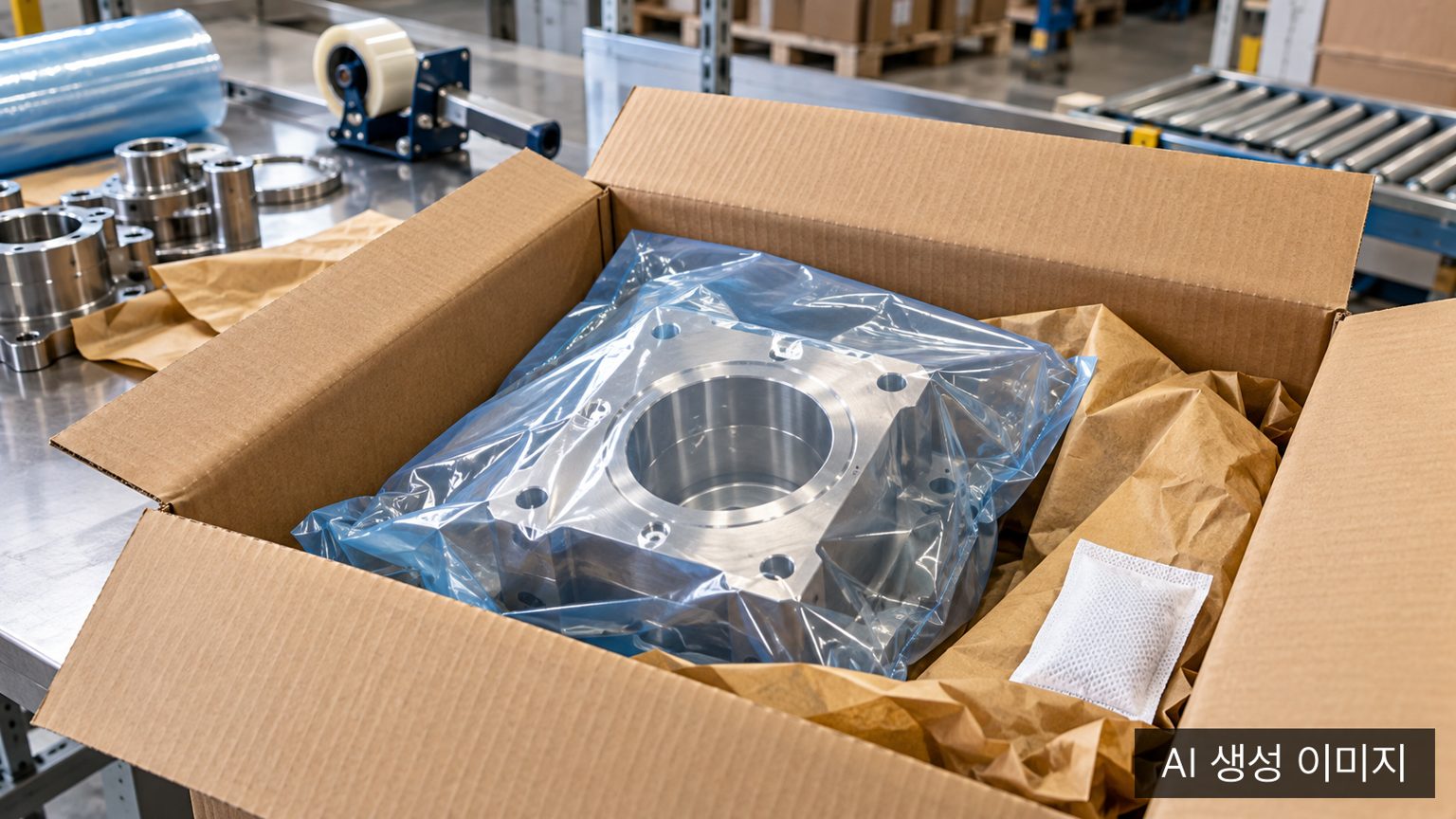
If a metal component arrives corroded, adding more desiccant should not be the first response. Identify when moisture or contamination reached the surface. Packaging Scotland’s October 28 report on Antalis’s advice points to temperature and humidity changes in transit, extended storage and handling practices. This guide does not treat a vendor’s shipping-damage estimate as a general export failure rate. Its focus is the diagnostic sequence. These are AI-generated illustrative images, not photographs of customer parts or tests.
Operational problem
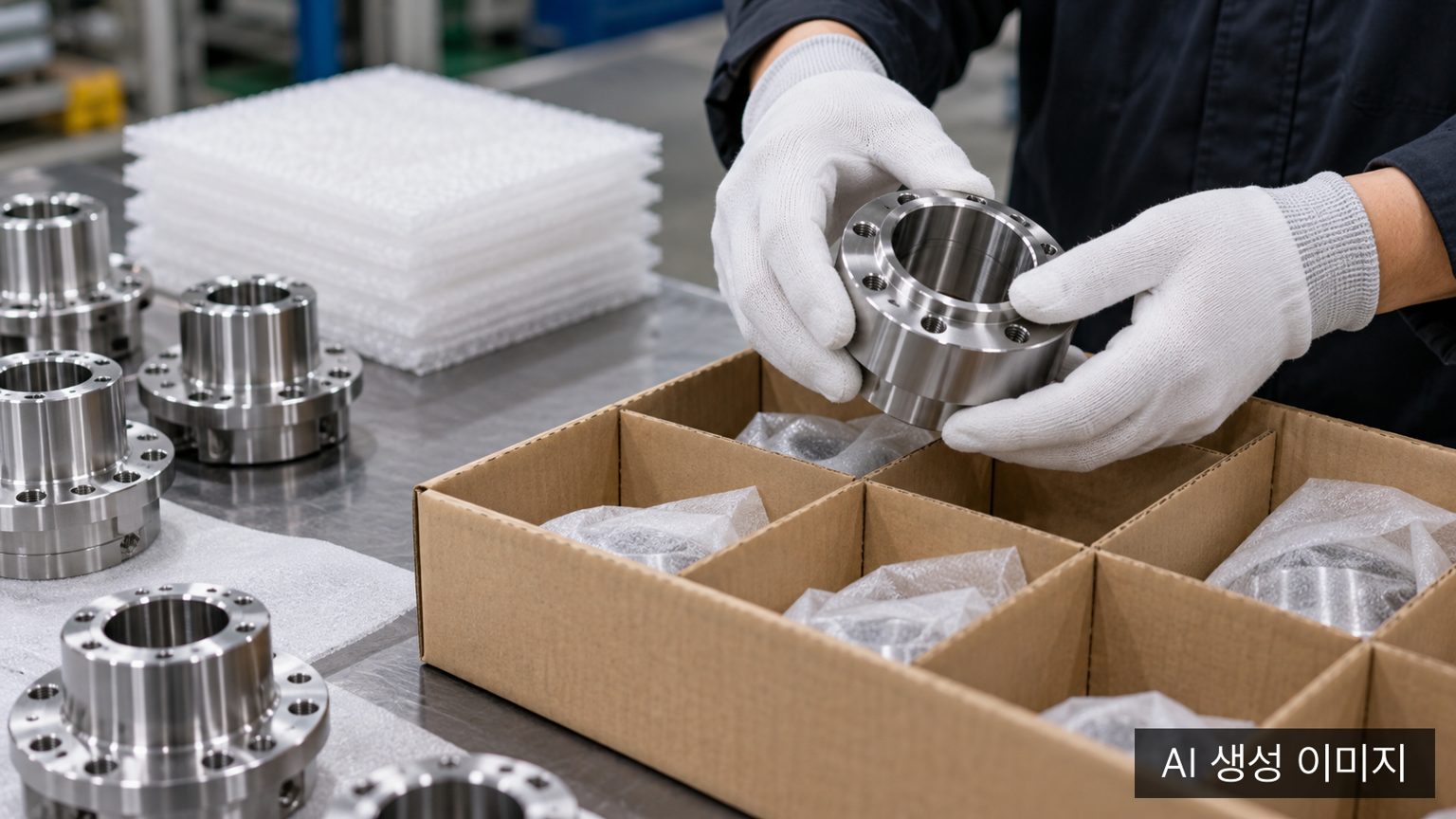
Separate moisture or fingerprints present before sealing from condensation inside the pack and humidity swings in storage. The report describes an example in which workers had removed the fingertips of their gloves and left marks on components. It illustrates why handling belongs in the investigation; it does not establish the cause of every corrosion complaint.
Evidence to request
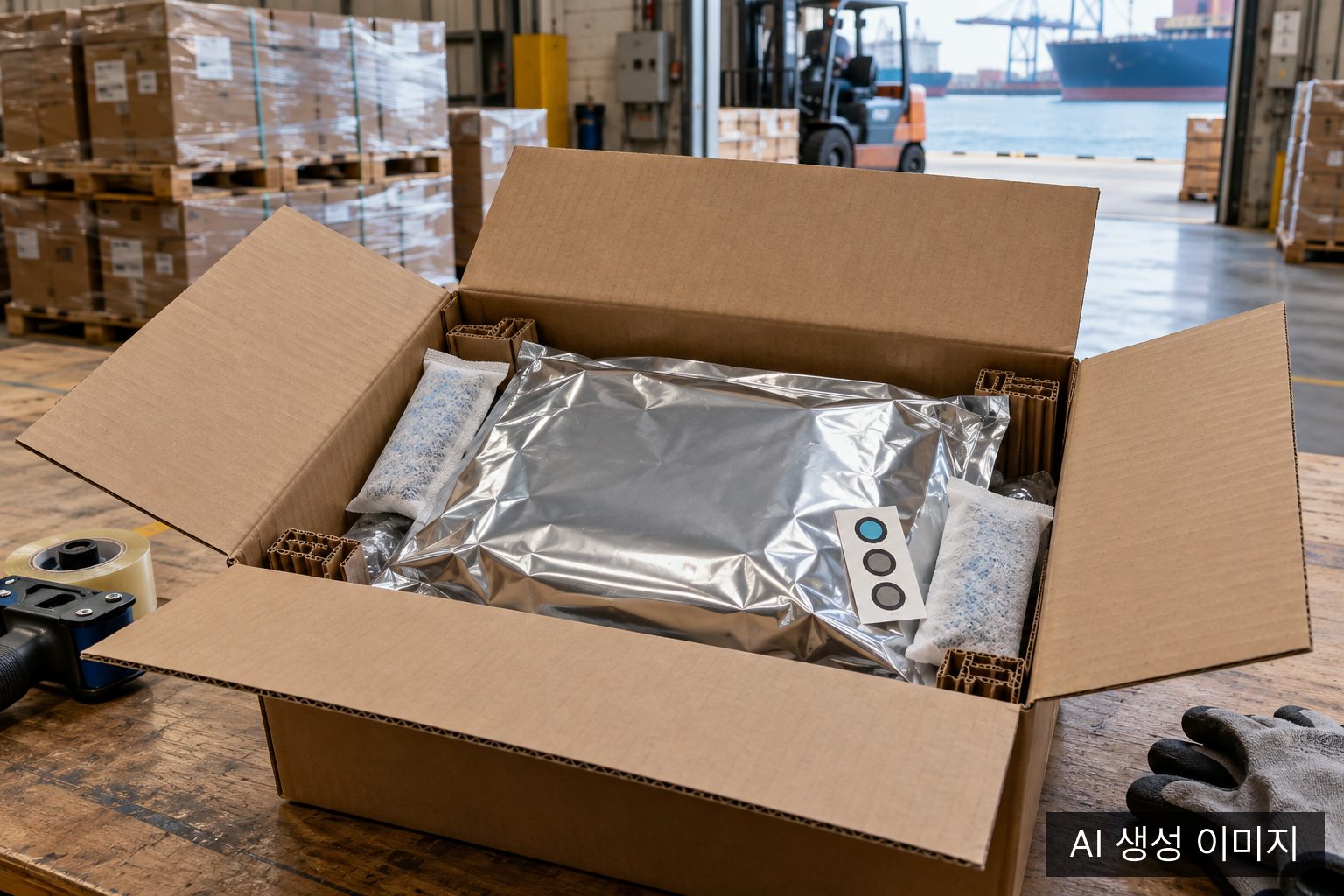
Antalis’s October 23 corrosion-packaging guide lists barrier films, desiccants and volatile corrosion inhibitors (VCIs) as available approaches. No single material automatically suits every metal and shipping route. Check VCI compatibility against metal type, surface treatment, pack volume and temperature with the supplier. Size desiccant to the enclosure, initial moisture, barrier permeability and shipment duration. A corrugated outer box can support handling and cushioning, but it does not automatically replace a sealed moisture barrier.
Practical output
Record the component alloy and finish, post-cleaning dryness, time to pack, route and duration, expected storage conditions, seal design and supplier compatibility evidence in the packing specification. Test the actual component with the proposed box, inner pack and inhibitor combination under relevant temperature and humidity cycles, then inspect the component surface and moisture traces. Acceptance locations and limits must come from the product or customer specification, not an invented generic number. Temperature and humidity cycling is an editorially proposed verification method.
When to defer application
Do not select VCI or desiccant as a default answer while alloy, surface finish, customer requirements or storage duration are unknown. If corrosion occurs, investigate cleaning, handling, sealing, storage and transit records before attributing it to the packaging material. Unlike a general paper-barrier choice, this decision turns on metal compatibility and the complete journey.
About the Author
PackingMaster: PaperPackLog editor covering paper-packaging markets, products and technology using public sources.
References
- Packaging Scotland, Antalis advice on protecting metal components, October 28, 2026
- Antalis Packaging, guide to anti-corrosion packaging, October 23, 2026 — supplier guidance, not a performance test for a specific part.