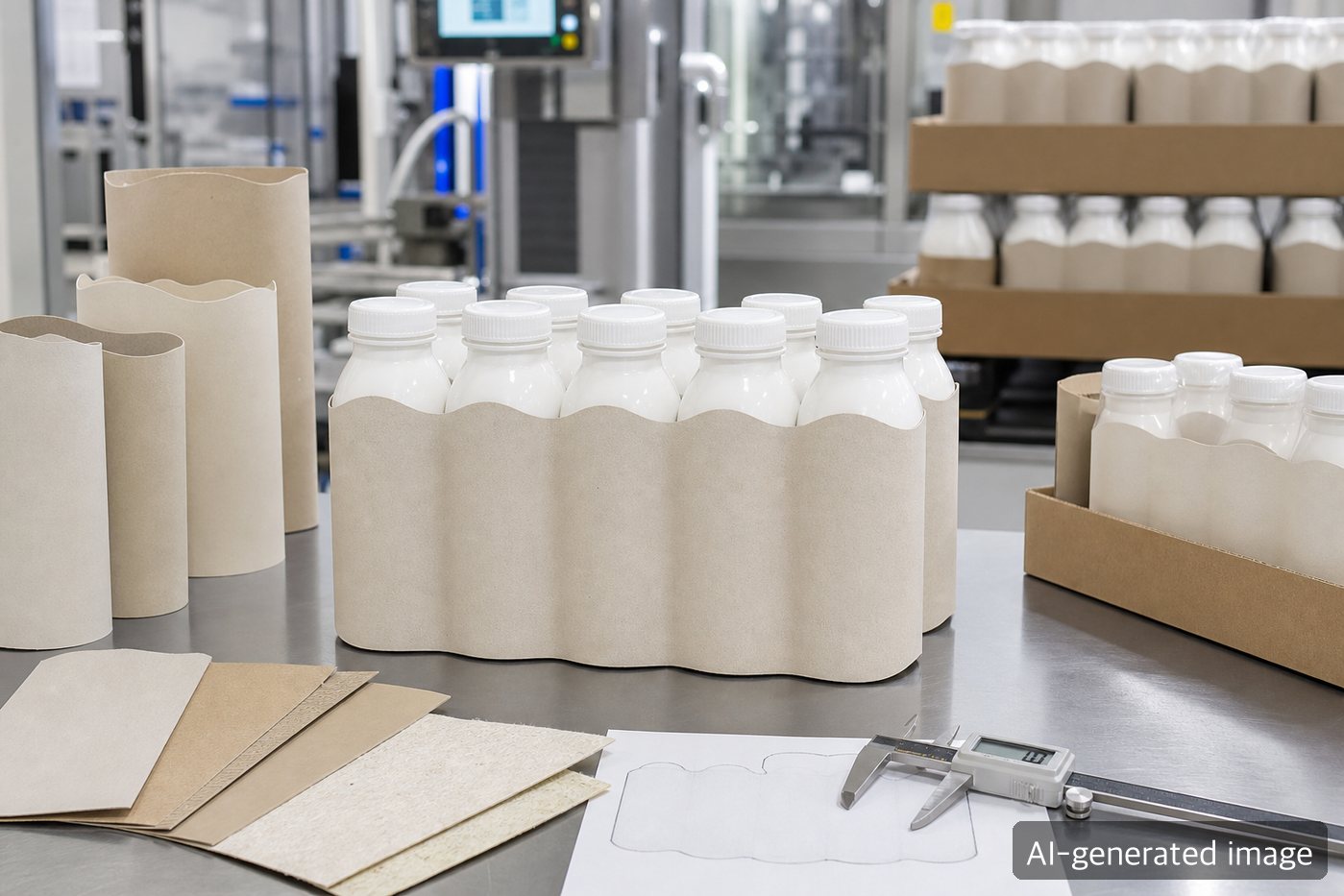
Sleeve labels are attractive in dairy and chilled beverage packaging because they offer a large branding and information area around a small bottle. But conventional shrink sleeves can also create recyclability problems when the sleeve material, inks, adhesives, or full-body coverage interfere with sorting and recycling. Recent news that Prism has introduced a fully recyclable sleeve solution for Bio&Me kefir drinks is therefore more than a label story. It is a useful case for understanding what a real food-packaging material shift requires.
The key point is not simply that a sleeve has been made from a different material. For food packaging, the sleeve has to work in the recycling system, on the filling and labeling line, in cold-chain distribution, and under labeling regulations.

Why Sleeve Packaging Matters Again
Dairy drinks, fermented beverages, functional drinks, and chilled foods often have limited container surface area. The label has to carry nutrition information, storage instructions, ingredients, allergy warnings, and brand design. A sleeve can wrap the whole container and provide far more communication space than a small pressure-sensitive label.
The challenge is recyclability. Even if the bottle itself is recyclable, a sleeve made from a different material can reduce the quality of the recovered material or disrupt optical sorting. Dark full-body sleeves can hide the container material, and inks or adhesives can affect washing and reprocessing.
A recyclable sleeve review should start with four practical questions.
- Does the bottle-and-sleeve material combination match the target recycling stream?
- Can sorting equipment still identify the container correctly?
- Does the consumer need to remove the sleeve, or is the package designed for recycling without removal?
- Does the sleeve run at acceptable speed and quality on existing equipment?
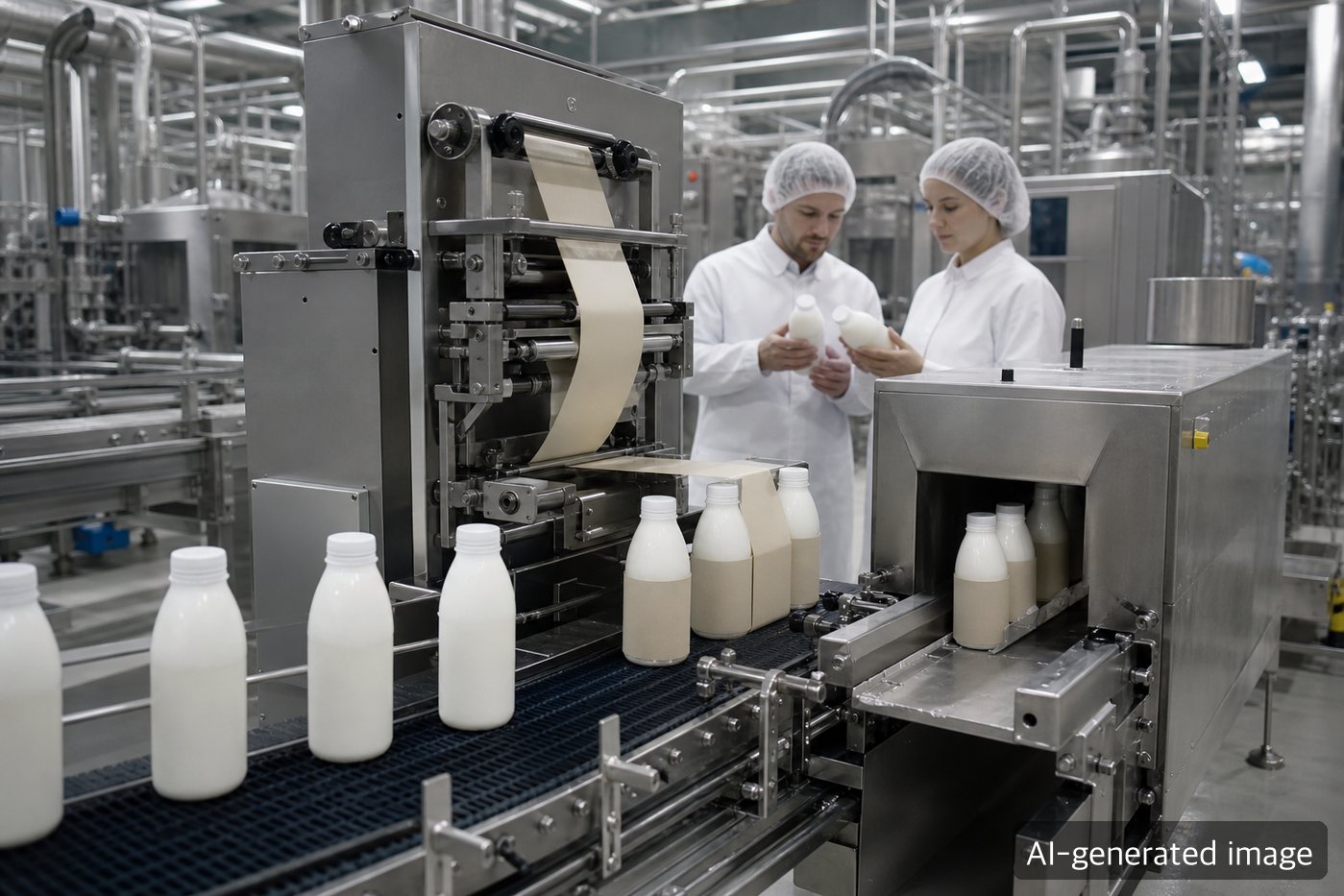
What “Fully Recyclable” Has to Prove
“Fully recyclable” is a strong marketing phrase, but B2B packaging decisions require evidence. The same sleeve can perform differently depending on container material, ink system, perforation design, adhesive use, shrink ratio, and local collection infrastructure.
Suppliers should prepare a practical evidence set before proposing a new sleeve.
| Checkpoint | Evidence Needed |
|---|---|
| Material structure | Sleeve material, thickness, ink and adhesive system |
| Container compatibility | PET, HDPE, PP, or other bottle compatibility |
| Sorting and recycling | Optical sorting, float-sink behavior, washing impact |
| Production performance | Shrink temperature, line speed, wrinkle and tear rate |
| Consumer instructions | Perforation, removal guidance, market-specific labeling |
| Cost impact | Unit cost, EPR fees, packaging tax or fee exposure |
This is why a material brochure is not enough. Food brands evaluate packaging cost together with line stoppage risk, recall risk, labeling compliance, export requirements, and consumer disposal instructions. A sleeve that is recyclable in theory but unstable on a production line will be difficult to adopt.
Implications for Food and Dairy Packaging
The same logic applies to Korean food and dairy packaging. As packaging information increases, brands need more label space while also reducing environmental-claim risk. Recyclable sleeves can become a practical option when three conditions are met.
First, the container and sleeve material strategy must be designed together. A recyclable bottle is not enough if the sleeve becomes a barrier to sorting or reprocessing.
Second, line validation is necessary. Changing sleeve material can alter shrink temperature, dimensional stability, static behavior, perforation strength, and print distortion. A small sample may look fine, but high-speed production can reveal wrinkles, tearing, or alignment defects.
Third, recyclability language should be conservative and evidence-based. Instead of saying only “recyclable,” suppliers should explain under which material combination, recycling route, and market standard the claim is being made. Export products may also need to consider PPWR, national EPR systems, and labeling rules.
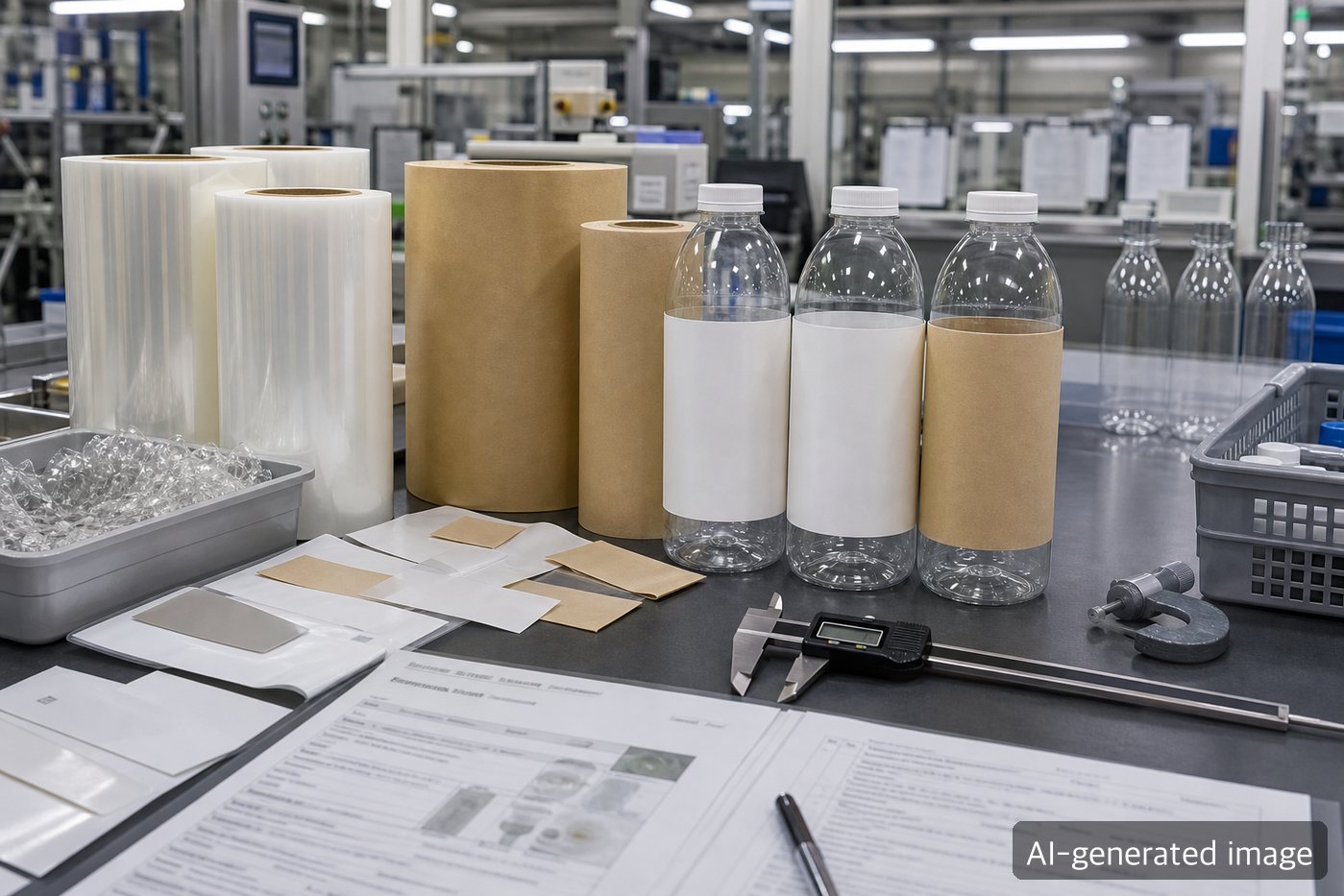
A Better Proposal Method for Suppliers
A recyclable sleeve should be proposed as a conversion-test package, not just as an eco-friendly label. A practical process can look like this.
- Confirm the customer’s current container and sleeve material.
- Check recycling and disposal rules in the target market.
- Print samples and test shrink ratio, wrinkles, perforation, and cold storage.
- Collect sorting or recycling-process evidence.
- Compare cost, EPR exposure, label area, and production speed.
- Prepare both consumer instructions and B2B technical documentation.
This approach benefits both the supplier and the food brand. The supplier can move beyond unit-price competition, while the brand can reduce environmental-claim risk and evaluate real production feasibility.
Conclusion
The fully recyclable sleeve case shows that food-packaging material shifts are system changes. Container, sleeve, ink, adhesive, filling line, recycling infrastructure, and consumer instructions all have to work together.
For packaging suppliers, the opportunity is not just to sell a new label material. It is to provide product-specific validation, line testing, and recyclability evidence. The next stage of food packaging competition will likely depend on who can combine communication space, sustainability claims, and production reliability in one verified package.
Frequently Asked Questions
Q: Are recyclable sleeves the same as paper sleeves?
No. Some sleeves may be paper-based, while others improve recyclability by using a compatible mono-material structure. The important point is whether the final package works in the target recycling stream.
Q: Can existing shrink-sleeve equipment be used?
Sometimes, but the new material can change shrink temperature, tension, static behavior, perforation quality, and print distortion. Line testing is required before production.
Q: What should food brands check first?
Shelf-life protection, labeling compliance, production performance, and recyclability evidence should be checked together. A single advantage is not enough for adoption.
About the Author
PackingMaster: Editor of PaperPackLog. Curates and organizes market trends, product information, and technical insights for the paper-packaging industry.