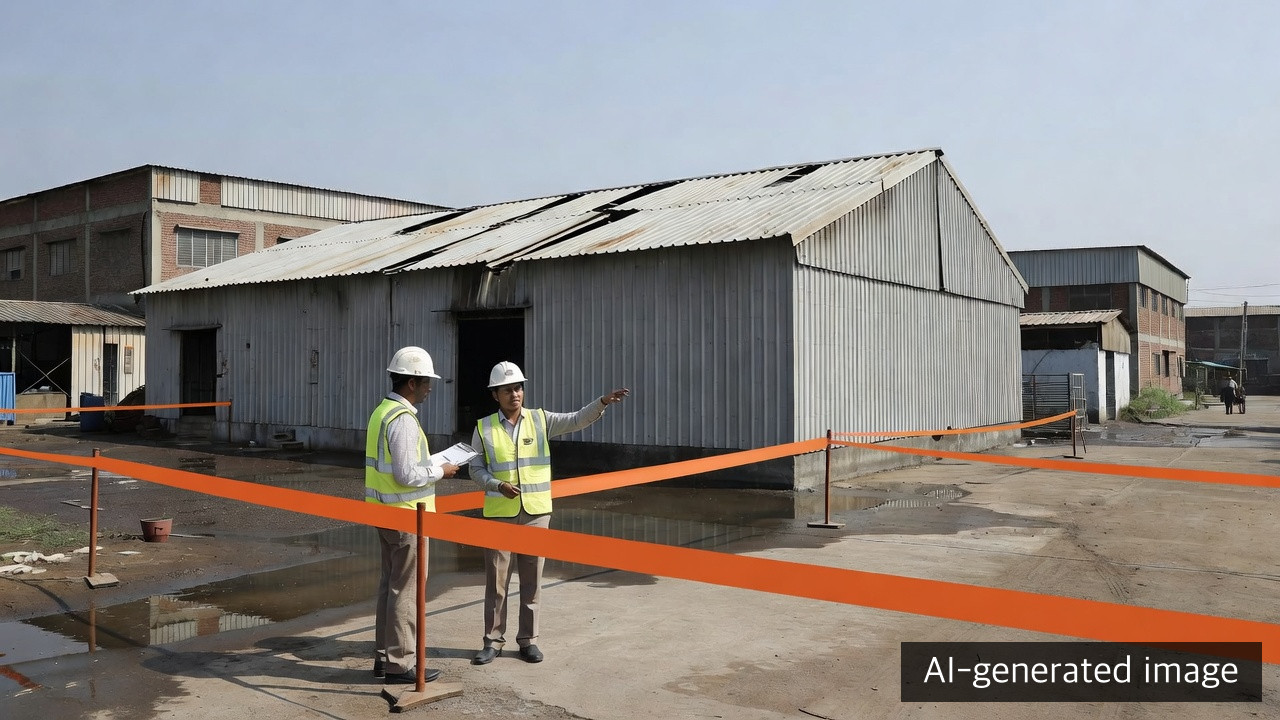
On September 5, 2026, local media reported a major late-night fire at a bag-manufacturing factory in the Tronica City industrial area of Ghaziabad, Uttar Pradesh, India. The India Today pages reviewed both describe a late-night fire but identify the day differently as Friday and Saturday. This article therefore uses September 5 as the publication date and leaves the exact ignition date and time unconfirmed. According to a fire officer quoted in the reports, the response grew from an initial four fire tenders to about 12 fire tenders and water tankers. Because fire remained beneath a collapsed metal roof, crews demolished walls and operated 8–10 hose lines from the front and rear. No deaths or injuries were reported.
The public reports do not establish what material and type of bags were made, which equipment, inventory, or orders were affected, or when production and shipment would resume. A buyer should not jump directly to “Indian packaging supply disruption.” The first task is to confirm whether a purchased item was actually made at this site, then connect structural access, inventory disposition, and PO release with evidence.
What the public reports establish
ETV Bharat quoted Fire Officer Rahul Pal Singh as saying that the Tronica City Fire Station received the alert for a fire at R&R Incorporation, a bag-manufacturing factory in Sector A3. The report and the recorded on-site statement describe the response as follows.
- Four tenders were initially sent from Tronica City, and about 12 fire tenders and water tankers were used in the overall response.
- The factory covered a large area. A metal roof collapsed and fire continued beneath it, so walls were demolished with a JCB and 8–10 hose lines were operated from the front and rear.
- Reports quoting the fire officer said no deaths or injuries were reported.
- India Today reported that three factory sheds were affected and that the fire was brought under control at about 2 a.m. after roughly four hours.
- ABP Live’s video description said no workers were inside at the time and that the cause was under investigation. That is the outlet’s account; the material reviewed does not include a separate final investigation report.
Several URLs do not make these separate investigations. The initial reports rely mainly on the same fire-service account and scene footage. They should not be expanded into an independently corroborated company operating update.
What remains unconfirmed
The September 5 reports reviewed do not disclose:
- bag material, construction, end use, or actual product codes;
- the point and cause of ignition or final fire-service, insurance, or regulatory findings;
- an asset list or quantities for damaged buildings, equipment, tooling, raw materials, work in process, and finished goods;
- quality disposition for inventory exposed to heat, smoke, soot, firefighting water, or debris;
- production restart, commercial shipment, alternate production, and customer-delivery dates; or
- allocation by customer and PO or an insured loss amount.
“Bag factory” must not be silently rewritten as a paper-bag, sack, shopping-bag, or other specific packaging plant. Until a buyer confirms that its item is made at this site, supply exposure remains unconfirmed.
Separate fire control from permission to enter a collapsed structure
A report that the fire was under control does not establish that the building was safe to enter. Public coverage described a collapsed metal roof and demolished walls. Site access must follow the local fire-service handover, applicable law, competent structural and electrical assessment, and the facility’s approved procedures.
The recovery ledger below is not a reconstruction of measures taken at the Ghaziabad factory and is not a statement of Indian legal requirements. It is an editorial operating example for manufacturers facing roof or wall damage and possible heat, smoke, and firefighting-water exposure to inventory.
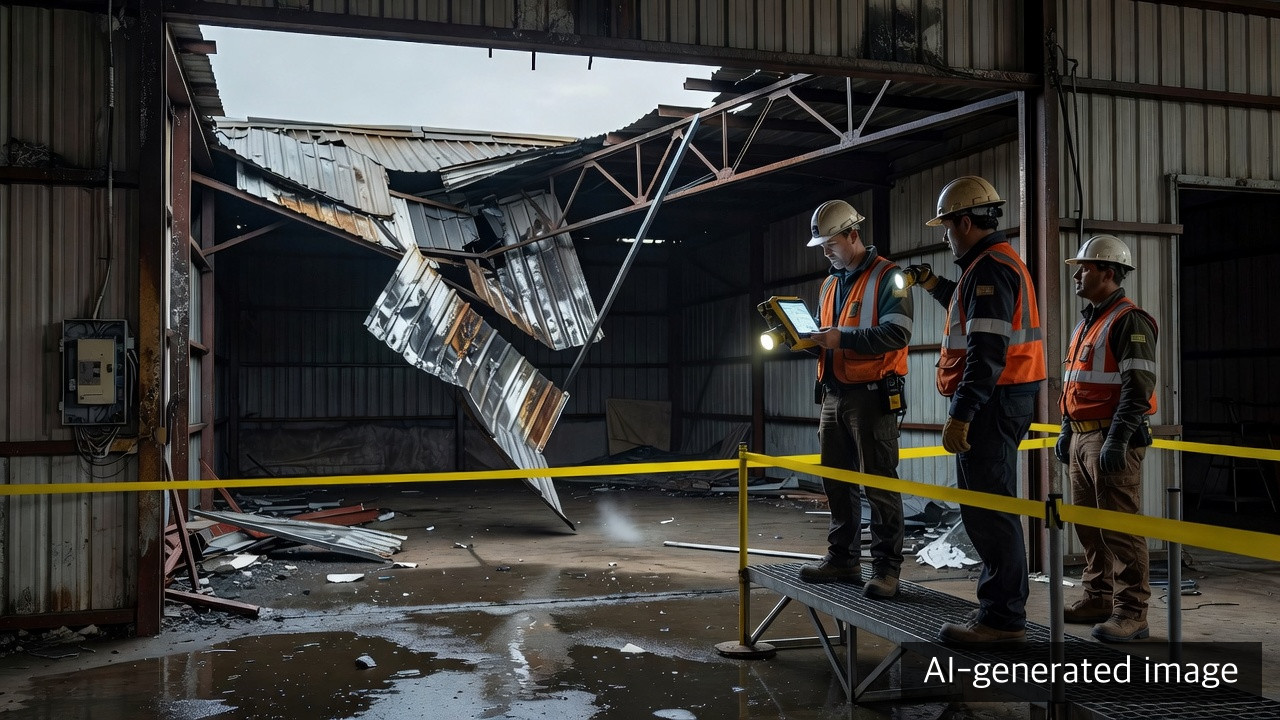
Record 1: site-access card
Do not change an entire building to “open for entry” when emergency response ends. Complete one card for each building, shed, and affected zone.
- Incident and zone key — Record the incident ID, building, shed, bay, drawing location, and photo time.
- Fire-service handover — Record emergency-response completion, residual hot-spot and rekindle monitoring, the handing and receiving parties, and time.
- Structural access state — Classify the roof, wall, column, beam, floor, and opening as
no entry / restricted access / approved access, with the assessor and evidence. - Utility isolation — Separate isolation and re-energization approval for electricity, gas, compressed air, heat sources, fuel, and installed fire-protection systems.
- Demolition and heavy-equipment boundary — Mark falling-object, crush, and overturn hazards and the control zone for wall demolition, JCB, crane, or work-at-height activity.
- Release evidence — Link structural and electrical reports, photographs and thermal images, hot-spot records, access approver, and next inspection time.
No inventory count or recovery target justifies entry into a collapse zone before the site-access card is approved. Prefer remote observation by camera, drone, or other non-contact means; the actual access method must be decided by locally authorized and competent personnel.
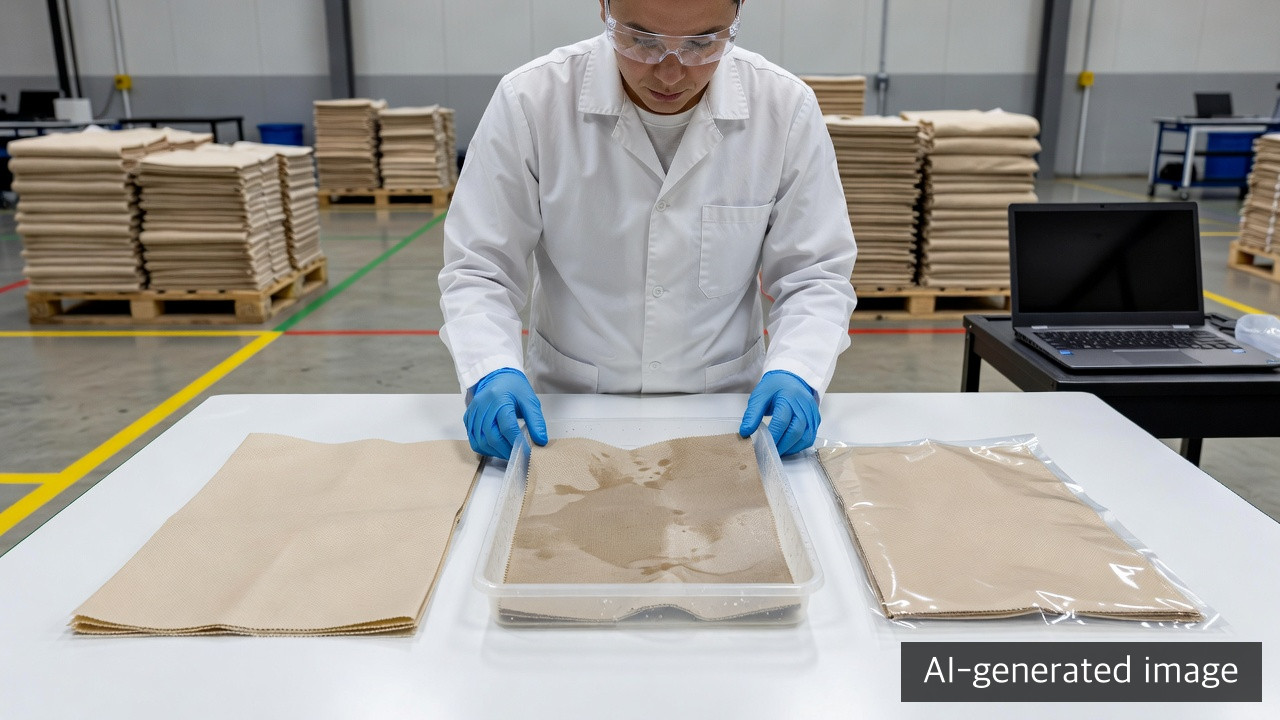
Record 2: material-and-lot disposition card
Counting only visibly burned stock can overstate usable inventory. Separate direct burning, heat, smoke and soot, firefighting water, structural debris, unknown exposure, and unaffected segregated stock by location and lot.
- Item identity — Record item code, product, material and construction, specification, end use, customer, and lot. Use internal specifications and supplier data, not a news article.
- Pre-incident location — Link the shed, bay, rack, work-in-process step, finished-goods area, and evidence for the quantity immediately before the incident.
- Exposure class — Record
direct burn / heat / smoke and soot / firefighting water / debris / unknown / unaffected and segregated. More than one class may apply to a lot. - Physical quarantine — Keep undecided stock separate from released stock by zone, pallet, or container. Do not cover the original lot traceability with the quarantine identifier.
- Inspection and test — Use only the checks required by the actual specification: appearance, odor, contamination, moisture, dimensions, printing, lamination, bonding, and relevant physical properties.
- Disposition — Classify the lot as
released / rework / awaiting customer approval / awaiting disposal or insurance decision, with approver, time, and evidence file.
Because the public reports do not identify the material, this article does not claim how moisture, heat, or smoke affected a specific property. Tests and acceptance criteria must come from the real product specification, customer requirement, applicable rules, and a competent quality decision.
Record 3: PO-release card
A partial site restart does not mean that a buyer’s order has shipped. Link each PO to the site-access and material-and-lot disposition cards.
- Order baseline — Record customer, PO, item code, specification, quantity, requested delivery, and committed ship date.
- Manufacturing-site check — Confirm the actual factory, shed, and line. If the Ghaziabad site is not involved, retain the evidence for the non-exposure decision.
- Allocated stock — Separate pre-incident finished goods, post-incident released stock, external-warehouse stock, and goods in transit. Link the lot-disposition card.
- Production and shipment state — Keep
impact unconfirmed / production hold / trial production / quality release / shipment release / in transitas distinct states, with time and respondent. - Alternative — Record differences in alternate site, supplier, material, construction, specification, sample date, converting trial, and required customer change approval.
- Confirmation evidence — Link only evidence actually obtained: production record, inspection result, dispatch number, transport document, ship date, or ETA.
Do not close a PO-release card on the words “factory operating” or “fire controlled.” Without a released lot and actual dispatch evidence, keep the state as unconfirmed or awaiting shipment release.
Eight questions to send the supplier
- Please confirm by item code whether our products are manufactured, stored, or dispatched from the affected Tronica City site in Ghaziabad.
- Please provide the boundary between affected sheds or zones and areas confirmed as unaffected and segregated.
- Where was each of our lots at the time, and was it exposed to heat, smoke, soot, firefighting water, or debris?
- Which zones are approved for access after structural and electrical assessment, and which remain no-entry areas?
- Who owns inventory quarantine, inspection, testing, use or disposal decisions, and when will each decision be complete?
- Please separate the status and dates for production restart, trial production, quality release, and commercial shipment.
- If an alternate site or item is proposed, provide differences in material, construction, specification, and process, plus sample and customer-approval timing.
- For each PO, what are the confirmed production date, dispatch date, transport document, ETA, and next written update time?
Conditions that block a “normal supply” decision
Do not record “normal supply,” “no quality impact,” or a firm delivery date while any of these remains unresolved.
- Fire-service handover and structural and electrical access approval are not separated by zone.
- Control lines and falling-object hazards for collapsed roofs, walls, or heavy-equipment work are not defined.
- Product material, construction, end use, and the actual factory for the buyer’s item are unconfirmed.
- Stock exposed to direct burning, heat, smoke, firefighting water, or debris is not physically separated from released inventory.
- Lot-level acceptance criteria, results, approver, or required customer change approval is missing.
- Trial production and commercial shipment are not distinguished, or dispatch and transport evidence is absent.
- Only initial news coverage is available and the supplier has not provided an item- and PO-specific written response.
The public record supports a major bag-factory fire, a response involving about 12 fire tenders and water tankers, multi-side firefighting under a collapsed roof, and no reported casualties. Product material, cause, inventory damage, restart, and customer delivery remain unconfirmed. The practical sequence is therefore site-access card → material-and-lot disposition card → PO-release card. If those three records do not link through evidence, “fire controlled” must not become “supply normal.”
About the Author
PackingMaster: Editor of Paper Pack Log. We collect and organize market trends, product information, and technical insights for the paper packaging industry.
References
- IANS, scene footage and fire-officer statement on the Tronica City bag-factory fire
- ETV Bharat, fire response at a bag-manufacturing factory in Tronica City, Ghaziabad
- India Today, Ghaziabad bag-factory fire report describing Friday night
- India Today, Ghaziabad bag-factory firefighting report describing Saturday night
- ABP Live, video report on the Tronica City bag-factory fire