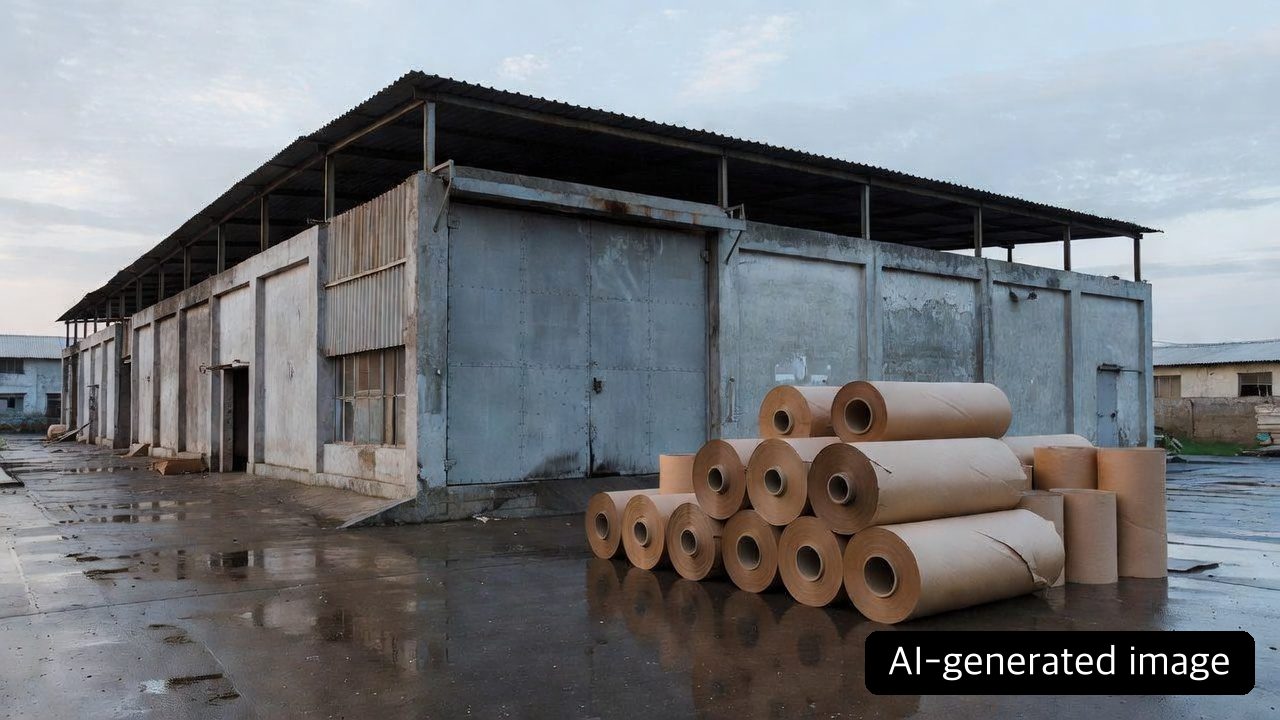
On the morning of September 18, 2026, a fire occurred at a paper-tube factory in the Tronica City industrial area of Loni, Ghaziabad, Uttar Pradesh, India. Local reports say the fire was fully extinguished about five hours later, but they do not establish a production stoppage, equipment damage or customer-delivery impact. Procurement, production, quality and logistics teams need a working check that connects the actual manufacturing site, paper-core specification, exposed lots, alternate approval and PO shipment, not an assumption of supply disruption.
Status checked at 12:15 p.m. KST on September 19, 2026. The operating status may change if the fire service, company, insurer or customers issue later information.
This was a different incident from the bag-manufacturing factory fire reported from the same wider Tronica City area on September 5. Mixing the factory type, date or purchased item would create the wrong supply decision.
What the local reports establish
Amar Ujala and Dainik Bhaskar reported a fire at SK Paper Tube Industries at Plot C-58, Sector D-1, Phase 2, in the Tronica City industrial area of Loni. Both accounts centre on a fire-service officer’s description and report the following points.
- The fire service received the alert at about 6:23 a.m. on September 18.
- Three fire tenders were initially dispatched to the approximately 1,500-square-metre factory. An additional water bowser or fire vehicle brought the reported total to four.
- Paper rolls continued to smoulder in a walled room.
- With police assistance, a JCB was brought in to break one wall. The paper rolls were removed and doused with water.
- Both reports say the fire was fully extinguished at about 11:00 a.m. and that no injuries were reported.
- The cause had not been determined.
The reports describe the intermediate control point differently. Amar Ujala says the fire was controlled by about 7:00 a.m.; Dainik Bhaskar says it was largely controlled after about two hours. This article keeps that difference source-specific and uses only their common statement that full extinguishment occurred at about 11:00 a.m.
On mobile, swipe the table horizontally to view the hidden columns.
| Item | Reported fact | Current status | Do not infer |
|---|---|---|---|
| Site and time | Plot C-58; alert at about 6:23 a.m. on September 18 | Reported locally | That it made the buyer’s item |
| Fire response | Three vehicles initially; four in total after an additional vehicle | Reported locally | Damage scale from vehicle count |
| Paper rolls | Smouldering continued among rolls; one wall was broken before removal and dousing | Reported locally | That all base paper or inventory was lost |
| Fire status | Intermediate control time differs; fully extinguished at about 11:00 a.m. | Extinguishment reported | That production, quality and shipment were released |
| People | No injuries reported | Reported locally | A separate official casualty registry or long-term health conclusion |
| Cause | Not determined | Unresolved | An electrical, equipment or work-process cause |
| Production and delivery | No public operating notice reviewed | Unresolved | A stoppage, restart date or customer delay |
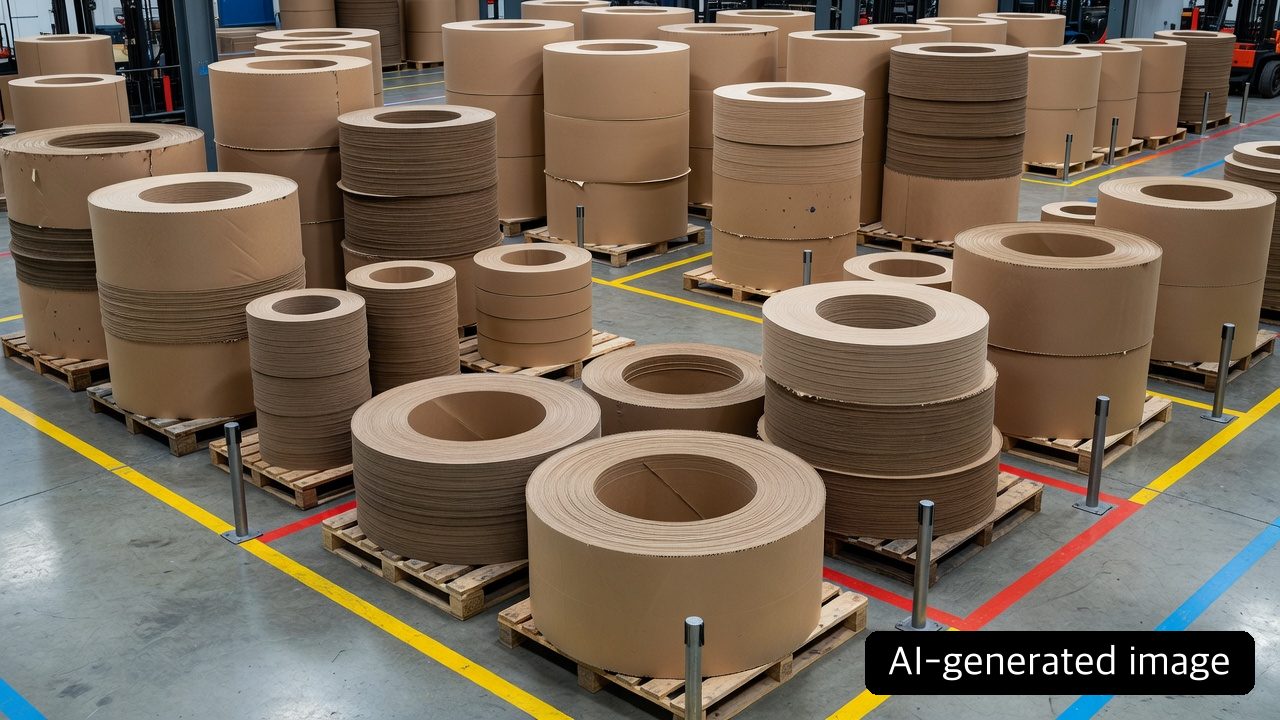
Two articles are not independent operating confirmation
The outlets are different, but the detailed sequence is very similar and is built around the same fire-service account. Multiple URLs do not independently confirm the company’s production condition or loss amount. The public material reviewed does not disclose:
- which paper-tube or paper-core products and specifications were made;
- quantities of damaged base-paper rolls, adhesive, work in process and finished goods;
- the condition of winders, cutters, drying or curing areas, dust collection and electrical equipment;
- usable external-warehouse inventory or goods already in transit;
- production stoppage, trial production, quality release or commercial-shipment dates;
- delivery impact by customer and PO, alternate production, insurance or recovery timing.
The following checks therefore do not reconstruct the named factory’s equipment or recovery actions. They are general editorial working examples for Korean manufacturers and exporters checking exposure to a paper-core supplier. They are not a statement of Indian law or instructions for entering the site.
Practical deliverable: four-stage paper-core supply decision
Q0. Connect the purchased item to the actual manufacturing site
Do not mark exposure merely because the supplier name matches. Conversely, an intermediary may hide a real link to the incident factory.
- Put the item code, customer, end use and open PO on one line.
- Confirm the actual factory, shed, winding and cutting line, and dispatch warehouse.
- Obtain a written answer on whether the incident site, another plant or a subcontract process made the item.
- Retain manufacturing-site, inventory-location and dispatch evidence even for a non-exposure decision.
Release evidence: actual plant by item, open-PO list, inventory location at the incident time and timestamped supplier reply.
Q1. Do not combine base paper, work in process and finished cores as one inventory figure
The reports establish that paper rolls continued to smoulder in a walled room. They do not identify the grade, width, lot, production stage or damaged quantity. Ask the supplier to separate:
- Base-paper rolls: direct burn, heat, smoke and soot, firefighting water, debris, unknown exposure, and unaffected segregated stock.
- Work-in-process cores: freshly wound, drying or curing, before or after cutting, inspection queue and packing queue.
- Finished goods: lot, pallet and customer allocation, factory warehouse, external warehouse, dispatched and in transit.
- Equipment and consumables: mandrels, chucks, knives, adhesive, packing materials, electrical, dust-collection and drying equipment.
Counting only visibly burned stock can miss heat, smoke and water exposure. Treating the entire site as unusable from an article photograph or floor area would be equally unsupported. Physically segregate the lots and record inspection, release, rework or disposal using the actual specification and competent site decision.
Release evidence: exposure class by location and lot, quarantined quantity, inspection result, decision owner and approval time.
Q2. Approve an alternate core by function, not only by its nominal size
Matching inner diameter and length does not by itself establish equivalence. Cores used for film, textile, labels, paper rolls or foil may differ in shaft fit, winding load, storage humidity, edge condition and customer approval. Do not invent acceptance figures absent from the approved specification.
On mobile, swipe the table horizontally to view the hidden columns.
| Comparison | Baseline from the approved item | Evidence from the alternate | Hold condition |
|---|---|---|---|
| End use and line fit | Wound product, shaft or chuck, mounting and running conditions | Intended line, sample mounting, idle and winding trial | No trial on the real equipment |
| Dimensions and tolerances | ID, OD, wall thickness, length, straightness and roundness | Drawing, measurement record and first sample | A critical dimension or tolerance differs |
| Construction and material | Paper grade, ply or winding structure, adhesive system | Specification, construction sheet and change list | Material or construction difference undisclosed |
| Strength and deformation | Approved test method and load direction | Result under the same conditions and sample comparison | Only a number from a different test condition |
| Moisture and storage | Storage humidity and duration, transport and packing conditions | Moisture control, packing, warehouse and route conditions | Actual storage condition unverified |
| Edge and surface | Cut edge, delamination, dust or contamination, surface friction | Visual standard, edge image and first-lot inspection | Line or product-contamination risk unresolved |
| Traceability and change approval | Lot key, customer approval and change-control procedure | First lot, inspection result and change approval | Commercial use or shipment before approval |
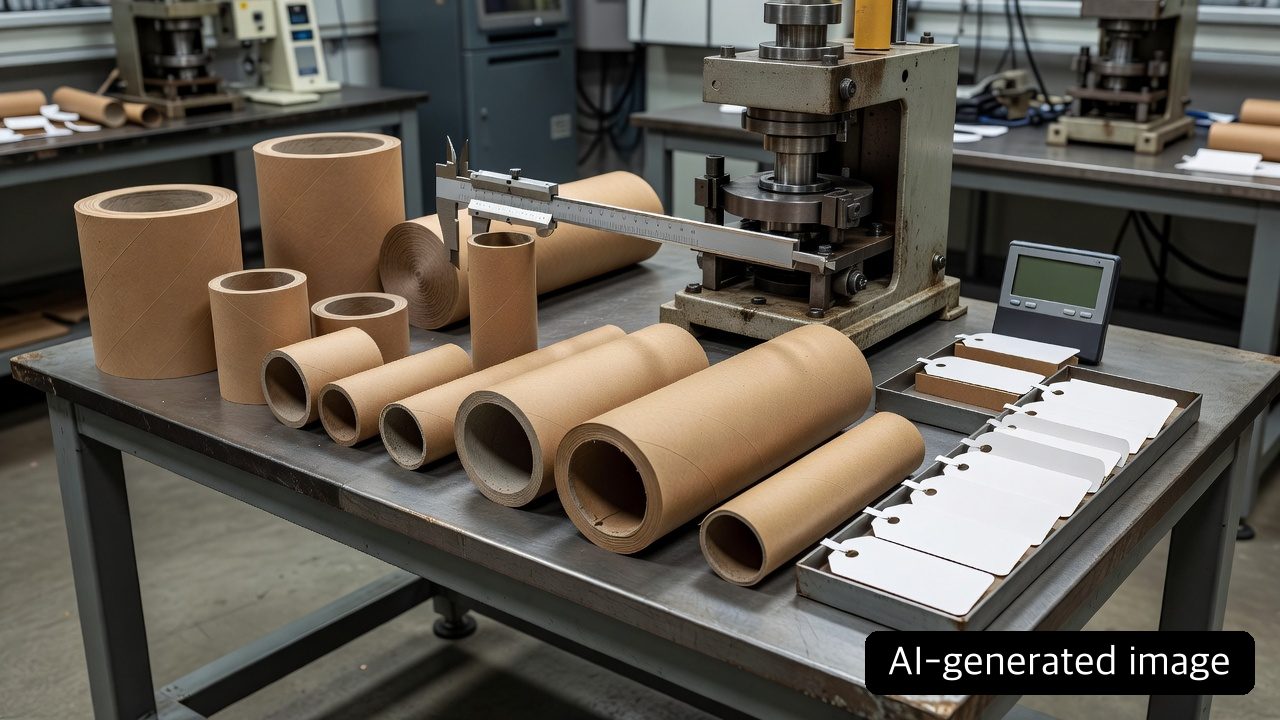
Q3. Keep production, quality and shipment as separate states
Fire extinguished, site accessible, equipment trial, trial production, quality release and commercial shipment are different states. Link these four evidence groups to each PO.
- Production: actual plant and line, firm production quantity, date and lot.
- Quality: inspection result for the first or recovery lot, approver and customer change approval.
- Dispatch: dispatch number, collection or loading, transport document and ship date.
- Delivery: firm quantity, partial shipment, ETA and next update time.
If a supplier says that part of the factory is operating but cannot provide a released lot and dispatch evidence, keep the state as production confirmed / quality and shipment pending, not normal supply.
Ten questions to send the supplier
- For each item code, is the actual factory, shed or line linked to this incident site?
- Separate each open PO into base paper, work in process, finished goods, external warehouse, dispatched and in transit.
- By location and lot, what exposure occurred from heat, smoke, soot, firefighting water or debris?
- State the quantity that is unaffected and segregated, awaiting inspection, under rework review or under disposal review.
- Which mandrels, chucks, knives, winding, cutting, drying, dust-collection and electrical equipment have been released for use?
- Separate the status and planned date for trial production, quality release, commercial shipment and full normalization.
- What firm quantity can be allocated immediately from approved external-warehouse or in-transit stock?
- What differs in material, construction, ID, OD, wall thickness, length, tolerance and test condition at the alternate site or supplier?
- What are the first-sample date, line-trial date, customer change-approval date and first firm shipment date?
- For each PO, what are the firm production date, dispatch date, transport document, ETA and next written-update time?
Conditions that require a hold
Hold an alternate order, firm customer date or normal supply status if any of these remains unresolved.
- The incident factory has not been connected to or ruled out for the buyer’s actual item.
- The 1,500-square-metre site size or fire-vehicle count has been converted into capacity, loss or delay days.
- Base paper, work in process, finished goods, external stock and in-transit goods are not separated by location and lot.
- Stock exposed to heat, smoke, firefighting water or debris is not physically separated from released inventory.
- The alternate core’s equipment fit, dimensions, construction, test condition and storage condition have not been compared with the approved item.
- Trial production and commercial shipment are recorded as one
restartstate. - Delivery is firm without a released lot, dispatch number and transport evidence.
- Local news is available, but the supplier has not provided an item- and PO-specific written reply.
Documents to check today
- Supplier and actual-manufacturing-site list for India-linked paper tubes and industrial cores
- Base-paper, WIP, finished-goods, external-warehouse and transport status by open PO and item code
- Approved end use, drawing, material and construction, dimensions, tolerances and test method
- Post-incident quarantine, inspection, release, rework and disposal decision by lot
- Alternate-site and alternate-item differences, first sample, line trial and customer approval
- Firm production, quality, dispatch, transport, ETA evidence and next update time by PO
The local reports support a paper-tube factory fire, smouldering paper rolls, a response involving four fire vehicles, full extinguishment at about 11:00 a.m. and no reported injuries. Production stoppage, equipment damage, usable inventory, alternate production and customer deliveries remain publicly unconfirmed. The practical sequence is Q0 site connection → Q1 base-paper, WIP and finished-lot disposition → Q2 alternate-core approval → Q3 PO shipment evidence, with no stage closed by news coverage alone.
About the Author
PackingMaster: Editor of Paper Pack Log. We collect and organize market trends, product information, and technical insights for the paper packaging industry.
References
The reports come from different outlets but rely on the same fire-service account. They were not treated as independent confirmation of production, quality or delivery status.
- Amar Ujala, Loni paper-tube factory fire and roughly five-hour response (September 18, 2026)
- Dainik Bhaskar, Tronica City paper-tube factory fire and firefighting response (September 18, 2026)