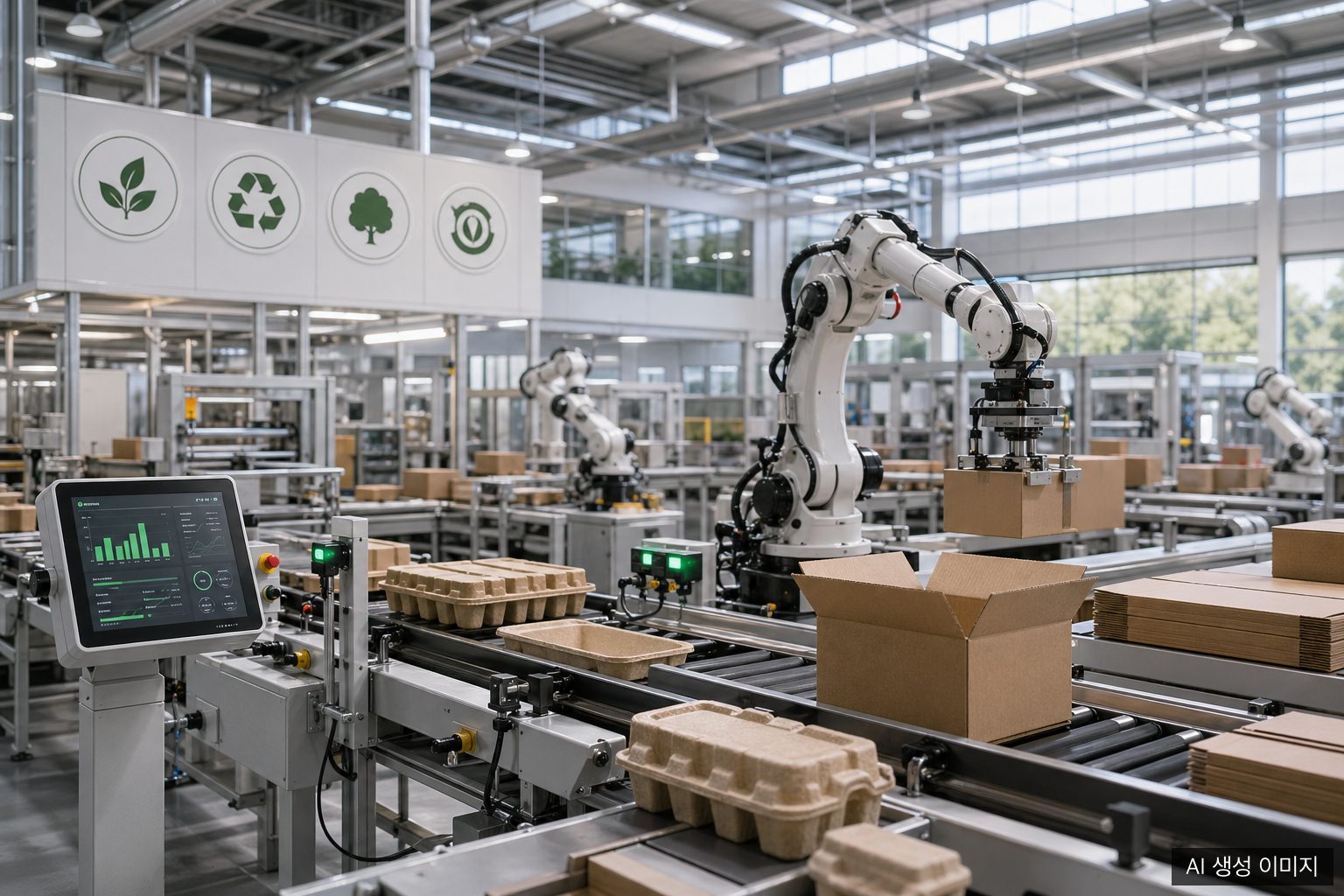
The global paper packaging industry in 2026 cannot be summarized with a single word. Regulation, technology, raw materials, and consumer perception are moving at the same time, pushing and pulling the market at different speeds and in different directions. This article reviews the four keywords that are changing real-world decision making, with data.
Market Background: What the Numbers Say About 2026
According to a, the paper packaging market is expected to grow from about USD 41.5 billion in 2025 to USD 62.1 billion in 2035 at a CAGR of 4.1 percent. The broader paper and paperboard packaging market is estimated at USD 352 billion in 2026, with a projected CAGR of 4.28 percent over the same period.
The growth drivers are clear: stronger plastic regulation, expanding e-commerce volume, and the four keywords covered in this article.
Keyword 1. Sustainability: 72 Percent Recycling Versus 14 Percent for Plastic
The strongest weapon of paper packaging is its recycling rate. The global paperboard recycling rate is 72 percent, far above plastic’s 14 to 18 percent. That single figure is one of the most direct reasons brands are shifting from plastic to paper.
EU PPWR: Mandatory from 12 August 2026
The EU Packaging and Packaging Waste Regulation (PPWR) 2025/40 entered into force on 11 February 2025 and applies in full from 12 August 2026. Two requirements stand out.
First, empty space in all packaging, including e-commerce parcels, is limited to 40 percent or less. Second, from 2027, packaging must carry a digital identifier such as a QR code to provide information on material composition, recyclability, and reuse. Producer responsibility also expands to cover collection, sorting, recycling, and disposal costs.
According to Gleiss Lutz analysis, the regulation affects not only products distributed inside the EU but also exporting companies indirectly.
Acceleration of FSC Certification and Bio-Based Coatings
FSC (Forest Stewardship Council) certification is now part of the basic checklist for global buyers. According to the Background: FSC official site, demand for FSC-certified paper packaging continues to increase.
Coating technology is evolving at the same time. The market for compostable paper barrier coatings that replace conventional plastic coatings is projected to grow from USD 735 million in 2026 to USD 1.835 billion in 2035, at a CAGR of 10.7 percent. According to a GlobeNewswire report, the biopolymer coating segment shows the fastest growth.
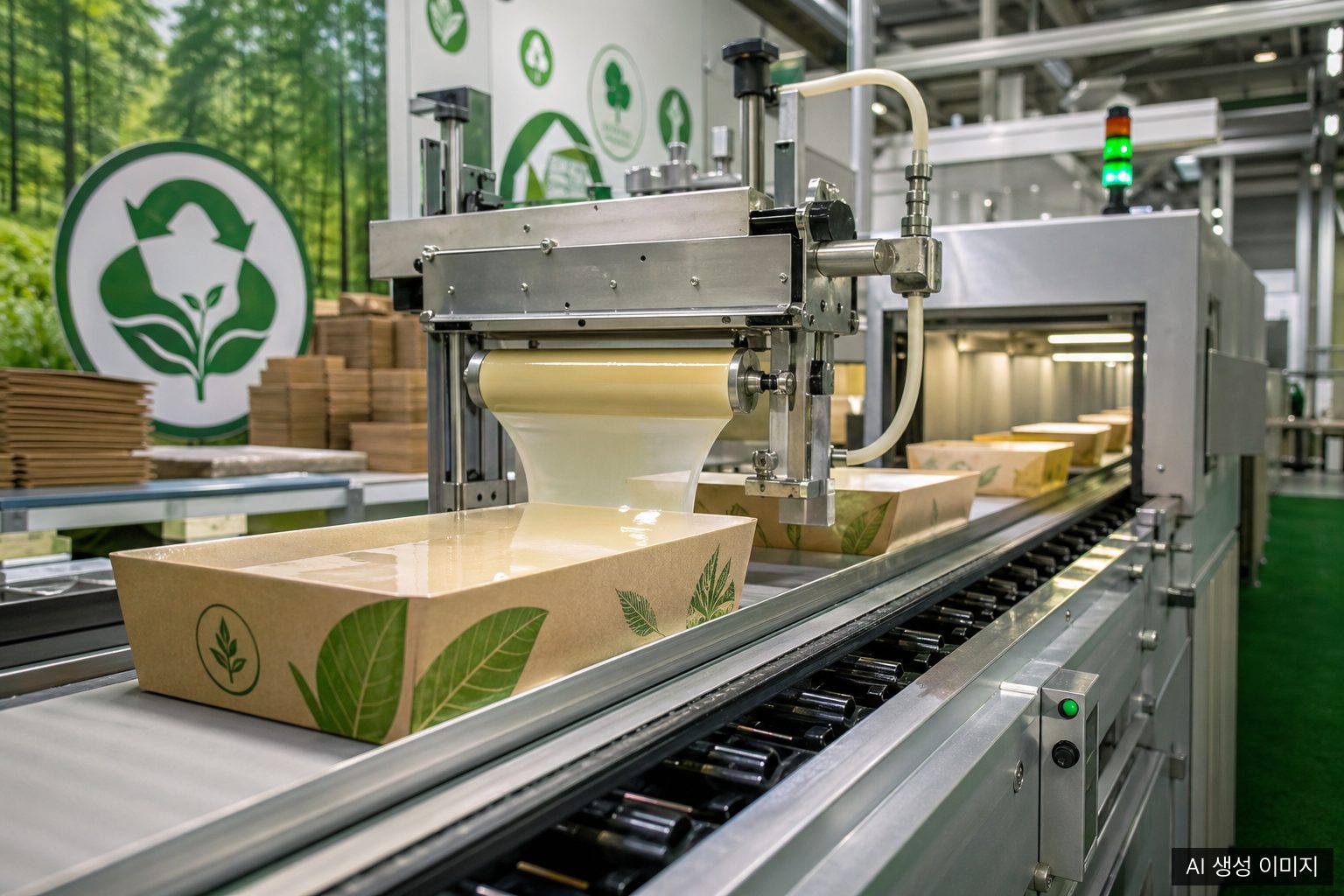
Keyword 2. Automation: AI Eyes, Robot Hands, and Smart Factory Brains
Packaging automation in 2026 has moved beyond repetitive work into automation that makes judgments. The core is AI vision.
AI Vision and Collaborative Robots
AI vision systems combine cameras and machine learning to detect defects, verify labels, and check product orientation in real time. According to, AI vision is being adopted especially quickly in food applications that traditional automation considered too difficult.
Collaborative robots, or cobots, work beside people on picking, pack-out, and palletizing. Servo-driven precision systems, autonomous logistics AGVs, ERP links through Manufacturing Execution Systems, and digital twins are being integrated inside the same factory.
A PMMI 2026 report identifies predictive maintenance, regulatory readiness, and data visibility as major effects of AI adoption. Production-line optimization and early defect detection lead to practical cost savings.
WEPACK 2026: A Gathering Point for Automation Trends
, held from 15 to 17 April 2026 at the Shenzhen World Exhibition and Convention Center, recorded its highest attendance to date with 137,157 visitors, including 13,598 from overseas. Corrugated and folding-carton converting equipment, digital printing, automation, and logistics systems were organized into eight integrated exhibitions, confirming China’s role as a global hub for packaging automation.
In Europe, will be held from 16 to 17 June 2026 at Messe Düsseldorf. The key agenda is the integration of print and digital channels, and the convergence of packaging and marketing.
Keyword 3. Smart Materials: Packaging Becomes Data
Packaging is evolving from a simple container into a data node. The core technologies are RFID and NFC, freshness indicators, and QR-code digital IDs.
RFID and NFC: Eyes for the Cold Chain
MIT J-WAFS research developed a food-safe wireless RFID sensor integrated into smart packaging to monitor pH across the cold chain in real time. Combining ethylene sensors with RFID or NFC modules turns packaging from a passive container into an active data node.
Dairy logistics solutions combining NFC and QR-based tracking, and predictive IoT platforms linking time-temperature indicators with shelf-life models, are already approaching commercialization. An explains in detail how ethylene-sensing smart packaging changes freshness monitoring for fresh produce.
Freshness Indicators: Color Shows Spoilage Signals
Freshness indicators use dyes that respond to pH changes generated during product spoilage. According to a, QR codes are the most cost-effective option because consumers can read them with only a smartphone camera and no special hardware on the package.
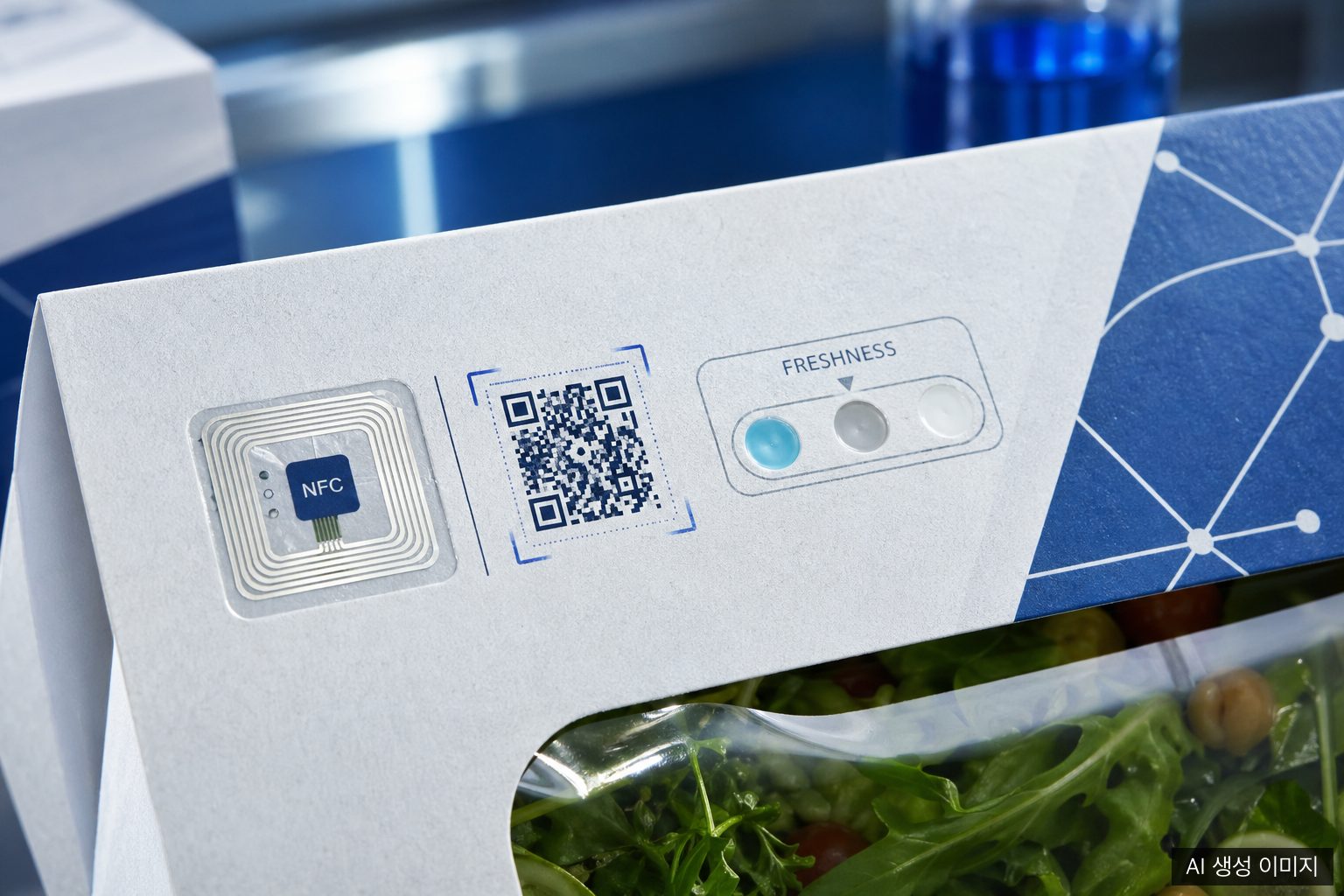
Digital ID Requirement under EU PPWR from 2027
From 2027, PPWR requires every package to carry a digital identifier such as a QR code that provides material composition, recyclability, and reuse information in structured form. This is where smart materials and regulation converge.
Keyword 4. Raw Material Volatility: The Era of Unpredictability
From 2025 to 2026, raw material markets repeated black-swan events and shook the industry’s cost-forecasting base.
OCC Fell in 2025, Followed by Containerboard Price Signals in 2026
According to Packaging Dive analysis, old corrugated container (OCC) prices fell 41 percent, from USD 74 per ton in November 2024 to USD 44 per ton in November 2025. Export demand caused a brief rebound of USD 10 to 15 in early 2025, but prices then declined again.
IndexBox market analysis points to structural causes of OCC volatility. Today’s OCC supply reflects corrugated box demand from three to five months earlier. That lag amplifies supply-demand imbalance.
In 2026, recovered-fiber prices and finished containerboard prices need to be separated. Fastmarkets reported a net USD 50 per short ton rise in North American linerboard pricing from February through April, followed by USD 50-70 June increase announcements from six major producers. Packaging Dive reported the company-specific notice amounts and announced effective dates. These are containerboard price signals; they do not prove that OCC rose by the same amount. Recovered-fiber pricing requires separate market evidence.
China’s Recovered Paper Import Rules: A New Variable
According to Packaging Dive, China required imported recycled pulp to specify dry or wet processing methods and undergo on-site inspection from 10 October 2025. The move is intended to restrict imports of dry-processed recovered paper, and the industry viewed it as a black-swan event.
Outlook for Pulp and Paperboard Prices
The U.S. containerboard PPI rose slightly from 161.44 in January 2025 to 163.30 in April. U.S. containerboard producers implemented price increases of USD 60 to 70 per ton in January 2025. Trading Economics data suggests gradual increases after 2026 as utilization rises, while geopolitical variables may inject new volatility.
Where the Four Keywords Intersect
Sustainability, automation, smart materials, and raw material volatility do not move independently. Automation reduces raw material waste and cushions volatility shocks. Digital IDs in smart materials connect directly to PPWR requirements. FSC certification and bio-based coatings are combining with smart materials to create a new category of sustainable smart packaging.
How these four axes intersect in 2026 will determine company competitiveness.
Frequently Asked Questions
Q. Does EU PPWR apply only to companies inside the EU?
A. No. It applies to all companies placing products on the EU market. Exporters from Korea, China, the United States, and other countries must ensure that packaging for EU-distributed products complies with PPWR. The key general application date is 12 August 2026, and the digital identifier requirement begins in 2027.
Q. If OCC prices fell 41 percent in 2025, will packaging costs continue to fall in 2026?
A. No. The 41 percent plunge in 2025 is already past, and the trend turned upward in 2026. Fastmarkets RISI reported a USD 1 to 5 per ton increase in U.S. OCC prices in March 2026, and North American containerboard prices rose for a second consecutive month through April. Sonoco’s USD 70 per ton URB increase effective 3 April points in the same direction. The 2025 plunge pressured containerboard producer margins, leading to production adjustments and closures, followed by a typical rebound cycle. Because OCC has a three-to-five-month lag, early 2026 increases may affect procurement costs in the second half and require close tracking.
Q. Can small and midsize companies adopt smart packaging such as NFC or RFID?
A. QR codes are the lowest-cost way to begin smart packaging because they require no special electronic component on the package. NFC and RFID have higher initial costs, but long-term ROI is increasingly proven in food and pharmaceutical cold-chain distribution. The 2027 EU PPWR digital ID requirement effectively makes QR-code investment necessary.
Q. How can a company obtain FSC certification?
A. The Background: FSC official website explains the certification process. Chain of Custody traceability from raw material sourcing to final product is the core requirement, and audits are conducted through FSC-accredited certification bodies.
Q. What are the major paper packaging industry exhibitions in 2026?
A. WEPACK 2026, held from 15 to 17 April in Shenzhen, China, and PRINT DIGITAL CONVENTION 2026, held from 16 to 17 June in Düsseldorf, Germany, are key global events. WEPACK is useful for Asian market and converting equipment trends, while PDC focuses on European and digital printing trends.
About the Author
PackingMaster: Editor of PaperPackLog. Covers market trends, product insights, and technology in the paper packaging industry.
References
- GlobeNewswire: Compostable Paper Barrier Coating Market Trends 2026-35
- Packaging Dive: Following market volatility, will OCC prices return to ’normal’ in 2025?
- Packaging Dive: China’s new pulp import restrictions create ‘black swan event’ for OCC
- IndexBox: 2025 Recycling Market Crash - OCC & Mixed Paper Prices Halved
- Packaging Dive: Containerboard prices rise in April for second consecutive month
- Gleiss Lutz: The new EU Packaging Regulation - Key requirements from August 2026
- EU PPWR Official: Packaging and Packaging Waste Regulation
- Background: FSC: Paper & Packaging
- PMMI: AI, Automation, and Sustainability Lead Packaging Trends 2026
- Background: PRNewswire: WEPACK 2026 Concludes on a Record High
- MIT J-WAFS: Food-safe wireless RFID sensor on smart packaging for pH monitoring
- Trading Economics: US PPI Paperboard
- Towards Packaging: Paper and Paperboard Packaging Market Trends 2035