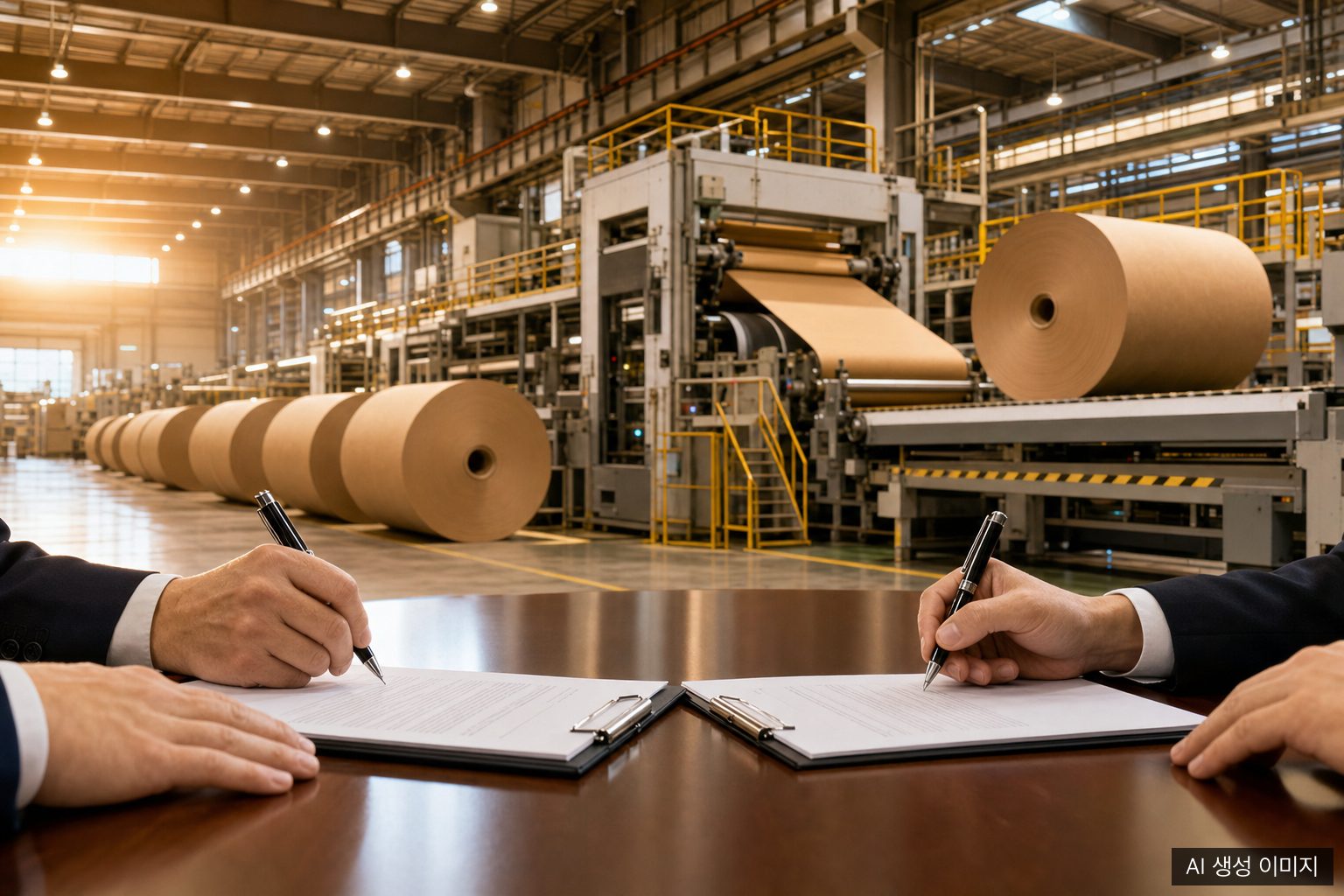
A NewDaily Economy article published on April 28, 2026 carried a provocative headline: “Global Sae-A’s Kim Woong-ki plays hardball with a strong hand: can a KRW 2 trillion paper-unit sale happen?” The sale strategy appears to prioritize price over speed, while the debt burden behind it is drawing attention inside and outside the paper industry. If completed, this transaction would be more than a simple portfolio adjustment by one business group. It would transfer ownership of a supplier that holds 30% of Korea’s containerboard market.

Structure of Global Sae-A’s Paper Business
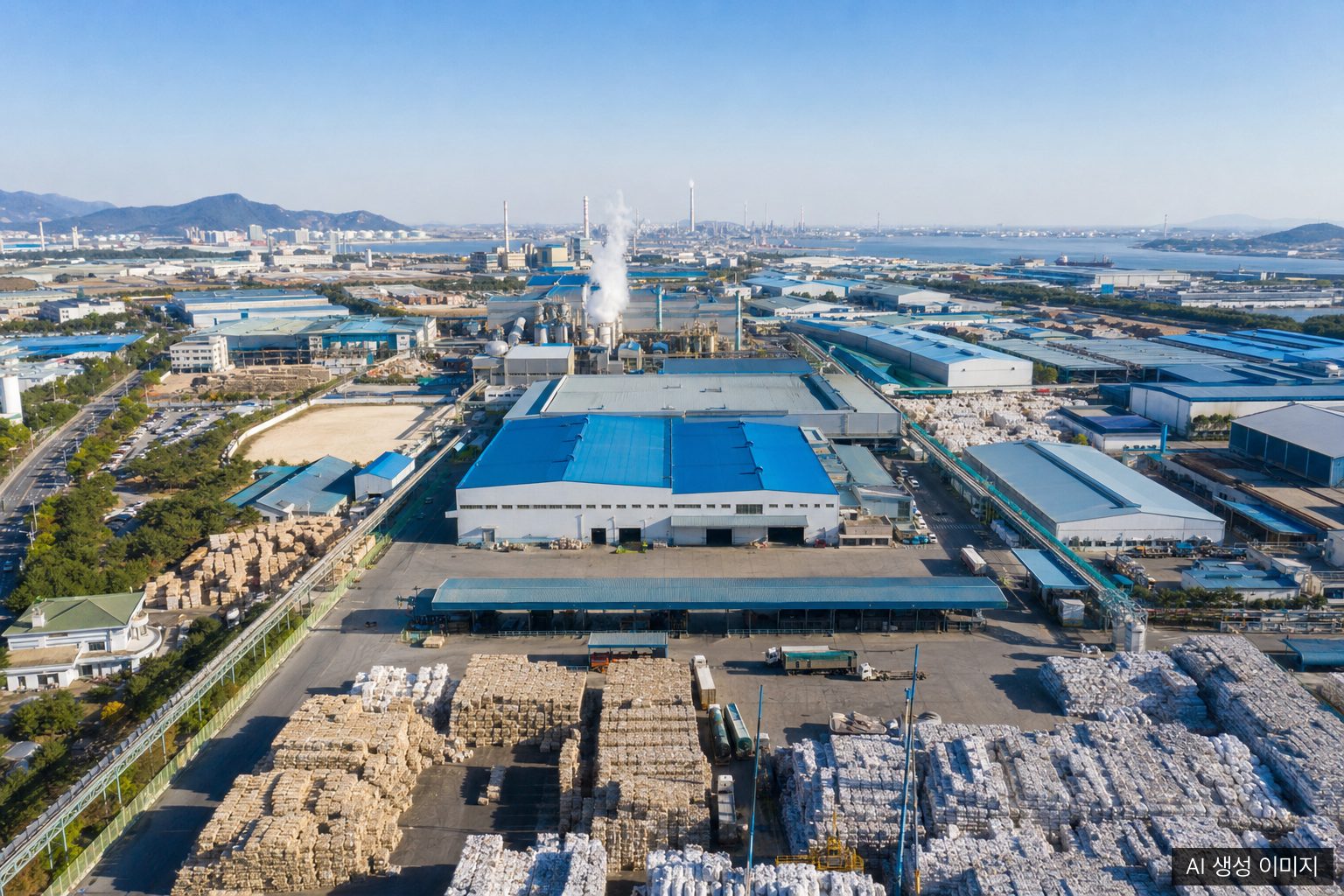
Global Sae-A is a diversified group centered on apparel OEM and construction through SsangYong Engineering & Construction. Its paper business expanded quickly after the 2020 acquisition of Tailim Paper. At the end of 2023, it completed its paper portfolio by acquiring Jeonju Paper and Jeonju OnePower, held by Morgan Stanley PE for 15 years, through Tailim Paper for about KRW 650 billion.
The affiliates currently mentioned as potential sale assets are as follows.
- Tailim Paper: focused on containerboard production, including liner and corrugating medium; Korea’s largest-scale producer
- Tailim Packaging: manufactures corrugated sheets and boxes, with about 20% share of the packaging market
- Jeonju Paper: specialized in printing paper and industrial paper; includes Jeonju OnePower, an in-house power generation affiliate
- Jeonju OnePower: affiliate that supplies power to Jeonju Paper
Together, these four companies generated roughly KRW 1.52 trillion to KRW 2 trillion in 2025 revenue, with annual paper output of about 2.1 million tons, the largest among single Korean groups. Their share of the containerboard segment alone reaches 30%. From a vertical integration perspective, the group has an end-to-end structure from base paper production at Tailim Paper and Jeonju Paper to sheet and box converting at Tailim Packaging.
Why a Sale Is Being Considered: Rising Debt and Portfolio Pressure
The main driver behind the sale review is financial pressure. Global Sae-A’s consolidated gross borrowings increased from about KRW 560.3 billion at the end of 2018 to KRW 2.6072 trillion at the end of 2024, a rise of more than 381% in six years. Its dependence on borrowings rose from 38.3% to 45.6% over the same period.
The direct cause of the borrowing increase was aggressive M&A. Successive deals, including Sae-A STX Entech in 2018, Tailim Paper in 2020, SsangYong Engineering & Construction in 2022, and Jeonju Paper plus Jeonju OnePower in 2023, all required significant debt financing. The problem is that, after acquisition, the paper affiliates’ performance fell short of expectations amid a weak industry cycle. Tailim Paper’s operating profit declined from KRW 77.2 billion at the time of acquisition to KRW 24.7 billion in 2024, while Jeonju Paper posted an operating loss of KRW 18 billion in 2024.
Industry observers interpret the move as a portfolio reshuffle: exit a paper business with limited growth and concentrate resources on core businesses such as apparel OEM and construction, as well as new growth areas. Global Sae-A maintains that it has not decided to sell the paper business and is only exploring possibilities to enhance corporate value. However, the selection of UBS as sale adviser and the confirmed distribution of teaser letters to potential buyers make its intent look clear.
Global Sae-A is reportedly seeking a transaction price of about KRW 2 trillion. This represents roughly 7 to 8 times EBITDA of about KRW 260 billion, a considerable premium to industry averages. Market participants believe the timetable could be delayed during price negotiations, but selection of a preferred bidder and closing within 2026 are still considered possible at the earliest.
If the Sale Goes Through: Impact on Containerboard and Corrugated Supply
Supply Structure: The New Owner’s Strategy Is the Variable
Korea’s containerboard market includes several competitors such as Asia Paper, Korea Export Packaging Industrial, and Shin Daeil Paper, but the combined Global Sae-A affiliates, Tailim Paper and Jeonju Paper, are dominant with a 30% share. If this volume moves to a new owner, the market impact will vary depending on the buyer’s character.
If a private equity fund acquires the business, it may focus on improving profitability and minimize capacity investment. In that case, short-term expectations for supply expansion would fall, and in a tight base paper supply environment this could support prices. By contrast, if a Korean or foreign strategic investor acquires it, the new owner is more likely to contribute to supply stability through production efficiency and facility investment.
Viewpoint of Corrugated Sheet and Box Makers
Small and midsize corrugated companies that have sourced base paper within Tailim Packaging’s vertically integrated sheet and box structure need to watch for changes in transaction practices. If, after acquisition, Tailim Packaging shifts strategy toward prioritizing internal volume or renegotiates base paper supply prices, cost pressure could increase.
Price Impact
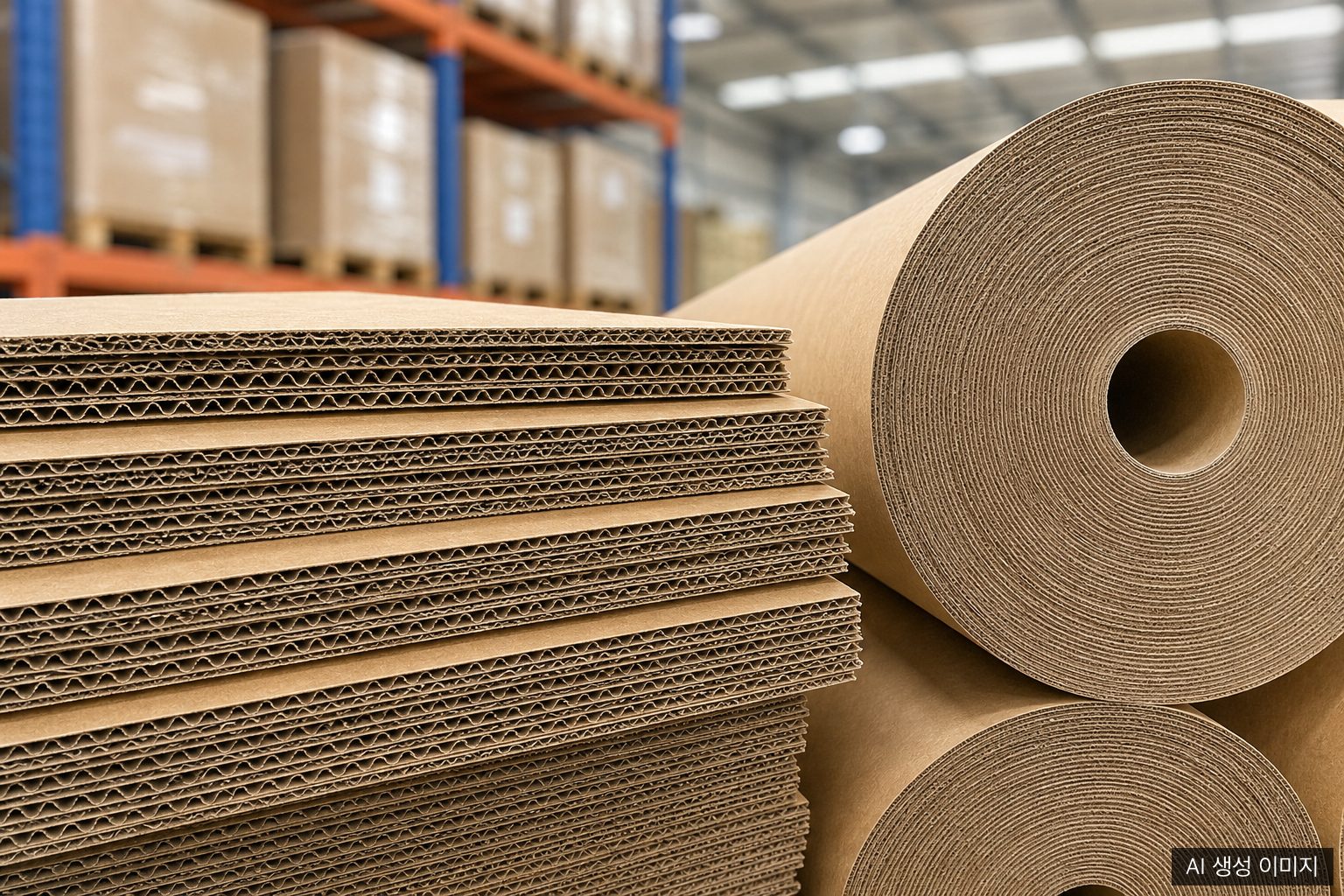
The sale itself does not directly affect short-term base paper prices. However, uncertainty during the acquisition process, including delayed facility investment, operational gaps, and changes in purchasing strategy, could make the supply-demand balance feel tighter. In particular, unexpected supply shocks this year, including the work stoppage at Asia Paper’s Sejong mill and a fire at Korea Export Packaging Industrial, have already overlapped. In this context, a change of ownership at one of Korea’s largest suppliers could add to market participants’ psychological burden.
Key Points to Watch
The market should focus on three variables in this deal.
First, the final buyer. The future supply strategy will differ sharply depending on whether the buyer is another Korean paper company, a PE-led financial investor, or foreign capital.
Second, how Jeonju Paper risk is handled. Jeonju Paper is a burden asset that recorded an operating loss of KRW 18 billion in 2024. In an all-in sale structure, who bears that risk and how they do so will determine the final price and transaction speed.
Third, the closing timeline. The longer negotiations continue, the higher uncertainty becomes on the ground. Decisions in the physical business, including supply contracts, facility investment plans, and raw material purchasing negotiations, inevitably remain on hold.
Global Sae-A’s potential paper-unit sale is more than a corporate reshuffle. It is an event that could shape the direction of Korea’s containerboard supply structure. Whether the sale is completed or postponed, its signaling effect on the market has already begun. Proactive risk monitoring is now needed across the base paper, corrugated sheet, and box value chain.
FAQ
Q: Has the Global Sae-A paper business sale been confirmed?
It is still difficult to view it as a confirmed transaction. Based on reports, the group is exploring a sale, and the schedule may change depending on the desired price and the type of buyer.
Q: Will base paper prices rise immediately?
The sale review itself does not immediately lead to price increases. However, an ownership change at one of Korea’s largest suppliers could affect facility investment, production strategy, and long-term supply contracts, so monitoring is needed.
Q: What risks should packaging companies watch?
They should check diversification of base paper suppliers, long-term contract terms, and possible changes in transaction policy between Tailim Packaging and external corrugated companies. Whether the buyer is a PE fund or a strategic investor is also an important variable.
About the Author
PackingMaster: Editor of Paper Pack Log. We collect and organize market trends, product information, and technical insights for the paper packaging industry.
References
- NewDaily Economy, report on the possible KRW 2 trillion sale of Global Sae-A’s paper business (2026.04.28)
- The Korea Economic Daily, report on the sale of Global Sae-A’s paper division (2025.12.30)
- Maeil Business Newspaper, report on teaser letters for the sale of Global Sae-A’s paper business (2026.03.16)
- Chosun Biz, analysis of variables in the Global Sae-A paper business sale (2026.01.20)