
Global Sae-A’s possible paper business sale was one of the major variables discussed in Korea’s containerboard market this year. If the ownership structure around Tailim Paper, Jeonju Paper, and Tailim Packaging had changed, base paper supply, internal volume allocation, and long-term procurement strategies could all have shifted.
But when reports indicate that the sale has been withdrawn or put on hold, the question for packaging companies changes. Instead of asking “who will the new owner be,” the practical question becomes: “Are our procurement terms safe if the existing supply structure continues?” A withdrawn sale does not automatically remove containerboard supply risk. It simply creates a quieter window to review price terms, lead times, and supplier concentration.

A withdrawn sale does not automatically mean stable supply
The risks during an active sale process are easy to see. A new owner can change facility investment, profitability targets, and internal volume allocation. That is why the previous article focused on the supply signals created by a possible ownership change.
In a withdrawal or postponement scenario, the risks move more quietly. Ownership may remain the same, but the financial pressure and portfolio review exposed during the sale process may still remain. Even if the paper affiliates are not sold immediately, group-level investment priorities and operational efficiency pressure can continue.
Purchasing teams should therefore avoid treating the news as a simple “all clear.” They should check three things first.
- Have delivery lead times or allocation methods changed over the past three months?
- Are price negotiation cycles becoming shorter in monthly or long-term contracts?
- Do alternative suppliers actually work for specific grades and specifications?
Item 1: Supplier concentration by grade

Corrugated box makers and industrial paper packaging companies should not count suppliers only by name. Even if several vendors exist on paper, risk remains high if most actual usage depends on one group, one mill, or one specific grade.
The review should be done at the item level. KLB, semichemical medium, corrugating medium, paperboard, and specialty paper do not have the same substitutability. In normal times they may all be managed as “base paper,” but during a disruption, some can be replaced quickly while others cannot.
A useful six-month review table looks like this.
| Checkpoint | Practical question |
|---|---|
| Supplier share | Does the top supplier exceed 50% of volume? |
| Mill dependence | Is volume concentrated in one mill even within the same supplier? |
| Grade substitutability | Is there an alternative with similar strength, basis weight, and material? |
| Price leverage | Can a comparison quotation be obtained when prices rise? |
| Lead-time buffer | Can material be secured two to four weeks before urgent orders? |
This is not just a purchasing worksheet. It is also a margin protection tool for sales quotations. If a company fixes long-term delivery prices without understanding base paper risk, it becomes difficult to reflect later cost increases in finished packaging prices.
Item 2: Read long-term contract wording again
After a sale withdrawal report, long-term contracts should not be reviewed only for volume security. The wording matters, especially how prices are adjusted when base paper costs move.
The following clauses are often critical in practice.
- Product price renegotiation when base paper prices change
- Approval procedure for alternative specifications during allocation cuts or supply disruption
- Additional cost or exception terms for urgent lead-time requests
- Quotation validity period for export or long-term projects
- Quality approval scope when the paper supplier changes under the same specification
For small and midsize packaging companies, it is risky to treat long-term contracts only as fixed-price agreements. Fixed prices are convenient in stable markets, but without a price indexation clause, they can amplify losses when raw material costs move.
Item 3: Supplier diversification starts at the quotation stage
Supplier diversification is not something that begins after a disruption. In practice, it starts when the quotation is written. If the proposed specification depends on one paper grade, one mill, or one coating condition, later substitution becomes difficult.
The following questions should be added to internal quotation review.
- Does this specification have an alternative base paper candidate with equivalent strength?
- Which items cannot be changed without customer approval?
- Among basis weight, strength, surface condition, and print quality, which attribute is critical?
- For export packaging, might the buyer request evidence when the supplier changes?
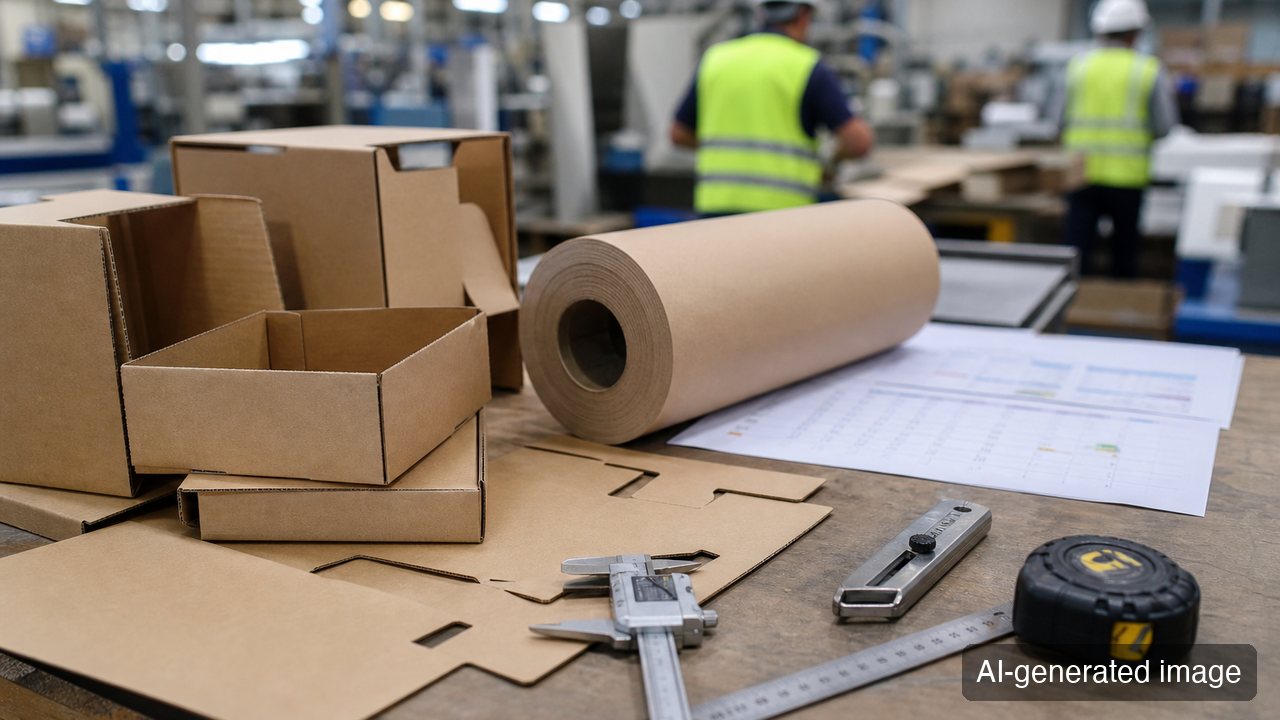
For food, cosmetics, electronics, and industrial export packaging, visual similarity is not enough. Compression strength, print surface, humidity response, pallet stability, and recyclability labeling may all matter. Supplier diversification is therefore not just a purchasing task. It is a specification management issue that sales, quality, production, and procurement should decide together.
How this update differs from the previous article
The previous article explained how a possible paper business sale could affect Korea’s base paper supply structure. This update has a different focus: what packaging companies should do after a sale withdrawal or postponement report.
The viewpoint changes as follows.
| Previous viewpoint | This update |
|---|---|
| The buyer’s identity could change supply strategy | Even if the current structure remains, supplier dependence should be reviewed |
| M&A uncertainty can influence short-term price psychology | After the withdrawal, contract wording and quotation validity should be updated |
| Watch ownership changes at a major domestic base paper supplier | Check whether alternative suppliers actually work by grade and specification |
In other words, the practical conclusion is not “the sale is over, so the risk is gone.” It is “while major structural change is paused, use the window to improve procurement resilience.”
Five-minute checklist for purchasing and sales teams
Before the next internal meeting, start with these five checks.
- Split the past six months of base paper purchases by supplier, mill, and grade.
- Identify a second-choice supplier for items with high concentration risk.
- Check whether long-term quotations include base paper price adjustment clauses.
- Separate specifications that can be substituted internally from those requiring customer approval.
- Prepare customer-facing wording for lead-time delays, allocation cuts, or price increases.
The reported withdrawal of Global Sae-A’s paper business sale may signal that Korea’s paper market structure will not change immediately. But for packaging companies, the more important issue is not the direction of one news item. It is the weak point in their own ordering structure. Rechecking supplier diversification, long-term contract wording, and quotation validity now will make the next price or supply disruption much easier to handle.
FAQ
Q: If the sale is withdrawn, will base paper prices stabilize?
Not necessarily. Base paper prices depend on recovered paper costs, demand, mill operations, inventory, and imported paper conditions. A withdrawn sale may reduce ownership uncertainty, but it does not guarantee price stability.
Q: Can small and midsize packaging companies diversify suppliers?
Yes, but not for every item at once. A practical approach is to begin with high-volume grades where customer approval risk is relatively low.
Q: What should be included in customer quotations?
Include price renegotiation when base paper costs move, quotation validity periods, and approval procedures for alternative specifications. These clauses become especially important in long-term projects.
About the Author
PackingMaster: Editor of Paper Pack Log. We collect and organize market trends, product information, and technical insights for the paper packaging industry.