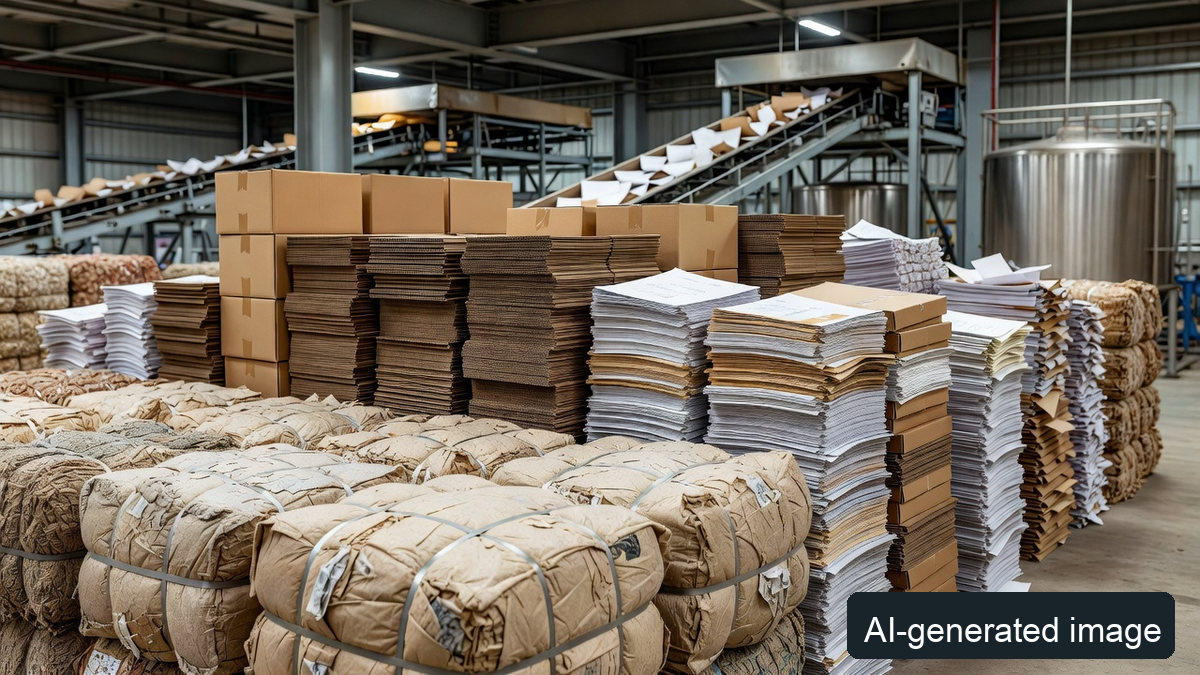
The change in Hong Kong’s recovered-paper chain is a move from a government-supported route for exporting waste paper as collected to a route centred on local processing into pulp. In a September 24, 2026 release, the Environmental Protection Department (EPD) said that a modernised pulping facility at EcoPark, Tuen Mun, began operating on July 27 and was ramping up. The department announced a plan to pulp all locally recovered waste paper at full scale from October 1. That is a forward-looking transition as of September 27, not evidence that every tonne has already passed through the facility.
The EPD’s service description says locally collected waste paper will be processed into pulp and the pulp then exported for conversion into paper products. Less reliance on exporting raw waste paper must not be translated into a ban on all paper-related exports or a claim that all finished paper will be made in Hong Kong.
More accepted paper types, still subject to quality rules
Beyond the traditional cardboard, newspapers and office paper, the service scope can include mixed paper such as paper bags, packaging boxes, wrapping paper and shoe boxes. The EPD makes acceptance conditional on specified quality standards; it does not promise to take wet or otherwise contaminated loads. This announcement alone does not establish whether a particular coated, laminated or food-soiled item will be accepted.
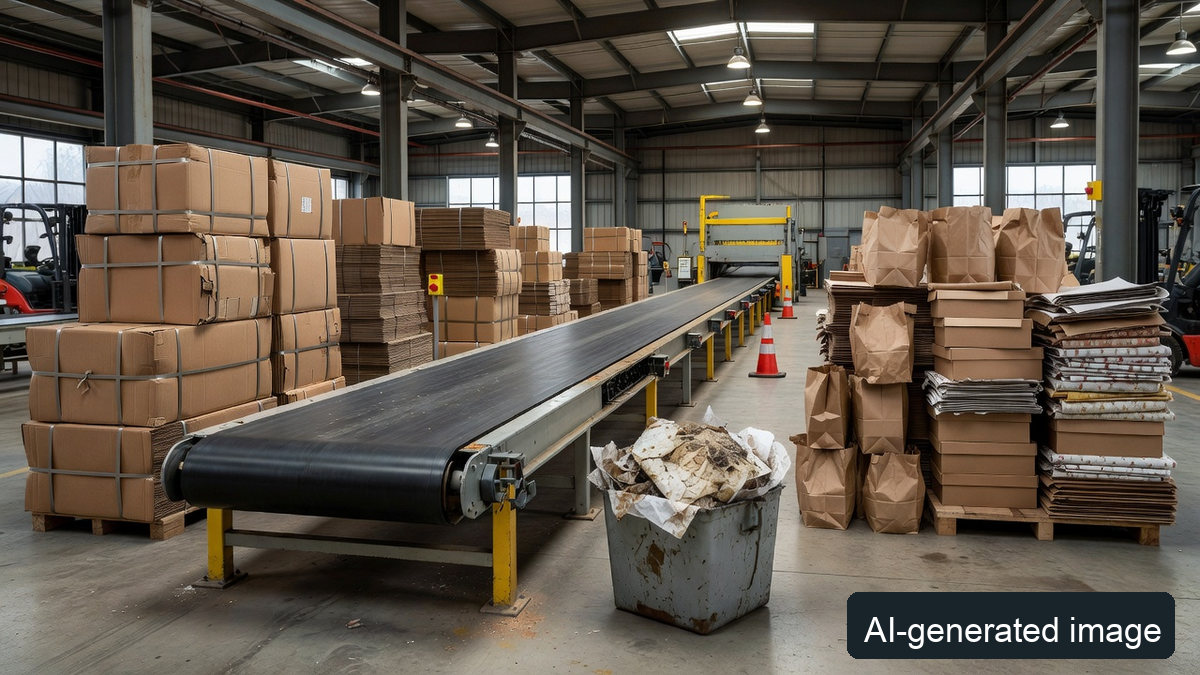
Illustration only. It does not verify acceptance of a particular mixed-paper grade or any equipment performance.
For operators, the useful question is not simply “Does mixed paper now count?” but which collection source, grade, moisture and contamination limits, bale composition, rejection and re-sorting terms apply. This is an editorial operating framework inferred from the EPD’s quality condition, not a government-issued universal inspection sheet. A supplier must confirm the applicable contract specification and the facility operator’s actual intake rules.
Separate handover, contracts and export routes
According to the September 24 EPD release, the existing Waste Paper Collection and Recycling Services contract, established to support waste-paper exports, will end. Yet the department explicitly says recyclers wishing to export waste paper to other markets may make their own arrangements through market mechanisms. Ending a government-backed export-service contract is not the same as banning private exports by law.
The local-pulping contract requires the facility operator to buy qualifying waste paper from collectors and recyclers at no less than a Designated Purchasing Price. A separate Designated Minimum Price protects payments by collectors and recyclers to frontline collectors for paper meeting specified quality standards. These are not one interchangeable price or an unconditional guarantee for all material. The EPD says they are reviewed and published regularly. Check the official service page and the operator’s notices before a transaction.
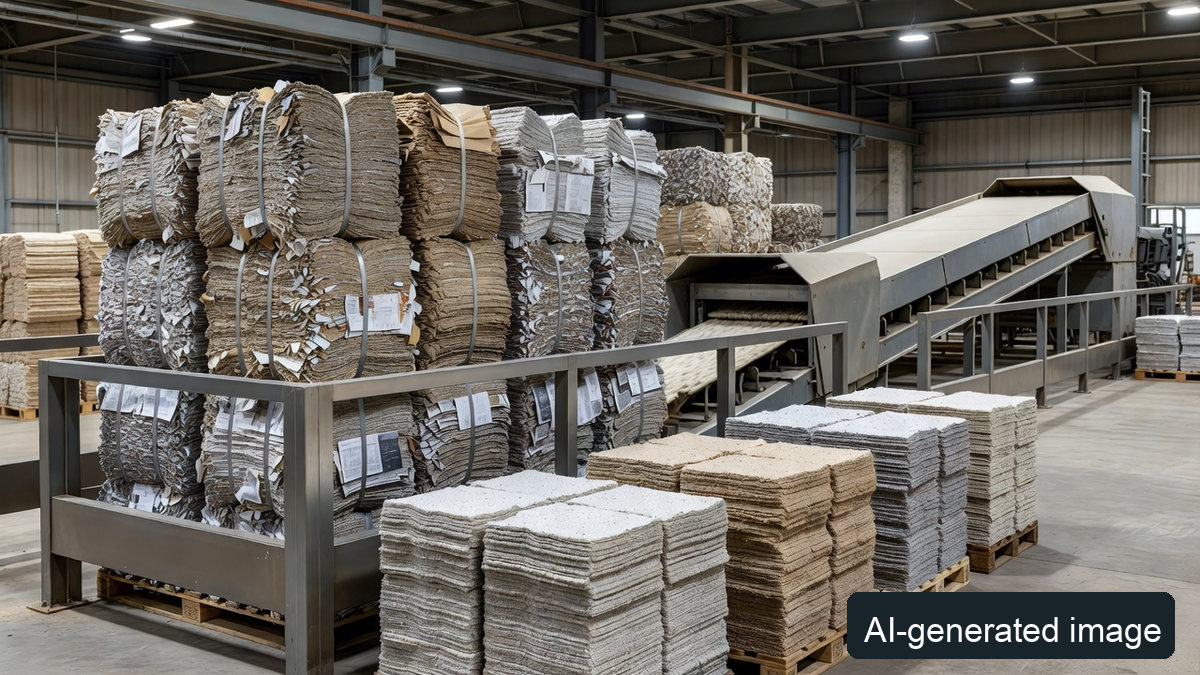
Illustration only. The pictured equipment, bales and output do not establish the actual plant’s process specification or shipment form.
Questions for fibre suppliers and packaging buyers
- Volume: Identify actual quantity by collection source, grade and bale; confirm the enlarged scope with the contracting counterparty.
- Quality: Request the operator’s limits for moisture, non-paper contaminants, food residues, coatings and composite layers. Do not infer acceptance from an example item alone.
- Handover: Record the buyer, condition at receipt, and responsibility for rejected material, re-sorting and storage.
- Route: Track local pulping under the service contract, any separately arranged private waste-paper export, and later export of processed pulp as different flows.
- Price: Check the payer, quality condition and revision date separately for the purchasing price and the frontline minimum price.
This is an editorial checklist, not a new statutory duty or a universal contract. Nor does the announcement itself prove an effect on Korean-bound fibre prices or supply volumes. Buyers need grade-specific contracts and shipment evidence before claiming such an effect.
Bottom line: Hong Kong has announced a plan to move to full-scale local pulping from October 1. Intake may widen but quality standards remain; the resulting pulp can still be exported. Do not mistake the end of a government-supported waste-paper export contract for a ban on private export. Verify each handover from collection and sorting to pulping and outbound pulp.
About the Author
PackingMaster: PaperPackLog editor, covering packaging materials, market developments and practical technical guidance for the paper-converting industry.