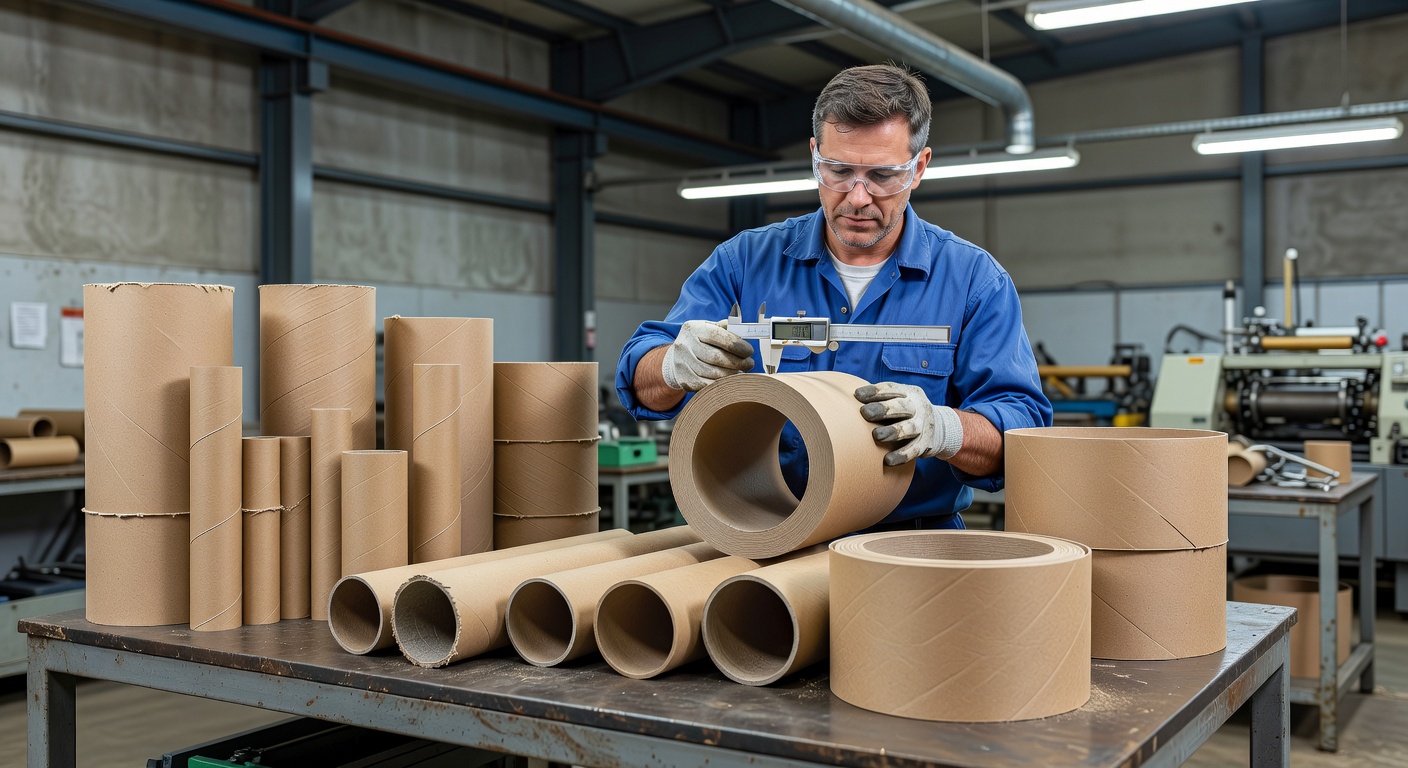
A paper core or tube looks like a simple cylinder of paper from the outside. But on lines winding continuous materials such as film, label stock, fabric, paper, foil, and tape, the core sits closer to an industrial component that supports the product. When the core deforms, the roll wobbles; when the roll wobbles, you get winding defects, print defects, unstable stacking, and damage in transit.
For buyers and production-engineering staff, the critical items to verify before a quote are dimensions, strength, and storage conditions. Ordering a paper core only by “diameter and millimeter” leaves too much out. The spec should include inner diameter, outer diameter, wall thickness, length, winding load, compression strength, humidity, edge reinforcement, and test criteria. Pulling these together up front reduces problems on the floor.
Where Paper Cores Are Used
GlobalSpec’s core and tube selection guide explains that cores and tubes are used not only for mailing, shipping, logistics handling, and product display, but also for winding and supporting continuous-process materials such as paper, film, and foil in roll or web form. That is also the central use case for industrial paper cores.
Typical applications include:
- Cores for winding film, vinyl, and laminated webs
- Cores for supporting fabric, nonwovens, and textile rolls
- Cores for winding paper, label stock, release liner, and wrapping paper
- Small-diameter cores for tape, strap, and slit products
- Center-axis protection for large rolls in transit and storage
- Protective packaging for cylindrical products or long parts
Different uses ask different things of the core, even at the same diameter. The core for a light label roll and the core for a heavy fabric roll in long-term stacking are not the same problem.
Criterion 1: Inner Diameter and Outer Diameter
In paper-core specs, the first item to check is the inner diameter. The ID has to match the production equipment’s shaft, chuck, or mandrel. If it is too small, the core does not fit; if it is too large, the winding wobbles.
The outer diameter is determined together with the wall thickness. At the same ID, a larger OD means a thicker-walled structure, which is generally more resistant to compression and deformation. But a larger OD also affects how much product can be wound, the finished outer diameter, and pallet stacking efficiency.
The purchase spec should split out these items:
| Item | Why it matters |
|---|---|
| Inner diameter | Must match the equipment shaft, chuck, or auto-winding line |
| Outer diameter | Needed to calculate wall thickness and finished roll OD |
| Length | Tied to web width, cutting tolerance, and side clearance |
| Tolerance | Affects automatic equipment fit and roll wobble |
| Straightness | Prevents bowing in long cores and off-center winding |
On automated lines especially, “close enough” creates problems. Auto-lines are more sensitive to tolerance than hand-loaded operations, so the equipment OEM’s recommended dimensions and the core supplier’s production tolerances should be checked together.
Criterion 2: Wall Thickness and Layer Structure
Wall thickness is the main lever for strength. But thicker is not unconditionally better. Huihua Packaging’s technical guide explains that paper-core performance is the joint result of base-paper grade, layer structure, total wall thickness, winding method, inner diameter, unsupported length, adhesive quality, and finishing such as coating or laminate.
In other words, at the same 5mm wall thickness, performance shifts based on:
- Which base paper, and how many layers
- Basis weight and fiber strength of the base paper
- Whether interlayer adhesion is uniform
- Spiral winding versus convolute (parallel) winding
- Whether drying and curing were complete
- Whether interlayer delamination shows up after moisture exposure
In practice it is better to request total wall thickness, base-paper specs, and compression test values together, rather than “how many layers.” A structure built from many thin layers and one built from fewer thick layers can behave very differently in terms of interlayer bonding and deformation mode.
Criterion 3: Compression Strength and Load Direction
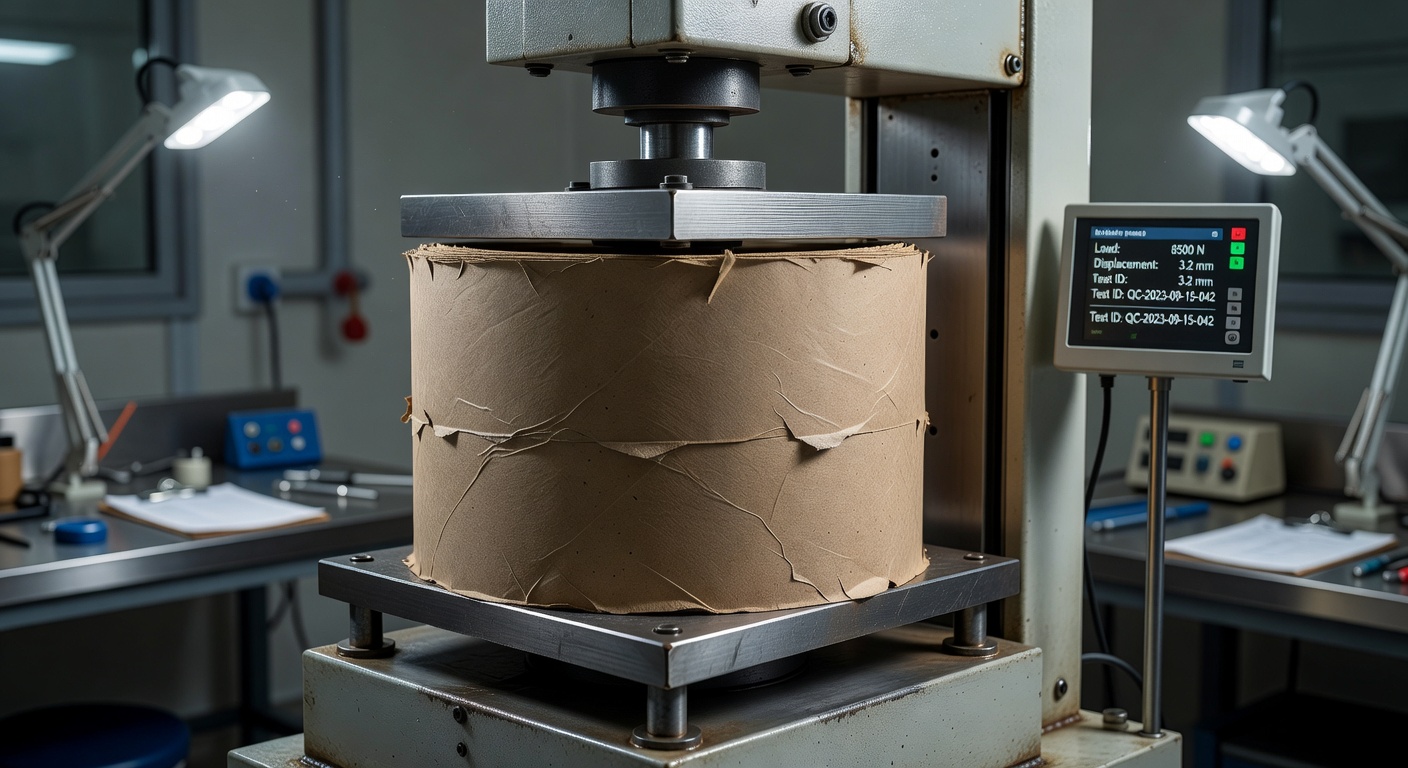
Paper-core strength does not collapse into a single number. Axial compression in the longitudinal direction, ring crush from the side, localized compression where the roll load concentrates on part of the cross-section, and creep during extended stacking are all separate properties.
The most common miss for buyers is load direction. When a paper core acts as the center axis of a roll, the relevant force is the internal shaft load plus the roll weight. When the core sits like a pillar inside packaging, it carries top-down stacking load. When the core acts as a protective tube, it has to handle drops, impacts, and edge crushing.
Items to review:
- Maximum weight of the finished roll
- Winding tension and line speed
- Stacking levels and storage duration during warehousing
- How the core is supported: both ends, central axis, or floor contact
- Vibration, drops, and forklift handling in transit
- Whether end caps, disks, or reinforcement rings are used
Huihua Packaging notes that when comparing axial compression performance, the relevant reference is the compression-strength curve measured at the same inner diameter together with the test conditions, not the nominal number of layers. The same point applies to B2B buying. A supplier quote that just says “high strength” is incomplete; the test method, sample count, temperature and humidity conditions, and support method need to come with it for any comparison to mean something.
Criterion 4: Moisture Conditions
Paper-based materials are sensitive to humidity. As moisture rises, fiber stiffness drops, adhesive layers weaken, and coatings or laminates can lift. A core may look fine externally while internal strength has dropped, and that can show up as deformation under winding or off-center storage.
Moisture conditions matter most in these situations:
- Storage in high-humidity warehouses through summer
- Ocean export, container shipping, and long-haul transport
- Possible condensation around chilled or frozen logistics
- Webs or films that are themselves humidity-sensitive
- Long inventory storage before going to the production line
Moisture countermeasures are not simply a matter of adding a coating. Coatings improve performance but affect recyclability, unit price, lead time, surface friction, and label adhesion. So instead of asking for “waterproof cores,” it works better to provide the storage humidity, storage period, transport route, and allowable deformation up front, so the supplier can propose an appropriate structure.
Edge Reinforcement and Cap Design
Core failure often starts at the edges. A rough-cut edge, a small contact area at the end face, or impacts concentrated on the end can spread the wall apart and start interlayer delamination.
Where appropriate, consider these reinforcements:
- Paper disks or caps inserted in the ends
- End-face compression or coating
- Edge reinforcement rings
- Internal sleeves or double cores
- Taping rules at the start and end of winding
- Load-spreading boards under stacked pallets
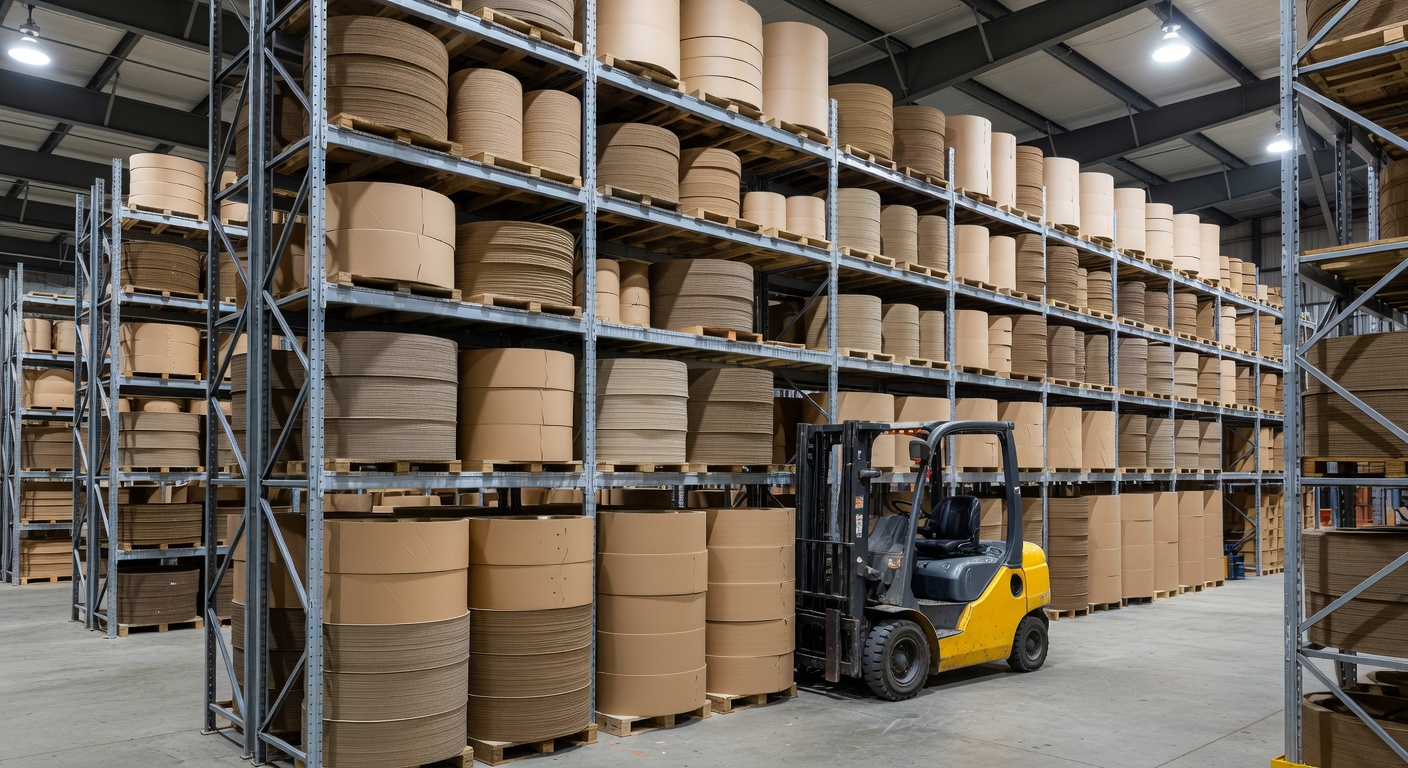
For heavy rolls stored upright, or for setups where the core ends carry direct load, increasing the end-face contact area matters a lot. Even if the core itself has adequate compression strength, a narrow end-face area can fail first under localized compression.
Questions to Sort Out Before a Quote
When placing a new paper-core order or switching suppliers, it helps to organize the following questions in advance:
- What is being wound: film, web, paper, foil, or tape?
- What is the maximum weight and maximum outer diameter of the finished roll?
- What is the equipment shaft size and the required ID tolerance?
- What are the winding tension and line speed?
- What are the storage period and stack levels?
- Is transport short-haul domestic, long-haul, or export?
- What is the temperature and humidity management level of the warehouse?
- What is the failure mode on the current core: deformation, bowing, delamination, or end-face damage?
- Do you need test data on compression strength, ring crush, or humidity exposure?
- Are there extras such as coating, printing, dyed paper, labeling, or FSC requirements?
Working through these questions moves the quote past basic dimensional specs and toward a paper-core spec matched to actual use conditions.
Wrapping Up
Industrial paper cores look like a low-cost consumable, but they affect both production-line and logistics quality at the same time. The wrong ID gets stuck in the equipment, insufficient wall thickness or compression strength leads to roll collapse, and missing moisture conditions causes deformation in storage.
So a paper-core order should not end at item name and dimension. Inner diameter, outer diameter, wall thickness, length, tolerance, compression strength, edge reinforcement, moisture conditions, and test documentation belong together in one spec sheet. Especially for heavy rolls, long-term storage, export shipping, and automated lines, paper cores should be treated as load-bearing components between equipment and product, not as packaging consumables.
About the Author
PackingMaster: Editor of PaperPackLog. Curates and organizes market trends, product information, and technical insights for the paper-packaging industry.
References
- Background — Huihua Packaging, “How strong are paper tubes for heavy or fragile goods?”, https://www.topmadeincn.com/guides/how-strong-paper-tubes-heavy-fragile-goods/
- 제품소개 - (주)윤성