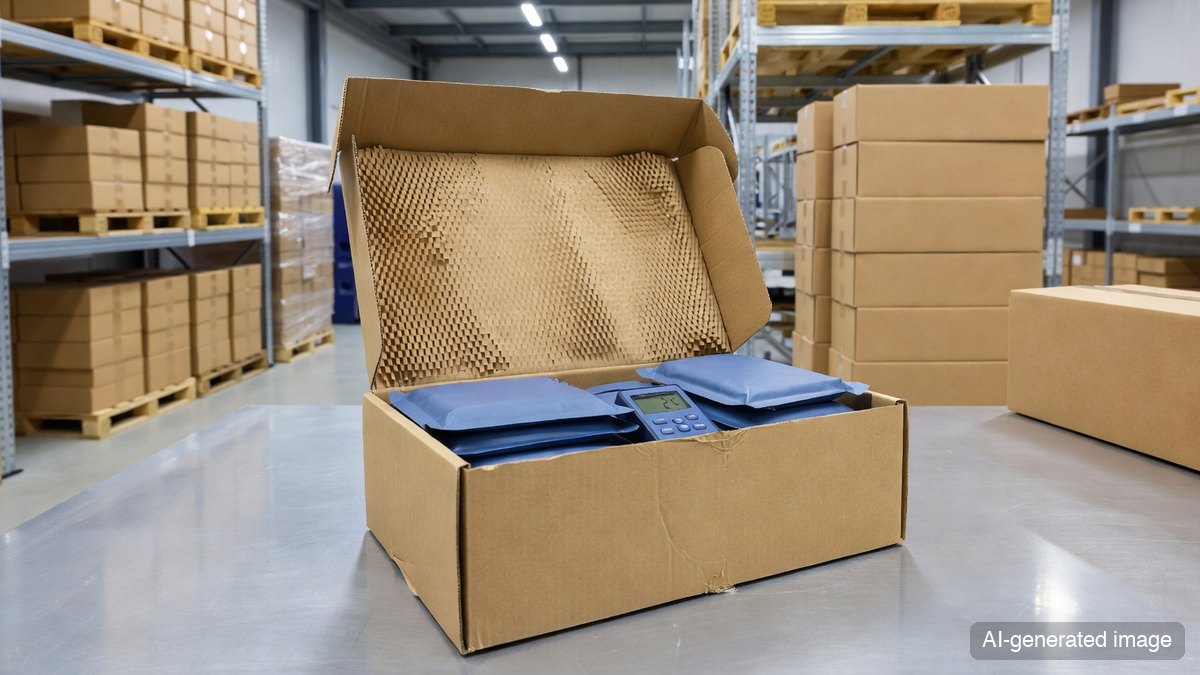
Interest in insulated paper shipping boxes is rising again. Recent coverage in Korea highlighted a paper-based cold box that maintained a cool internal condition for several hours, and searches around domestic paper packaging keywords continue to show demand from fresh food delivery, meal-kit, and local grocery logistics.
However, an insulated paper box should not be treated as a universal replacement for EPS foam. It is more accurate to see it as a packaging option that can replace EPS or plastic insulation in specific delivery windows where time, temperature, product type, and handling conditions are controlled. A two-hour chilled last-mile route and a long-distance frozen shipment with dry ice are very different problems.
This article reviews insulated paper boxes by performance, cost, recyclability, and operating limits, then maps the delivery segments where replacement is realistic.
The problem insulated paper boxes are trying to solve
Fresh and chilled food deliveries have traditionally used EPS boxes, plastic liners, foil-faced insulation, and gel ice packs. This combination has clear strengths in insulation performance and unit cost. The challenge appears after delivery.
Common issues include:
- Bulky packaging that is expensive to store, collect, or dispose of.
- EPS that becomes difficult to recycle when contaminated or broken.
- Composite insulation materials that consumers cannot easily separate.
- Gel ice packs that require draining, film separation, reuse, or collection systems.
- A gap between a brand’s sustainable delivery message and the packaging waste customers actually see.
Insulated paper boxes respond to this problem by using paper-based outer boxes, paper insulation layers, cellulose-based cushions, air-gap structures, or water-based coatings to reduce plastic content and improve the end-of-life experience.
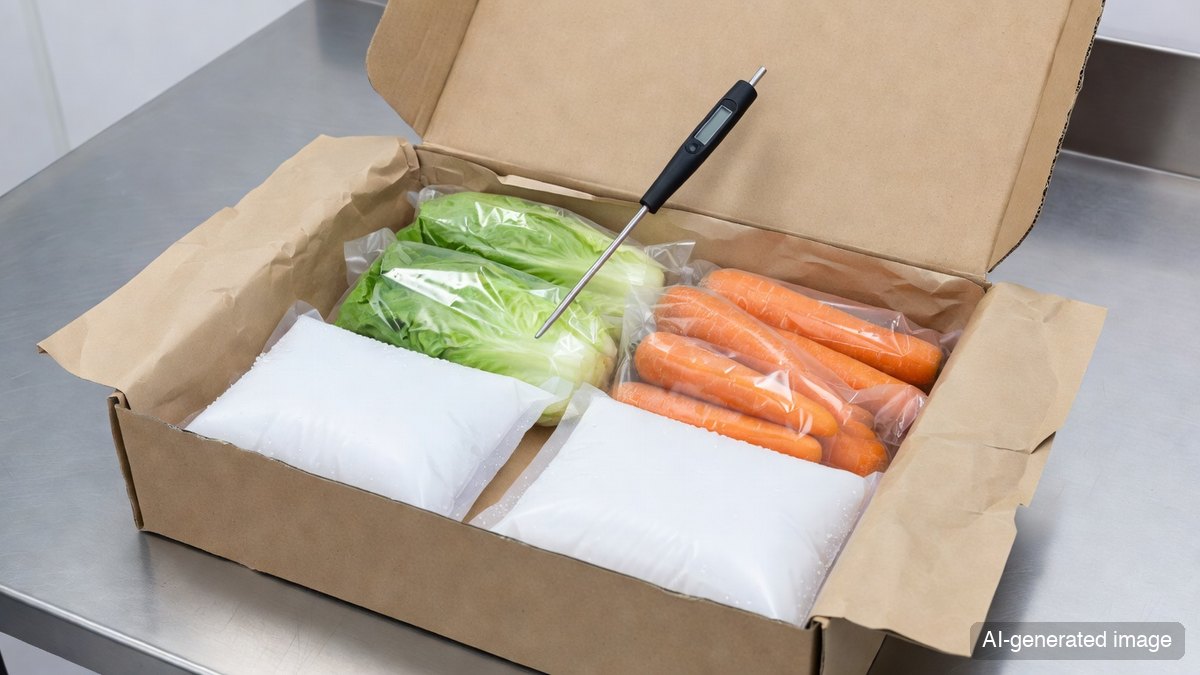
The first replacement criterion is time
Thermal performance is not determined by material name alone. The same paper-based package can perform very differently depending on box size, insulation thickness, internal air volume, product starting temperature, coolant quantity, outside temperature, and time spent in vehicles, depots, or at the doorstep.
A practical starting point is to separate delivery windows.
| Delivery condition | Fit for insulated paper boxes | Key judgement point |
|---|---|---|
| 1–3 hour chilled last-mile delivery | High | Works best when products are pre-chilled and outside exposure is short |
| 3–6 hour chilled delivery | Medium | Requires testing of coolant quantity, insulation thickness, and summer peak conditions |
| 6–12 hour mixed logistics | Limited | Must include depot dwell time, vehicle loading, and redelivery risk |
| Over 12 hours, frozen or long-distance delivery | Low | EPS, vacuum insulation, dry ice, or high-performance systems may still be required |
A report that a paper box stayed cold after three hours is meaningful. It does not mean that every chilled or frozen shipment can switch to paper. Whether the test was conducted at room temperature or above 30°C, whether the product was water, meat, seafood, or ice cream, and how much coolant was used all change the practical conclusion.
Replacement potential varies by temperature band
Cold-chain packaging should be reviewed by the product’s target temperature band.
Chilled foods: the most realistic starting point
Products targeting a chilled range, such as salads, meal kits, selected dairy items, chilled bakery products, meat, and seafood in short-route delivery, are strong candidates for insulated paper boxes. The fit is especially good for same-day delivery, urban last-mile routes, store-to-home delivery, and pickup-linked distribution where time and route variability are limited.
The starting temperature of the product matters. If products are not properly pre-chilled before packing, no passive package will perform well. Insulated packaging is not a refrigeration machine. It slows heat gain; it does not create cold.
Frozen foods: start with partial replacement or hybrid structures
Frozen dumplings, frozen meat, seafood, and especially ice cream require a much stricter temperature profile. Paper-based insulation alone may not be able to replace EPS immediately. The better first step is to test coolant optimization, inner liners, returnable coolants, or hybrid insulation structures.
For ice cream and other temperature-sensitive frozen products, “still feels cold” is not a valid criterion. The package must keep the product below a defined temperature for a defined time. In this segment, insulated paper boxes are more realistic in narrow delivery zones, seasonal specifications, or as part of a hybrid system rather than as a one-for-one EPS replacement.
Heat-sensitive ambient products: an underrated opportunity
Some products are not frozen or chilled but still need protection from heat: chocolate, cosmetics, nutraceuticals, and selected personal care products. The goal is not to maintain refrigeration but to slow temperature rise during hot-weather delivery. For these applications, insulated paper boxes can reduce plastic thermal pouches or foam inserts while improving the customer disposal experience.
Performance must be evaluated as a package system
A common mistake is to compare only the box material. Real thermal performance comes from the complete package system.
Key variables include:
- Strength and gap control of the outer corrugated box.
- Thickness, density, and air-retention capability of the paper insulation layer.
- Moisture resistance of the inner liner.
- Type and quantity of coolant.
- Product starting temperature and packing density.
- Empty headspace inside the box.
- Outside temperature and direct sunlight exposure.
- Time spent in pickup, sorting, loading, delivery, and doorstep waiting.
A simple “replace one EPS box with one paper box” approach can be risky. To hit the same temperature target, a paper-based design may need more coolant, less headspace, thicker insulation, or a tighter inner liner. Those changes affect material cost, box size, storage space, and shipping efficiency.
Cost comparison: box price alone is misleading
An insulated paper box may appear more expensive than a standard EPS box when looking only at unit price. That is not the full cost picture.
A useful comparison should include:
- Packaging unit cost: outer box, insulation, liner, coolant, and tape.
- Storage cost: flat-packability, warehouse volume, and inbound unit load.
- Packing labor: assembly time, coolant insertion, and sealing method.
- Shipping cost: outside dimensions and dimensional weight.
- Damage and claim cost: temperature excursion, leakage, and box collapse.
- Disposal or collection cost: customer instructions and returnable packaging operations.
- Brand cost: plastic reduction, overpackaging perception, and ESG communication.
Paper-based packaging can offer storage advantages if it ships flat and fits existing corrugated handling systems. On the other hand, thicker insulation may increase outside dimensions and raise parcel cost. For a fair comparison, test at least two or three box sizes across summer and non-summer conditions and compare total delivered cost.
Recyclability: the word “paper” is not enough
A major advantage of insulated paper boxes is that consumers usually understand paper packaging more easily than EPS. But actual recyclability depends on structure.
Check the following:
- Can the paper insulation layer be separated from the outer corrugated box?
- Is the moisture barrier water-based, PE-laminated, or a composite film?
- Are metallized films, nonwovens, or foil-faced layers attached?
- Do adhesives and tapes create excessive contamination in paper recycling?
- What happens when the box is wet or contaminated by food leakage?
- Are disposal instructions simple enough for consumers to follow?
An insulated paper box with too many inseparable composite layers may lose much of its recycling advantage. Conversely, if the outer box, insulation layer, and coolant pack can be separated clearly, the customer experience and post-use handling can improve significantly.
Where EPS replacement is most realistic
Based on current practical constraints, insulated paper boxes are most promising in the following segments:
- Urban 1–3 hour fresh food delivery.
- Chilled same-day delivery with short depot dwell time.
- Heat-sensitive ambient products in summer delivery.
- Products with clear plastic or EPS reduction targets.
- D2C food, cosmetics, and wellness shipments where disposal experience matters.
- Routes where returnable EPS operations are difficult and one-way disposal is a problem.
In these cases, paper-based insulation can provide enough thermal performance while improving the post-use packaging experience. Still, replacement should be validated with temperature loggers under the real delivery scenario.
Where EPS replacement remains difficult
Insulated paper boxes should be treated cautiously in the following cases:
- Long-distance frozen delivery over 12 hours.
- Ice cream and other products with very narrow temperature tolerance.
- Summer delivery above 30°C with long doorstep waiting time.
- Parcel networks with redelivery, missed delivery, or long terminal dwell risk.
- Frozen logistics that require dry ice.
- Seafood routes with repeated wetting, leakage, and condensation.
In these segments, the answer may be to keep EPS, use higher-performance insulation, operate returnable cold boxes, or improve refrigerated vehicle control. Some cold-chain problems cannot be solved by changing the box alone; they require system-level control.
Test checklist before adoption
Before switching to an insulated paper box, run tests in this order:
- Define the target temperature and required hold time.
- Include worst-case conditions, such as summer heat, doorstep waiting, and depot dwell time.
- Test with the actual product weight and actual coolant quantity.
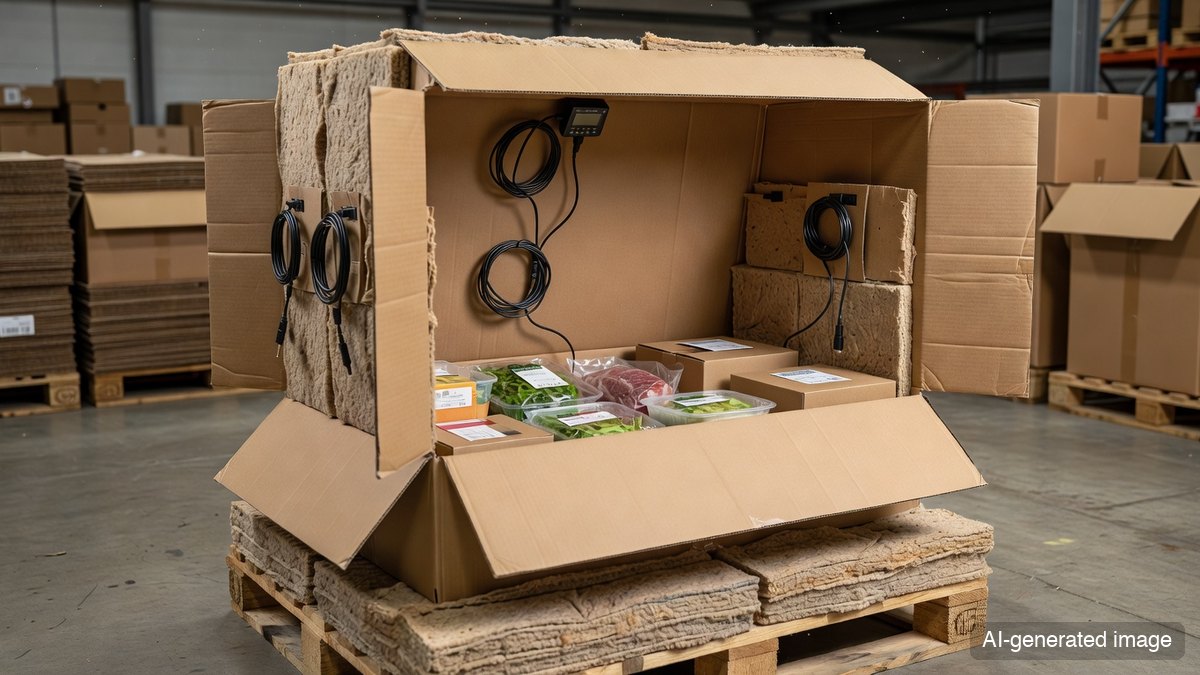
- Place temperature loggers in multiple internal positions.
- Check leakage, condensation, and compression strength after exposure.
- Test consumer disposal and separation steps.
- Compare total cost against the current EPS specification.
- Decide whether seasonal specifications are needed.
Moisture deserves special attention. Paper strength can drop because of coolant condensation, seafood leakage, or moisture on chilled products. Thermal performance should be tested together with box compression strength, handle tear resistance, tape adhesion, and liner durability.
Practical conclusion
Insulated paper shipping boxes are a real option for reducing EPS and plastic cold-chain packaging, but they are not a universal replacement. The strongest starting points are short chilled last-mile delivery, heat-sensitive ambient products, and D2C routes where brand experience and disposal convenience matter.
For long-distance frozen delivery, ice cream, hot-weather doorstep waiting, and parcel networks with high redelivery risk, the decision should be more conservative. In those cases, paper boxes may still play a role, but usually as part of a system that includes coolant design, liners, returnable packaging, and temperature-controlled logistics.
The safest procurement question is not “Can this paper box replace EPS?” It is: “Under our product, our route, and our summer worst-case condition, how many hours did it keep the target temperature?” Once that answer is supported by temperature data and total cost analysis, the right replacement window becomes much clearer.
About the Author
PackingMaster writes about industrial paper packaging, sustainable packaging materials, and logistics packaging standards from a practical B2B perspective. The focus is on connecting material claims with operating conditions, quality risks, and cost structure.
References
- ASTM International, ASTM D3103 - Standard Test Method for Thermal Insulation Performance of Distribution Packages: https://www.astm.org/d3103.html
- Background — U.S. Environmental Protection Agency, Containers and Packaging: Product-Specific Data: https://www.epa.gov/facts-and-figures-about-materials-waste-and-recycling/containers-and-packaging-product-specific-data