
If a southern US repacking warehouse loses the box converting site it depended on, the product may be ready while printed boxes, cutting dies, and transfer approvals delay the next shipment. The responsible readers are purchasing, logistics, and packaging-engineering teams that ship industrial goods to North America. The checkpoint table below can be copied into a working file to track local repacking, alternate converters, plate and die transfer, box inventory, and emergency approval actions.

How this differs from the earlier closure article
The July 2 article looked at multiple US facility closures as a broader signal for export-box quote validity and substitute board rules. This article does not repeat that structure. It narrows the July 16, 2026 single-site announcement to one practical question: what should exporters check when a box converting point in Texas changes?
The official release says the facility will close by the end of the third quarter of 2026 and that customers will be serviced at other facilities in the region. Industry coverage adds that the site is a box plant in the Dallas suburb of Carrollton, that nearly all hourly and salaried employees will be affected, and that another nearby box plant produces similar products while a nearby recycling center is not affected. That points to a local transition issue rather than a broad North American shortage story.
Why one converting site matters
Industrial export packaging often fails at the downstream step, not at the paper-price step. A local RSC box, printed shipper, die-cut divider, corner pad, or label position depends on converting lead time. Even when another regional plant can serve customers, the following items do not automatically transfer:
- printing plates and cutting dies;
- inner dimensions, scores, and flute direction;
- box inventory held by the local 3PL;
- short-run emergency converting capacity;
- customer label position and pallet pattern.
The right artifact for this update is therefore not a quote-validity table. It is a site-transition checkpoint table.
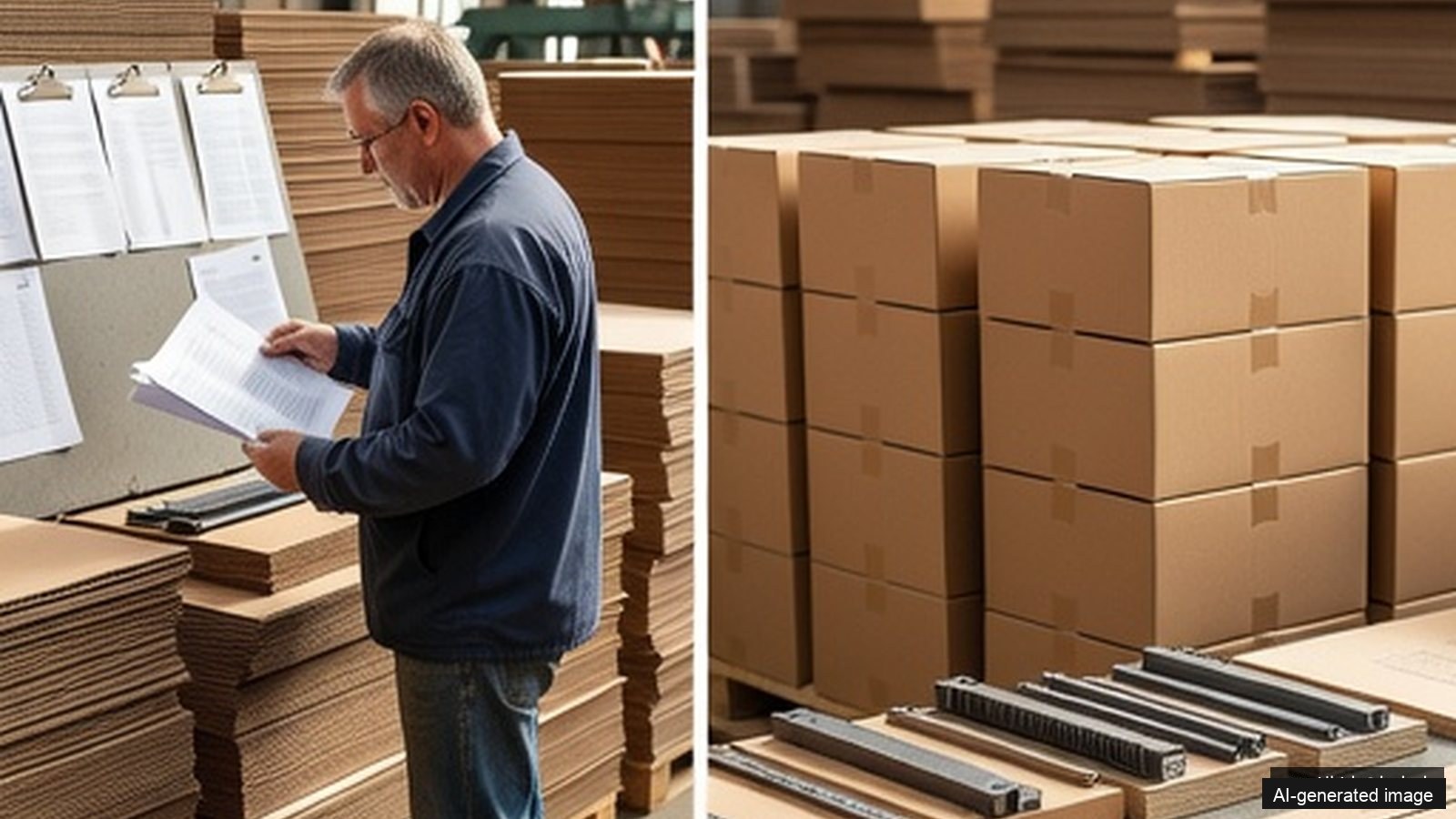
Lead-Time Risk Checkpoints for North America-Bound Industrial Packaging
The table below is designed for exporters that use local repacking or locally sourced boxes in the United States. The public closure announcement and industry report confirm the event. Your actual pass/fail values and lead times should come from supplier and 3PL responses.
| Input field | Site value to record | Decision basis | Status | Action |
|---|---|---|---|---|
| SKU and customer | North America-bound SKU, customer DC, repacking warehouse | Whether the SKU used the affected site or nearby converters | Relevant / Not relevant / Unknown | Logistics asks the 3PL and box supplier for written site confirmation. |
| Box format | RSC, die-cut, divider, tray, set pack | Whether the alternate plant can make the same format | Available / Hold | Packaging engineering sends drawings and samples to the alternate converter. |
| Plates and dies | Plate or die number, storage location, ownership | Transfer approval and move date must be confirmed | Transfer / Remake / Hold | Purchasing confirms ownership and transfer date, then gets a remake quote. |
| Box inventory | Local stock, daily usage, safety stock | Whether stock lasts until the first alternate production lot | Enough / Short | 3PL calculates stock-out date and requests emergency substitute approval if needed. |
| Alternate converter | Candidate plant, distance, MOQ, lead time | Same-spec production and emergency response capability | Approve / Conditional / Reject | Purchasing gets MOQ and first-delivery dates from at least two candidates. |
| Print and label rules | Color count, label position, barcode location, customer text | Must match customer inbound rules | Maintain / Revise | Quality compares alternate samples with customer-approved drawings. |
| Box strength | ECT, BCT, customer-approved strength, pallet pattern | Substitute boxes require protection confirmation | Approve / Test | Packaging engineering checks sample boxes with the actual stack pattern. |
| Local repacking | 3PL workspace, labor time, worker training | Temporary SOP and photo record must be possible | Available / Hold | Logistics issues a temporary repacking SOP and photo checklist. |
| Customer notice | Changed items, unchanged items, effective date | Inbound conditions should not change without approval | Notify / Await approval | Sales separates unchanged specifications from potential changes. |
| Final action | Maintain, transfer, remake, alternate converter, hold shipment | Decision owner and date must be recorded | Approve / Hold / Stop | Program owner confirms final status before the next shipment. |
Role-Based Actions
Purchasing should confirm the real converting site, not only the supplier name on the contract. Ask for plate and die ownership, storage location, transfer timing, and remake cost.
Logistics should calculate the stock-out date for boxes held at the US warehouse. Finished product inventory does not matter if box inventory runs out first. Ask the 3PL for current stock, daily usage, and the first possible arrival date from an alternate source.
Packaging engineering should confirm whether the alternate converter can reproduce the same inner dimensions, flute direction, scores, and print position. “Similar product capability” is not enough. Use drawings and physical samples.
Sales and customer-facing teams should communicate what is unchanged before explaining the supply event. If label position, outer dimensions, and pallet patterns remain the same, say that first.
Hold Conditions
Do not approve alternate production or temporary repacking if any of the following applies:
- The 3PL cannot confirm the actual converting site used for the SKU.
- Plate or die ownership and transfer timing are unclear.
- The alternate converter has not confirmed inner dimensions, score positions, and flute direction.
- Customer label position or pallet pattern will change without customer approval.
- Current box inventory and daily usage are missing, so stock-out date cannot be calculated.
- Substitute box strength and stack stability have not been checked with samples.
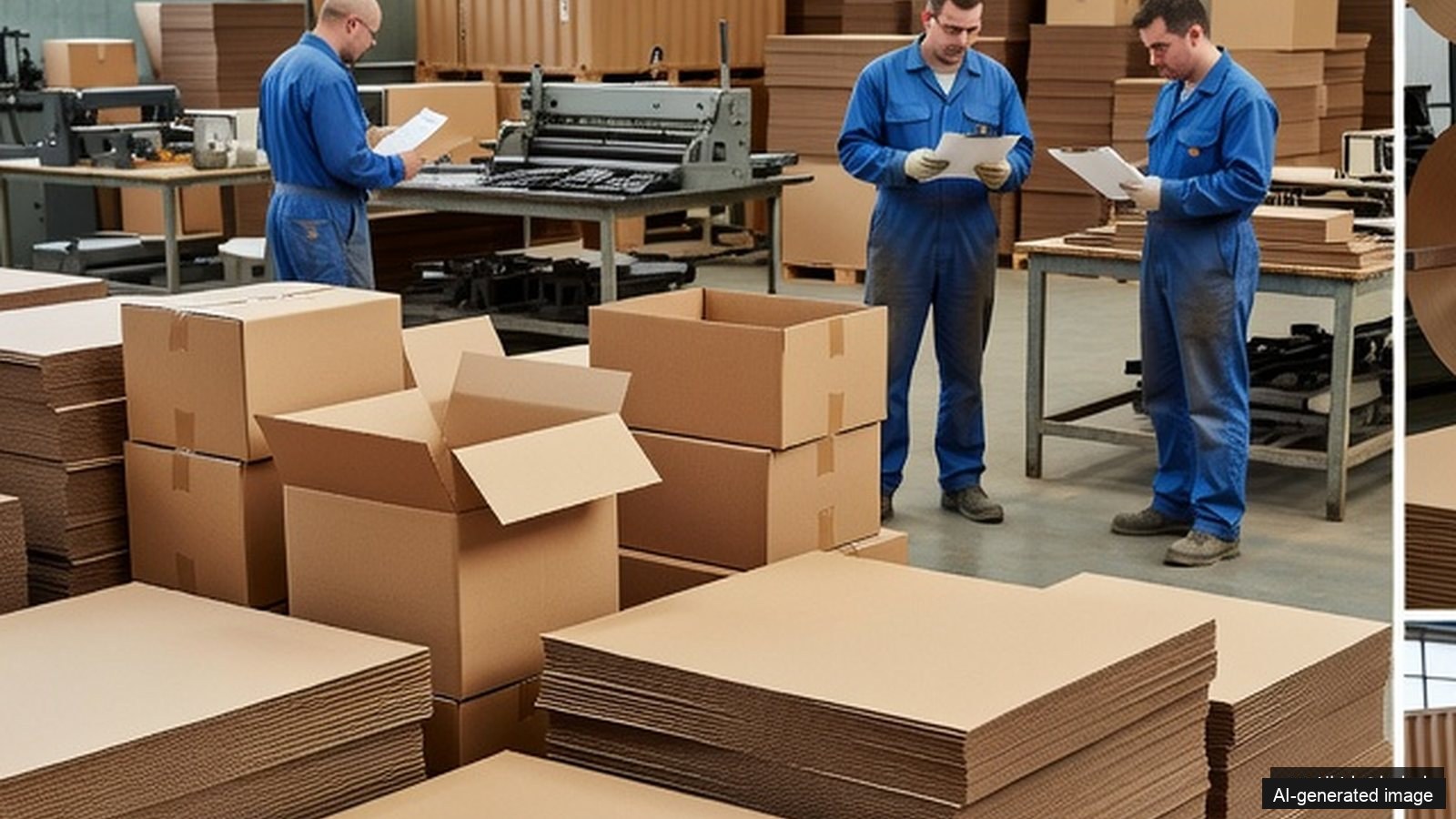
Conclusion: Turn the News Into a Site-Transition Table
This announcement does not need to be read as a broad North American packaging shortage. The official release says customers will be serviced at other facilities in the region. The more practical risk is narrower: which SKUs used that local converting site, where plates and dies are stored, how long current box inventory lasts, and whether an alternate converter can reproduce the same specification.
The earlier quote-validity article dealt with price assumptions and commercial conditions. This update deals with state transition. When exporters receive a facility-closure signal, the first question should not be “will the price rise?” It should be “where, with which tooling, and by what date will the next box be made?”
FAQ
Q: How is this different from the July 2 article?
The earlier article covered multiple closures and quote validity. This article focuses on one Texas box facility and turns it into a local repacking, alternate-converter, plate, die, and inventory checkpoint.
Q: Should companies that do not buy from that company still check this?
Yes, if their North American 3PL or repacking partner uses regional converters. The real production site and box inventory matter more than the direct contract name.
Q: What should be requested first?
Ask the 3PL for current box stock, daily usage, actual production site, and first alternate-production date. At the same time, ask the supplier where the plates and dies are stored and when they can be transferred.
About the Author
PackingMaster: Editor of Paper Pack Log. We collect and organize market trends, product information, and technical insights for the paper packaging industry.