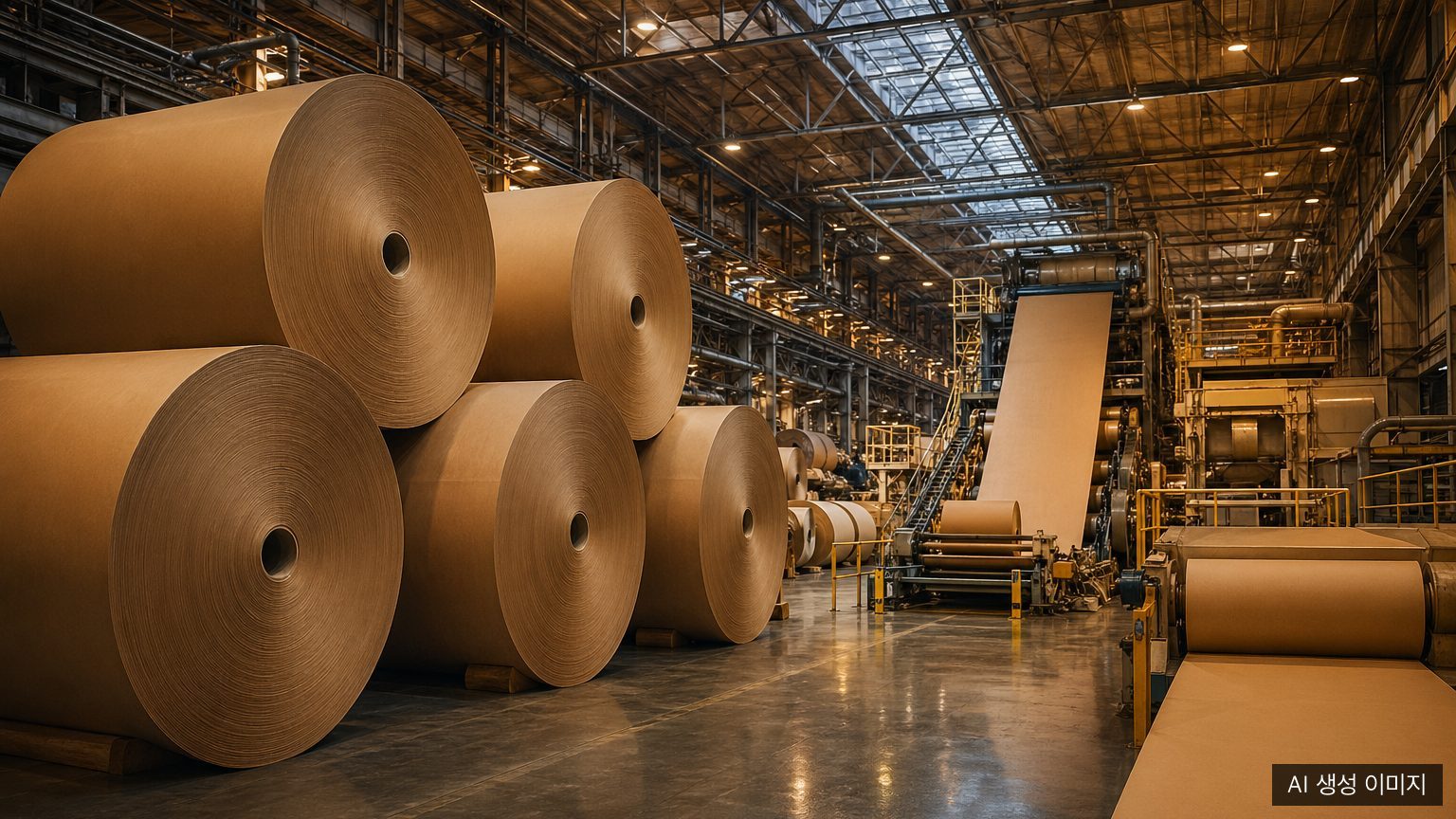
International Paper (IP) has started building a new corrugated packaging plant in Brandon, Rankin County, Mississippi. The groundbreaking ceremony was held on May 20, 2026. In its press release, the company put the investment at USD 225 million (roughly KRW 225 billion), the site at about 80 acres, the facility at 468,000 square feet, and the startup at Q4 2027. Around 150 new manufacturing jobs will be created.
The reason this matters for the Korean corrugated and paper packaging sector is that the announcement lands at a moment when North American containerboard pricing is moving up and some legacy mills and lines are being closed or reshuffled at the same time. A single new box plant does not redraw overall market supply, but read as a signal of expansion at IP’s North America Packaging Solutions East unit, it becomes usable information for Korean exporters at the negotiating table.
What Is Being Built, Where, and at What Cost
A short summary of the basic facts about the new Mississippi plant:
- Investment: about USD 225 million (roughly KRW 225 billion)
- Location: Brandon, Rankin County, Mississippi, at the East Metro Center site
- Site and facility: roughly 80-acre site with a new corrugated plant of about 468,000 square feet
- Groundbreaking: May 20, 2026
- Startup: Q4 2027
- Jobs: about 150 manufacturing jobs
- Adjacent existing plant: Richland box plant near Jackson, about 10 miles away
- Business unit: IP North America Packaging Solutions East
- Main sources: PR Newswire, PaperAge, Pulpapernews, Tissue Online North America
IP’s press release described the project as a sustainable corrugated solution that protects products across multiple industries while supporting supply chain and sustainability goals. In other words, this is not a stand-alone capacity addition but a regional expansion that reinforces the eastern box-plant network and responds to demand for more sustainable packaging.
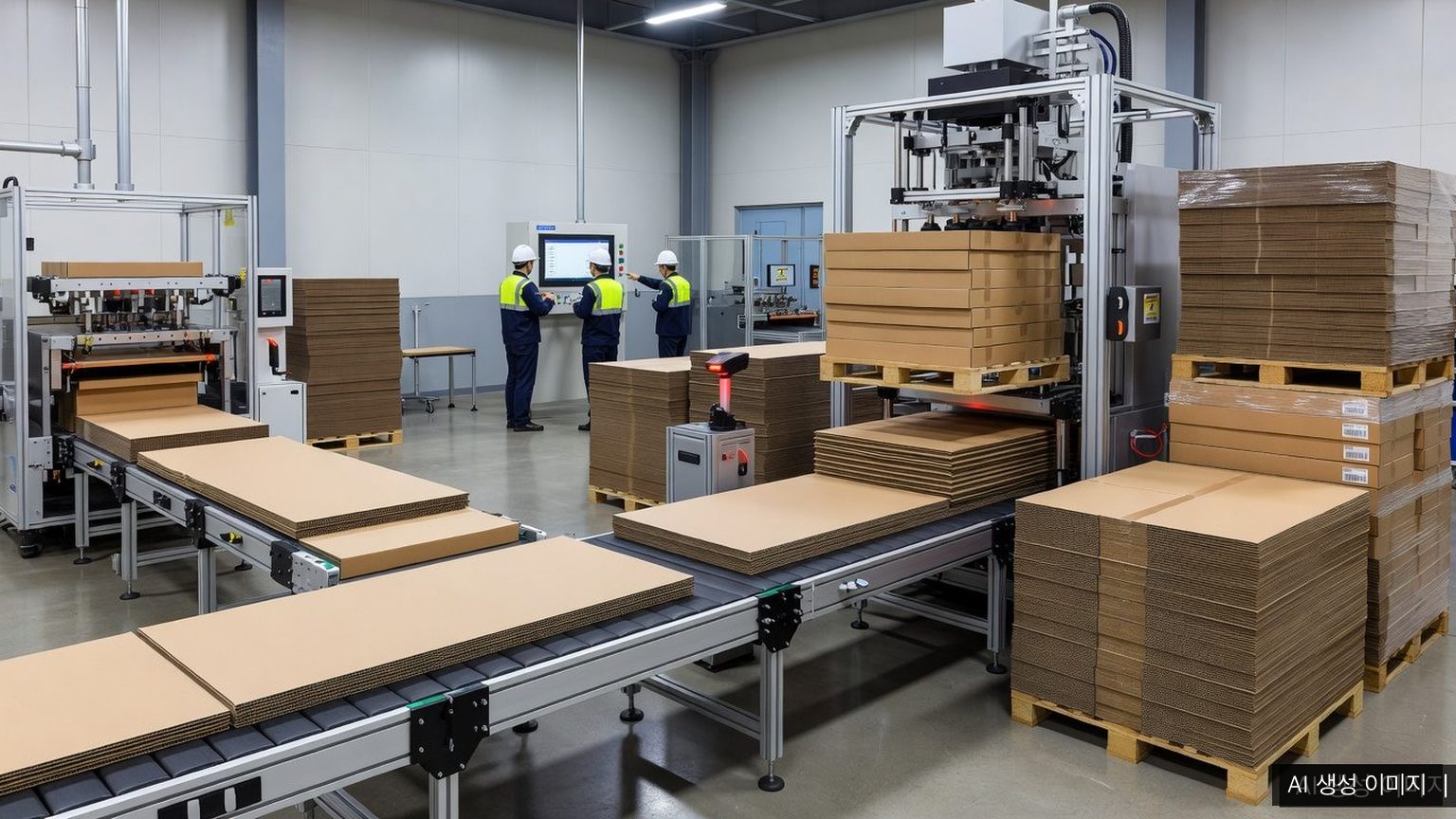
Building about 10 miles from the existing Richland box plant matters operationally. The setup spreads production capacity within the same region, lowers single-site risk, and puts capacity closer to customers in the US South and East. From a Korean exporter’s perspective, that translates into a more stable box-supply picture for shipments delivered into the US Southeast.
North American Containerboard Around the Same Time
The groundbreaking gets more interesting when read against the broader North American containerboard market in the first half of 2026, which has shown a fairly clear pattern.
First, a second round of price increases. Major producers including Smurfit Westrock and Cascades have been announcing containerboard price hikes in the run-up to June. Packaging Dive and others read this as a demand-recovery signal, while also pointing out that some mill closures and restructuring have tightened supply.
Second, supply-side adjustments. Some aged mills and paper machines have been throttled back or shut down, creating a stretch where short-term supply has tightened. At the same time, IP has been moving quickly to reshape its North American box and containerboard network with the NORPAC acquisition (announced April 2026) and the Delmarva converting facility acquisition (May 2026).
Third, e-commerce and food demand rebound. E-commerce mailers and food boxes are growing again, so a stretch of overlapping price increases and demand recovery is opening up.
It matters that the Mississippi plant is targeted at a Q4 2027 startup within this picture. The 2026 round of price increases reflects short-term supply tightness, and the Mississippi plant works more like reinforcement that kicks in from late 2027. The roughly 18 months in between are likely to be a stretch where pricing power leans toward the producer side.
How to Use This as a Negotiation Card
The Mississippi plant itself does not directly supply containerboard to the Korean market. But for Korean exporters negotiating box price, spec, and lead time with US buyers, it can be used as follows.
Negotiating the pass-through of price increases: IP strengthening its US box supply network reads as the producer side gaining short-term pricing power. As box-spec quotes received by Korean exporters move up, it helps to split the increase by quarter or document it as an addendum effective from a specific date. Rather than simply reflecting “this year’s increase,” it is safer to lay out a “pre- and post-Q4 2027 startup pricing scenario” on the same sheet.
Supply stability and multi-sourcing: As IP reinforces its US Southeast footprint, box supply for Korean export cargo into that region is likely to stabilize. But heavier reliance on one producer can also shrink the pool of alternative sources, so Korean exporters benefit from keeping a one-page spec and price comparison against other box suppliers (Smurfit Westrock, Packaging Corporation of America, Pratt, etc.) ready at all times.
Sustainability and recycled-content specs: IP framed the new plant as a sustainable packaging facility. From a Korean exporter’s perspective, US buyers are more likely to push for sustainability specs (recycled-fiber share, coatings, separate-collection marking). Applying spec updates already in motion for EU PPWR and Korean EPR to US-bound export SKUs lets the same exporter use “sustainability specs available, no extra cost” as a card later.
Lead-time negotiation: In the window before Q4 2027 startup (2026 through H1 2027), box lead times can stretch on some SKUs. Korean exporters should consider moving order cycles one to two weeks earlier than usual and add a clause requiring formal notice of any lead-time change to the purchase contract.
A One-Page Brief to Bring to the Meeting
To translate the Mississippi news and the containerboard price flow directly into a Korean exporter’s negotiation, the following items work well on a single page:
- Plant basics: location, investment, facility size, startup date, adjacent existing plant.
- North American producer price-hike calendar: increase amount, announcement date, and effective date by producer.
- Your US-export SKU box specs: outer dimensions, basis weight, ECT/BCT, supplier, lead time.
- Per-scenario unit-price outlook: expected box prices for H2 2026, H1 2027, H2 2027, and H1 2028.
- Alternative supplier comparison: spec, price, and lead-time table.
- Sustainability spec options: recycled fiber, coatings, separate-collection marking, certifications.
- Contract and addendum update items: notice of price increase, notice of lead-time change, post-startup spec and price renegotiation clauses.
With this brief ready, a single question from a US buyer like “why is the price going up?” can be answered with the IP plant schedule, the producer price-hike pattern, and the exporter’s prepared sustainability options shown together. It moves the meeting away from a unit-price haggle and toward an explanation of where the exporter sits inside the supply-chain reshaping.
Wrapping Up
The Mississippi groundbreaking is not just “one company adding one box plant” from a Korean exporter’s point of view. It is one of the visible markers of how IP is reinforcing specific regions while the North American corrugated supply chain reshapes, the second round of containerboard price increases plays out, and sustainability-spec requirements get stronger, all at once.
In the window before Q4 2027 startup, producer pricing power is likely to stay strong. Korean exporters do well to bundle the IP NORPAC acquisition, the Delmarva converting acquisition, and the Mississippi groundbreaking into a single line of context and turn it into a negotiation card. That helps on both price-hike pass-through and supplier diversification.
Frequently Asked Questions
Q: Is the Mississippi plant a containerboard mill or a corrugated box plant?
It is a corrugated box (converting) plant. IP’s press release describes it as a corrugated packaging facility, and the business unit is North America Packaging Solutions East, which covers boxes and converting. It is not a paper mill that makes containerboard itself.
Q: Does this new plant directly affect Korean export pricing?
Direct impact is limited, because Korean exporters that ship Korean-made cargo to the US do not have those boxes made in the US. But as US box supply stability strengthens and sustainability requirements rise, box specs and price negotiations for Korean export SKUs are exposed to the same currents.
Q: With Q4 2027 startup, what should we prepare for the period before that?
Match the work to the second-price-hike round and the stretch of producer-side pricing power. Put your SKU-level box specs, prices, and lead times onto a single page, prepare an alternative-supplier comparison, and update sustainability-spec options and contract-addendum items in parallel. That gives you more cards to play in upcoming negotiations.
Q: How do the NORPAC and Delmarva acquisitions tie into this new plant?
All three are parts of how IP is reorganizing its North American packaging network. NORPAC secures a west-coast containerboard footprint, Delmarva adds eastern converting capacity, and Mississippi adds a new southeastern box plant. As regional footprints strengthen, it reads as a signal that the US box market is reshaping with IP at the center.
About the Author
PackingMaster: Editor of PaperPackLog. Curates and organizes market trends, product information, and technical insights for the paper-packaging industry.
References
- PR Newswire, “International Paper Breaks Ground on New Sustainable Packaging Facility in Rankin County, Mississippi”
- PaperAge, “International Paper Breaks Ground for New Corrugated Packaging Plant in Mississippi”
- Pulpapernews, “International Paper breaks ground on new packaging plant in Rankin, Mississippi”
- Tissue Online North America, “International Paper begins construction of new sustainable packaging facility in Mississippi”
- Packaging Dive, “Containerboard price increases June 2026 supply-demand”