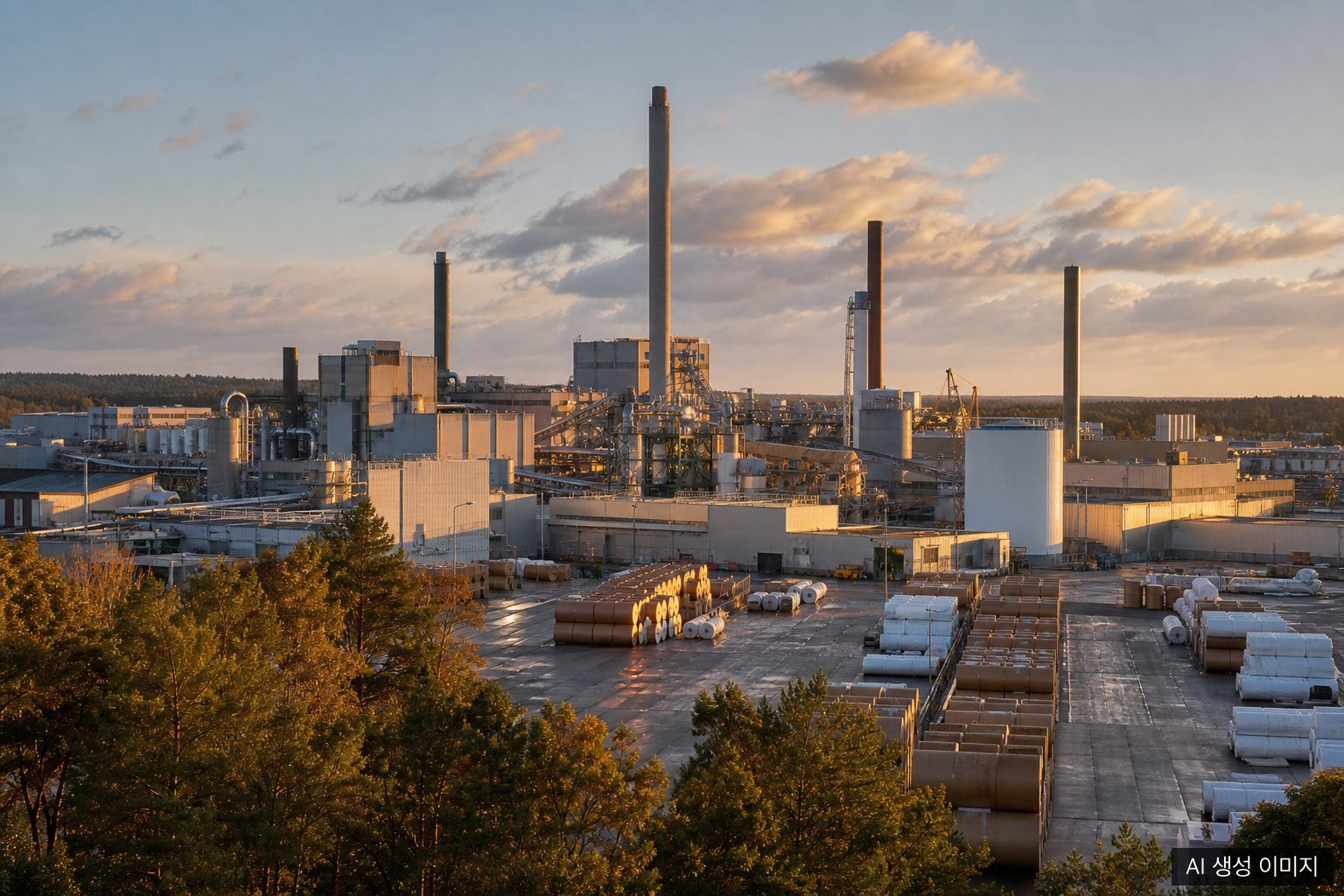

International Paper (NYSE: IP), one of the world’s largest paper and packaging companies, announced its first-quarter 2026 results on April 30, 2026. As the company completed the first annual cycle after acquiring DS Smith, the market focused not only on the financial figures but also on the progress of restructuring in EMEA, covering Europe, the Middle East, and Africa. The announcement was more than a quarterly earnings update. It showed the outline of the future business structure IP is building.
Key Q1 2026 Results
IP’s consolidated net sales for Q1 2026 were $5.97 billion, up 13.4% from $5.2 billion in the same period of the previous year. This reflected the full consolidation effect of the DS Smith acquisition. However, revenue was slightly below the market consensus of $6.01 billion, and the share price fell after the announcement.
Profitability showed a meaningful recovery. Net income from continuing operations turned positive at $76 million. In the same quarter of the prior year, IP had recorded a net loss of $124 million. Adjusted EBITDA was $677 million, and cash flow from operations was $611 million. Free cash flow also improved dramatically from negative $618 million in the previous period to positive $94 million.
Adjusted EPS was $0.15, 7% above the market estimate of $0.14. The figure suggests that cost controls are working faster than expected despite macro uncertainty.
For the second quarter, IP guided to adjusted EBITDA of $520 million to $570 million. Its full-year guidance was $3.2 billion to $3.5 billion, a partial reduction from previous guidance to reflect macroeconomic uncertainty.
$200 Million of EMEA Cost Savings: Where and How
The most notable part of the earnings release was the cost reduction progress in EMEA. IP said the cumulative benefit of its 80/20 business optimization plan in EMEA had reached more than $200 million on an annual run-rate basis. This was about $40 million higher than in the previous quarter.
The specific savings measures fall into three main categories.
Facility Closures and Production Line Rationalization
IP closed a total of 31 facilities in the EMEA region. The main targets were DS Smith’s small and midsize mills and converting plants spread across Europe. The approach is to shut low-profitability smaller sites and concentrate production at core large-scale facilities.
Workforce Restructuring
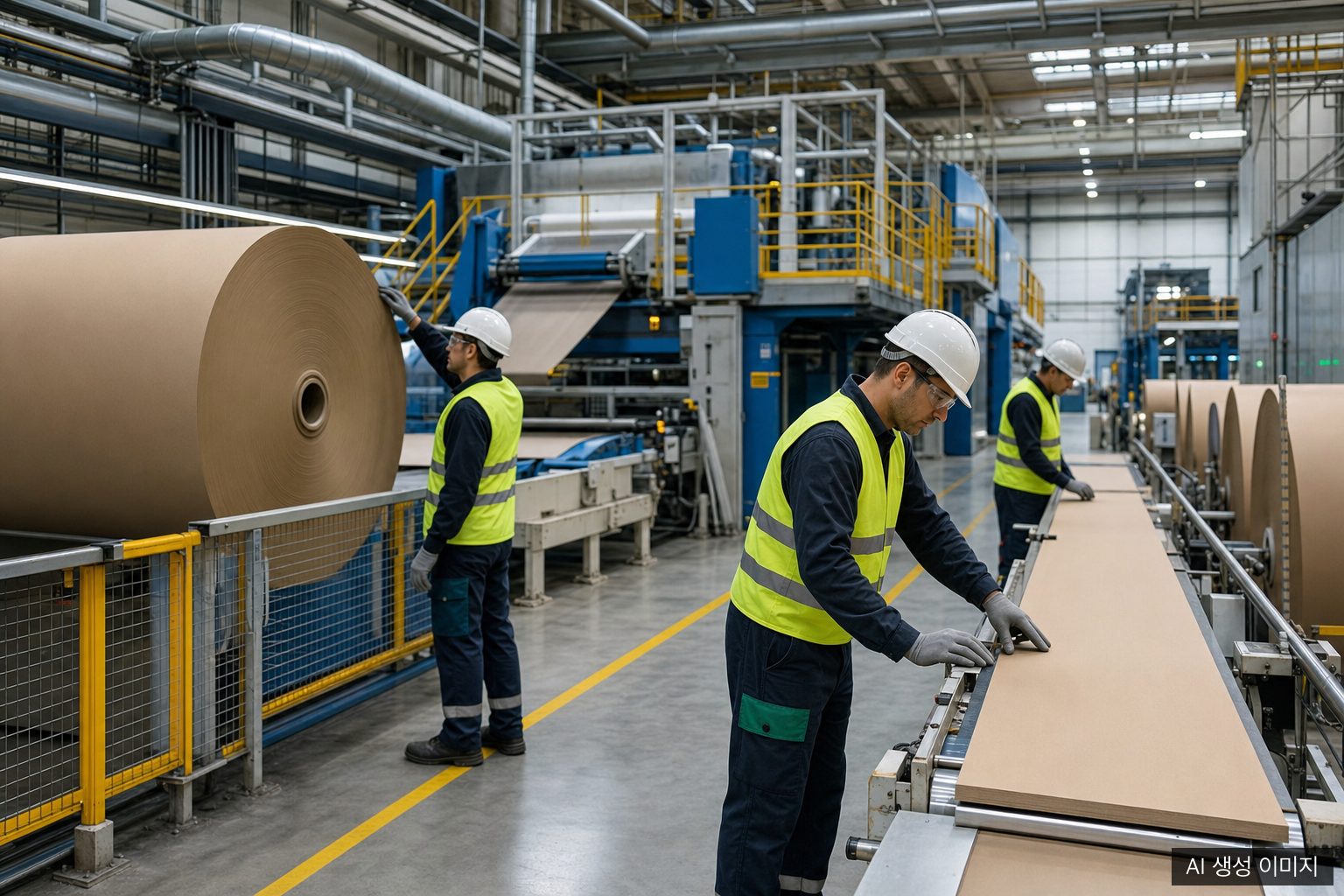
More than 2,800 positions were eliminated. Alongside the removal of duplicate functions that typically follow a large acquisition, IP is also improving operating efficiency through automation and digital investment.
Product Portfolio Optimization
Following the 80/20 principle, IP is also reducing low-profit-contribution SKUs and customer segments. The direction is to reduce low-margin commodity containerboard volume and increase the share of higher-value specialty packaging.
IP plans to invest an additional $400 million in its EMEA business in 2026 so that it can remain competitive even after a future standalone listing.

One Year After the DS Smith Acquisition: Integration Status
IP completed the DS Smith acquisition in January 2025. The original synergy target was $514 million, but it was later raised to $600 million to $700 million. Rapid optimization in the North American business helped lift the overall synergy estimate.
The European market, however, is recovering more slowly than North America. A weak European manufacturing cycle, sluggish consumer demand, and containerboard oversupply are all weighing on the region. IP candidly acknowledged that DS Smith integration had started more slowly than expected, while emphasizing that structural cost reductions through the 80/20 program would improve profitability regardless of market conditions.
IP’s Next Move: Separate Listings for North America and EMEA
In January 2026, IP announced another major strategic direction: it plans to separate its North American and EMEA businesses into two independently listed companies. Specifically, the EMEA packaging business will be spun off to existing IP shareholders and dual-listed on the London Stock Exchange and the New York Stock Exchange. IP plans to retain about 20% of the new EMEA company for roughly 12 to 18 months after the separation.
The target completion date is within 12 to 15 months of the announcement, meaning early to mid-2027. CEO Andy Silvernail is expected to lead the North American company, while former CFO Tim Nicholls is expected to lead the new EMEA company.
This separation decision should be understood together with the EMEA cost reductions. IP’s strategic intent is to clean up the EMEA entity’s financial structure as much as possible before a standalone listing and present an attractive company to IPO investors.
Impact of Global Restructuring on Packaging Costs
IP’s restructuring could affect the broader global packaging supply chain.
In the short term, supply reduction pressure may appear. The closure of 31 EMEA facilities reduces European linerboard and fluting supply. If lower supply overlaps with demand recovery, European containerboard prices could rise.
Over the medium to long term, the market will continue shifting toward higher-value products. The combined IP-DS Smith platform is reshaping its portfolio toward higher-value areas such as e-commerce packaging and specialty consumer-goods packaging, rather than low-margin commodity containerboard. This may ease some competitive pressure in the general-purpose containerboard market.
Cost pass-through power may also strengthen. After 80/20 optimization, IP’s bargaining power is higher in the core customer segments it chooses to focus on. Large FMCG companies with long-term supply contracts may receive more stable supply, but in exchange they may have to allow IP greater pricing flexibility.
Implications for the Korean Packaging Industry
IP’s latest moves offer several implications for Korea’s packaging industry.
First, global majors’ focus on higher value-added products raises standards for Korean players. If IP and DS Smith focus on e-commerce-specific packaging and high-strength, eco-friendly lightweight liners, procurement standards at global FMCG companies will also rise. Korean packaging manufacturers and converters should monitor changes in customer specifications.
Second, IP-affiliated base paper import prices may fluctuate indirectly. IP does not directly supply large volumes of base paper to the Korean market, but changes in IP’s supply reductions and pricing policy in the global containerboard market can indirectly affect East Asian market prices. In particular, OCC prices and international spot prices for kraft linerboard should be monitored together.
Third, the Asia strategy of the new EMEA company after separation will be worth watching. DS Smith has traditionally had a limited presence in Asia, but after becoming independent it may explore entry into the Asia-Pacific market depending on its growth strategy.
Conclusion
IP’s Q1 2026 results are an interim report card for the DS Smith integration and part of the preparation for business separation. The $200 million EMEA cost reduction is more than simple cost cutting. It is strategic work to increase the value of the EMEA entity before a standalone listing. The closure of 31 facilities and elimination of more than 2,800 positions show the intensity of the program.
The global packaging market is in the middle of a major reshuffling by large players. Megatrends such as Smurfit WestRock, the IP-DS Smith integration followed by separation, and Mondi’s regional focus are changing the supply structure. Korea’s packaging industry now needs to read the direction of these changes and strategically reset its position in the global value chain.
FAQ
Q: Does International Paper’s EMEA cost reduction directly affect the Korean market?
The direct supply impact is limited. However, global containerboard supply reductions and pricing policy changes can indirectly affect sentiment across European, North American, and Asian markets.
Q: Are the effects of the DS Smith acquisition already reflected in results?
They have been reflected in consolidated results in earnest from Q1 2026. However, because of the European slowdown and integration costs, buyers should watch the pace of restructuring as well as short-term earnings.
Q: What should packaging procurement managers check?
They should monitor imported base paper prices, OCC prices, and European containerboard price trends together. Facility closures by major players can be interpreted as a signal of tighter supply.
About the Author
PackingMaster: Editor of Paper Pack Log. We collect and organize market trends, product information, and technical insights for the paper packaging industry.
References