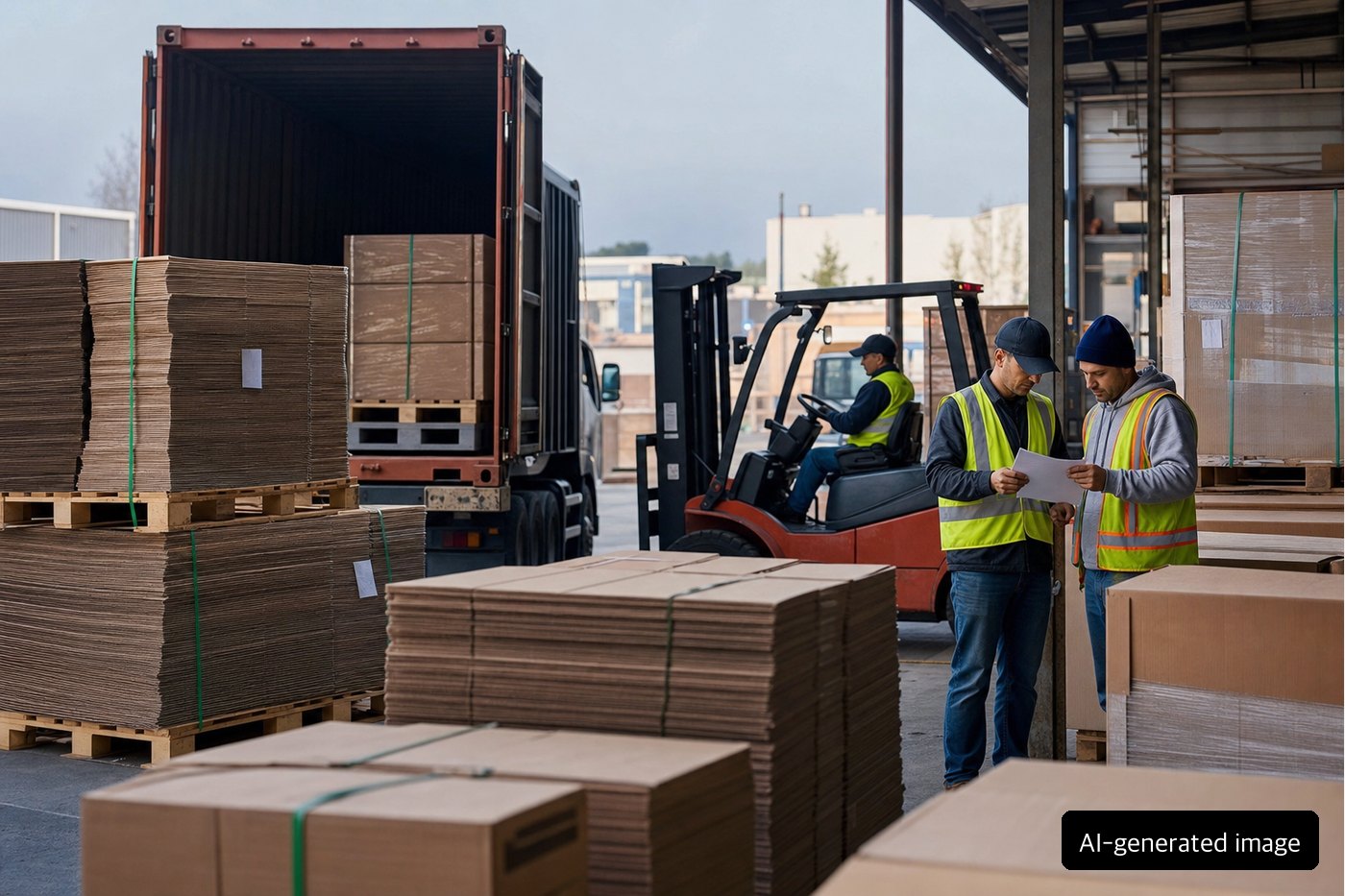

International Paper announced a new round of North American packaging network optimization, including the closure of its Aurora, Illinois sheet plant, converting plants in Elk Grove, California and Barrington, New Jersey, and the shutdown of preprint operations at its Richwood, Kentucky facility. The company said the actions are expected to be completed by the end of the third quarter of 2026, while affected customer volumes will be transitioned to other facilities in each region.
For Korean exporters and industrial packaging buyers, the point is not simply that a large US packaging company is closing several sites. The more practical signal is that major corrugated networks are being reshaped around cost position, regional density, and higher-value opportunities. That can indirectly affect quote validity, lead times, printed packaging schedules, and substitute board decisions.
What the announcement actually says
International Paper framed the move as network optimization. The company said the decision is intended to focus investments where they create the greatest value, strengthen its cost position, and better serve North American customers. Packaging Dive reported that about 330 employees are affected across the four facilities.
The affected sites are not only containerboard mills. They include a sheet plant, converting plants, and preprint operations. That distinction matters. Export box buyers should look beyond linerboard price and include the downstream steps that turn paper into customer-ready packaging: sheets, converting capacity, printing, preprint scheduling, and regional freight.
Why quote validity deserves a closer look
Many export packaging buyers treat a corrugated box quote as a stable number until the next scheduled price review. During a network reshuffle, however, the assumptions behind that quote can change faster than expected.
First, sheet and board lead times may move. Even if supply continuity is maintained, order routing and production slots may change when customer volumes are moved to another facility.
Second, printing and preprint schedules may become more sensitive. Branded retail boxes, multi-color printed cartons, and display-ready packaging often depend on artwork approval, plates, color control, and preprint capacity. These steps can become the bottleneck before the box price itself changes.
Third, quote validity periods need to be tied to assumptions. A “30-day valid quote” is not enough if paper grade, sheet supply, printing, freight, or minimum order quantities are all variable. Buyers should ask which parts of the quote are fixed and which are subject to revalidation.

Questions purchasing teams should add to the quote file
A practical checklist would include:
- Does the quoted price include paper, sheeting, converting, printing, and freight, or only part of that chain?
- If liner or medium grades change, how will box strength and price be reconfirmed?
- Can the same box specification be produced by an alternate supplier or plant without new tooling delays?
- Do preprint or high-color boxes require a separate artwork and sample approval lead time?
- Can the supplier reopen pricing before the quote expires if a major supply-chain event occurs?
- If an emergency substitute specification is used, who checks ECT/BCT, stacking stability, and pallet patterns?
These questions matter even when a company does not buy directly from International Paper. Large network decisions can reset expectations among regional converters, 3PL packaging suppliers, and competing producers.
Manage condition changes before assuming supply disruption
The announcement does not mean North American packaging supply will immediately become scarce. International Paper said it expects to transition affected customers to other facilities to ensure continuity of supply.
The bigger day-to-day risk is not a sudden supply stop. It is a change in conditions: lead time, minimum order quantity, print approval schedule, freight responsibility, or rush-order availability. For export packaging, small changes can affect customs preparation, distribution-center intake, retail compliance, and shipment timing.
Substitute board grades should be documented before they are needed
One weak point in many quote files is the substitute board rule. Phrases such as “equivalent grade acceptable” are too vague when a supplier actually needs to change the liner, medium, recycled content, coating, or print surface.
A better substitute specification should document:
- allowed basis-weight ranges for outer and inner liners;
- medium changes and compression-strength requirements;
- recycled content or FSC/PEFC requirements where applicable;
- surface printability, coating, and moisture-resistance needs;
- pallet stacking, humidity, and transit-test requirements;
- the approval flow and responsibility split when a substitute is used.
With this information in place, a buyer can respond faster if a supplying plant changes, a regional converter is replaced, or a printed box must be rerouted.

What Korean packaging suppliers can learn
The same signal applies to Korean paper packaging suppliers. As global producers become more selective about network efficiency and customer mix, some mid-sized and specialized buyers may look for suppliers that can respond faster, document substitute materials, and explain quote assumptions more clearly.
A supplier proposal should therefore show more than a low price. It should include:
- fast sample response for export packaging changes;
- a board-grade substitution table and strength criteria;
- transparent separation of fixed and variable quote conditions;
- backup production or alternate specification options;
- packaging specifications, test reports, and recycling or certification documents.
In short, the lesson from the International Paper news is not “box prices will rise tomorrow.” It is that buyers and suppliers should manage the assumptions behind the price before those assumptions shift.
Conclusion: manage the quote conditions, not only the quoted price
Packaging price still matters, but during a period of network optimization, the quote conditions often move first. International Paper’s four-facility announcement shows how major packaging networks are being reorganized around cost position, regional density, and higher-value customers.
Exporters should compare not only unit prices but also validity periods, substitute board rules, printing lead times, minimum order quantities, freight assumptions, and rush-production terms. Packaging suppliers that document these conditions clearly can reduce uncertainty for their customers and stand out in a more selective market.
FAQ
Q: Does this directly change corrugated box prices in Korea?
Not directly. The effect is more of a market signal. It highlights the need to review quote assumptions for export boxes, especially when North American logistics or local packaging suppliers are involved.
Q: Should companies that do not buy from International Paper still care?
Yes. Regional 3PLs, repacking partners, and local converters may still be influenced by broader network shifts and lead-time changes in the North American packaging market.
Q: What should be checked first?
Start with quote validity, price components, substitute board rules, printing lead times, and minimum order quantities. Then align the box specification and approval process before urgent shipments occur.
About the Author
PackingMaster: Editor of Paper Pack Log. We collect and organize market trends, product information, and technical insights for the paper packaging industry.