
Packaging innovation shown at a major trade fair is not only about new machines or eye-catching materials. The practical question for 2026 is becoming clearer: can this package survive regulation, recycling expectations, labeling requirements and data requests at the same time?
Recent coverage around Interpack 2026 and the EU packaging regulation agenda points in the same direction. For Korean exporters using paper packaging, the important issue is not a broad sustainability slogan. It is whether the packaging specification can be documented, tested, labeled and adjusted for each target market.
Translating trade fair trends into export work

Terms such as sustainable packaging, circular economy and smart packaging appear frequently in trade fair coverage. For an exporter, those themes need to be translated into concrete checks.
- Does the current packaging meet the recyclability expectations of the target market?
- Do paper, coatings, labels, tapes and cushioning materials create problems in recycling?
- Is there enough space for country-specific EPR and labeling information?
- Can the company provide packaging data sheets to customers or distributors?
- Will the same specification remain usable after PPWR implementation progresses?
Before adopting a new material or machine, exporters should build a specification management process that can answer these questions.
PPWR readiness is not only a material issue
The EU Packaging and Packaging Waste Regulation covers packaging reduction, recyclability, reuse, labeling and information requirements. Paper packaging may have advantages over many plastic formats, but “made of paper” is not a complete answer.
A paper box can still include barrier coatings, composite labels, strong adhesives, plastic handles or mixed cushioning materials. In that case, the recyclability of the whole packaging system may be different from the recyclability of the outer box alone.
A practical specification sheet should therefore include:
- Main material and secondary material composition
- Coatings, lamination and adhesive use
- Printing ink and labeling method
- Packaging weight and reduction options
- Space for market-specific labeling
- Customer evaluation or recyclability test results
Labeling space must be designed early
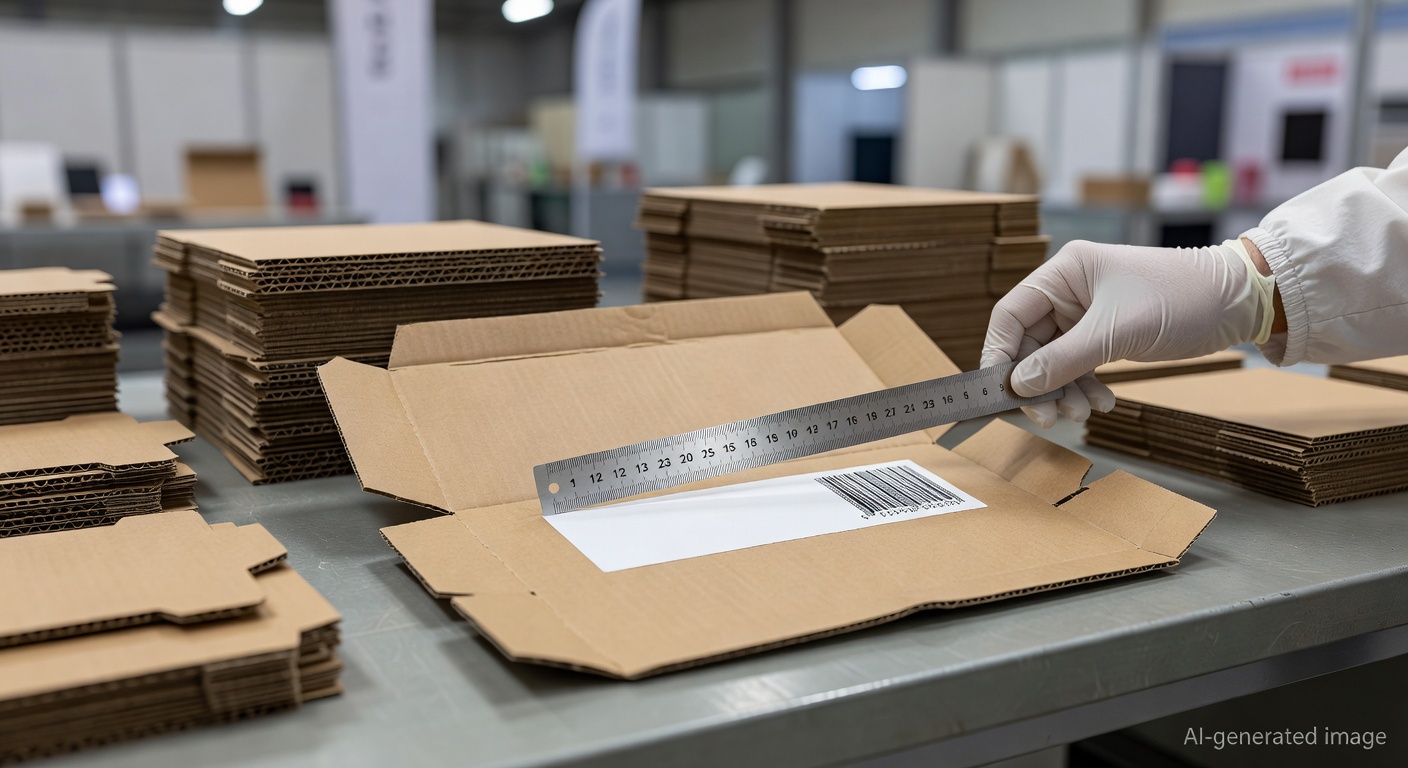
Labeling is a common bottleneck in regulation-ready packaging. Product information, barcodes, origin marks, safety text, local language information and disposal instructions may compete for the same printed area.
Markets with country-specific EPR and labeling systems require separate checks even when a broader EU framework exists. PPWR may set the direction, but actual sales can still depend on local registration, labeling files and distributor requirements.
Exporters need to decide whether to use one common package, country-specific stickers, or separate printed versions. That decision affects sales, quality control, purchasing and production schedules.
Practical checkpoints for Korean exporters
The Interpack 2026 trend can be converted into five practical checks.
- Separate target markets: EU-wide requirements, Germany, France, the UK and the US should not be treated as one identical market.
- Break down packaging components: outer box, internal cushioning, labels, closure materials and manuals should be listed separately.
- Mark recyclability risks: coatings, composites, adhesives, heavy ink coverage and hard-to-separate parts need attention.
- Reserve labeling space: regulatory text and distributor requests should be planned before artwork is finalized.
- Manage packaging data: weight, material, supplier, test records and revision history should be stored systematically.
This checklist does not replace legal review. It helps packaging design and export sales teams discuss the same practical information.
Conclusion
Packaging innovation is no longer just about lighter or better-looking packaging. It is increasingly about packaging that can be evidenced. Paper packaging also needs documentation for recyclability, labeling and material composition.
When redesigning export packaging, it is useful to convert trade fair trends into regulatory questions for each target market. That turns packaging improvement from a marketing claim into a practical risk-reduction tool.
About the Author
PackingMaster: Editor of PaperPackLog. We summarize market trends, product information and technical insights for the paper packaging industry.
References
- European Union, Regulation (EU) 2025/40 on packaging and packaging waste, https://eur-lex.europa.eu/eli/reg/2025/40/oj/eng
- Background — European Commission, Packaging waste, https://environment.ec.europa.eu/topics/waste-and-recycling/packaging-waste_en