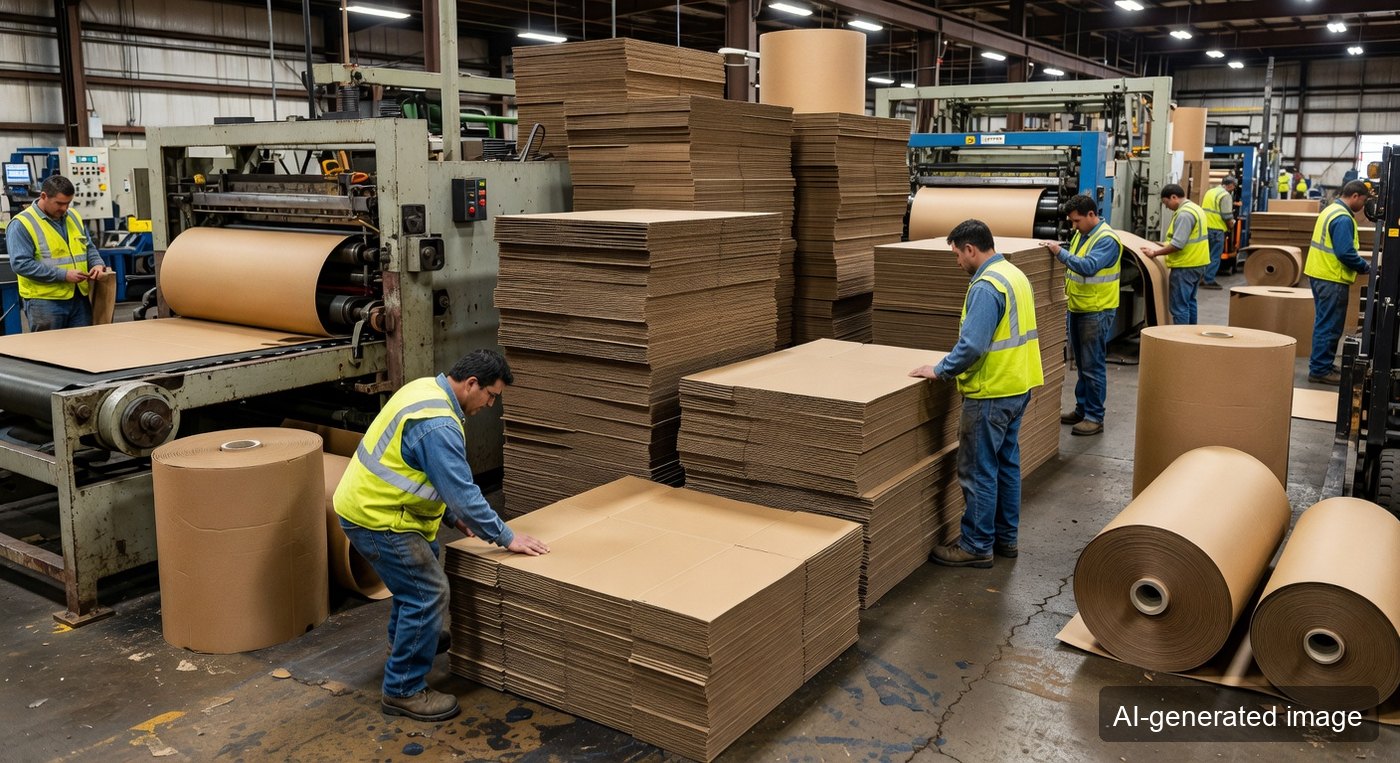
On May 18, 2026, International Paper (IP) announced that it had acquired a corrugated converting facility from Delmarva Corrugated Packaging in Dover, Delaware. After its earlier NORPAC move around containerboard capacity, this transaction adds a different layer of capability: the facility that turns corrugated board into customer-ready boxes and packaging structures.
The deal may look modest compared with a paper mill acquisition. For industrial and export packaging, however, it matters. Customers do not buy containerboard in the abstract. They need packaging that arrives on time, fits the product, prints correctly, runs through packing operations, survives distribution, and meets retailer or export requirements.

What Is a Corrugated Converting Facility?
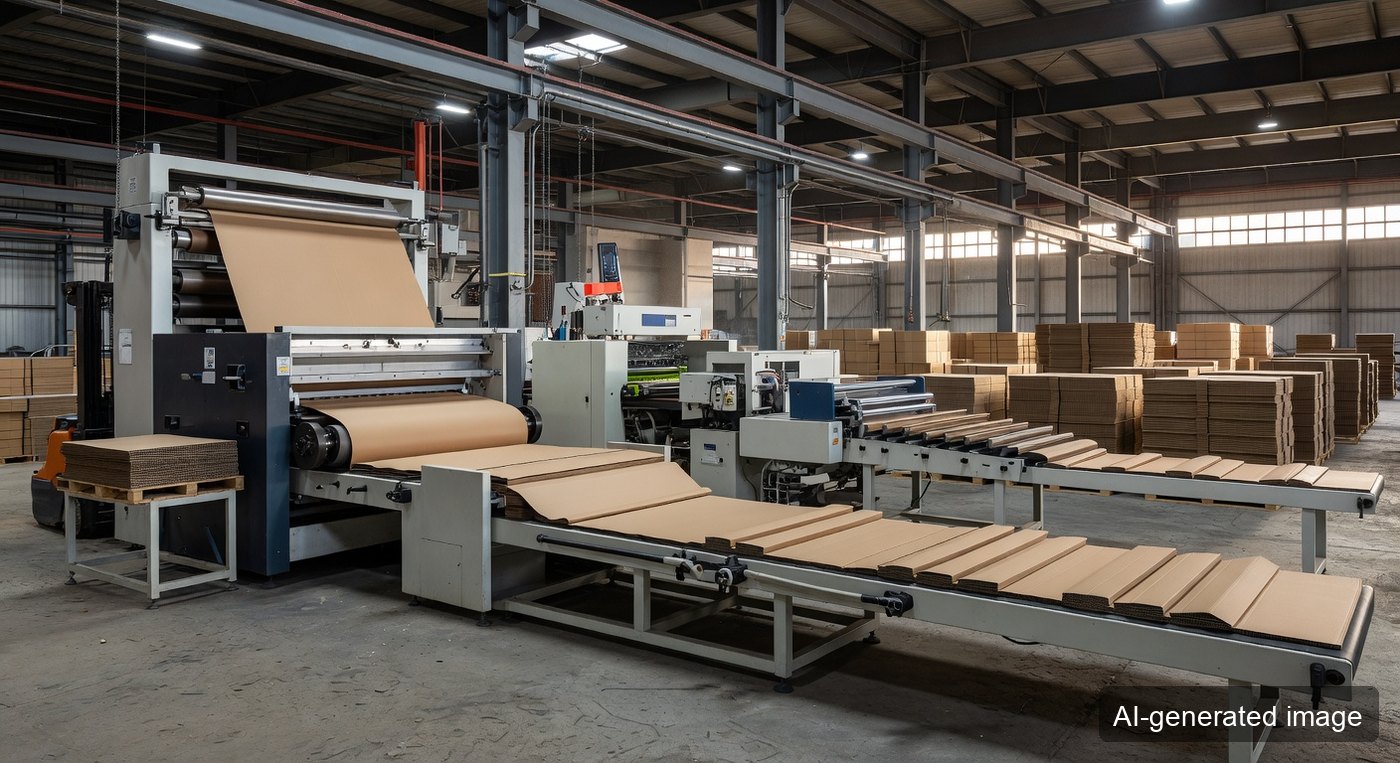
In corrugated packaging, converting means transforming sheets or board into the actual formats customers use: boxes, trays, partitions, pads, protective structures, and other components. The work can include printing, slotting, scoring, die cutting, folding, gluing, bundling, and specification control.
Many packaging problems appear at this stage rather than at the paper mill stage:
- box dimensions are correct but crease lines fail during assembly;
- print placement makes barcodes or handling marks hard to read;
- board strength is acceptable but die-cut edges weaken the structure;
- many SKUs create scheduling and short-run complexity;
- a structure change reduces board use but increases handling time.
For that reason, converting is not merely a downstream process. It is often the bottleneck that determines service quality, speed, and customer-specific packaging performance.
Why the Delmarva Deal Matters
According to International Paper’s announcement, the acquired Delmarva facility is located in Dover, Delaware. IP said the addition supports service to customers in the Mid-Atlantic region and strengthens its packaging operations.
Three points stand out.
1. Customer proximity is becoming as important as capacity
More containerboard capacity does not automatically solve customer problems. A buyer may need a specific box size, pallet pattern, retail marking, barcode position, return structure, or line-automation fit. A regional converting facility helps a large packaging supplier respond closer to demand.
2. Corrugated box supply chains remain regional
Finished corrugated boxes are bulky and inefficient to ship long distances. Board can travel farther than assembled or converted packaging. For e-commerce, food, parts, and industrial goods, local converting capacity can be more valuable than distant capacity on paper.
3. Integrated packaging-solution competition is intensifying
IP’s recent moves show a broader direction: paper, board, regional converting, customer specifications, automation support, and sustainability requirements are increasingly bundled together. The competitive question is not only who has tons of board, but who can deliver the right packaging format at the right time.
What Korean Exporters Should Watch
This transaction is unlikely to change Korean corrugated prices directly. But for companies shipping products to North America, it is a useful signal about what customers may expect from packaging suppliers.
1. North American customers may specify packaging in more detail
As large packaging companies strengthen regional converting networks, customers can ask for tighter requirements around structure, print, labeling, palletization, and returns. Exporters should prepare more than a generic box specification.
2. Quotation comparisons should include conversion and logistics effects
A lower board price does not always mean a lower total cost. Converting efficiency can affect assembly time, damage rate, dimensional weight, pallet utilization, and return handling. Packaging decisions should compare the full logistics cost, not only the price of one box.
3. Domestic design and overseas converting must be connected
A packaging structure designed in Korea may need adjustment to match local converting equipment, maximum die-cut dimensions, print limits, run lengths, or lead times in North America. Early coordination with a local converter can prevent redesign and delays.
Checklist for Packaging and Sales Teams
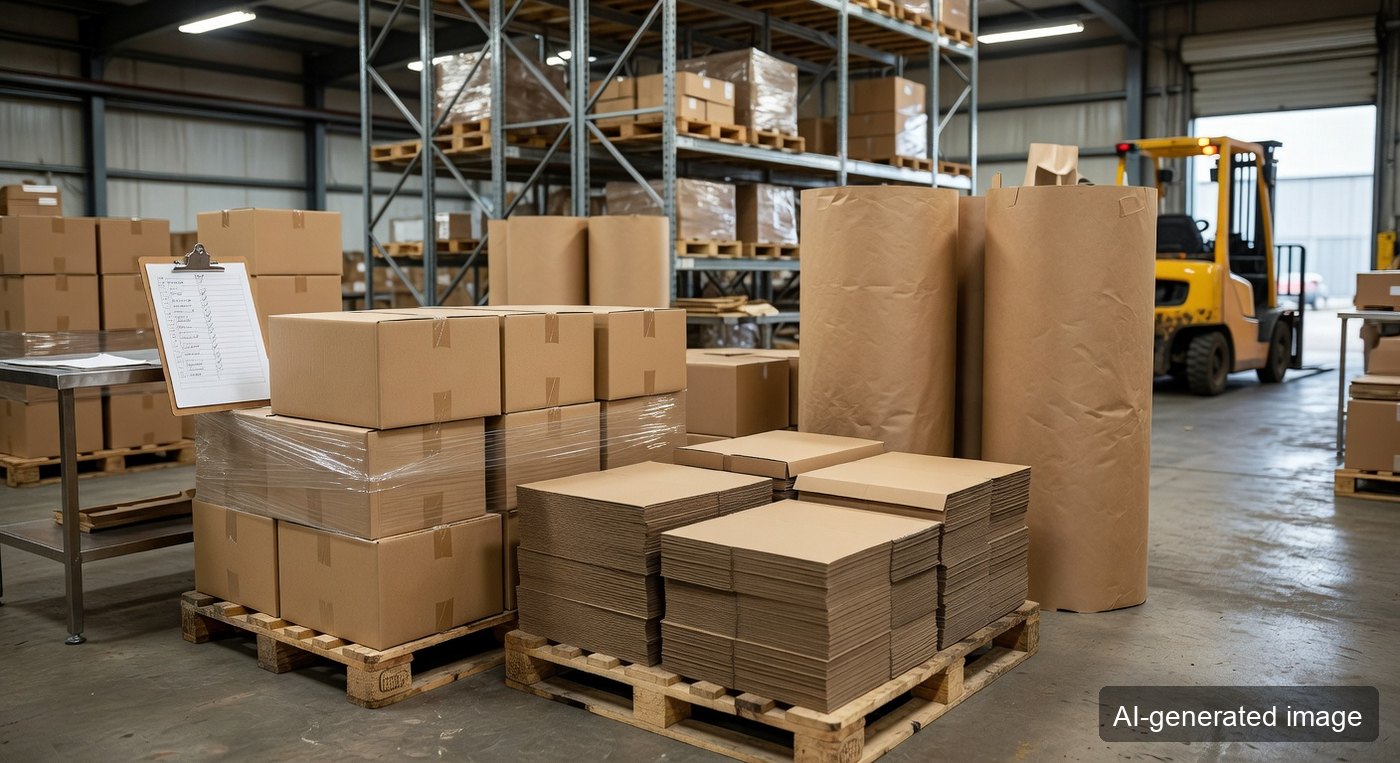
For products exported to North America, prepare these items before asking for corrugated packaging quotations:
- product weight and quantity per box;
- inner and outer dimensions, clearance, and vulnerable edges;
- pallet stacking pattern and container loading plan;
- required print, labels, barcode locations, and handling marks;
- return or repacking requirements;
- packing-line equipment such as tapers, wrappers, or automation;
- whether packaging will be produced domestically, locally, or through a hybrid model.
With this information, the discussion can move from “box price” to “total logistics cost and damage risk.”
Conclusion
The Delmarva converting acquisition may be smaller than a mill transaction, but it highlights a practical part of packaging competitiveness: the final step where board becomes a customer-specific package.
For packaging teams and exporters, the lesson is clear. Watch not only fiber and board prices, but also regional converting capacity, structural design support, lead-time reliability, and customer-specific packaging execution.
Frequently Asked Questions
Q: Did International Paper acquire a paper mill from Delmarva?
Based on the public announcement, the deal concerns a corrugated converting facility in Dover, Delaware. It is closer to a downstream packaging conversion site than to a containerboard mill.
Q: Does the deal directly affect Korean packaging companies?
The direct short-term impact is limited. The more relevant signal is that North American customers may expect more detailed packaging specifications, faster response, and regionally supported converting solutions.
Q: What should exporters prepare first for corrugated packaging quotations?
Start with product weight, units per box, stacking plan, shipping mode, label and barcode requirements, and any return or repacking conditions. These details allow the board grade and converting structure to be considered together.
About the Author
PackingMaster: Editor of Paper Pack Log. We collect and explain market trends, product information, and technical insights from the paper packaging industry.
References