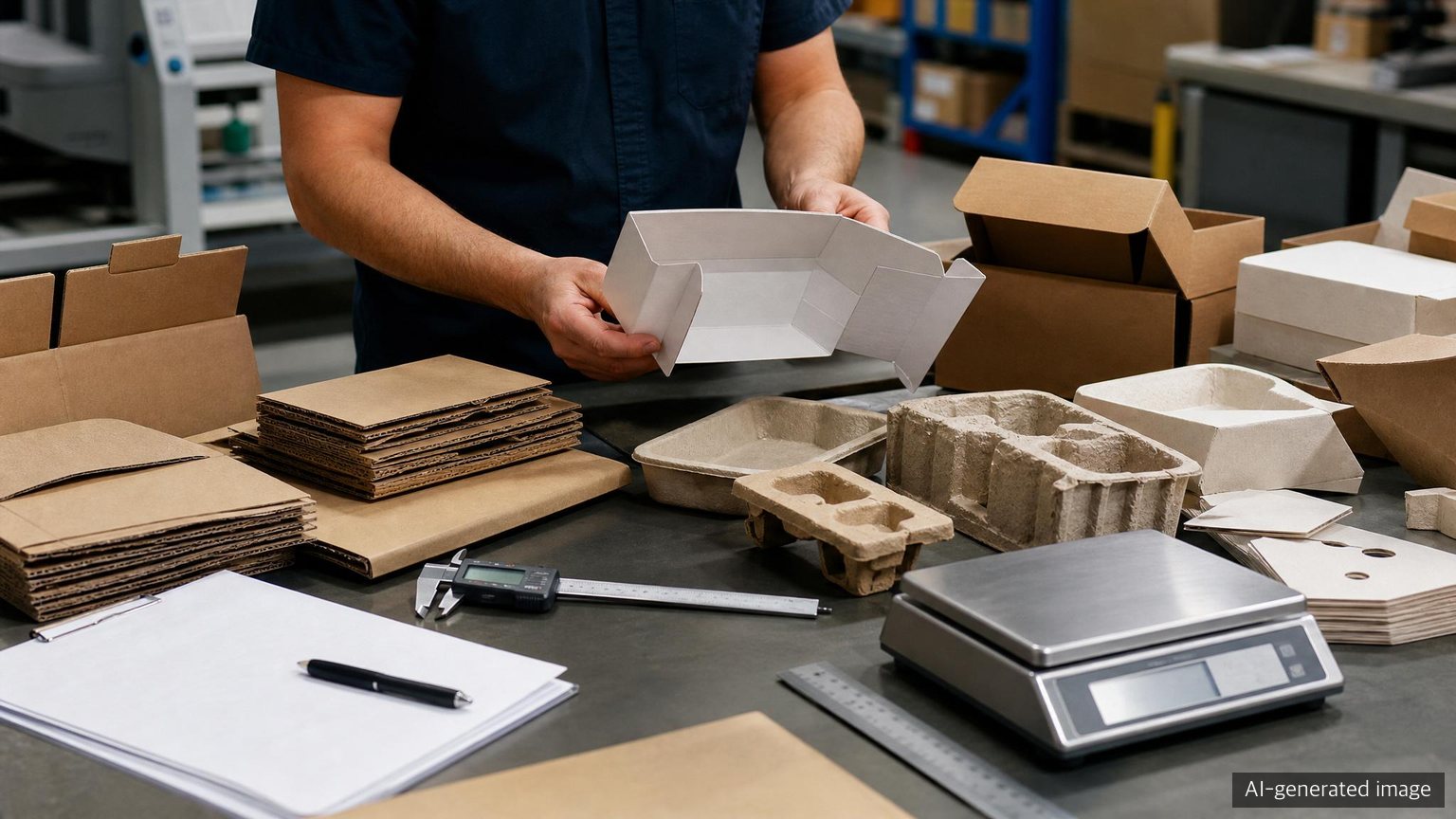
The phrase sustainable packaging is easy to say, but a design meeting needs more specific questions. Has the packaging been optimized? Does it still protect the product? Are coatings, composites, or contamination risks likely to disturb recycling? Has the design decision been documented?
ISO 18602:2013 is introduced as a standard on packaging and the environment for optimization of the packaging system. ISO 18604:2013 is introduced as a standard on packaging and the environment for material recycling. This article is not a translation of the standards. It converts the concepts into practical checkpoints for paper packaging design meetings.
The reason environmental claim guidance such as the FTC Green Guides matters is similar. Before saying a package is sustainable, the design and evidence should support the claim. This article focuses on design basis rather than claim wording.
Distinguish optimization from simple reduction
Reducing packaging does not mean making everything thinner. Packaging system optimization considers product protection, logistics efficiency, labeling, usability, disposal, and recycling together. If paper weight is reduced but product damage increases, the overall environmental and cost result may get worse.
Start with these questions:
- Is the current packaging more than needed for product protection?
- Can flute, basis weight, or structure be adjusted while maintaining the same function?
- Can cushioning and empty space be reduced without failing drop, compression, or vibration conditions?
- Will material reduction increase damage or returns?
- Have the carton, outer box, cushioning, and pallet packaging been optimized separately?
- Are before-and-after weight and performance test results recorded?
The goal is appropriate packaging, not minimum packaging. Customer communication should say that unnecessary weight and space were reduced while required functions were maintained.
Function comes first
Paper packaging must protect the product, reduce deformation during logistics, carry required information, and remain usable for the customer. If recycling design destroys core function, it is not a good design.
Function checkpoints include:
- compression strength and stacking stability,
- drop and vibration conditions,
- humidity and temperature changes,
- product characteristics such as food, cosmetics, or electronics,
- print and labeling space,
- opening and re-closing needs,
- automatic packing line compatibility,
- label and barcode readability during logistics.
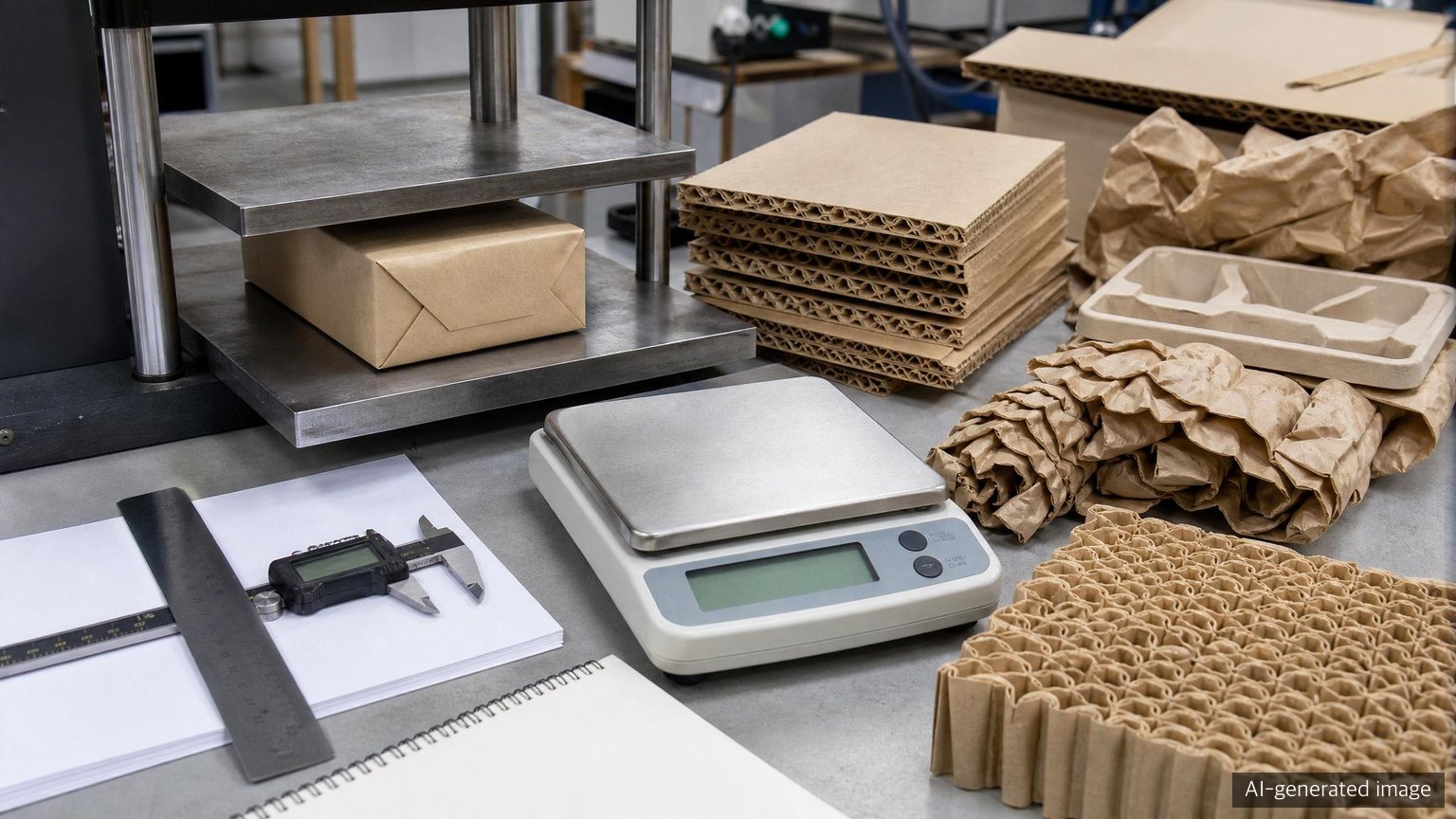
These items are not separate from recyclability. If a product needs moisture protection, a coating or inner package may be necessary. The design task is not to remove every coating, but to reduce recycling impact while maintaining required performance.
Review the structure through material recycling
The material recycling perspective of ISO 18604 is highly practical for paper packaging. A paper-based package is not automatically easy to recycle. Films that do not separate, heavy coatings, metal layers, excessive adhesives, and contamination can all create problems.
Review the following:
- Can paper be separated from other materials?
- Do window films, handles, labels, or tapes disturb recycling?
- Does water- or grease-resistant coating affect pulping?
- Is foil, metallization, or an aluminum layer really needed?
- Is food contamination expected?
- Are inks and adhesives used excessively?
- Can consumers sort the package easily?
- Has the customer been told that recycling infrastructure differs by region?
Paper-plastic composite structures can protect products well, but they may be less favorable in recycling. Design meetings should document both the benefit and the recycling limitation.
Decide contamination and coating issues early
Contamination and coating are common issues in paper packaging recyclability. Food packaging, chilled and frozen products, water-resistant packaging, and grease-resistant packaging may require coatings or inner packaging. The problem is when this decision is added late in the design process.
Ask early:
- Does the product touch paper directly?
- Is moisture, oil, aroma, or oxygen barrier performance required?
- Can a separate inner package replace a coated outer paper structure?
- If coated paper is used, is there recyclability evidence?
- Can consumers distinguish contaminated and clean components?
- Do disposal instructions match the actual structure?
For food packaging with high contamination risk, separating the outer paper package from the food-contact inner package can be more practical. If paper touches food directly, both food-contact safety and recyclability evidence should be reviewed.
Explain composite material risks before approval
Composite materials are not always wrong. They may be needed for product protection, shelf life, moisture barrier, or oxygen barrier. But once a composite is used, the design team must explain more clearly how it affects recycling.
Explain to customers:
- why the composite material is used,
- whether a mono-material alternative exists,
- how the composite protects the product,
- what limitations may exist for recycling or sorting,
- material weight and ratio by component,
- cost and lead-time impact of specification changes.
Without this explanation, customers may assume a package is recyclable simply because it looks like paper. Design teams should communicate based on structure and evidence, not appearance.
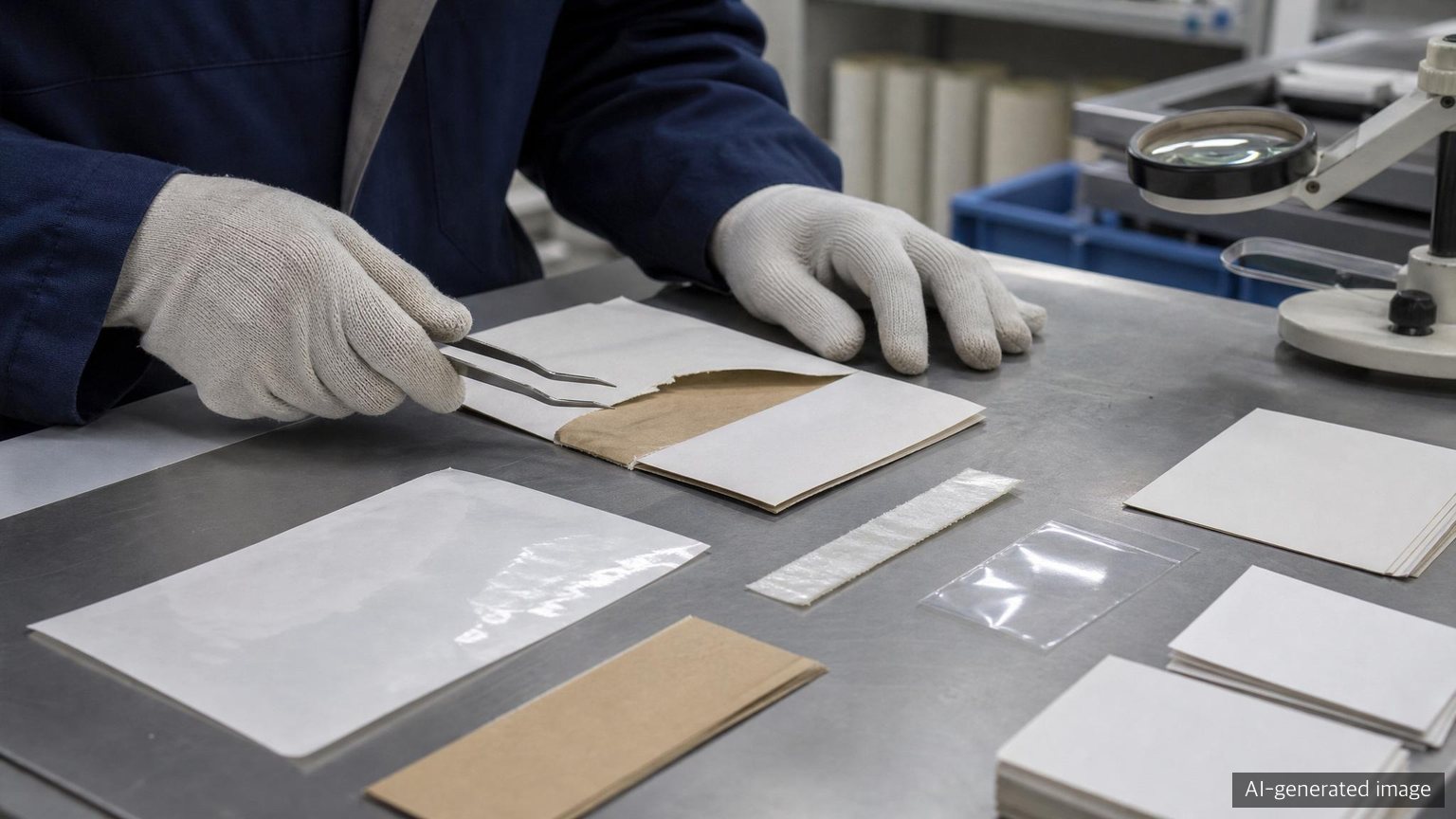
Keep the design basis on file
Recycling design should not end as a verbal conclusion in a meeting. The records may be needed later for customer audits, ESG reporting, regulatory response, or advertising claim review.
Keep the following documents:
- weight comparison between old and improved packaging,
- product protection test results,
- packaging dimensions and empty-space review,
- material composition sheet,
- coating, lamination, and adhesive information,
- supplier confirmation on recyclability,
- disposal instruction review history,
- customer approval history,
- specification change date and reason.
With these records, a team can explain the design improvement even without relying on broad environmental language.
Design meeting checklist
A practical paper packaging design meeting can follow this sequence.
- Confirm product protection requirements.
- Measure current packaging weight and empty space.
- Separate parts that can be reduced from parts that cannot.
- Mark components containing non-paper materials.
- Record the reason for coatings, laminates, window films, and adhesives.
- Review mono-material alternatives.
- Identify elements that may disturb recycling.
- Check consumer sorting feasibility.
- Link test results with material documents.
- Prepare the design basis sentence for customer communication.
This checklist does not replace the ISO standards. It helps design teams discuss packaging reduction, functional performance, material recyclability, and composite risk in the same meeting.
Closing thoughts
Recycling design is not about writing better environmental claims. It is about improving the packaging structure in a way that can be supported with evidence. In practical terms, ISO 18602 and ISO 18604 point teams toward packaging system optimization and material recycling review.
Paper packaging designers should reduce unnecessary material while maintaining function, explain why coatings or composites are used, and record elements that may affect recycling. Customers need design evidence, not abstract sustainability language.
About the Author
PackingMaster: Editor of Paper Pack Log, covering market trends, product information, and technical insights in the paper packaging industry.
References
- ISO, ISO 18602:2013 Packaging and the environment: Optimization of the packaging system, https://www.iso.org/standard/55870.html
- ISO, ISO 18604:2013 Packaging and the environment: Material recycling, https://www.iso.org/standard/55872.html