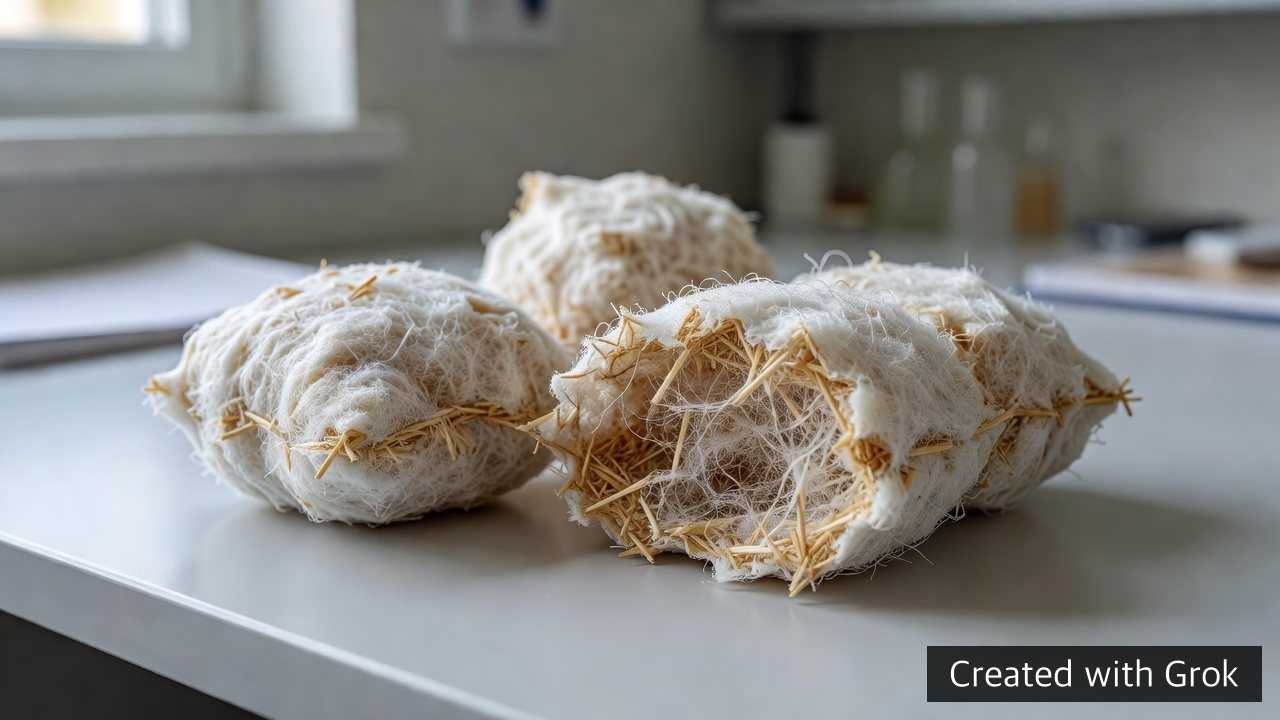
A new agreement about mushroom-mycelium packaging should not be read as news that a particular foam-replacement package has already passed testing or obtained certification. On September 28, 2026, the Ginseng and Special Crops Department of the Rural Development Administration’s National Institute of Horticultural and Herbal Science (NIHHS) and the Jangheung Mushroom Research Institute signed an agreement on research cooperation for mycelium-based materials. NIHHS says it will develop strains and core material technologies and promote their transfer to private users. The Jangheung institute is assigned work on material standardization, automation systems, industrialization support and organizing certification procedures. Those are planned responsibilities, not an announcement of a certified molded package. NIHHS announcement
This is also distinct from a Grico-related May 20 MOU entry listed as completed work in the institute’s June 8, 2026 monthly report. That one-line entry does not establish all parties or the agreement’s scope. The named parties to the September agreement are NIHHS’s Ginseng and Special Crops Department and the Jangheung institute. The public records do not establish whether a specific product, test result or certification links the two entries. Jangheung institute’s work report
Earlier commercial supply does not qualify a new part
It would be equally inaccurate to say that mycelium packaging has never reached customers in Korea. In an October 31, 2024 release about a different public–private collaboration, RDA reported that Yeoncheon Cheongsan Mushroom and Earthfoam were producing mycelium cushioning and supplying a domestic perfume company. The participants named in that release are not the parties to the September 2026 Jangheung agreement. An earlier supply case—or an older material-test result—cannot establish the specification, performance or certification of any future candidate product associated with this agreement. RDA’s 2024 release
“An earlier market application exists” and “a molded component that may later be proposed under this agreement has met the customer’s requirements” are different claims. The September NIHHS announcement describes plans for standardization and a certification framework. It does not disclose part-specific compression, drop or humidity results, a certificate number, a test report or a production acceptance record. This is a statement about what that September announcement makes public, not a claim that no research data exist anywhere.
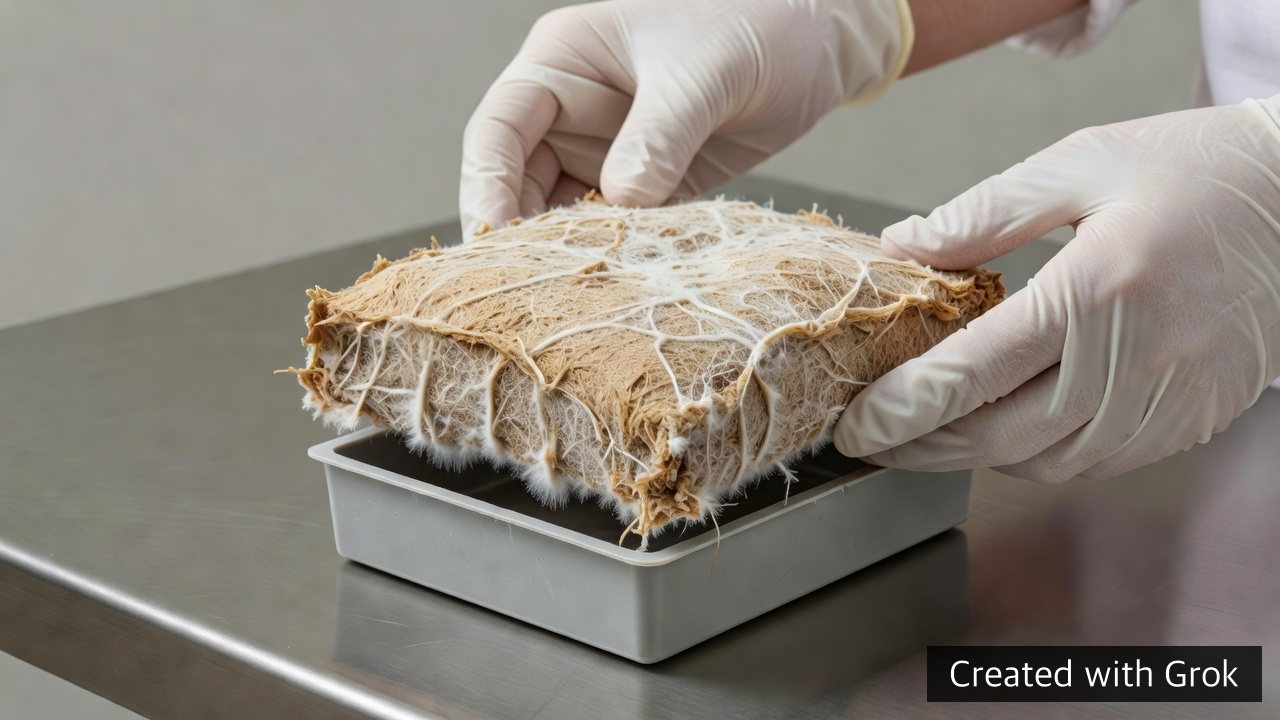
An agreement-to-evidence handoff for buyers
The “request/action” column below is an editorial due-diligence proposal, not a requirement of either agreement or a formal RDA certification checklist. Product scope and test conditions must be defined with the actual customer and supplier.
On a narrow screen, swipe the table sideways to see its final column.
| Input | Status in the published records | Request/action — editorial check |
|---|---|---|
| September NIHHS department–Jangheung institute agreement | Announced as signed September 28; research and standardization roles described | Record the parties and specify which product family, if any, is in scope. |
| Grico-related May 20 MOU entry | Listed as completed work in the institute’s June report; full parties and scope not disclosed | Obtain the parties and product/process scope before checking any overlap with the September research collaboration. |
| RDA’s 2024 supply example | Historical agency report about other participants | Do not pass it off as production or customer-acceptance evidence for the current candidate. |
| Candidate molded part’s material and process record | No part-level specification in the September announcement | Request strain, growth substrate and other inputs, molding/drying conditions, lot ID and change-control record. |
| Cushioning and shipping suitability | No product-specific test values in the September announcement | Agree a plan to compare the candidate and incumbent package under matched load, geometry, temperature/humidity and distribution conditions. |
| Certification and environmental claims | Organizing certification procedures is planned; no specific certificate or environmental assessment is provided | Identify the relevant scheme, scope, test body and certificate number; hold biodegradability, compostability and carbon-reduction claims until substantiated for the part and conditions. |
The table keeps “work planned” from turning into “approved.” Nor should a mycelium-grown molded part automatically be described as molded fiber made by forming paper-pulp slurry. A fibrous substrate or agricultural residue does not settle its composition or process; inspect the actual formulation, cultivation, molding and finishing records.
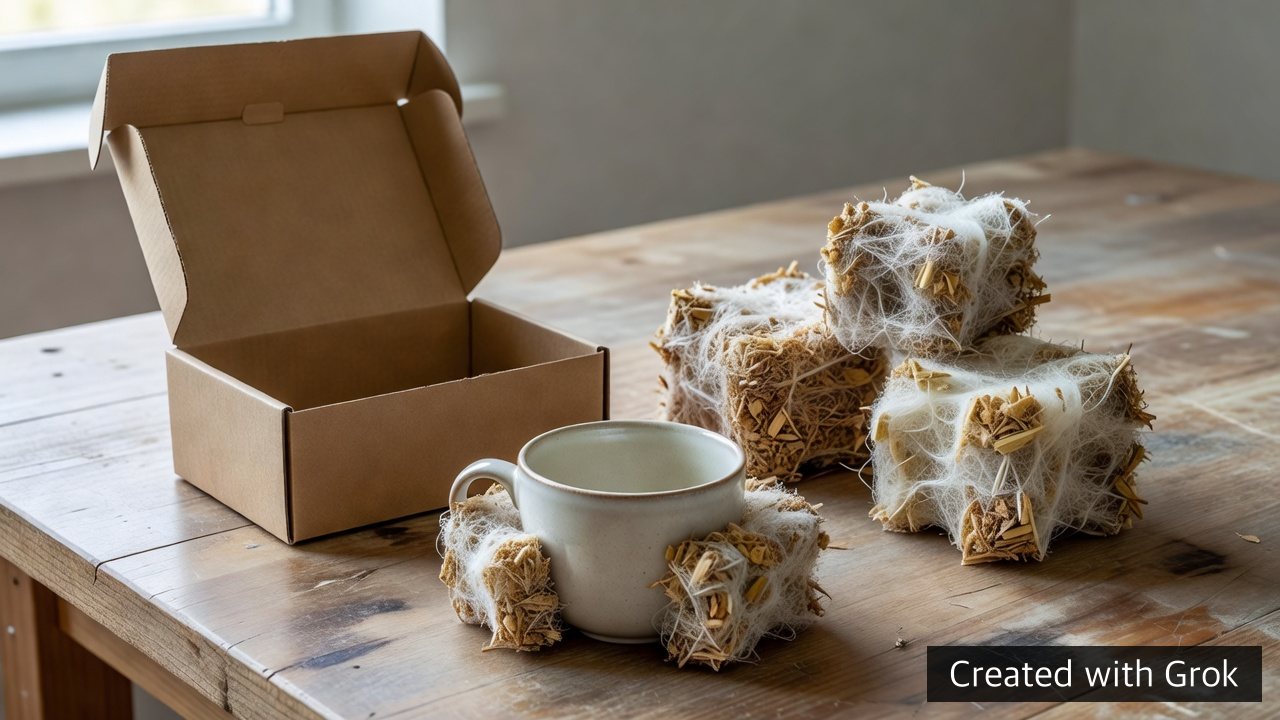
What would make the next decision possible?
First fix the shipped product, cushion geometry and contact points, allowable damage and distribution exposure. Then retain the current package as a matched control and draft a test plan for dimensional variation, condition after humidity exposure, compression, drop and vibration response, and surface damage to the product. These are editorial suggestions for customer-specific qualification; the announcement does not say these tests have been run. The customer specification, applicable methods and test provider should set pass limits and replicates.
Environmental verification is a separate task. “Mycelium-based” alone does not prove biodegradation under every disposal condition, compatibility with paper recycling or a lower carbon footprint than the incumbent foam. Review additives, coatings, end-of-life conditions and the precise test boundary for each proposed claim. If direct food contact is proposed, obtain suitability evidence separately from transport-protection tests.
The confirmed advance is not a newly certified package. It is the agreement to connect upstream research with regional standardization and industrialization support. The useful next update would contain a concrete draft specification, lot-linked test results, an identified certification scope and qualification of a molded component under a customer’s actual shipping conditions—not just another signing photograph.
About the Author
PackingMaster: Editor of PaperPackLog, covering paper-packaging industry developments, products and technical decisions.
References
- National Institute of Horticultural and Herbal Science, “플라스틱 대체할 버섯 균사체 소재 산업화, 지역과 손잡고 속도 낸다” (September 28, 2026) (Korean)
- Jangheung Mushroom Research Institute, “2026. 6. 8. 5월중 업무 실적 및 6월중 업무 계획” (original HWP work report) (Korean)
- Rural Development Administration, “‘버섯 포장재, 가죽’ 시장서 만난다, 민관 힘 모아 산업화” (October 31, 2024) (Korean)