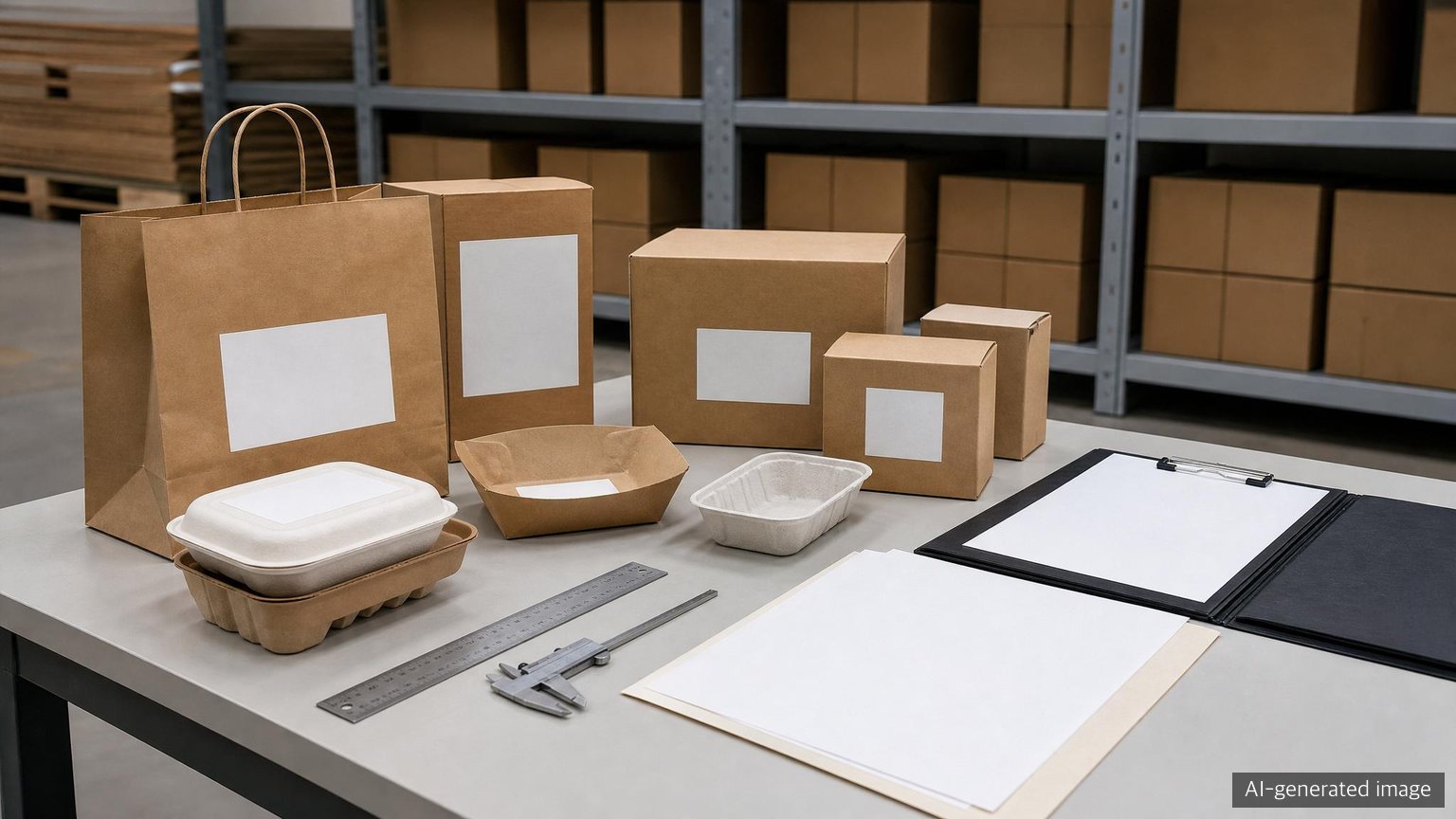
When preparing packaging for the Japanese market, product specifications, food labels, and customs documents are not enough. Exporters also need to understand how containers and packaging discarded by consumers connect to Japan’s sorting, recycling, and delegation systems.
Japan’s Ministry of Agriculture, Forestry and Fisheries provides information on reducing and recycling food containers and packaging, including resources related to the Container and Packaging Recycling Law. Japan’s Ministry of the Environment also provides information on plastic resource circulation, packaging design, and circular economy initiatives. For Korean manufacturers and exporters, the practical approach is not to treat this as legal advice, but to organize the items that packaging suppliers, brands, and importers should confirm together.
This article is not a full legal commentary. It is a working checklist for paper packaging and composite packaging used in consumer goods exported to Japan.
Start by separating the packaging scope
The first step is to define the scope of packaging. The sales package discarded by consumers and the outer transport package removed during logistics may be treated differently.
Useful categories include:
- Primary packaging: packaging that directly contains the product or is received by the consumer, such as paper cups, trays, cartons, pouches, and labels.
- Secondary packaging: set boxes, sleeves, cushioning, and bundled packaging.
- Transport packaging: corrugated shipping boxes, pallet wrapping, banding, and cushioning used mainly in logistics.
- Components: labels, adhesives, window films, coatings, inks, and inner films that must be assessed together with the main material.
The key question is not simply whether the package is paper. Exporters need to know whether it is subject to consumer sorting, whether paper and plastic are combined, and which party is responsible for labels and recycling-related obligations in Japan.
Review paper packaging and composite structures separately
Paper packaging is often seen as recyclable, but Japan-bound packaging should be reviewed in more detail. A plain paper carton is different from a paper carton with a plastic window. Food packaging with water- or grease-resistant coatings, aluminum layers, or heavy labels also needs separate review.
Ask packaging suppliers to confirm:
- whether the main material is paper, plastic, or composite,
- whether there are coatings, laminates, window films, or aluminum layers,
- whether consumers can separate components easily,
- whether the food-contact layer and outside label layer are different,
- whether the Japanese customer has specific sorting label requirements,
- whether material weight and composition can be provided by packaging item,
- whether a specification change may affect labeling or delegation analysis.

This is different from a calculation table for EU PPWR recyclability. For Japan-bound packaging, sorting labels, container and packaging classification, recycling delegation, and customer reporting formats need to be considered together.
Label wording should be confirmed with the local seller
A risky approach is to finalize Japanese recycling labels in Korea without confirming the local sales structure. The Japanese importer, brand owner, or distributor usually knows the final sales responsibility and label requirements. The packaging supplier should provide material and space information, while the local sales party should confirm the final label.
Practical questions include:
- Is a Japanese sorting label required for this packaging item?
- How should paper and plastic components be distinguished?
- Which material category applies to composite packaging?
- Do labels, caps, window films, or other components need separate indication?
- Does the label match what consumers can actually separate?
- Does the customer specify label position, size, or wording?
- How will existing printed packaging inventory be handled if the label changes?
For food packaging, recycling labels may share space with product labeling, allergen labeling, and origin information. If the design does not reserve space early, the printing plate may need to be revised later.
Who checks delegation obligations and recycling costs?
In practice, the issue is less about who physically made the packaging and more about who sells the product in Japan and who carries the obligation. The answer can differ depending on whether the Korean exporter sells directly in Japan, sells through an importer, or supplies a local brand.
Korean manufacturers should avoid making a final legal conclusion on their own. Instead, they should provide the information that the local party needs:
- packaging list by product,
- material and weight by packaging item,
- sales entity and importing entity in Japan,
- packaging supplier and production site,
- expected annual sales quantity and packaging use,
- customer reporting format,
- specification change history.
Delegation fees and recycling obligations require local legal and sales-structure review. But packaging data must be organized upstream. When a Japanese customer asks for material or weight data, the packaging supplier should be able to respond quickly.
Checklist for quotation and purchase order stages
For Japan-bound packaging, quotations should include more than price and size.
Check the following:
- Is the item for Japan export?
- Who is the final seller and importer?
- Is the packaging discarded by consumers or removed during logistics?
- What is the material classification of each packaging item?
- Is the packaging paper-only or paper-plastic composite?
- Are labels, window films, coatings, or adhesives used?
- What is the item weight and component weight?
- Is there space for Japanese sorting labels?
- Who approves the final label wording?
- What is the customer notification rule for specification changes?
This checklist does not replace legal review. It helps the packaging design and purchasing teams prepare the information that will be needed by Japanese customers.
Keep a Japan-specific data tab
Japan-bound packaging data can share the same product and packaging codes used for EU or US data, but it should include Japan-specific fields. The same paper carton may need sorting label information for Japan, EPR reporting fields for the US, and recyclability documentation for the EU.
A Japan tab can include:
- product code,
- packaging item code,
- Japan sales flag,
- packaging level,
- material classification,
- composite material flag,
- weight,
- label requirement,
- label approver,
- local sales entity,
- document update date.
The goal is not to force every country into one table. Use common item codes, then manage country-specific tabs so that Japan, EU, and US requirements are not mixed up.
Closing thoughts
Japan container and packaging recycling compliance is not something a packaging supplier can decide alone. The Korean manufacturer, packaging supplier, Japanese importer, and local brand need to confirm the sales structure and label responsibility together.
For paper packaging teams, the first tasks are clear: define packaging scope, check material and composite structure, reserve label space, define the approval route, and keep material and weight data. For Japan export, packaging data management is becoming as important as product quality.
About the Author
PackingMaster: Editor of Paper Pack Log, covering market trends, product information, and technical insights in the paper packaging industry.
References
- Ministry of Agriculture, Forestry and Fisheries, Information on reducing and recycling food containers and packaging, https://www.maff.go.jp/j/shokusan/recycle/youki/index.html
- Background — Ministry of the Environment, Information related to plastic resource circulation, https://www.env.go.jp/recycle/plastic/circulation.html