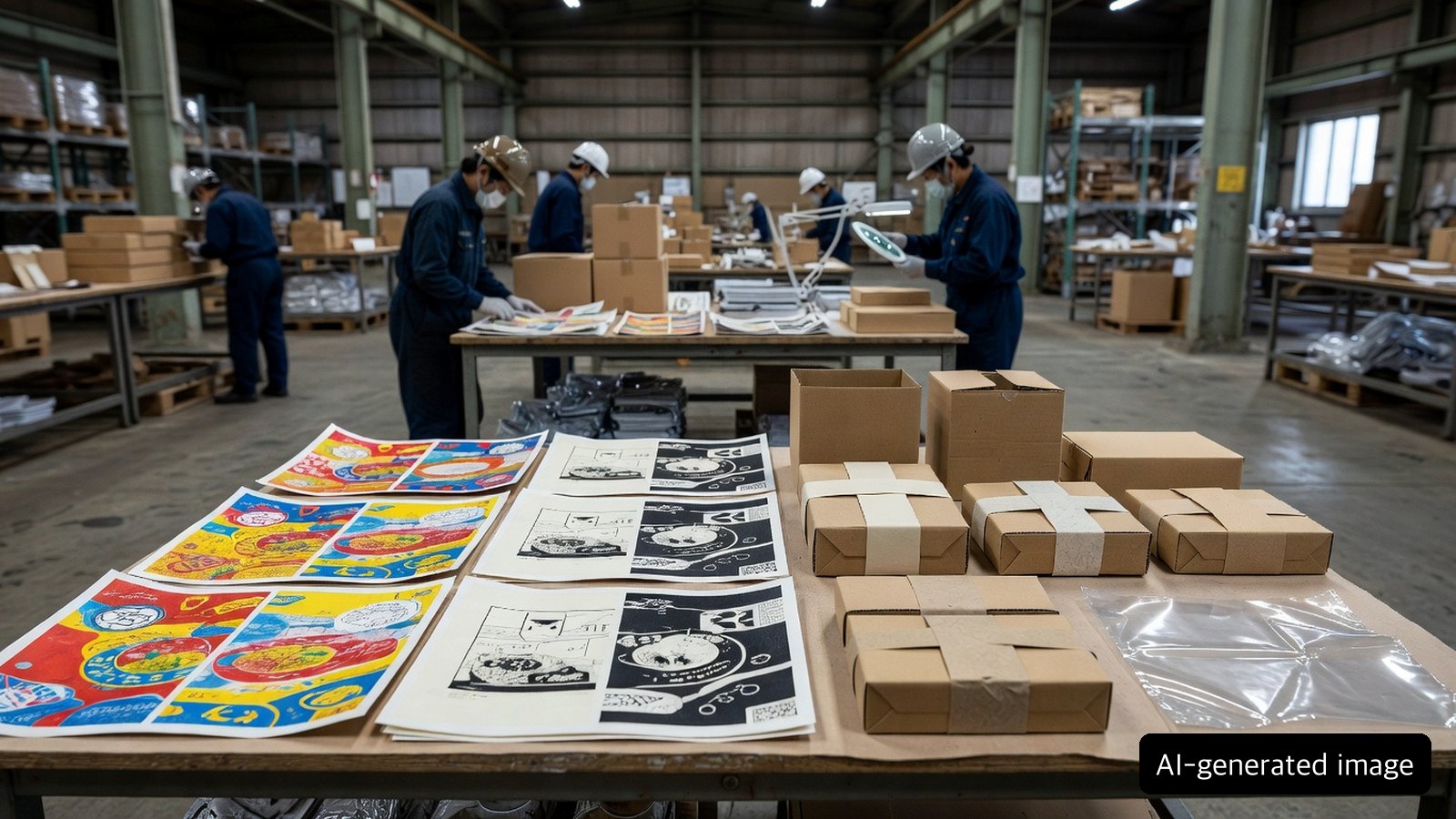
A visible shift is appearing in Japanese food packaging. Some packs are moving closer to two-color or monochrome printing, some plastic lids are being replaced with paper-based alternatives, and some colored plastic bands are being reconsidered as plain paper bands. This is not just a design trend. It is a sign that naphtha supply uncertainty can reach the actual packaging specification.
Naphtha is connected not only to plastic resin, but also to the wider petrochemical chain behind packaging inks, solvents, films, adhesives, lids, bands, and coatings. When supply becomes unstable, brand owners and packaging teams do not only look at price increases. They start reviewing specific packaging elements such as print colors, films, closures, bands, wraps, and coating layers.
We have already discussed the relationship between naphtha prices and paper packaging shifts in a previous article. This article focuses less on price forecasting and more on what is changing in actual Japanese packaging specifications, and what that means for paper-based alternative packaging.
Why Calbee reduced some packaging to two-color printing
One of the clearest examples is Calbee. On May 12, 2026, Calbee announced temporary revisions to packaging specifications for selected products in response to raw material supply concerns linked to the situation in the Middle East. The affected products include potato chips, Kappa Ebisen, Frugra, and other lines, with 14 product variations moving to two-color printing. The revised packaging is scheduled to reach stores gradually from the week of May 25, 2026.
The important point is that this is not a product quality issue. It is a measure to maintain stable supply. In other words, the company is reducing the expressive range of the package so that production and distribution can continue under constrained material conditions.
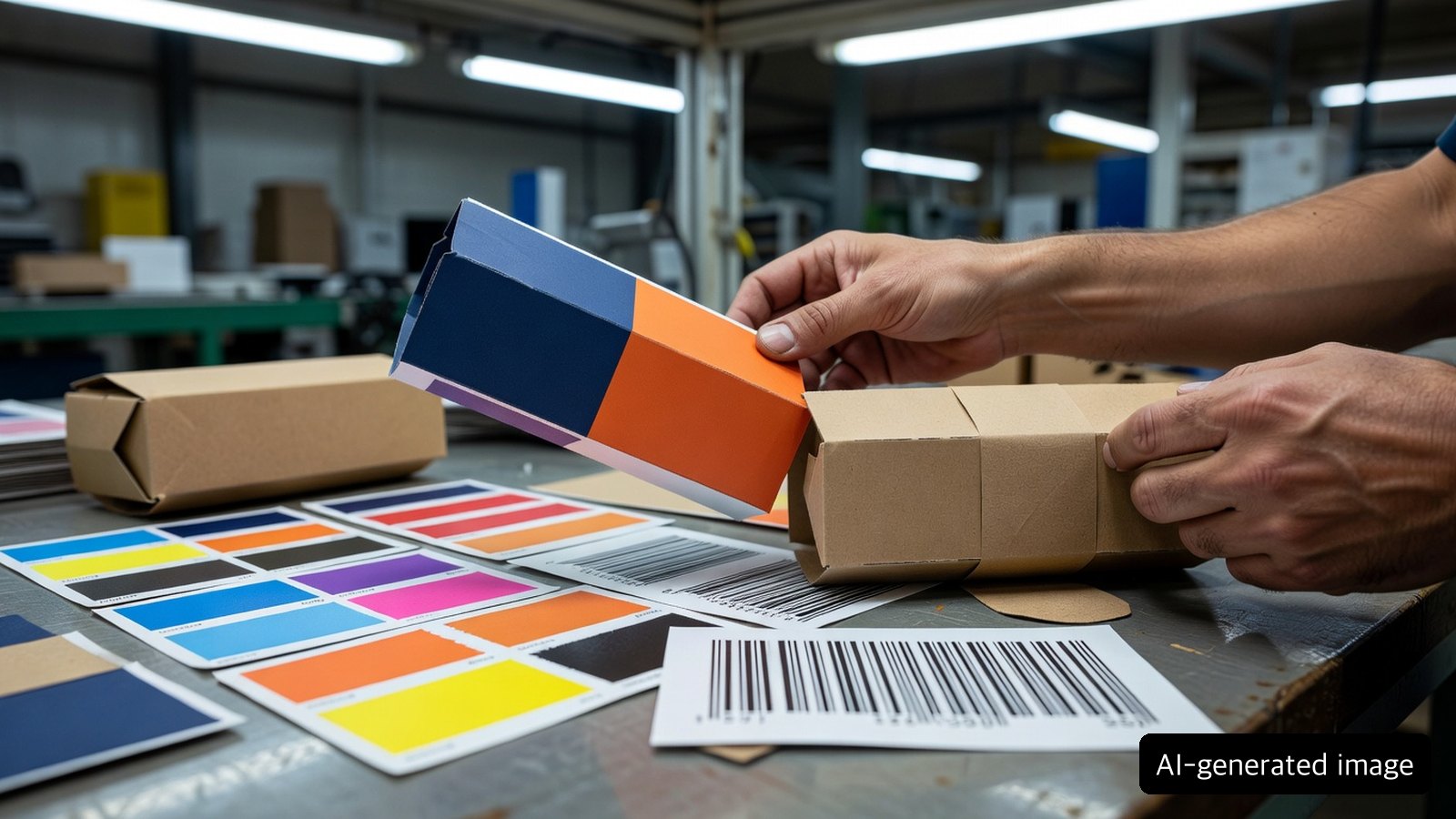
From a packaging operations perspective, this is not only a design department issue. It raises several practical questions.
- How far can a four-color or multi-color pack be reduced?
- Does the brand depend too heavily on color for recognition?
- Do spot colors, metallic inks, and highly saturated printing increase supply risk?
- Will barcodes, mandatory labeling, allergen information, and date coding remain readable?
- When the shortage eases, should the pack return to the old specification or keep the simplified version?
A near-monochrome package is not simply a stripped-down design. It can be an emergency packaging specification that keeps SKUs moving during a supply chain shock.
Packaging changes are happening by component
Korean media reports on the Japanese market describe several different packaging adjustments. Lawson has been mentioned in relation to replacing plastic coffee cup lids with paper-based lids. Ito-Yokado has reportedly looked at replacing some transparent plastic seafood packaging with wrap-style alternatives. Calbee chose to reduce color printing on major product packs due to ink-related constraints.
Creative Bloq also covered the shift from a branding and packaging design angle. In addition to Calbee, it discussed Kagome reducing ink use by making part of a tomato ketchup pack transparent, and Nisshin Seifun Welna considering plain paper bands instead of colored plastic bands for pasta packaging.
The point is not that “all plastic will become paper.” The real change is more granular.
- A lid may change from plastic to paper.
- A film pack may remain, but use fewer print colors.
- A colored plastic band may become a plain paper band.
- A rigid clear plastic tray may shift to a wrap or different structure.
- Transparent or unprinted areas may increase to reduce ink coverage.
This shows that material transition often starts by splitting packaging into functional components and adjusting the most exposed or vulnerable parts first.
Why this is visible in Japan first
Japan has a high dependence on Middle Eastern naphtha. Reports have noted that more than 80% of Japan’s domestic naphtha demand has relied on Middle Eastern supply, while alternative non-Middle Eastern procurement prices rose sharply after the regional disruption. Reports also mentioned reduced operations at many Japanese ethylene production facilities after March 2026.
Governments and large suppliers may explain short-term supply using inventory and alternative procurement. But packaging operations are not governed by average inventory alone. Packaging film, ink, adhesives, solvents, lids, bands, and trays may each have different suppliers and different petrochemical dependencies. If one component is delayed, finished product shipment can be delayed.
That is why packaging teams tend to act conservatively. If a company waits until materials are completely unavailable, it may already be too late to revise printing plates, approve artwork, check labeling, and manage retail transition timing. Calbee’s two-color change looks closer to a proactive emergency specification than a reaction after the supply chain had already stopped.
Paper alternatives have an opportunity, but the opportunity should not be exaggerated
There is a real opportunity for the paper packaging sector. Naphtha risk affects not only plastic prices, but also the stability of inks, films, and synthetic components. Brand owners may increasingly value packaging that can be sourced reliably during disruption, not only packaging that looks attractive or cheap.
Paper-based alternatives may receive faster attention in areas such as:
- Selected paper-based replacements for plastic cup lids
- Plain paper bands replacing colored plastic bundle bands
- Paper sleeves, cartons, and paper labels for secondary dry-food packaging
- Paper-based cushioning, interleaves, and support structures for retail and delivery
- Low-color, plain, or reduced-ink packaging formats
However, it would be risky to claim that paper can immediately replace every plastic function. Food packaging often requires moisture resistance, oxygen barrier performance, oil resistance, heat sealability, transparency, and product protection. Paper conversion may require coatings, barrier layers, and adhesives, which again affect recyclability and cost.
The more realistic direction is not total replacement, but partial replacement and specification simplification. If a film layer cannot be removed, the print specification may be simplified. If a plastic band is not essential, it may become a paper band. If a closure or sleeve carries a lower functional burden, it may be reviewed first.
What Korean packaging teams should check now
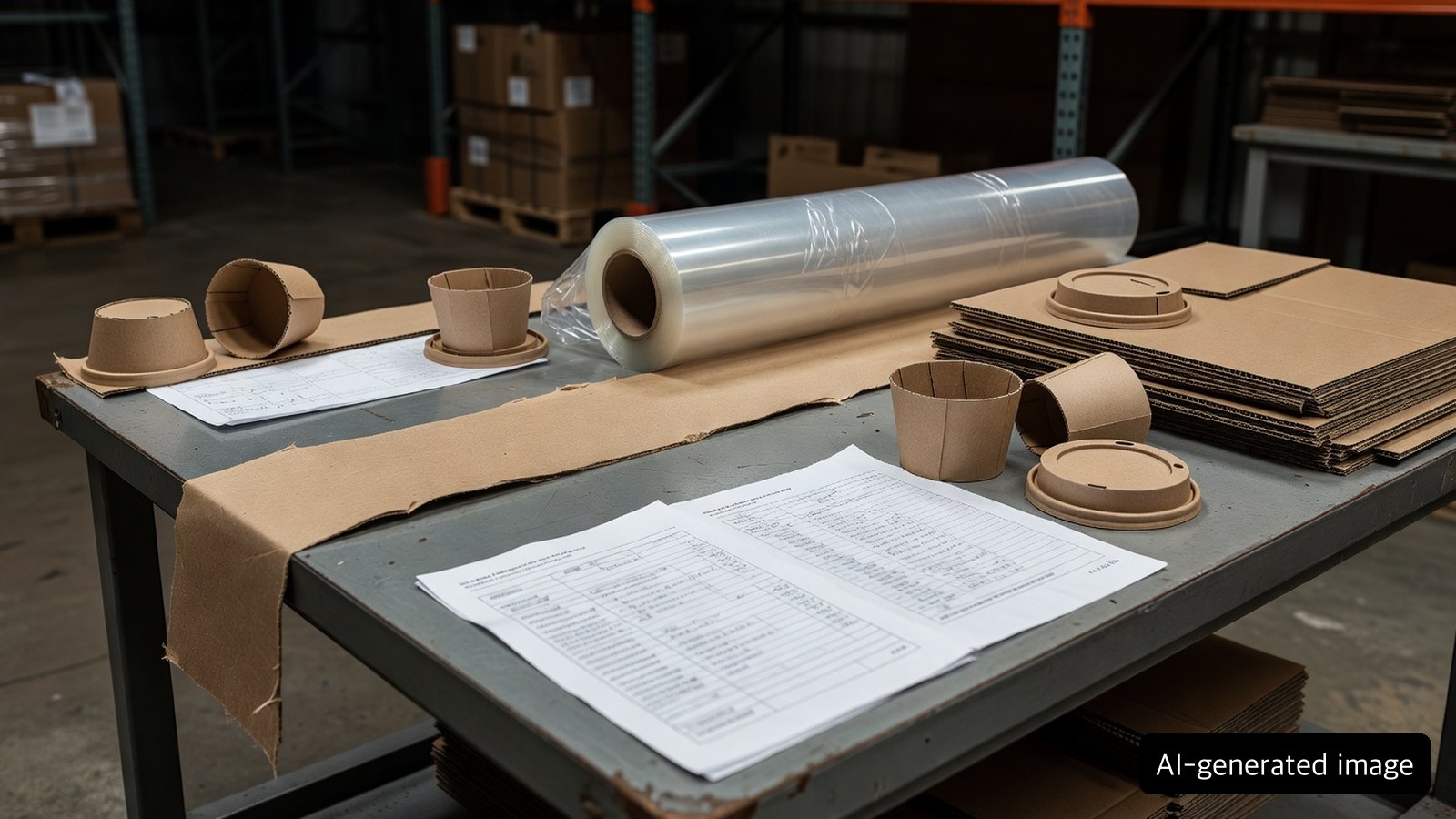
The Japanese case offers a practical checklist for Korean packaging teams. Even if the naphtha disruption does not hit Korea with the same intensity, packaging supply chains are already global. Companies handling export products or Japan-bound products should review the following points first.
Print colors: Check how many colors the current pack uses, and prepare emergency artwork for two-color, one-color, or plain versions.
Ink coverage: Review whether the pack depends on highly saturated full-surface printing, and consider transparent zones, unprinted zones, or separated labels.
Plastic components: Identify lids, bands, window films, trays, and other plastic parts, then separate components that may be replaced by paper or simpler structures.
Barrier functions: Check moisture, oxygen, oil, and sealing requirements, and divide the pack into areas that can and cannot move to paper.
Equipment fit: Confirm whether the alternative specification can run on existing filling, sealing, labeling, and inspection equipment.
Labeling: Make sure mandatory information, barcodes, ingredients, allergens, and date coding remain stable after the specification change.
Suppliers: Identify dependence on specific films, inks, adhesives, or components, and define backup suppliers and minimum inventory rules.
The first areas to review are usually print colors and plastic components. Barrier films may be difficult to replace quickly, but reducing print colors or replacing a colored plastic band with a plain paper band can be reviewed relatively fast.
Brand design can become a supply chain risk
This Japanese case also raises an important question for packaging design. If a brand depends almost entirely on color, reducing print colors may weaken shelf recognition. If the logo shape, product name hierarchy, layout, and pattern are strong enough, the brand may still remain recognizable in a two-color or plain version.
Packaging design reviews should now include questions such as:
- Can the brand be identified in one-color or two-color printing?
- Can flavor, size, and product type be distinguished without full color?
- Does the premium feel depend too much on foil, spot color, or coating?
- Will legal labeling and barcodes remain readable in a reduced-color version?
- Can consumers be informed so that emergency packaging is not mistaken for a defect?
Packaging design is no longer only a marketing output. It is also an operating specification for supply chain resilience.
Conclusion: the opportunity for paper packaging is resilience, not simple substitution
Japan’s near-monochrome packaging shift shows how naphtha risk can reach the packaging industry. By the time an oil or naphtha issue arrives at a packaging team, it may already have become a problem of film price, ink availability, closure material, print colors, and shipment continuity.
For paper packaging, the most useful keyword is not simple plastic replacement. A more accurate keyword is resilient specification design. Companies that already know which colors can be reduced, which components can be changed, which functions must be protected, and which emergency packaging versions can be approved are more likely to keep products moving.
Naphtha supply disruption may be temporary. But the question it leaves will remain: should packaging only be attractive and low-cost, or should it also help products keep moving through supply chain shocks? The opportunity for paper packaging begins with the second question.
FAQ
Q. Is Calbee changing all packaging to black and white?
A. According to the official announcement, selected product variations are temporarily moving to two-color printing. The revised packs are scheduled to appear gradually from the week of May 25, 2026.
Q. Why is naphtha connected to packaging printing?
A. Naphtha is connected to the petrochemical supply chain behind plastic resin, inks, solvents, films, adhesives, and packaging components. When supply becomes unstable, packaging materials and lead times can be affected together.
Q. Can paper packaging immediately replace plastic food packaging?
A. Some lids, bands, sleeves, cartons, and cushioning materials can be reviewed more quickly. But food packaging that requires moisture barrier, oxygen barrier, transparency, or heat sealing needs separate technical validation.
Q. What should packaging teams prepare first?
A. Start by listing print colors, ink coverage, plastic components, barrier requirements, and supplier dependencies. Then prepare emergency versions such as two-color artwork, plain packaging, or paper-band alternatives.
About the Author
PackingMaster: Editor of Paper Pack Log. We collect and explain market trends, product information, and technical insights from the paper packaging industry.