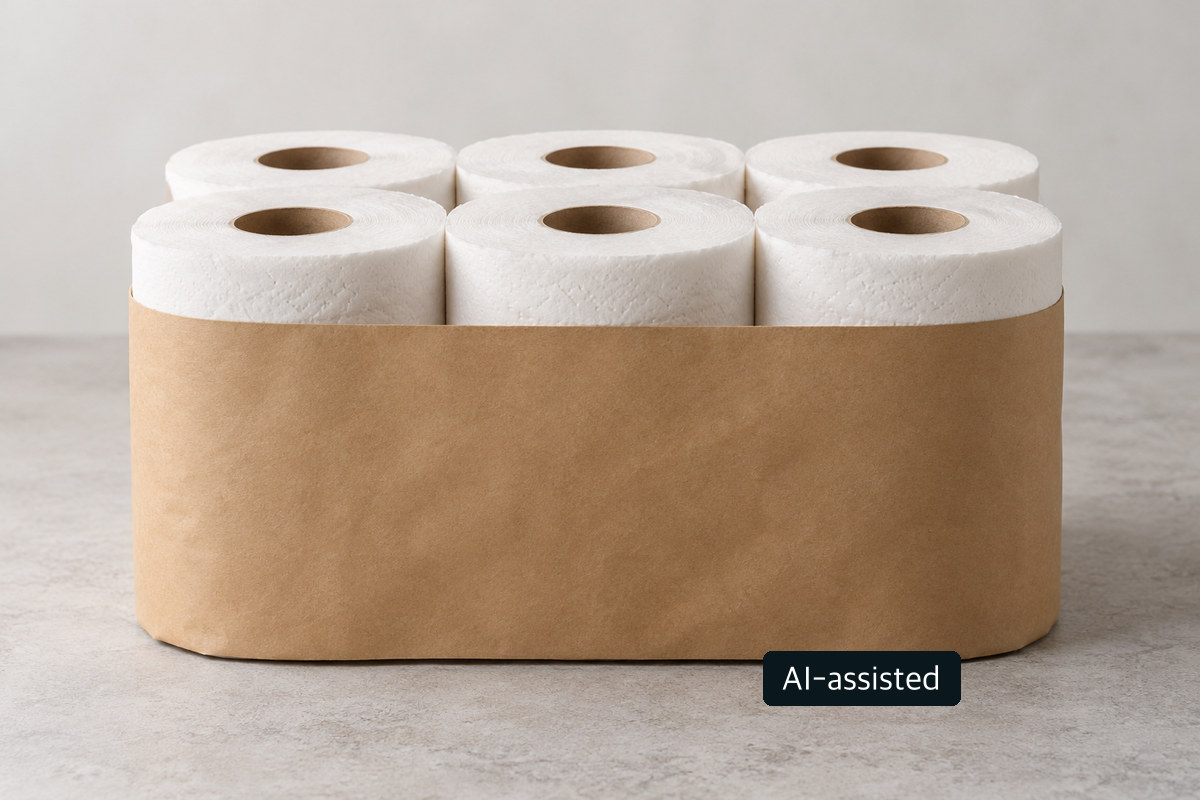
On 23 October 2026, Kleannara announced Fit tissue for one- or two-person households. Its company release describes a six-roll pack, 27 metres per roll, made with three-ply tissue from 100% natural pulp. The company says the outer package uses paper instead of plastic film. These are published product specifications, not independent proof of the outer wrap’s exact grade, coating, adhesives or recycling performance.
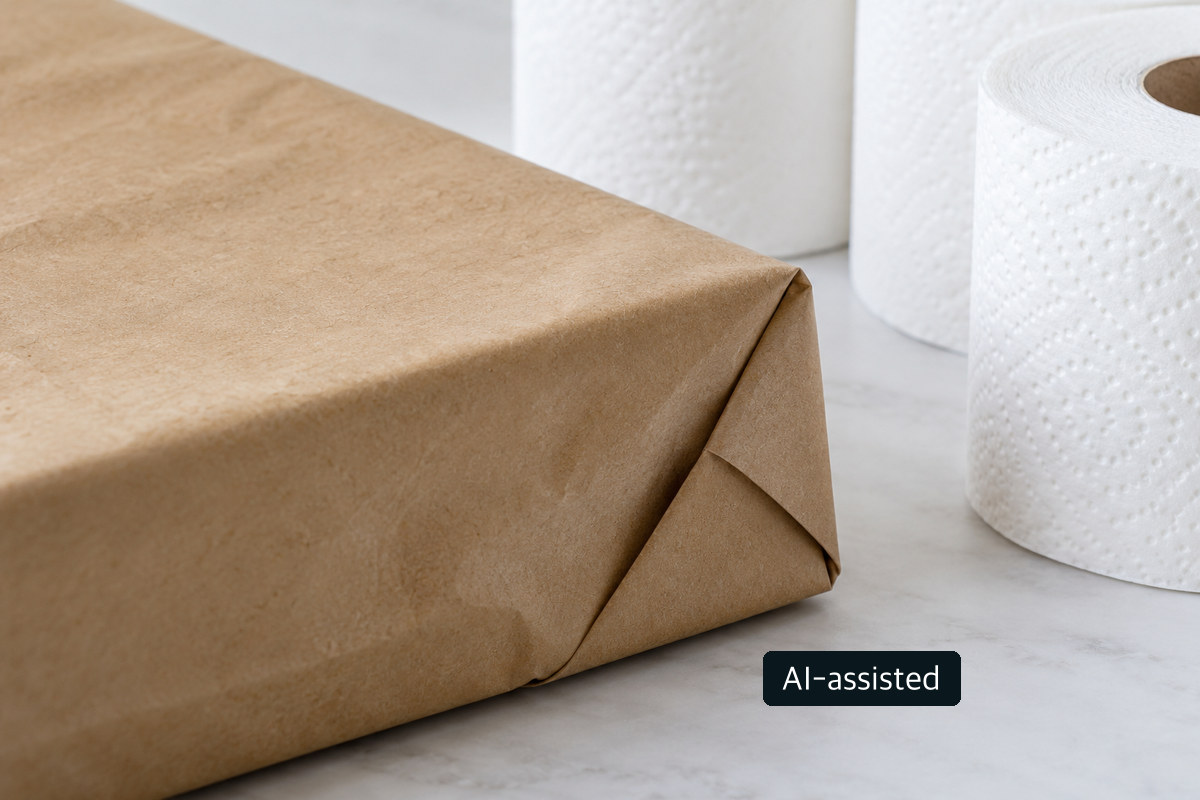
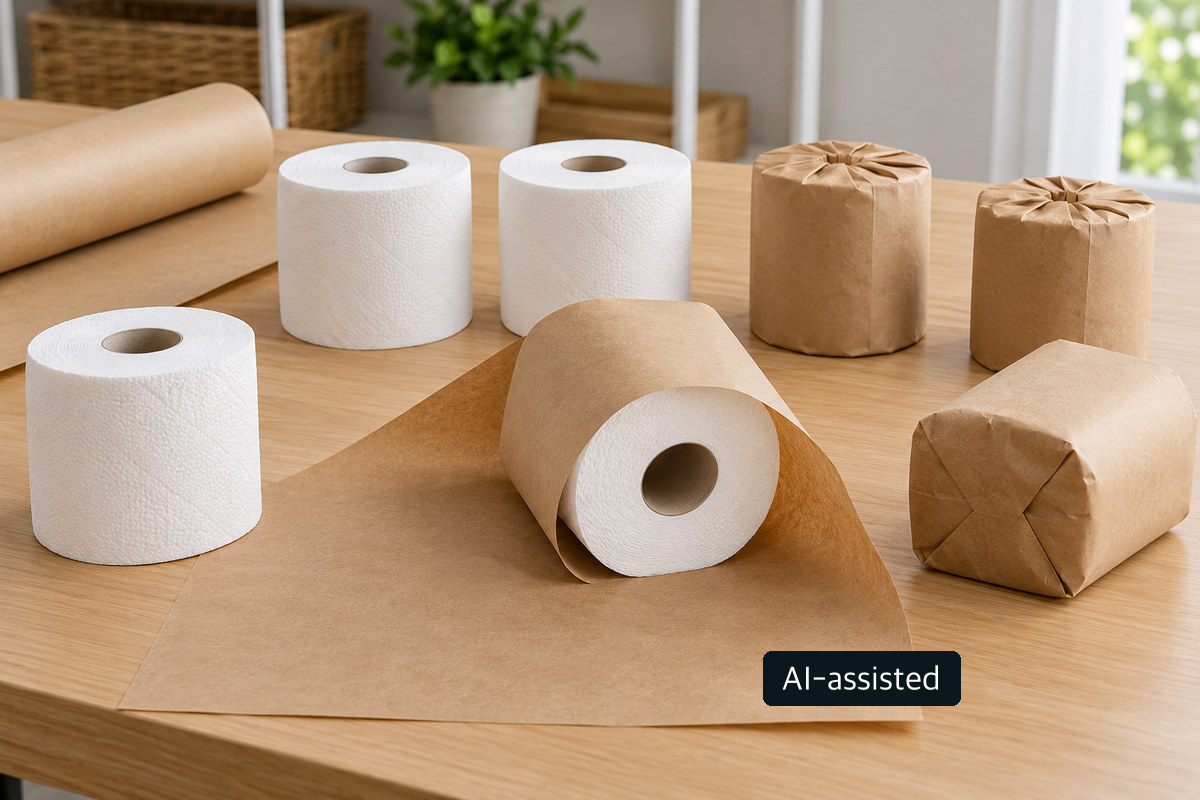
The photographs here are unbranded conceptual scenes, not photographs of the product sold by Kleannara or its facilities. The real package design and closure need to be checked against the company’s product materials.
What the announcement does—and does not—establish
| Item | Company announcement | Not established by the announcement |
|---|---|---|
| Pack size | Six 27-metre rolls, aimed at small households and storage spaces | Sales volumes or measured waste reduction |
| Tissue | Three-ply, 100% natural pulp | That the outer wrap has the same fibre composition |
| Outer wrap | Paper rather than plastic film | No coating or adhesive; mono-material construction; universal recyclability |
| Sales | The company lists its own mall, brand store and Coupang | Identical live stock and packaging specifications in every channel |
The tissue and the outer package are distinct materials. A claim about the tissue’s pulp content cannot be transferred to the wrapper. Likewise, calling a wrapper “paper” does not rule out surface treatment, printing or a bonded closure.
Four practical checks for a six-roll paper pack
The following are verification questions, not performance claims about the launched product. Obtain a physical sales sample and the converter’s specification before making a purchasing or sustainability judgment.
- Holding and closure. Does the wrap retain six rolls through handling, or do corners tear and seals open? Record the closure method rather than assuming the conceptual images show the product’s design.
- Humidity and hygiene. Test representative warehouse, parcel and retail conditions. Kleannara’s announcement does not give moisture-exposure tests, strength limits or failure rates.
- Labelling and collection. Check the actual wrap together with any labels or tape, printing, coating and adhesive. Collection and sorting rules are local; the release is not a recycling certification.
- Functional-unit comparison. A smaller pack can save storage space, but purchasing frequency and transit packaging may change. Compare wrapper mass and logistics per roll or per equivalent use, not material labels alone.
What to request from the supplier
Ask for wrap grammage and fibre construction, any treatment and inks, the adhesive or closure design, humidity and transport test methods and results, wrapper mass per roll, and the exact disposal instructions. A claim that one solution has a lower environmental burden requires comparable data for the same packaging function.
The verified news here is the six-roll launch and Kleannara’s reported switch from film to a paper outer wrap. The actual construction and real-world collection outcomes remain separate questions.
References
- Kleannara, announcement of the six-roll “Fit” tissue (23 October 2026, company release in Korean; accessed 24 October 2026). Product and packaging claims above are attributed to this release.
About the Author
PackingMaster covers paper packaging, papermaking and converting operations. We distinguish published specifications from the production and distribution evidence still needed to verify them.