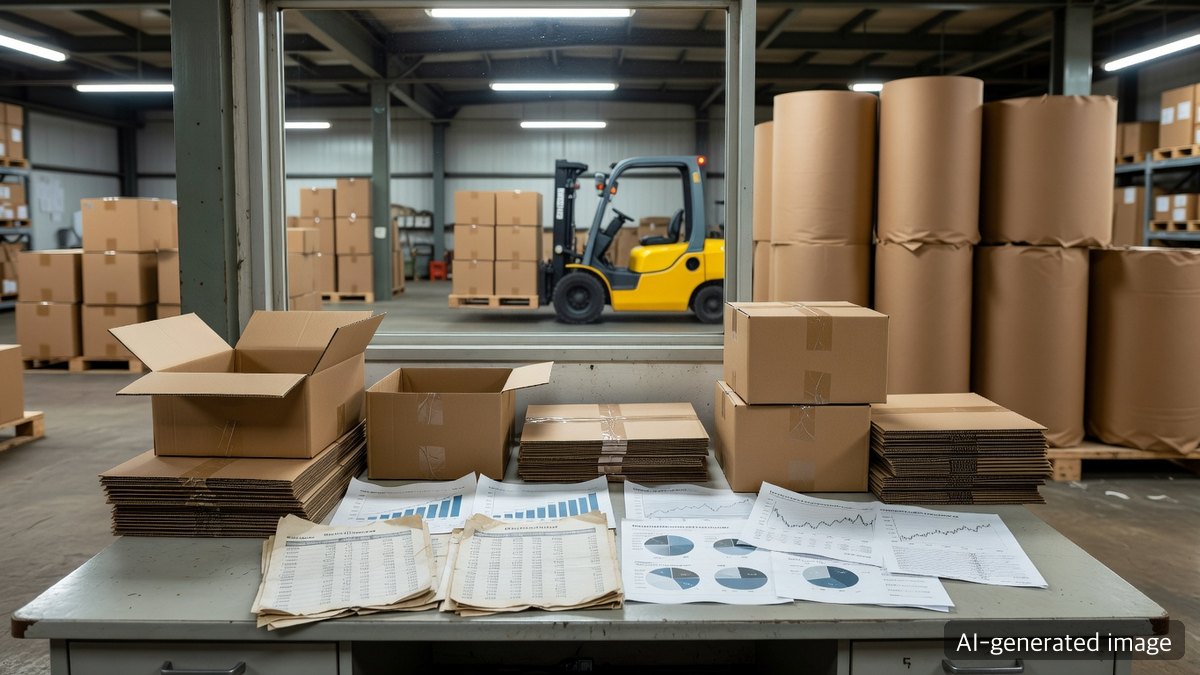
When buyers think about corrugated packaging risk, they usually focus on price increases, late deliveries, mill accidents, or sudden shortages. Financial news about a supplier may look less relevant at first. Yet capital policy can still be a useful secondary signal when evaluating whether a packaging supplier has the resources to maintain stable production, invest in equipment, and absorb raw material volatility.
A recent report on Korea Export Packaging’s share cancellation is a good example. For investors, it is a shareholder-return headline. For packaging buyers, it can also be a reminder to review supplier stability: cash flow, operating profit, equipment investment, and the ability to secure paper materials when the market tightens.
Why capital policy matters to packaging procurement
A share cancellation does not prove that a supplier is operationally strong. It does not guarantee quality, lead time, or service performance. But it can trigger a broader review of the company’s financial position and management priorities.
Corrugated packaging manufacturing is capital- and material-intensive. Producers need containerboard, power, labor, transport capacity, maintenance budgets, and working capital. If raw material prices rise or recovered paper supply becomes unstable, weak cash flow can quickly turn into production pressure.
For B2B buyers, the question is not whether the share price will move. The practical questions are different:
- Has the supplier maintained stable sales and operating profit?
- Does cash flow support raw material purchasing and equipment maintenance?
- Is debt at a manageable level?
- Are there signs of continued investment in production capacity?
- Does the supplier have enough operational resilience during price cycles?
Financial signals buyers can actually use
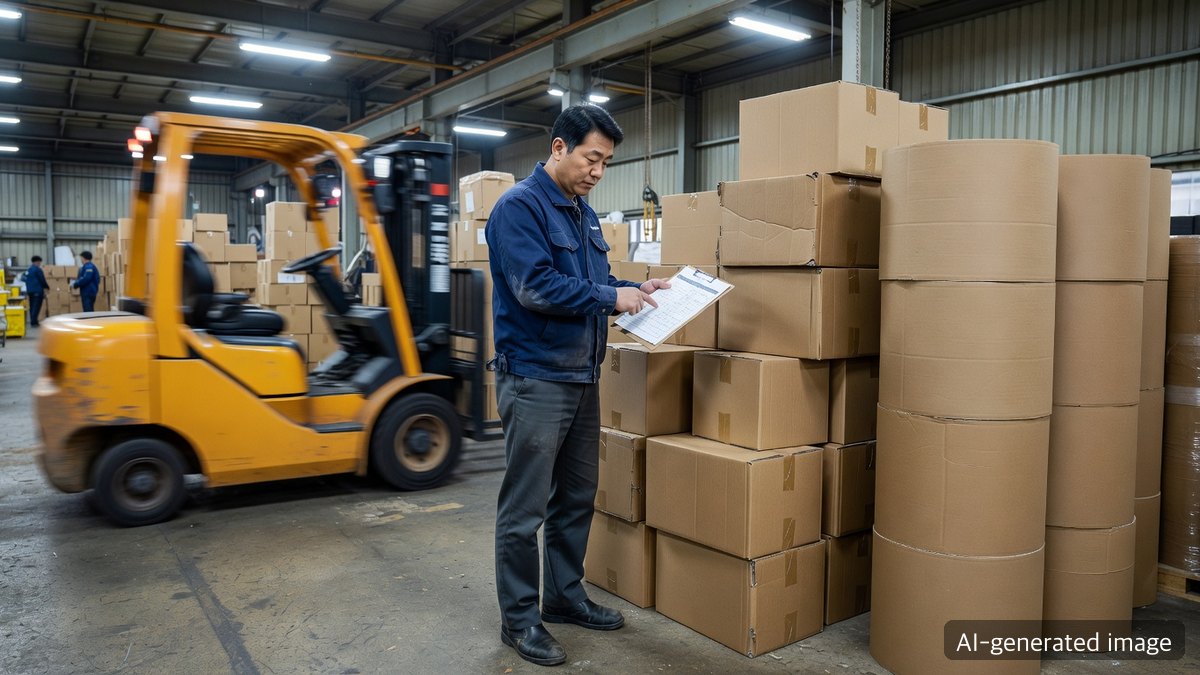
Packaging buyers do not need to become equity analysts. A few simple checks are enough to improve supplier risk awareness.
First, look at profit stability rather than sales size alone. A large manufacturer may still face pressure if margins collapse whenever paper prices move. A smaller supplier may be more reliable if it has stable customers, disciplined production planning, and good inventory control.
Second, review cash flow. Corrugated suppliers often buy paper before they get paid by customers. If working capital is tight, maintenance, inventory, or delivery flexibility can suffer.
Third, look for equipment investment and maintenance capacity. Corrugators, printers, folder gluers, and finishing lines require continuous upkeep. Delayed maintenance can create quality variation, downtime, and slower claim response.
Supplier risk before price negotiation
Packaging price is important, but the cheapest quote is not always the safest choice. Repeated B2B packaging supply depends on consistent lead time, printing accuracy, board grade, compression strength, and communication.
Supplier stability checks become especially important when:
- A critical box specification is supplied by only one vendor.
- Printing plates, dies, or approval drawings are locked to one supplier.
- Lead time is short and safety stock is low.
- A board-grade change can directly increase product damage.
- Export shipments would face high costs from packaging delays.
In these cases, public filings and supplier news can support a more structured review. They should be combined with delivery records, quality claims, site visits, and alternative sourcing plans.
A practical checklist when supplier news appears
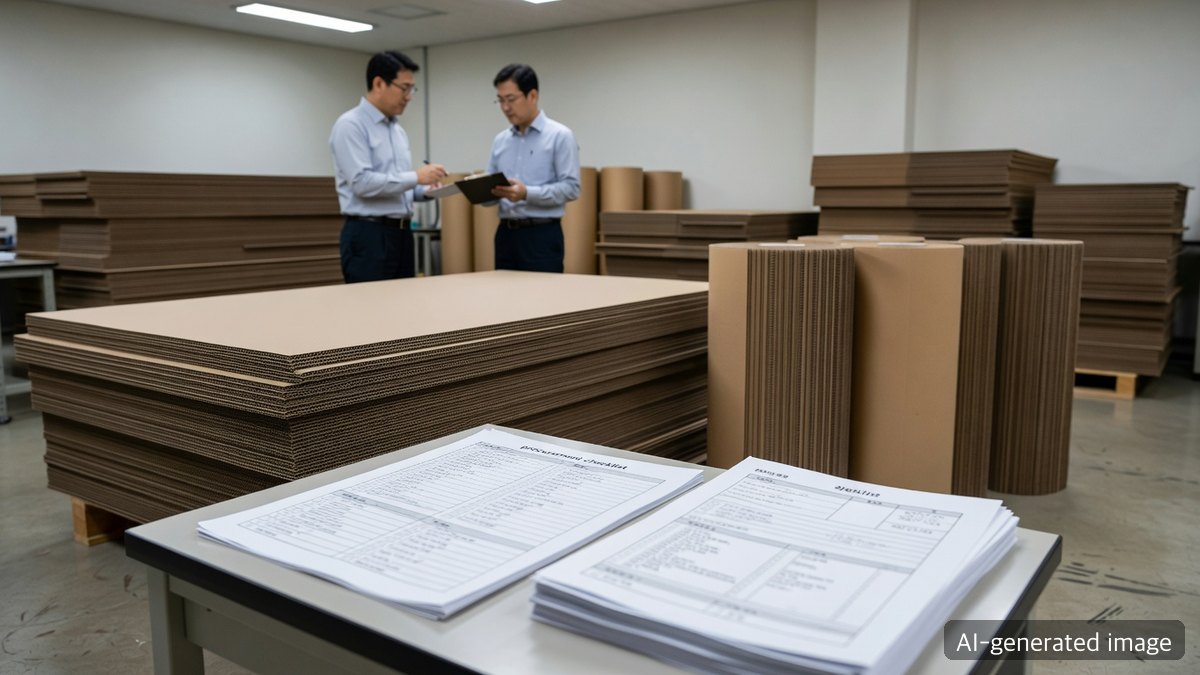
When a packaging supplier appears in the news, use it as a prompt for a short review:
- Identify the type of news: shareholder return, investment, accident, labor issue, M&A, or price change.
- Check recent public filings if the company is listed.
- Review sales, operating profit, cash flow, and debt at a high level.
- Look for production capacity or equipment investment disclosures.
- Compare the news with current paper and recovered-paper market conditions.
- Identify whether the issue affects your actual packaging specifications.
- For single-source items, review backup suppliers and safety stock.
Avoid over-reading one signal
A share cancellation does not automatically make a company a better supplier. Not cancelling shares does not make another company risky. Procurement decisions should never rely on one headline.
The value of the news is that it encourages a disciplined review. Public information, transaction history, quality records, and operational communication should be read together.
Closing thoughts
Corrugated packaging procurement is not only a price negotiation. It is a supply stability decision involving paper availability, equipment reliability, quality consistency, and financial resilience. Capital policy news is only one input, but it can help buyers ask better questions before a supply issue becomes urgent.
About the Author
PackingMaster writes practical B2B content on paper packaging, corrugated boxes, export packaging, and sustainable packaging regulations. The focus is on checklists and decision criteria that procurement, quality, and logistics teams can use together.
References
- Digital Today report on Korea Export Packaging’s share cancellation: https://www.digitaltoday.co.kr/news/articleView.html?idxno=658964
- 중동 리스크에 화재·사고까지…골판지 공급망 ‘이중 충격’ < 경제일반 < ECONOMICS < 기사본문 - 더퍼블릭