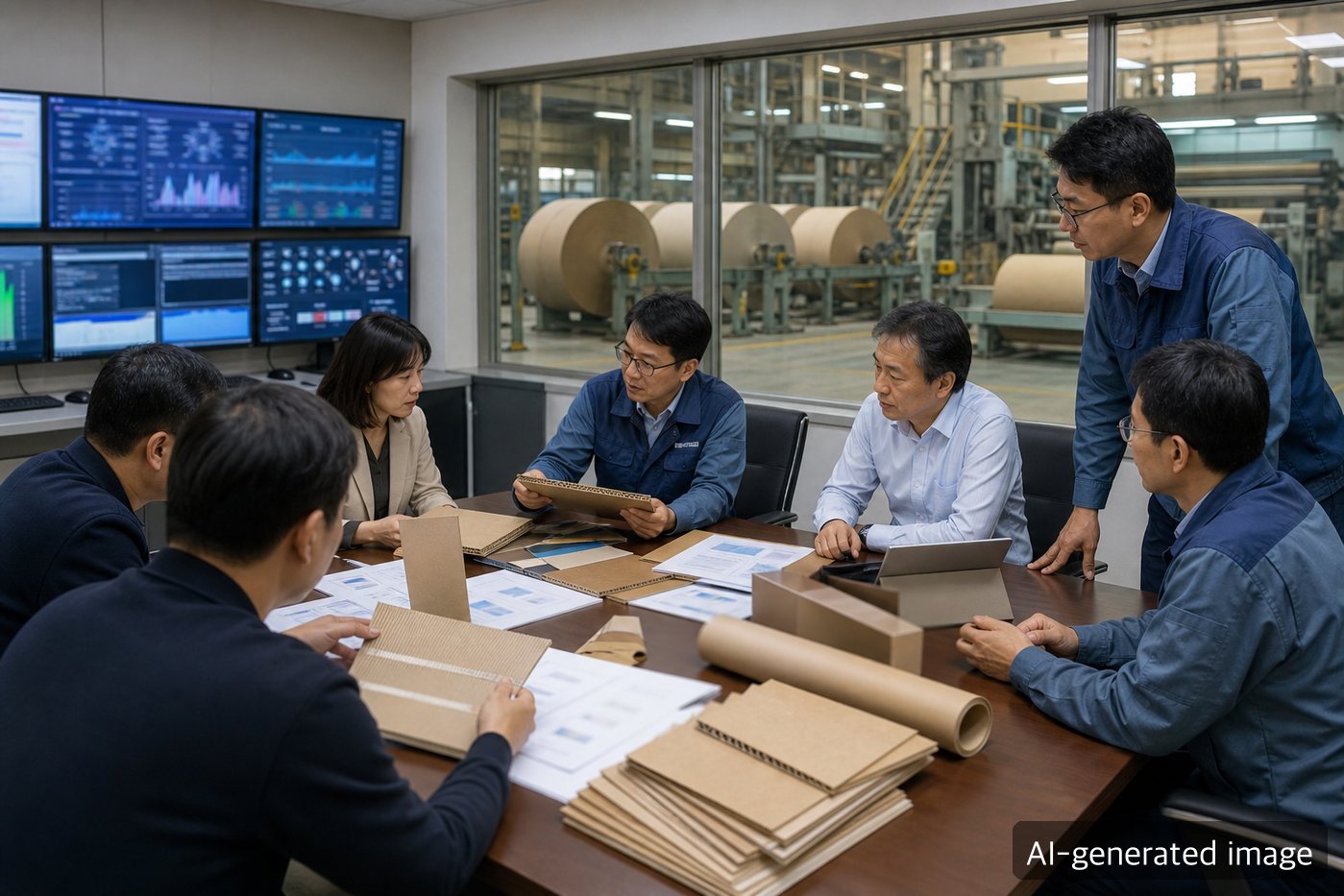
Korea’s Paper Day event on June 16 is a reminder that the paper industry should be seen as industrial infrastructure, not only as a consumer-paper sector. The familiar themes are sustainability, exports, and manufacturing competitiveness. But for packaging buyers, the more practical point is this: AX and DX in the paper industry can change how packaging materials are purchased and evaluated.
Digital transformation in paper manufacturing is not just about adding sensors to machines. It connects raw material input, forming conditions, moisture, strength, cutting, inventory, and shipment data. When this improves, buyers of corrugated boxes and industrial paper packaging can move beyond simple price comparison and start evaluating quality data and supply risk together.

Why AX and DX Do Not Stop Inside the Paper Mill
Paper mills are highly sensitive to energy, water, raw materials, and machine conditions. Even for the same basis weight, moisture, compression strength, surface condition, and cutting variation can affect corrugated board productivity and box performance. In the past, these variations were often managed through experience and post-production inspection. DX makes it easier to connect process data with final quality.
AX is the next step. It moves from monitoring to more active support for demand forecasting, furnish adjustment, machine-condition prediction, energy use, and inventory allocation. For packaging buyers, this becomes a new set of questions.
- Can the supplier explain quality variation with data?
- Can delivery-delay risks be shared earlier?
- Which grades and widths are actually substitutable for urgent orders?
- Are price increases linked to raw material, energy, or utilization data?
- Can repeated defects be traced back to process or storage conditions?
In other words, AX and DX are not only internal-efficiency projects. They become part of supplier reliability.
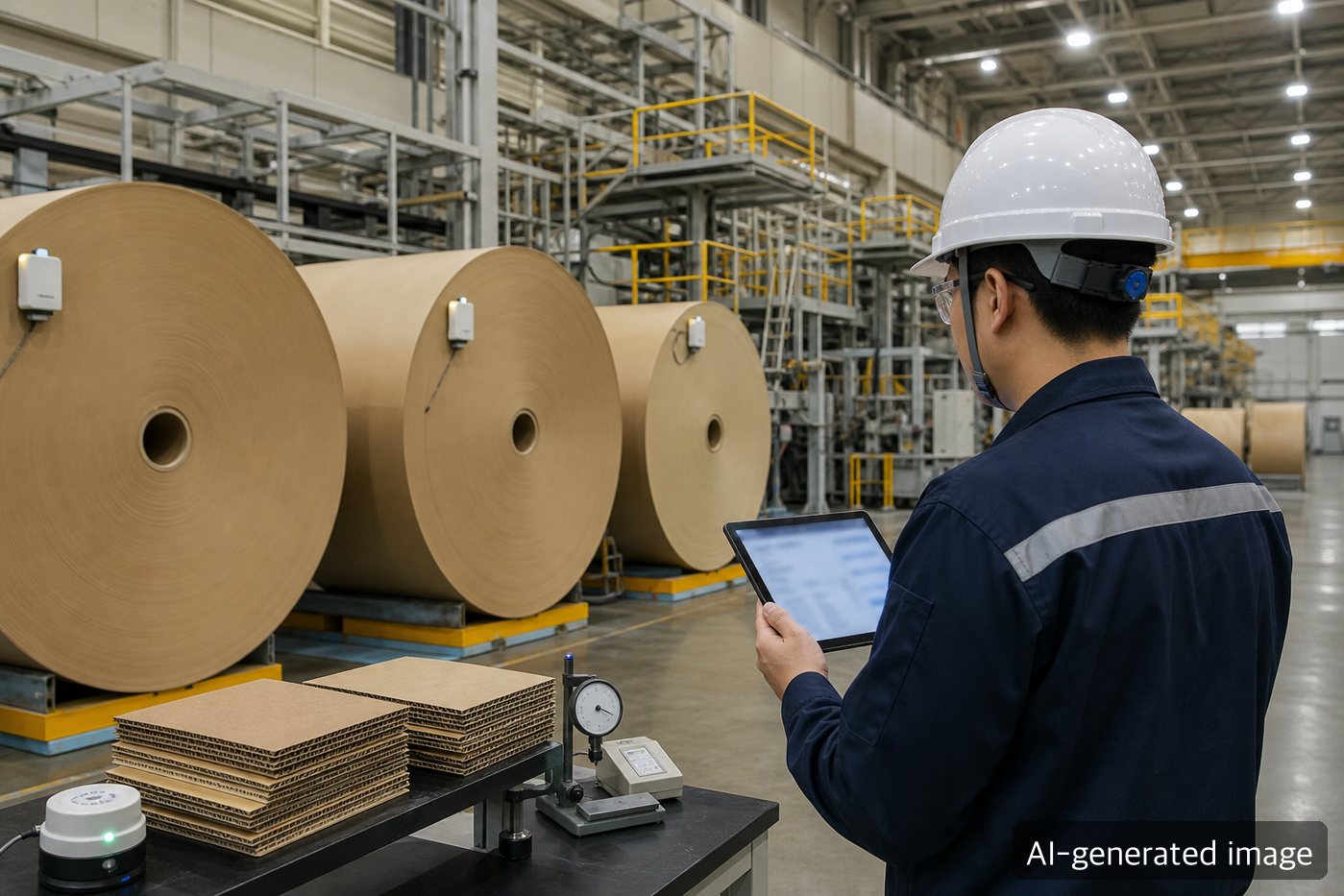
Three Ways Packaging Procurement Changes
First, quotation validity may become shorter. When recovered paper, pulp, energy, and logistics costs move quickly, suppliers are less comfortable holding fixed prices for long periods. Data-based explanations for price changes may become more common.
Second, quality discussions become more numerical. When boxes fail compression tests, burst, delaminate, or print poorly, buyers will need to look beyond a general statement that the paper was weak. Basis weight, moisture, strength, storage conditions, production date, and lot information all become relevant.
Third, inventory and delivery visibility become procurement value. Packaging materials are directly linked to product shipment. If base paper supply is delayed, box production is delayed; if boxes are delayed, finished goods shipments can be delayed. Suppliers with better digital inventory control can propose alternative grades, expected arrival dates, and split deliveries faster.
| Procurement Issue | Conventional Response | AX/DX-Enabled Response |
|---|---|---|
| Price changes | Price notice | Explanation using raw material, energy, and supply data |
| Quality claims | Post-inspection and experience | Lot, process, and storage-condition traceability |
| Delivery delays | Phone calls and manual adjustment | Inventory and production-plan visibility |
| New specifications | Repeated sample trials | Data-based narrowing of strength and basis-weight options |
| Supplier evaluation | Price and relationship | Data quality, response speed, and risk-sharing capability |
Paper as Packaging Infrastructure
The paper industry is often associated with books or office paper, but in manufacturing it supports logistics and packaging through containerboard, paperboard, packaging paper, and tube stock. E-commerce, food, cosmetics, automotive parts, steel, and export logistics all rely on paper packaging in some form.
That is why AX and DX in the paper industry should be read as infrastructure investment for packaging supply chains. Export companies increasingly need packaging specifications, recyclability evidence, and compliance documentation. If suppliers cannot manage data, customers also struggle to prepare regulatory documentation.
A Checklist for Packaging Buyers
To turn Paper Day’s industry message into practical procurement work, buyers can start by asking suppliers the following questions.
- Are key paper and packaging quality standards shared in measurable terms?
- Can production date, paper grade combination, and test results be traced by lot?
- How are recovered paper, pulp, and energy-cost changes reflected in price?
- Is there a list of substitute grades, basis weights, and widths for urgent orders?
- Can process, storage, and transport causes be separated when claims occur?
- Can the supplier provide material, weight, and recyclability data for export packaging compliance?

Conclusion
Paper Day celebrates the role of the paper industry, but packaging buyers should read it as a practical signal. As AX and DX progress in paper manufacturing, packaging procurement will shift from price comparison toward data-based supply management.
A strong supplier will not simply provide lower-cost paper. It will explain quality variation, share delivery risks earlier, and provide regulatory documentation more quickly. Buyers, in turn, should start asking for data, traceability, and supply-chain visibility alongside price and samples.
Frequently Asked Questions
Q: Do AX and DX immediately change packaging prices?
Not directly in every case. But they can change how suppliers explain quality, delivery, alternative grades, and price-adjustment reasons.
Q: Should smaller packaging companies also request this kind of data?
Yes, but gradually. Start with quality standards, lot traceability, and delivery-risk sharing for the most important items.
Q: How is this different from paper-market M&A or supply-risk topics?
Market-structure articles focus on ownership and supply risk. This article focuses on how AX and DX change procurement work and supplier evaluation.
About the Author
PackingMaster: Editor of PaperPackLog. Curates and organizes market trends, product information, and technical insights for the paper-packaging industry.