
Between May 29 and May 31, 2026, Hankuk Paper (027970) and Daeyoung Packaging (014160) both traded near new lows. Other Korean paper and packaging names showed similar weakness in April and May, even as box and containerboard producers were communicating new price increases. This post does not re-tell the price-domino story. It translates the signal into a Q2 2026 procurement checkpoint: how box and containerboard buyers should run quotes, inventory, and contracts through June and July.
For the earlier price-domino and inventory-risk angles, see “Recovery Signals and the Price Domino: What Korea’s Box Market Faced in May 2026”, “Korea Corrugated Inventory Risk and Box Order Timing”, and “Containerboard Price Rebound and Export Packaging Quotes”.
What the May Stock Signal Says (and Doesn’t)
A short factual recap first. This post is not an equity recommendation; it summarizes the signal so procurement teams can use it as input.
- Hankuk Paper (027970): Traded down to around the KRW 690 range on or around May 29, 2026, reportedly near 52-week or long-term lows. The discussion at a PBR of about 0.34 framed it as undervalued, but the price kept drifting lower.
- Daeyoung Packaging (014160): Traded around KRW 920, with an intraday low of KRW 918 near the year-to-date low on May 29–31. The stock had run up to roughly KRW 1,300–1,400 in March–April on box themes, then corrected back.
- Sector context: The broader Korean paper and packaging sector showed weakness through April and May, even as box producers communicated price increases, while box converter associations publicly pushed back on what they called repeated upstream hikes.
Listed-company prices reflect more than just demand and earnings, so one new low does not by itself prove a broad downturn. But when the same direction shows up across multiple names in the sector at the same time, procurement teams should at least re-test the assumption that the second-half demand recovery will hit the consensus pace.

Five Q2 2026 Checkpoints for Procurement Teams
1. Re-check Quote Validity Windows
Quotes issued by box converters in April and May (typically valid 30–60 days) are about to expire. When a quote expires, the automatic re-quote can move either up or down.
- Re-tabulate the expiration date of April–May quotes by SKU.
- Simulate two scenarios for the volume planned in June–July: place a partial order before the quote expires, or wait for a fresh quote after expiration.
- After one cycle of price increases, sector weakness suggests Q2-end quotes may not all keep moving one way.
2. Recalculate Inventory Days Against June Run-Rate
Recalculate box and containerboard inventory days using early-June 2026 consumption, not the April baseline.
- If box inventory built up right after April’s price hike still covers more than six weeks, you can hold off on the next purchase order.
- If you instead delayed ordering in April to avoid the hike and inventory is now drawing down quickly, set a final top-up window before the next round of July quotes lands.
- Calculate by SKU, not as a single average. The same box code can move very differently in e-commerce vs. industrial channels.
3. Switch the Negotiation Lever
When pricing momentum slows or weakens, do not negotiate only on unit price. Bring multiple levers to the table.
- Hold the unit price but extend quote validity to 90–120 days.
- Trade larger or steadier order volume for a unit-price freeze, which helps the converter stabilize utilization.
- Accept a small unit-price cut in exchange for shorter payment terms.
- Bundle in trial orders for new SKUs or new product lines to lock in a blended price.
Wrap the outcome as “unit price + validity + payment + order size,” not just one number.
4. Audit Primary and Backup Supplier Channels
If weakness in paper and packaging continues, smaller converters may show stress in lead times or quality consistency. Procurement should check:
- The primary box converter’s delivery-delay incidents and reasons over the past 60 days
- The backup converter’s utilization and quote-response time
- Whether the primary converter sources its containerboard from a concentrated mill or a more diversified base
- Any soft signals (sales-channel chatter or formal notices) of supplier changes
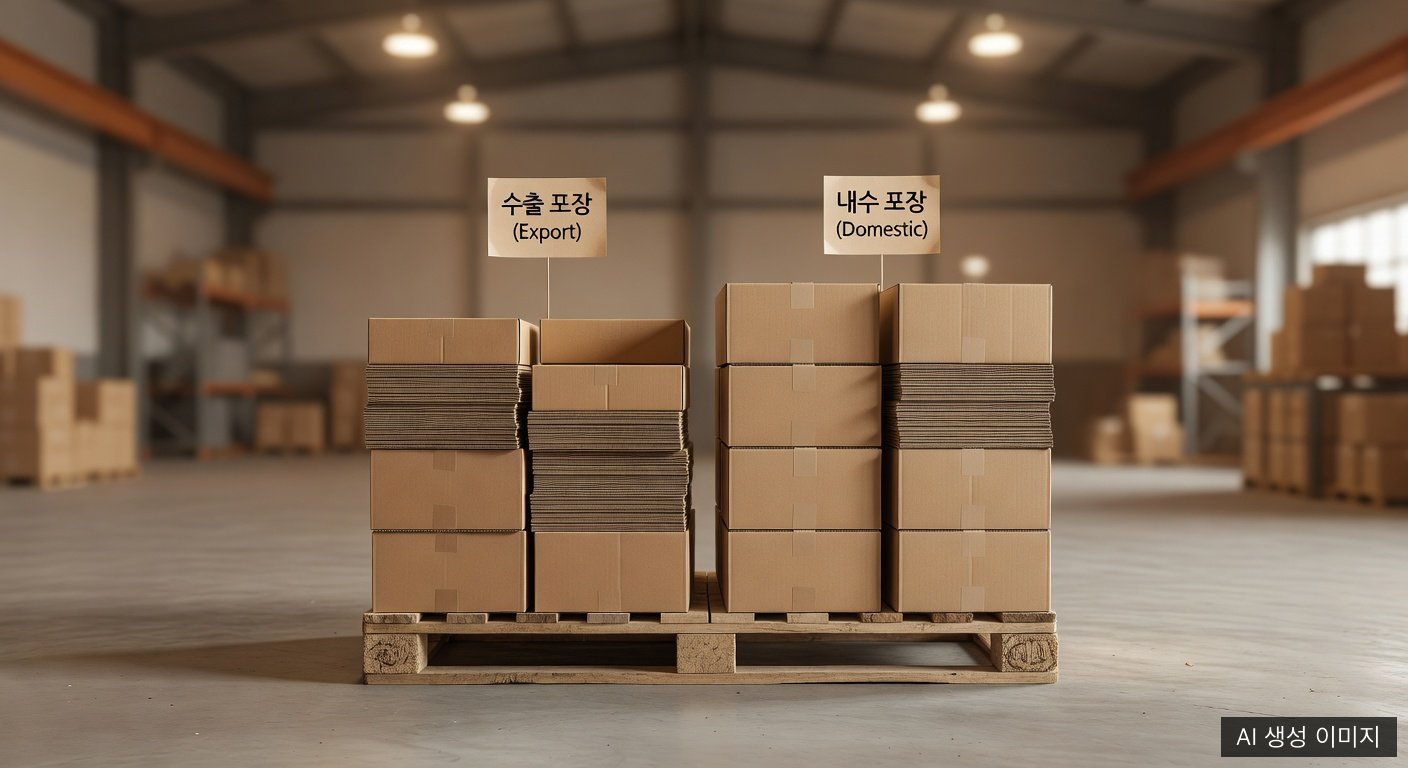
5. Manage Export vs. Domestic Packaging SKUs Separately
Even the same box behaves differently in export vs. domestic flows. Export packaging is also exposed to the global containerboard price rebound and overseas rules like PPWR and US EPR.
- Read export packaging SKUs alongside the signals in “Containerboard Price Rebound and Export Packaging Quotes”.
- Read domestic packaging SKUs alongside the signals in “Korea Corrugated Inventory Risk and Box Order Timing”.
Three Quick Wins for the Next Week
- Quote expiration sheet: Put the expiration date of every April–May quote into one SKU-level sheet and set reminders one week before each expires.
- Recalculate inventory days against June run-rate: For each SKU, recalculate how many days of inventory you actually have using early-June consumption rather than April.
- 30-minute call with your primary converter: Skip the price negotiation and have a short call with the primary converter’s sales contact asking about June–July demand flow and utilization. That single signal alone changes the leverage on the next quote.
Conclusion
The late-May new lows in Hankuk Paper and Daeyoung Packaging do not by themselves mean “box prices are going to fall.” But the fact that weakness showed up across multiple names in the sector, immediately after one round of price increases, makes this a good moment to retune quote validity, inventory days, negotiation levers, and supplier channels. Whichever direction prices move after July, that preparation gives procurement more reaction time.
About the Author
Lee Daeri, Marketing Team, Yunsung Co., Ltd. Covers paper packaging sales and marketing, and translates market signals into practical language for box and containerboard procurement teams.
References
- ChosunBiz, “KOSPI 52-Week Lows,” 2026-05-29 — https://biz.chosun.com/stock/c-biz_bot/2026/05/29/GQ2GEZDEGU2GKNRTGNTDEMZTG4/
- MK Business, “Box price increases” — https://www.mk.co.kr/news/business/11977633