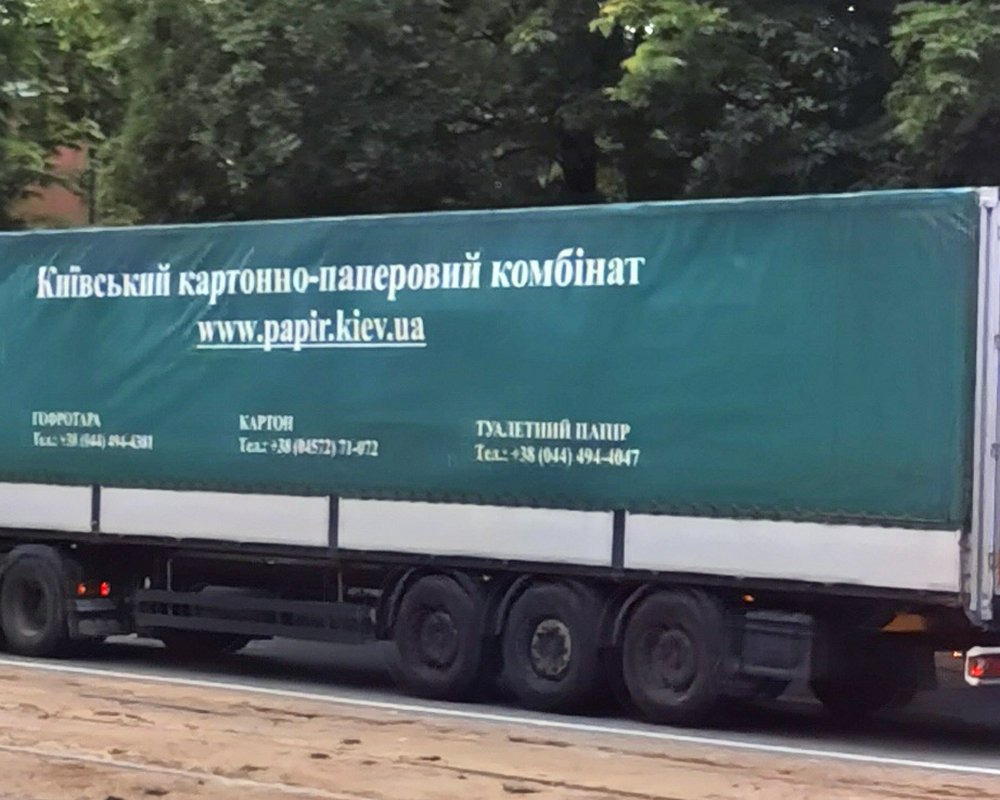
Kyiv Cardboard and Paper Mill (KKPK) in Obukhiv, Kyiv region, reported damage to its production and storage facilities after an October 7 missile attack and said production was halted at the time of its statement, according to Interfax-Ukraine’s 16:10 local-time story. Ukrinform’s 16:41 story explicitly cites a post by the mill’s press service. These are two reports of substantially the same company account, not two independent site inspections or proof of a recovery schedule. As this article was prepared on October 8, neither source established when full production would resume or how any particular customer’s shipment was affected.
Cover reference photo: the company-name trailer side in “Kkpk truck in Dnipro. Bright,” photographed in June 2025 by Alex Blokha, CC BY-SA 4.0; center-cropped and resized, adaptation shared under the same license. Not the Obukhiv mill, an October 2026 attack scene, or a damaged vehicle.

What the reports establish—and what they do not
According to the statements attributed to the mill, production and storage buildings, equipment and utilities were damaged; fires broke out and emergency response was continuing at the time of the reports. The company said production was halted and no employees were injured. This is its reported status, not a subsequent independent safety audit or a final determination about every affected asset. Neither the total monetary loss, future operating rate nor insurance and logistics impact can responsibly be inferred from the two stories.
The reports also describe earlier attacks and operational disruption in March and April 2026. The newly reported October 7 damage is a separate event, not merely another citation to the earlier shutdown. Equally, any earlier recovery cannot be assumed to represent post-October-7 line-by-line status.
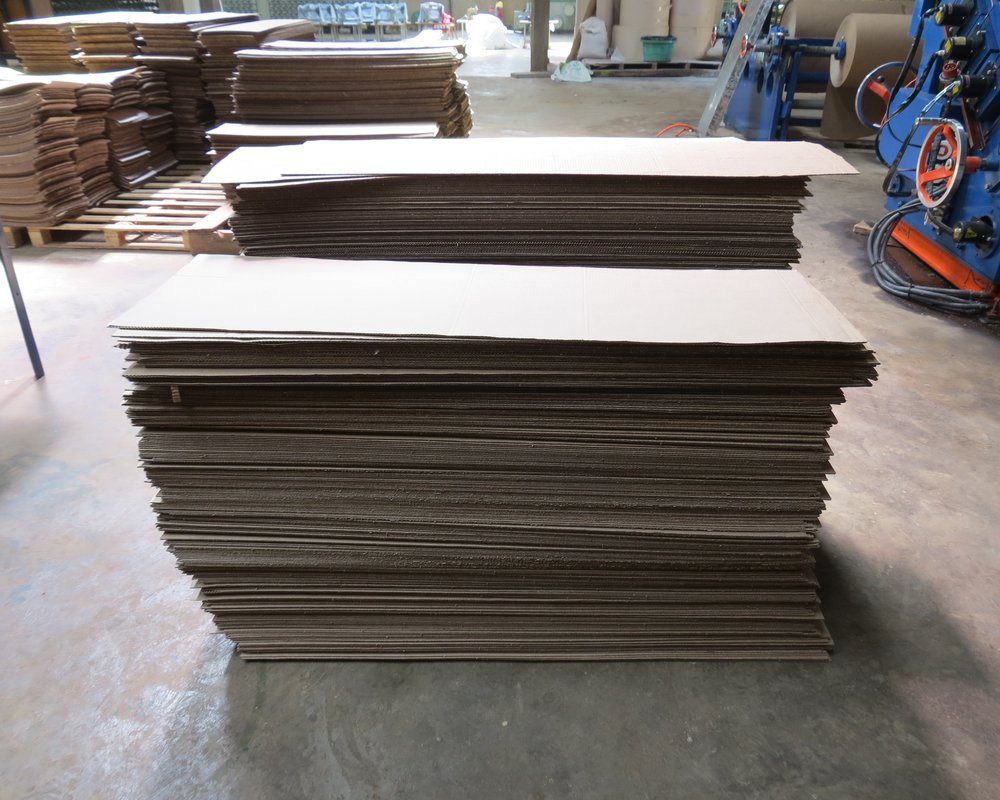
Reference photo: “Ndawara packaging production unit, production of cardboard boxes (05).JPG” by Bdx, CC BY-SA 4.0; center-cropped and resized, adaptation shared under the same license. This is not KKPK’s site, damage or inventory.

Why stock, output and deliveries require different checks
The mill is described as producing cardboard, corrugated packaging and hygiene-base paper and products. A report that production is halted does not establish that every finished-goods stockpile, subcontracted source or shipment is halted in the same way. Conversely, a presumed stockpile would not demonstrate normal customer fulfilment. The historical capacity figures carried by a news story should not be converted into current available capacity or a restart forecast.
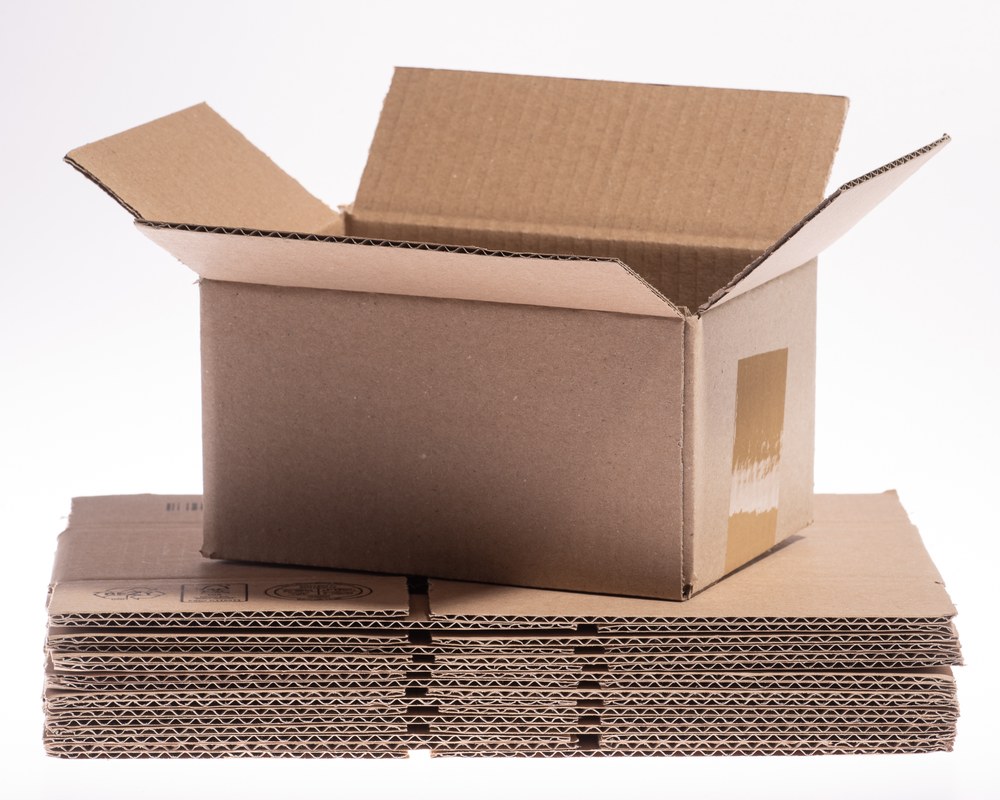
Product reference photo: “Cardbord box 001” by Renmontom, CC BY-SA 4.0; center-cropped and resized, adaptation shared under the same license. It does not depict goods or resumed production at the affected mill.

A buyer should seek written confirmation by purchase order, grade, specification and quantity: production location, inventory status, dispatch and transport stage, possible alternative supply, and the next scheduled status update. An alternative board or carton needs its own basis-weight, strength, dimensions, print/converting suitability and delivery review. These are verification questions—not a claim that a particular Korean company has lost supply or a recommendation to place an unqualified substitute order.
A meaningful follow-up would require a timestamped mill update, competent emergency/safety confirmation, line acceptance and evidence of actual shipments. The two initial reports alone cannot fix a restart date, final employee-safety outcome or the scale of any Korean procurement impact.
About the Author
PackingMaster: Editor of PaperPackLog. Covers market trends, product insights, and technology in the paper packaging industry.