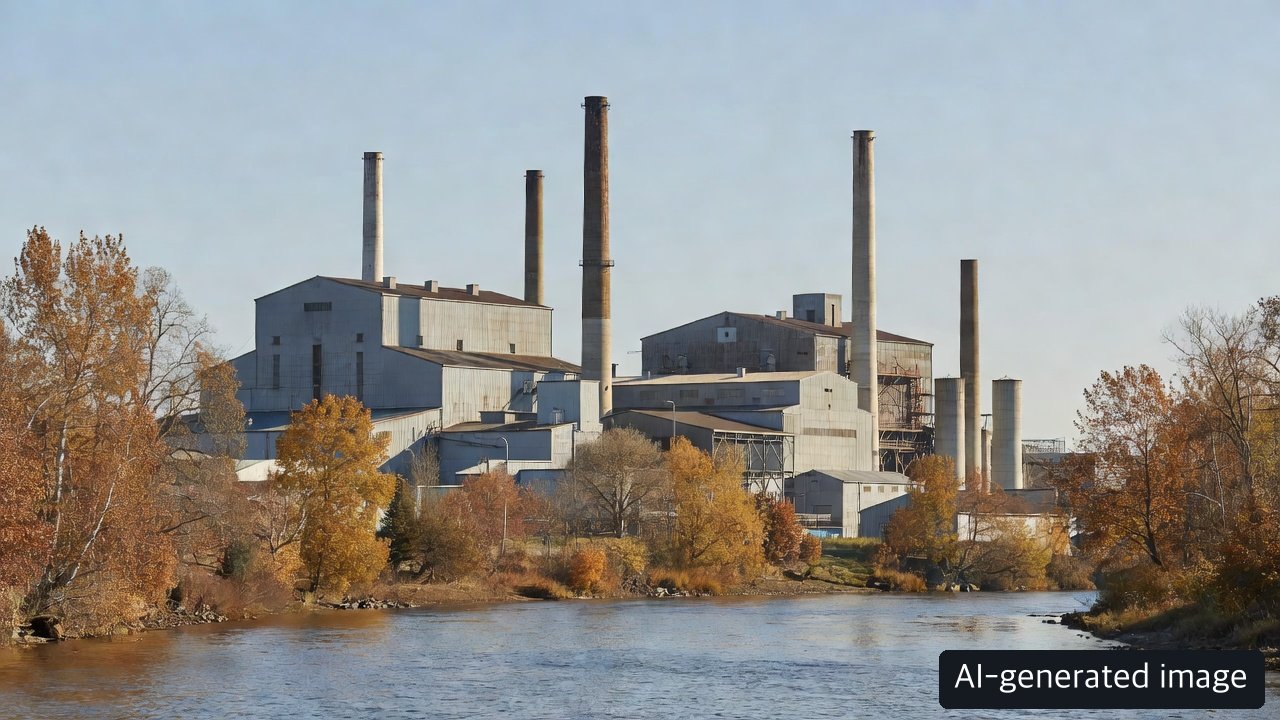
Workers are expected to return to Nippon Dynawave Packaging’s mill in Longview, Washington, following the May 26 white-liquor storage-tank disaster. We remember those who died and their families; this article does not reconstruct the accident or speculate about its cause. For packaging buyers, the essential distinction is that returning staff, continued wages, commercial production and a customer’s shipment are four different statuses.
What changed: A workforce agreement, not full production
The U.S. Chemical Safety and Hazard Investigation Board (CSB) announced an investigation on May 27 into the rupture and implosion of a white-liquor tank at the mill. A union spokesperson told The Seattle Times on October 1 that a majority of employees are expected back on October 12. KPTV’s report that day of the union announcement says the Association of Western Pulp and Paper Workers (AWPPW) and the mill reached a return-to-work agreement. Employees covered by exceptions will also continue receiving pay through at least January 17, 2027. KPTV explicitly reports the union’s statement that the mill has not yet returned to full production.
October 12 is a planned worker-return date, not an announced production restart date. A workforce and recovery-preparation state does not itself identify restarted paper machines, approved commercial output, liquid-packaging-board tonnage or shipments against particular purchase orders. The reports and union account do not provide a confirmed date for full production, grade-by-grade output or recovery of any customer’s promised delivery. January 17, 2027, is a minimum wage-continuation date, not an announced production restart date. Safety readiness and actual production status require subsequent information from the mill and relevant authorities.
Trace the mill behind an actual order
For an importer or converter, the first question is whether the grade it buys actually comes from this facility. A broad Nippon Paper group connection does not mean every pulp or paper grade comes from Longview. A distributor may also obscure the manufacturing site on the face of a purchase order. Without a link among manufacturing mill, grade, lot and customer order, do not declare that this development has changed your delivery date.
The following is our editorial order-status template, not a description of the mill’s actual inventory or a legally prescribed form. On mobile, swipe the table horizontally to see the other columns.
| Verification step | Question for the supplier | Evidence and hold condition |
|---|---|---|
| Manufacturing source | Which mill actually produces this grade and order? | Hold the exposure assessment without a specification and mill confirmation. |
| Available stock | How much already-approved finished stock is available, distinct from planned new production? | Do not promise supply without available quantity, lots and allocation. |
| Alternative grade | Does switching mill or supplier require customer approval? | Do not finalize a substitute before checking the relevant strength, caliper, coating/barrier and food-contact requirements, tests and approval. |
| Dispatch | What are this order’s production, quality-release, transport-booking and promised-date states? | Do not fix a delivery date without a dated written response from an authorized contact. |
These questions apply to liquid-packaging board or other items only when actual sourcing exposure is established. Similar material names do not establish equivalent converting behavior or customer approval.

Give customers the order status, not a mill-wide assumption
For each purchase-order ID, procurement should obtain grade / producing site / approved on-hand stock and lot / alternate-source approval / confirmed dispatch date / respondent and timestamp from an official supplier contact. Leave missing fields unresolved; do not invent depletion forecasts or alternate-material test dates. A bounded customer update is: “A worker-return plan has been reported, but we are checking the producing mill and shipment date for your particular order with the supplier.”
Our earlier article on the May chemical incident and upstream paper-packaging risk covers the broader safety and environmental questions. The new fact here is the workforce-retention agreement; the new buyer artifact is an order-specific inventory, quality and dispatch record. Returning experienced workers matters for safe recovery, but does not by itself close a customer’s delivery verification.
About the Author
PackingMaster is the PaperPackLog editor, covering paper packaging markets, products, and technical questions.
References
- U.S. Chemical Safety Board (CSB), investigation opened into the Nippon Dynawave white-liquor tank incident — primary announcement on the May 26 incident and May 27 investigation.
- The Seattle Times, most workers expected back at the Longview mill — reports a union spokesperson’s October 12 expected worker-return date, not a production restart schedule.
- KPTV, union-reported worker return and wage continuation at the Longview mill — local report attributing the agreement, pay exception and lack of full production to the union. Repeating the union’s announcement is not an independent verification of commercial output.