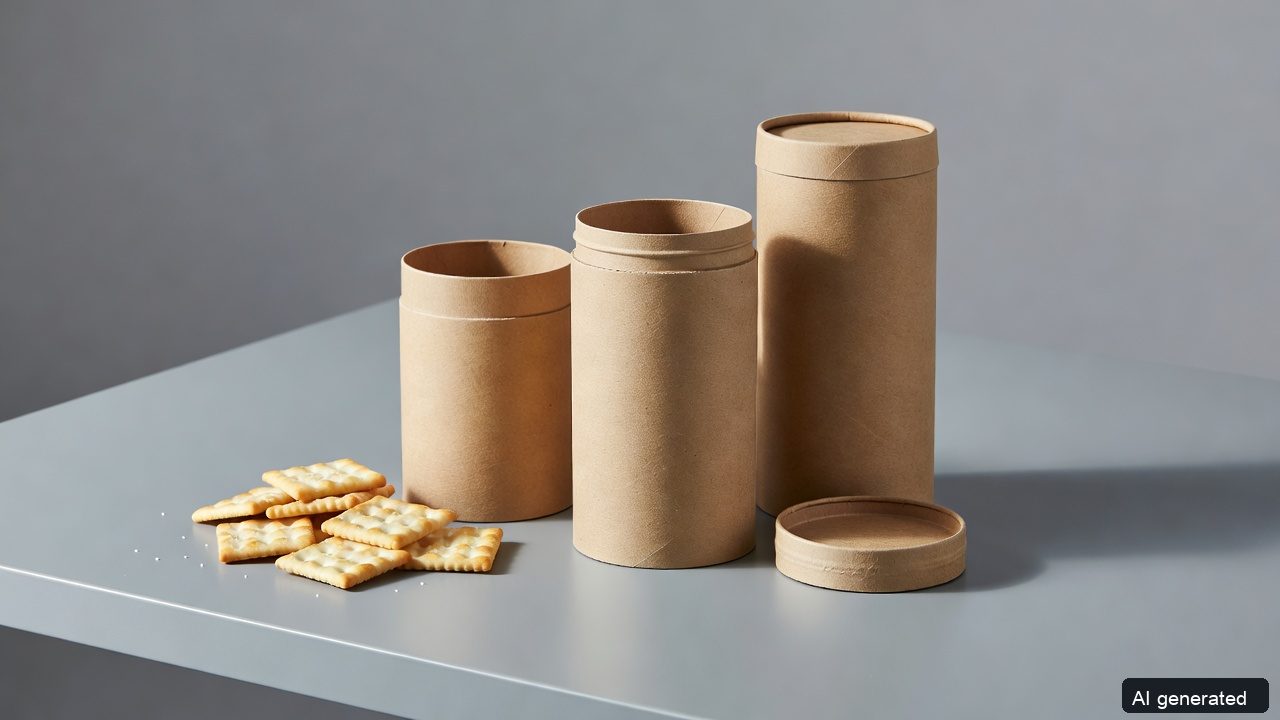
On September 8, Mars Snacking announced resealable canisters for selected Cheez-It and Club crackers. On October 1, Packaging Dive reported that Sonoco confirmed directly to the outlet that it makes the paper cans. The brand’s account of consumer convenience and the reporter’s supplier confirmation have different provenance. Neither establishes the exact material construction or recycling performance of a particular finished canister.
Unlike our earlier general examination of Sonoco GreenCan and paperisation, this article separates what is known about the new Mars products from the documents a packaging buyer would still need. The reviewed sources do not establish that these products are GreenCan SKUs.
What the launch and supplier report actually establish
Mars named Cheez-It Original, Cheez-It Grooves Minis Sharp White Cheddar and Club Minis Original in the new format. It described availability at select U.S. retailers and emphasized portability and reclosure. Its promise that crackers stay crunchy from the first bite to the last is a brand claim, not a published shelf-life test result.
Packaging Dive added an important independently reported detail: it asked Sonoco and received a direct confirmation of the paper-can supplier. That is stronger evidence for supplier identity than merely repeating Mars’ release. But neither public account specifies the body laminate, inner barrier, lid, rim, initial seal or collection acceptance for a named SKU. Calling something a “paper can” is not evidence that every component is paper or that the complete package belongs in a paper recycling stream.
Request the material record component by component
The following is our proposed procurement checklist, not a description of a confirmed construction. Specify the SKU and sales region when asking the brand and supplier for written evidence.
- Body, base and rim: Obtain the materials, laminate structure, mass shares and joining methods for each component. A description of the body does not automatically describe the complete pack.
- Lid and first-open seal: Ask what forms the original seal and what enables repeated closing afterward. A photograph cannot establish whether either part is plastic, paper or a composite.
- Food-contact and barrier layers: Request food-contact documentation and performance results under the relevant cracker, storage and distribution conditions. Do not transfer specifications from another Sonoco product to this SKU.
- Disposal and collection: Ask for component-specific separation instructions and evidence of acceptance or recyclability in the target region. Appearance and a product category name are not a local collection decision.
Reclosure is a requirement to validate, not a test certificate
Mars frames portability and retained crunch as consumer benefits. A buyer should translate that message into separate checks for unopened barrier performance and fit after repeated opening. Filling-line compatibility, lid application, drops, compression and storage can then be assessed against the incumbent pack. These are proposed approval questions; the cited launch and report do not publish results for those tests.
The verified news here is narrow but useful: Mars announced the resealable format, and Sonoco was subsequently identified directly as the paper-can supplier. Body, closure, barrier, seal and end-of-life performance remain SKU-specific questions. Keeping a consumer promise separate from a purchase-approval dossier is the practical takeaway.
About the Author
PackingMaster edits PaperPackLog, covering market developments, products and technical decisions in the paper-packaging industry.
References
- Mars, “CHEEZ-IT AND CLUB CRACKERS UPGRADE SNACKING WITH ALL-NEW RESEALABLE CANISTERS” — brand announcement; product selection, resealability, availability and crunch claim.
- Packaging Dive, “Packaging innovations: Sonoco’s snack hack for Mars, Amcor flips for pet food” — direct supplier confirmation from Sonoco; not proof of component specifications.