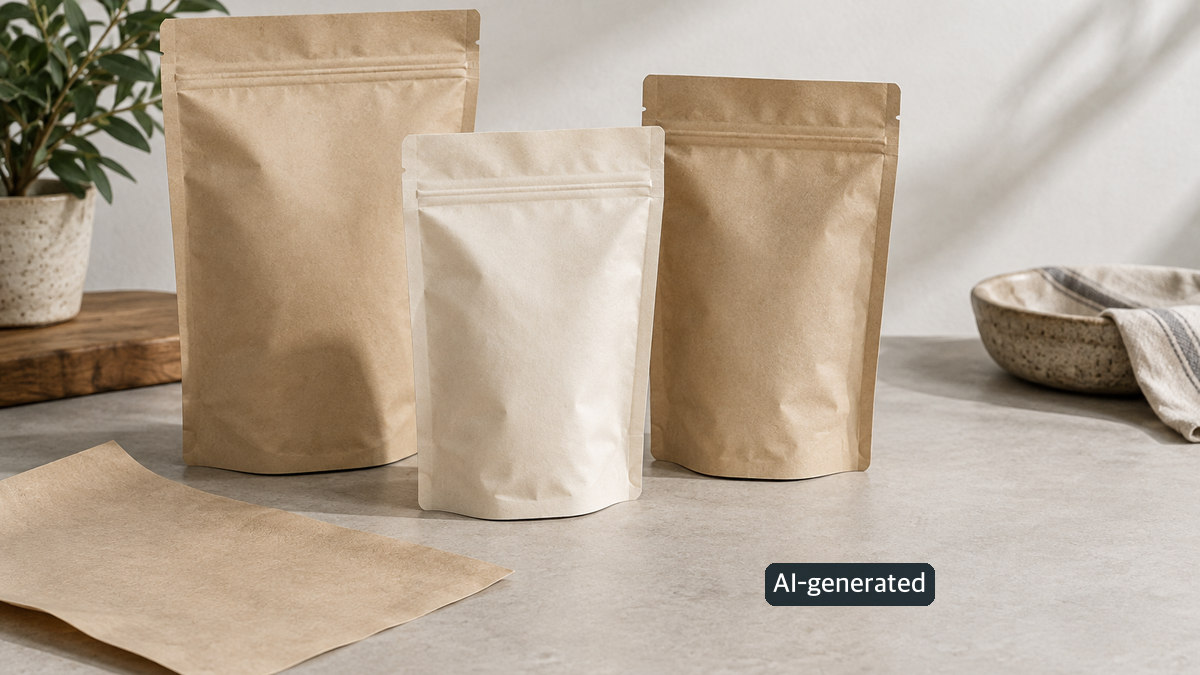
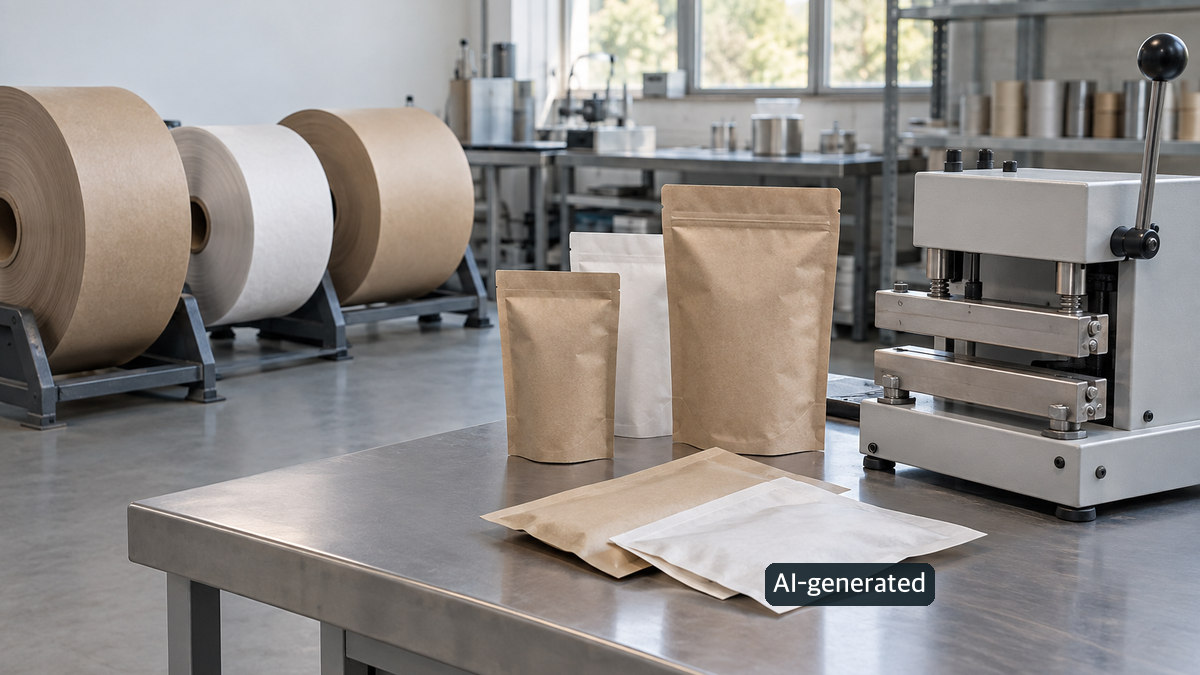
When a paper pouch comes with test figures, the first question is whether they describe the starting material or the printed and formed package. In its October 7 announcement, Masterpress says it installed a Karlville Swiss pouch-making line at its Białystok, Poland, site, connecting existing digital and flexographic printing with in-house pouch formation. According to the company, installation occurred in August 2026 and the line became fully operational in September, following operator training and trials of materials, formats and sizes. A Sustainable Packaging News article dated October 9 repeats the announcement. It does not amount to an independent replication of the tests.
What changed: the process link between printing and forming
The supplier says surface-printed paper- and plastic-based materials can proceed to pouch forming without an intervening lamination or curing stage, potentially shortening lead times. That does not mean every pouch made on this line has a non-laminated single-material structure. The company lists paper-based materials separately from single-layer PE and PP structures, as well as conventional laminates the machine can convert. Two-side-seal, three-side-seal and stand-up formats, with or without zippers, describe available formats. The figures below were not reported as finished-pack results for every format.
Do not turn substrate figures into finished-pack scores
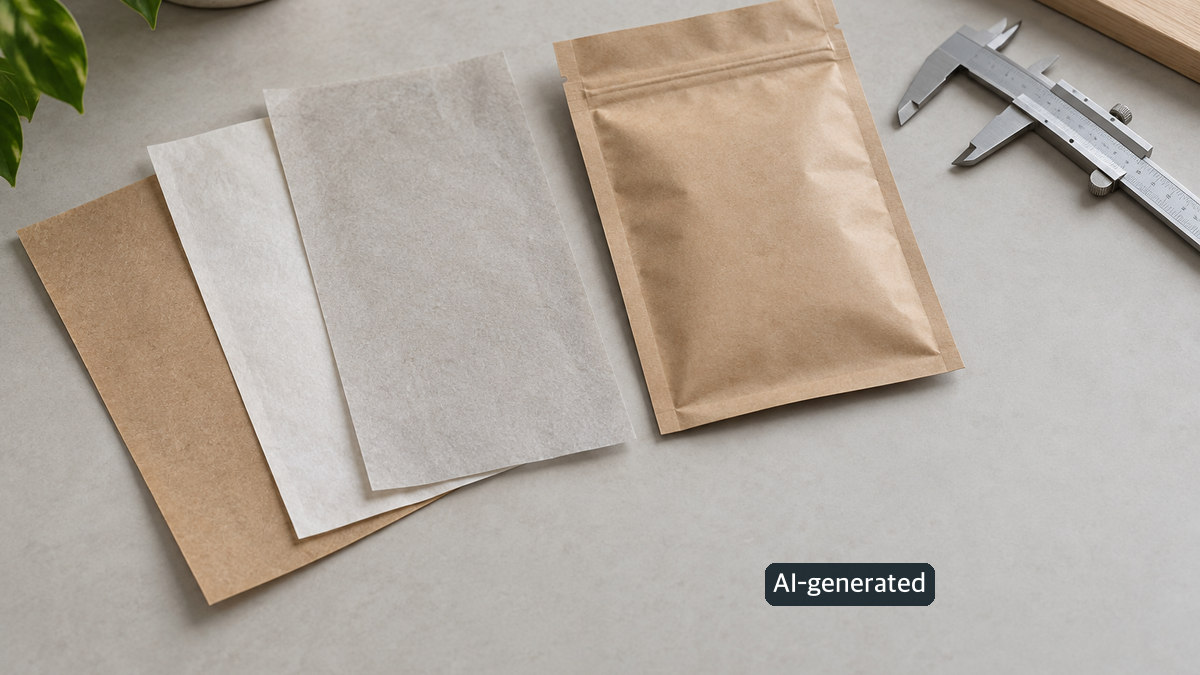
For a paper-based material it says can be made into pouches, Masterpress reports more than 90% paper content, more than 95% bio-based content, no PFAS or PVDC, and oxygen and moisture barrier performance. Under the conditions cited in the company release, oxygen transmission (OTR) was below 1 cm³/m²/day and water-vapor transmission (WVTR) was below 1 g/m²/day. The two articles do not provide complete temperature, humidity and specimen-construction details or an independently accessible third-party test report. Its food-contact suitability statement also needs application-specific documentation for the actual food, time, temperature, inks, seals and market.
Most importantly, Masterpress says the material was assessed as suitable for recycling in standard paper mills under the CEPI method and received Level A under Aticelca 501. The same release explicitly says recyclability testing of the final printed, pre-made pouches is still to come. These supplier-reported substrate results therefore do not establish CEPI or Aticelca certification of the finished package, acceptance in every local collection system, or a confirmed PPWR-compliance verdict. A single-layer PE pouch cannot inherit a paper substrate’s recycling assessment either.
A buyer’s evidence list: define the tested object
- Material: Request product-specific definitions for paper and bio-based content, OTR/WVTR methods and conditioning, specimen construction, and support for the PFAS/PVDC statement.
- Conversion: Freeze the actual specification, including ink, seals, zipper and contents; test seal integrity, leaks, storage performance and production yield. These are proposed acceptance checks, not published passing results for a finished Masterpress pouch.
- Recycling: Obtain the substrate CEPI/Aticelca report with its specimen scope. Separately request a plan and results for the printed, sealed, zippered finished pouch, plus collection and sorting assumptions in the destination market.
- Regulatory language: Treat the supplier’s “fast track to PPWR compliance” as positioning, not a current legal approval for a particular pack. Applicable dates, category and evaluation criteria require their own review.
The operational value of an integrated printing-to-pouch line lies in the supplier’s stated ability to iterate pilot formats within one production organization. Commercial approval still depends on tests covering the chosen complete structure. This article reviews the manufacturer release and its trade-press repetition; it is not a factory visit, an independent laboratory report or verification of finished-pack certification.
About the Author
PackingMaster: Editor of PaperPackLog, covering paper-packaging industry developments, products and technical decisions.