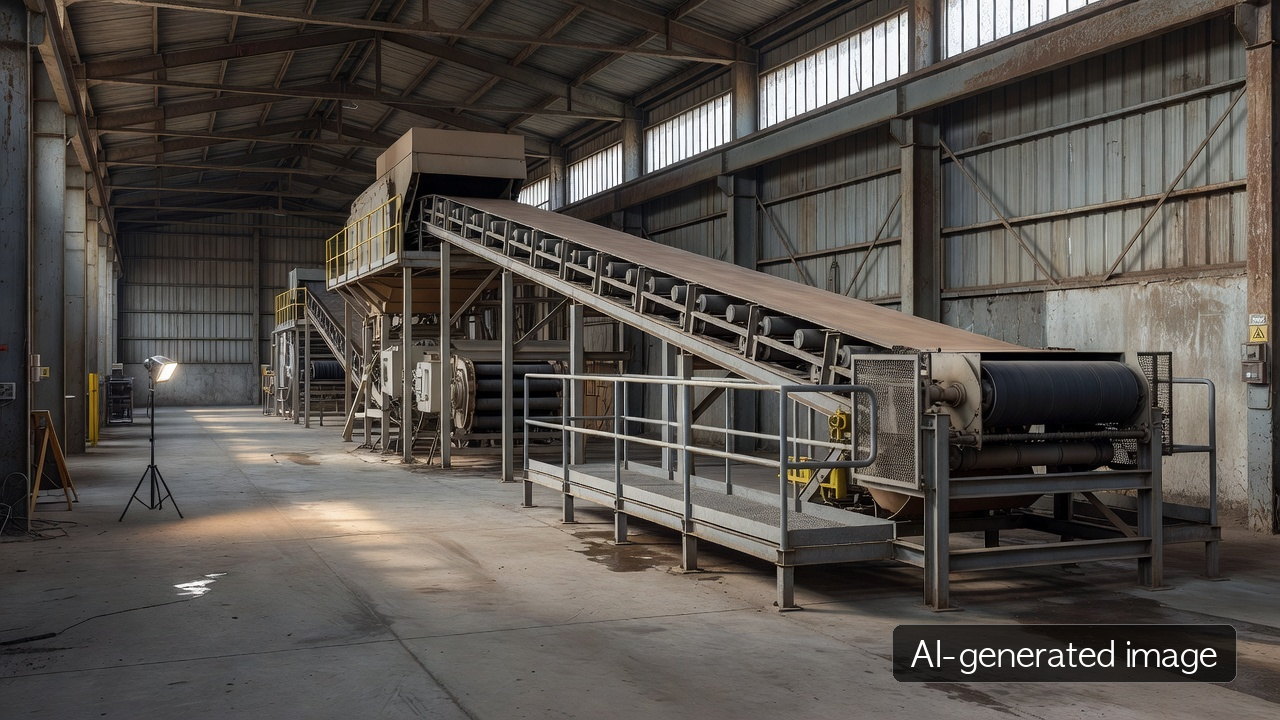
Early on September 12, 2026, a fire was reported in a pulp conveyor at the back of McKinley Paper’s mill in Combined Locks, Wisconsin. Citing a news release, Kaukauna Community News said multiple fire, ambulance and law-enforcement agencies were dispatched at about 2:25 a.m. and that the mill emergency response team (ERT) had knocked down the initial fire before outside crews arrived. Responders then used fans to clear smoke from the building and cooled remaining hotspots and embers in the original fire area.
The report said a drone view appeared to show smoke and flames from the roof, prompting a request for an aerial platform. Crews used visual checks and thermal-imaging cameras and found no extension into the roof. The article said the mill was able to resume production after fire departments cleared the scene about two hours later. However, a reported production restart does not establish a completed cause investigation, final damage amount, preventive-maintenance scope or normal delivery of every item.
Status checked at 2:50 p.m. KST on September 15, 2026. This article reviewed the public report and a news index that lists the same report. The incident detail comes from one local article citing a news release; it is not treated as independently corroborated reporting from multiple sources.
Reported and unresolved status
Record what the public report says, its evidence status and the operating treatment for each item.
Dispatch
Public record: Multiple agencies dispatched at about 2:25 a.m. on September 12
Evidence status: Local report citing a news release
Operating treatment: Retain the source and check timestamp in the incident record
Initial knockdown
Public record: Mill ERT reportedly knocked down the fire before outside crews arrived
Evidence status: Same source
Operating treatment: Separate the ERT response from formal site handover
Roof extension
Public record: Visual and thermal checks found no fire extension into the roof
Evidence status: Same source
Operating treatment: Do not convert a roof result into proof of conveyor integrity
Remaining hotspots
Public record: Crews cooled and flushed hotspots and embers in the original area
Evidence status: Same source
Operating treatment: Obtain the hotspot-clearance and re-ignition-monitoring record separately
Production
Public record: Article said production could resume after fire departments cleared
Evidence status: Reported operating status
Operating treatment: Verify item, line, quantity and shipment status separately
Cause and damage
Public record: The cause was being identified; no damage estimate available
Evidence status: Unresolved
Operating treatment: Do not record a suspected cause or invented loss amount
Injury status
Public record: The reviewed incident article does not state it
Evidence status: Unresolved
Operating treatment: Do not rewrite the absence of a statement as “no injuries”
Maintenance and delivery
Public record: Insurance, repair scope, preventive action and customer delivery effect not disclosed
Evidence status: Unresolved
Operating treatment: Request a written company or supplier update
The Ground News page groups only the Kaukauna Community News article and adds no separate reporting. Two URLs therefore do not count as two independent confirmations of the incident.
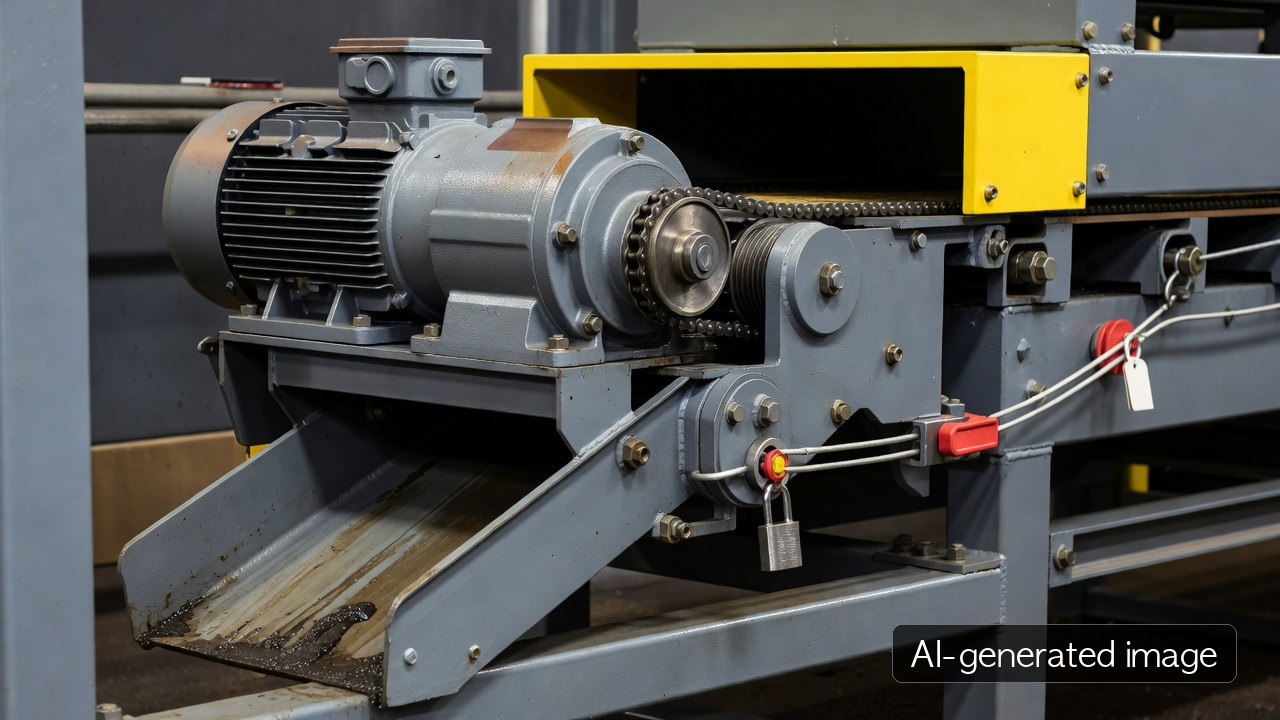
“Able to resume production” is not the same as “equipment normal”
A report that the emergency response ended and the mill was able to resume production is one operating-status signal. Procurement, production and safety teams still need to verify that status separately at the equipment and shipment levels.
- Emergency closeout: Were external response and formal handover to the mill completed?
- Equipment release: Were the conveyor drive, belt or chain, chute, guarding and electrical parts inspected?
- Fire-protection function: Were the installed detection, stop, suppression and ventilation functions tested?
- Process restart: Did no-load and restricted-load runs avoid abnormal heat, slip, misalignment or current?
- Commercial shipment: Were the actual item, grade, lot and PO produced and released?
These questions do not reconstruct the equipment installed at the incident mill. They are a general framework for paper-mill conveyors moving pulp, wet furnish or recovered fibre. Each site must fill it using its design, manufacturer instructions, statutory procedures, risk assessment and authorised release process.
Five-stage pulp-conveyor restart record
- R0 Site handover
- Evidence required: Fire-service and ERT closeout, thermal images, handover owner and time
- Check boundary: Original fire area, roof and overhead structure, chutes, ducts, hidden spaces and hotspots
- Release or stop condition: Hold access and restart if heat, smoke, odour or embers remain, or monitoring closeout is undocumented
- R1 Isolation and strip inspection
- Evidence required: Lockout/tagout record, inspection photos and replaced-parts list
- Check boundary: Motor, gearbox, bearings, pulleys, belt/chain, idlers, guards, liners and cables
- Release or stop condition: No operation before repair if heat damage, distortion, misalignment, lubrication damage or incomplete isolation is found
- R2 Residue and cleaning
- Evidence required: Recovered-material log, cleaning-zone map and repeat thermal check
- Check boundary: Wet pulp, char, embers, chute blockage and accumulation along the return side, floor and dust-collection interface
- Release or stop condition: Hold if a residual heat source, blockage, combustible accumulation or safe recovery method is unresolved
- R3 Safeguard test
- Evidence required: Device-level test, alarm and trip history and restoration approval
- Check boundary: Installed emergency stops, pull cords, speed/slip, misalignment, bearing temperature, heat detection, suppression and ventilation
- Release or stop condition: Hold for any bypassed interlock, failed detector, uncleared alarm or missed test
- R4 Staged run
- Evidence required: No-load, restricted-load and normal-load trends with sign-off
- Check boundary: Belt tracking, vibration, noise, temperature, current, material bias or spillage, dust/leakage and stop test
- Release or stop condition: Stop immediately and return to R1 for an out-of-limit trend, recurring hotspot, slip, overcurrent or abnormal vibration
The public report cannot supply acceptance numbers. Set bearing temperature, vibration, current, belt-misalignment and test-duration limits from the equipment baseline, manufacturer limits, site risk assessment and maintenance procedure. Test only the interlocks and suppression devices actually installed; do not describe a possible safeguard as an existing feature at the incident mill.
Verify supply continuity by item, line and PO
A restart at one mill should not be translated into either a North American shortage or normal supply across recycled paper and containerboard. The public article does not state which grades or processes used the conveyor, whether inventory was affected, or whether shipments changed. Korean manufacturers and exporters can request four evidence bundles from the supplier.
- Mill and line mapping: Is the purchased item made at Combined Locks, through the affected material path, or at another mill?
- Item production status: By item code, grade, basis weight and width, what is normal, restricted or awaiting inspection?
- Inventory and shipment status: Separate mill stock, off-site warehouse stock, in-transit material and new production, with firm dates.
- Alternate plan: If another mill or grade is required, identify changes, approvals, sample date, production date, shipment date and ETA.
Eight questions to send the supplier
- Please confirm whether our item is directly linked to the affected conveyor or process.
- Separate lines that restarted after the fire from lines still under inspection.
- What quantity can be produced by item code, grade and width, and what is the earliest firm shipment date?
- Separate pre-incident stock, post-incident production, off-site warehouse stock and in-transit quantity.
- When is the next official update on the cause investigation and damage or repair scope?
- If an alternate mill or grade is needed, what changes and quality or customer approvals are required?
- Separate POs with a confirmed delay from POs whose effect is still being checked.
- Which production record, release number or transport document can substantiate the next update?
Conditions that require a hold
Hold an equipment normal, supply normal or firm customer-delivery status if any of the following remains unresolved.
- Fire-service and ERT closeout are not separated from formal mill handover.
- A hotspot, ember, smoke, odour or abnormal thermal result reappears in a hidden area.
- Heat damage and alignment of the drive, electrical equipment, guards or chute are unchecked.
- An installed emergency-stop, detection, trip or suppression function remains untested or bypassed.
- The line moved directly from no-load to normal load without an intermediate trend record.
- The only evidence is a production-restart article, with no item, grade, quantity or PO release record.
- Cause, loss, insurance or preventive-maintenance scope is being filled with speculation.
- A single-mill incident is being extrapolated into a North America-wide shortage or recovery.
The article reports a pulp-conveyor fire, says the mill ERT knocked down the initial fire, and says outside crews cooled hotspots and found no roof extension. It also says the mill was able to resume production after the scene cleared. Cause, damage amount, repair and preventive-action scope and customer delivery still require separate confirmation. The practical sequence is site handover → isolation and strip inspection → residue removal → safeguard test → staged run, followed by an evidence link to item, line, PO and shipment.
About the Author
PackingMaster: Editor of PaperPackLog. Covers market trends, product insights, and technology in the paper packaging industry.