
MiraeN’s Sejong plant piloted a day-only shift in part of the factory in May 2026 and expanded it across the plant in August. The operation concentrates output in daytime rather than continuing two-shift night production and is adding equipment and digital control to preserve capacity. Public reporting cites company figures of 8.7% higher hourly production and 83.3% less record-management time after MES/POP deployment through 2023, plus an investment plan of about KRW 10 billion and a planned KRW 3 billion sheetfed press. Results for accidents, total output, delivery and wages after the full shift change are not yet public.
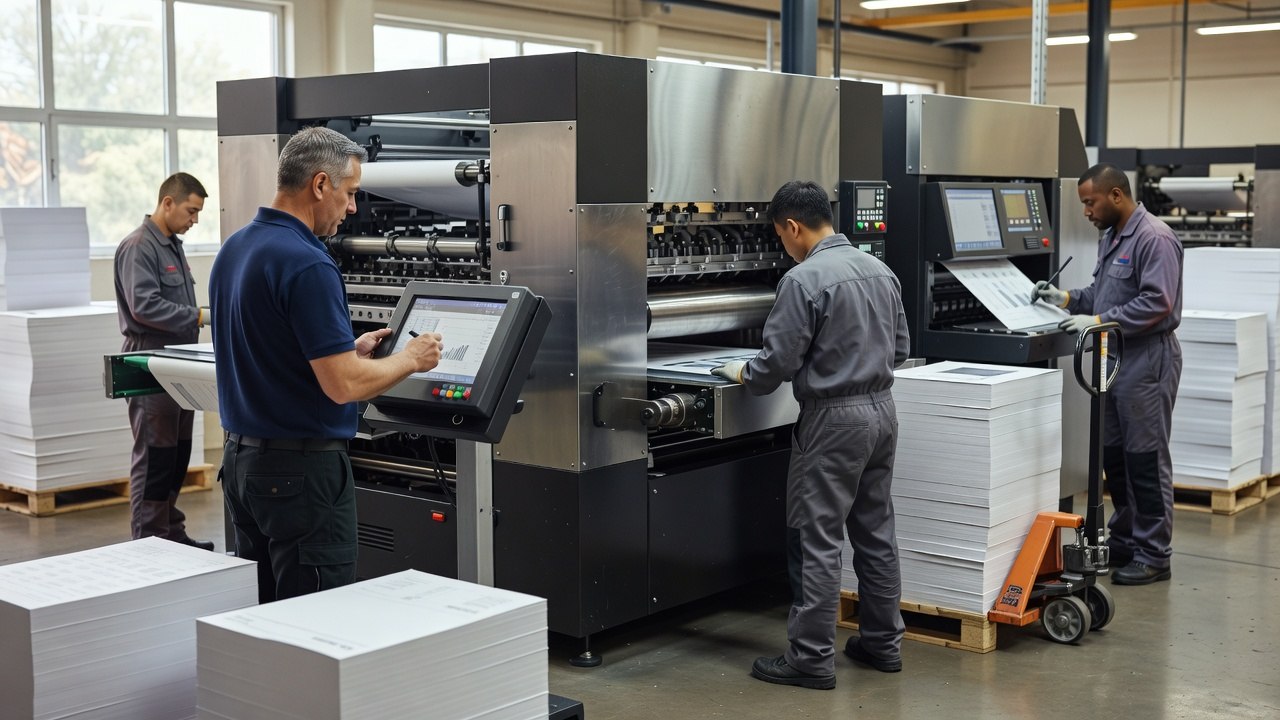
Timeline of the Reported Change
| Time | Reported action | Current interpretation |
|---|---|---|
| Through 2023 | MES and POP built with a smart-factory support program | System deployment and company-reported indicators |
| May 2026 | Day-only shift piloted in selected areas | Pilot confirmed; detailed result not public |
| August 2026 | Day-only shift expanded across the plant | Implementation stage, before peak-season proof |
| In progress | About KRW 10 billion facility investment plan | Planned and under way; completion and effect undisclosed |
| Planned | About KRW 3 billion additional sheetfed press | Planned installation, not completed acceptance or production |
| October–March | Textbook peak season | Critical test of capacity and delivery |
Management said fatigue and lower concentration in deep night hours can contribute to entanglement and other accidents. This is a credible risk hypothesis, but no measured post-change accident reduction has been published.
A Shift Change Is a Production-System Change
Producing the same monthly volume in fewer hours cannot be achieved by speed alone. It requires level scheduling, shorter plate and washup changes, pre-staged materials, preventive maintenance, immediate quality decisions and synchronized logistics.
| Operating axis | Required change | KPI to verify |
|---|---|---|
| Orders and planning | Peak forecast, daily leveling and rush-order rules | Plan adherence, urgent changes and on-time delivery |
| Equipment | Added press, bottleneck capacity and preventive maintenance | Good output/hour, availability, failure and setup time |
| MES and POP | Connect output, stop, defect and material data | Input delay, missing data and cause-code completeness |
| Quality | First-sheet approval, color, register and contamination | Rework, paper waste, customer defects and approval waiting |
| Safety | Energy isolation, guarding and stop procedures beyond removing nights | Injury, near miss, unsafe action, rest and fatigue |
| Labor and pay | Day staffing, skills, breaks and pay protection | Turnover, absence, overtime and take-home pay |
MES does not make the shift viable by itself. If stops and defect reasons are entered in a batch at the end of the day, the bottleneck remains hidden. Machine, job, quality and material IDs must reach the same order in time to adjust the daily plan.
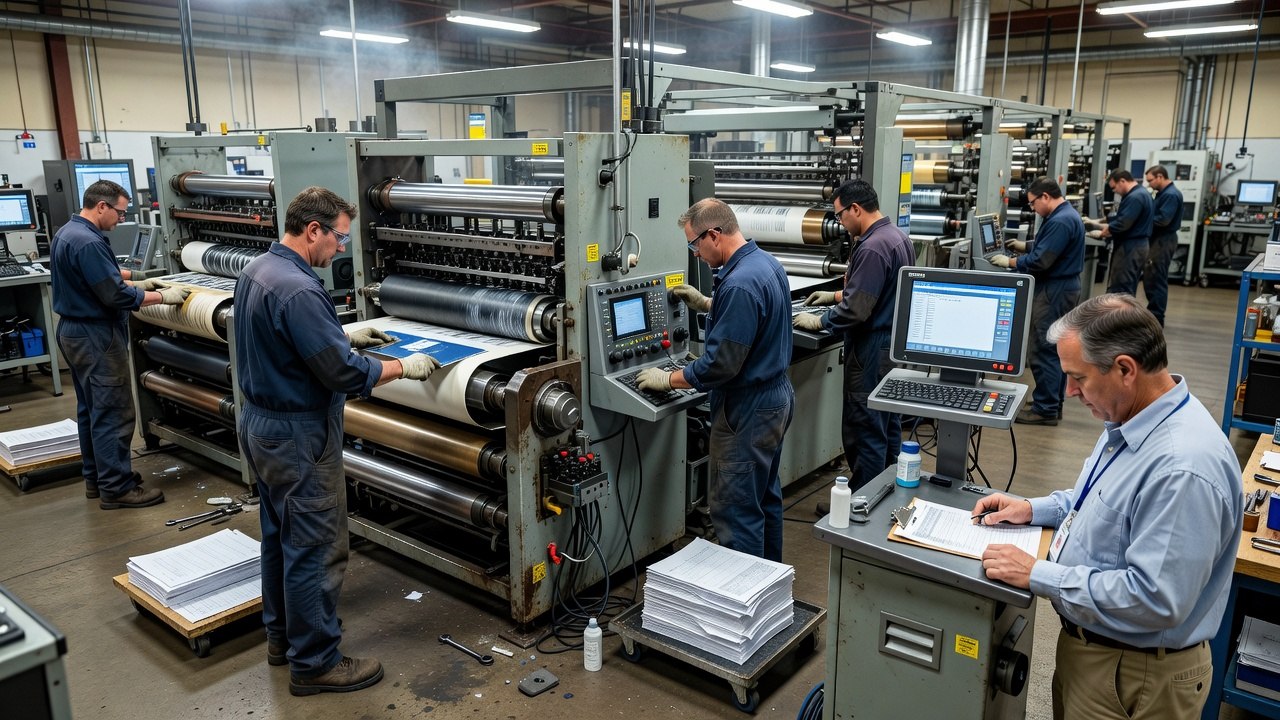
How to Read 8.7% and 83.3%
The report says MiraeN saw hourly production rise 8.7% and record-management work time fall 83.3% after MES/POP introduction. These are company-reported smart-factory indicators, not results of the August 2026 plant-wide day-only shift. The article does not provide the baseline period, product mix, calculation formula or independent verification.
A follow-up comparison should freeze the definitions:
- Hourly production: gross impressions or accepted good output?
- Record-management time: operator entry or management compilation?
- Output maintenance: total volume only, or also delivery, rework and outsourcing?
- Safety: injuries only, or near misses and exposure hours?
- Pay: base pay only, or take-home pay including allowances and overtime?
Peak-Season Validation Table
| Gate | Previous baseline | Post-change evidence | Hold condition |
|---|---|---|---|
| Capacity | Good output/hour, setup and bottleneck by product family | Same-mix output, delivery and WIP | Volume maintained only by outsourcing or prebuild |
| Investment | Existing capacity, failure and maintenance | Press installation, SAT, real output and defects | Planned amount without acceptance and operation |
| Digital | MES/POP data completeness | Automatic capture, delay and cause codes | Spreadsheet correction remains the primary record |
| Quality | Waste, rework and customer defects | Same-definition comparison | Defects worsen as speed rises |
| Safety | Injuries, near misses and exposure | Risk by process and time | Night removal without LOTO or guarding improvement |
| Labor | Hours, pay, breaks and turnover | Take-home pay, overtime and fatigue | Hidden early starts or overtime compensate capacity |
Claims That Require a Hold
- Treating the August rollout as proof that peak-season output is maintained
- Converting a KRW 10 billion investment plan into fully completed assets
- Describing the planned KRW 3 billion press as installed, accepted and producing
- Mixing earlier MES indicators with results of the day-only shift
- Treating removal of night work as zero accidents or completed serious-injury prevention
The MiraeN case is meaningful because it combines MES/POP, equipment, concentrated production and labor consultation rather than changing the roster alone. The real result must be judged during the October–March peak season: can the plant preserve good output, delivery and pay while reducing fatigue and hazard exposure? Until that evidence is public, “an operating experiment under full rollout” is more accurate than “a proven success.”
About the Author
PackingMaster: Editor of Paper Pack Log. We collect and organize market trends, product information, and technical insights for the paper packaging industry.